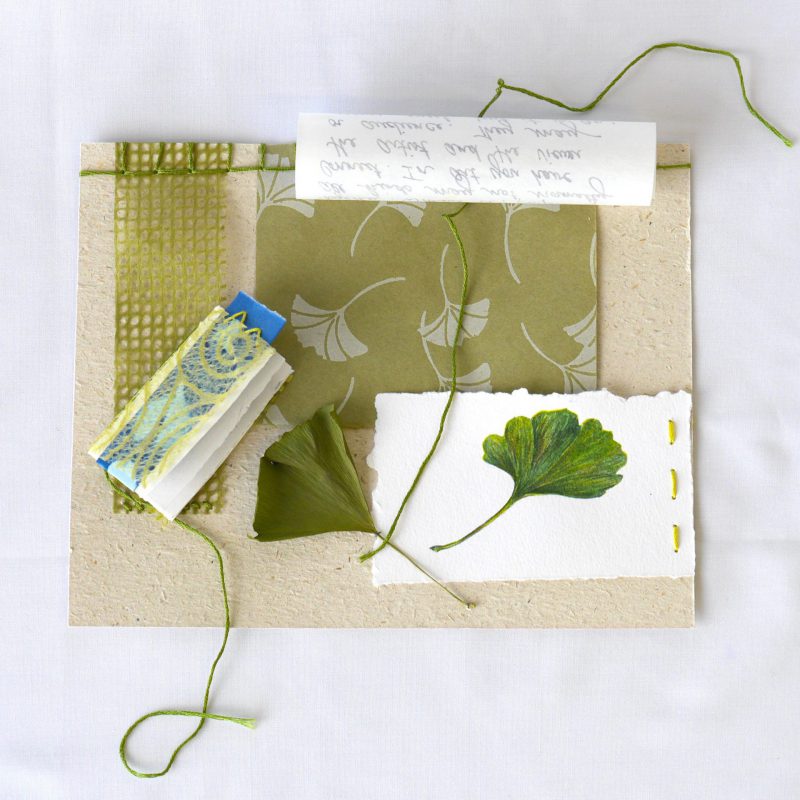
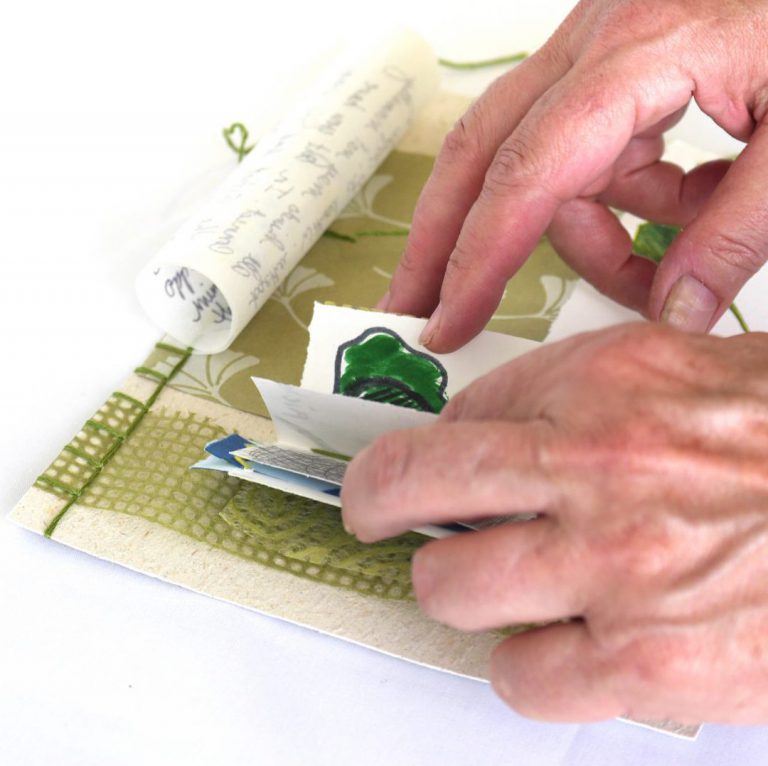
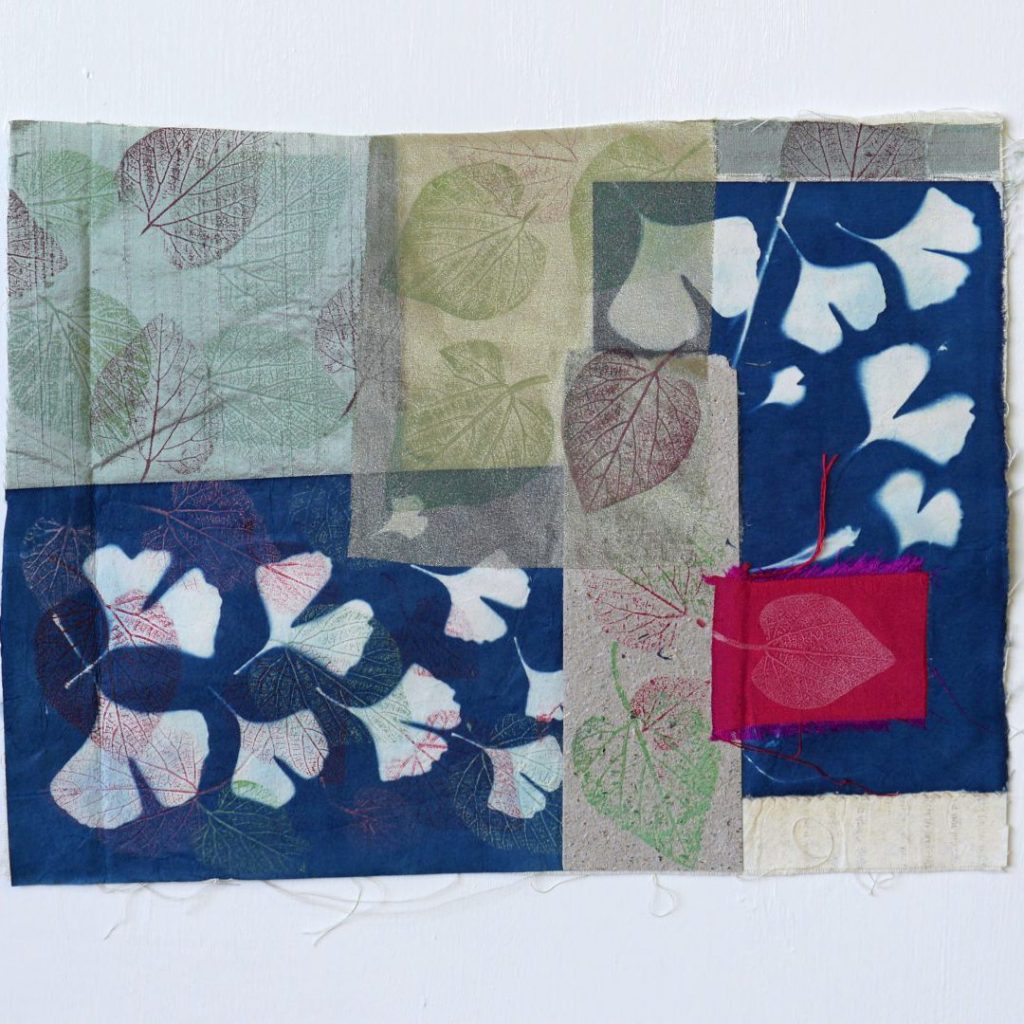
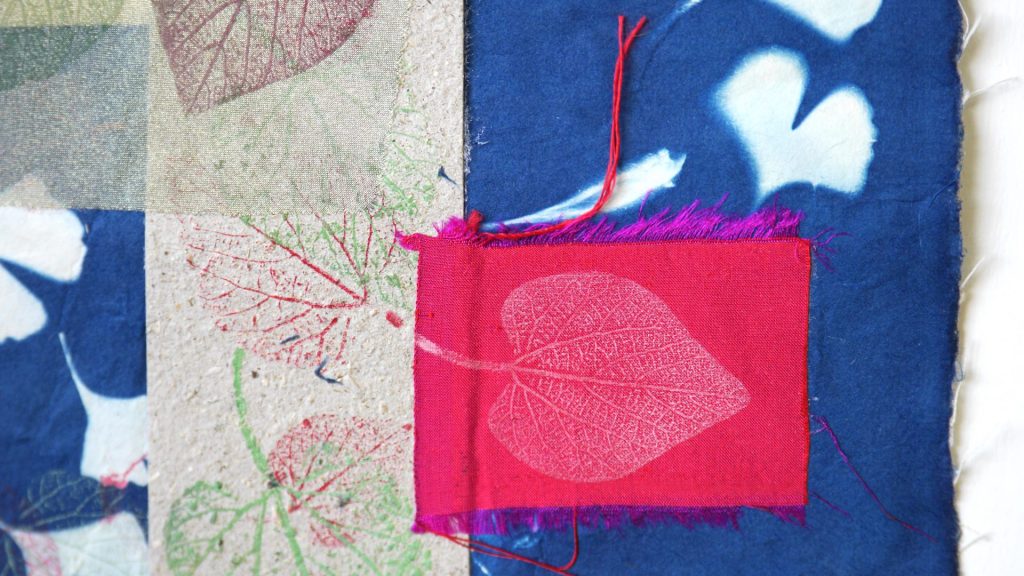
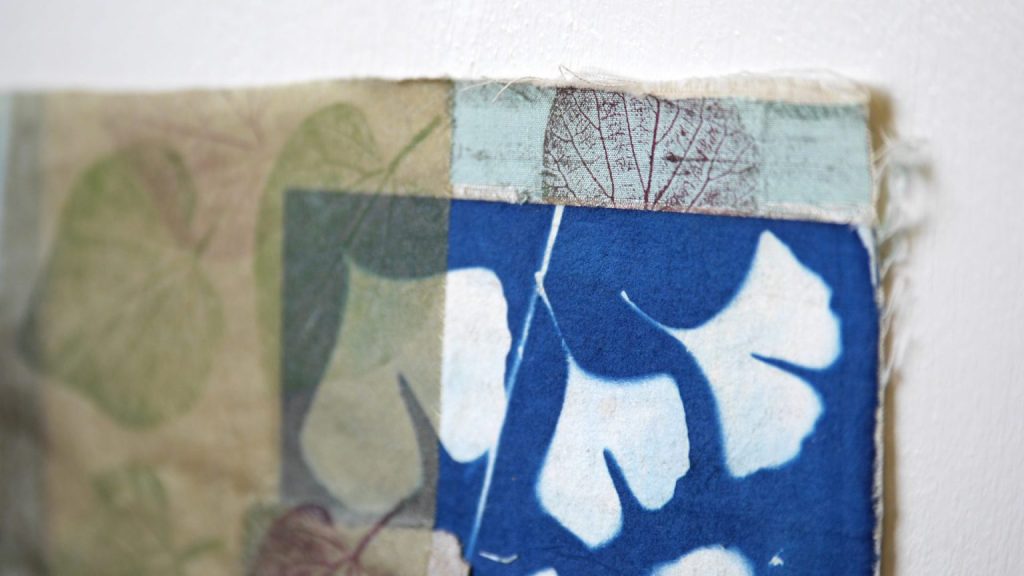
My contribution to this research features the leaves from Aristolochia tomentosa, Dutchman’s pipe. They absorb the ink, leaving a perfect ghost print. I made cyanotypes of gingko leaves, which are called living fossils. My art doesn’t address the big issues but it gives me a connection to others and reminds me to appreciate the gifts of nature during a time of isolation.
— Lorrie Blair
In the throes of the pandemic, we turned to nature for solace and respite. Those of us who were locked down at home looked longingly out our windows – and shared images of our views on social media platforms that enabled us to virtually ‘visit’ others in their sites around the world. Those of us with gardens felt doubly blessed: not only could we nourish ourselves by putting our hands in dirt, but we could also attend to our own food security by growing vegetables. When we were able to venture out, we took to parks, bike paths, waterways, and naturalized spaces with zeal: we could feel what researchers have found, that access to nature was vital to support our mental health. Our blue and green spaces directly promote our resilience.*
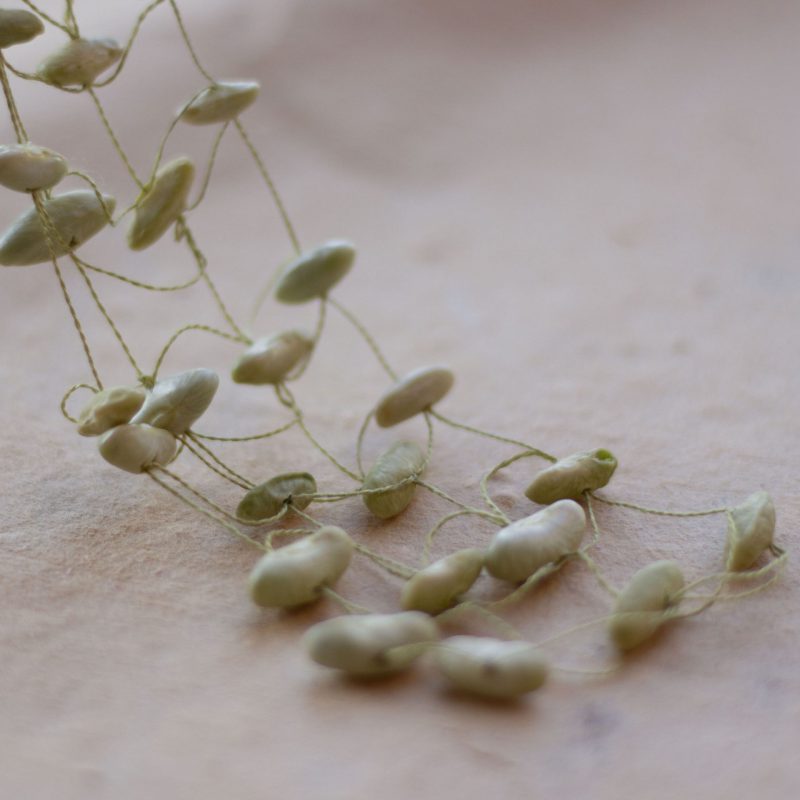
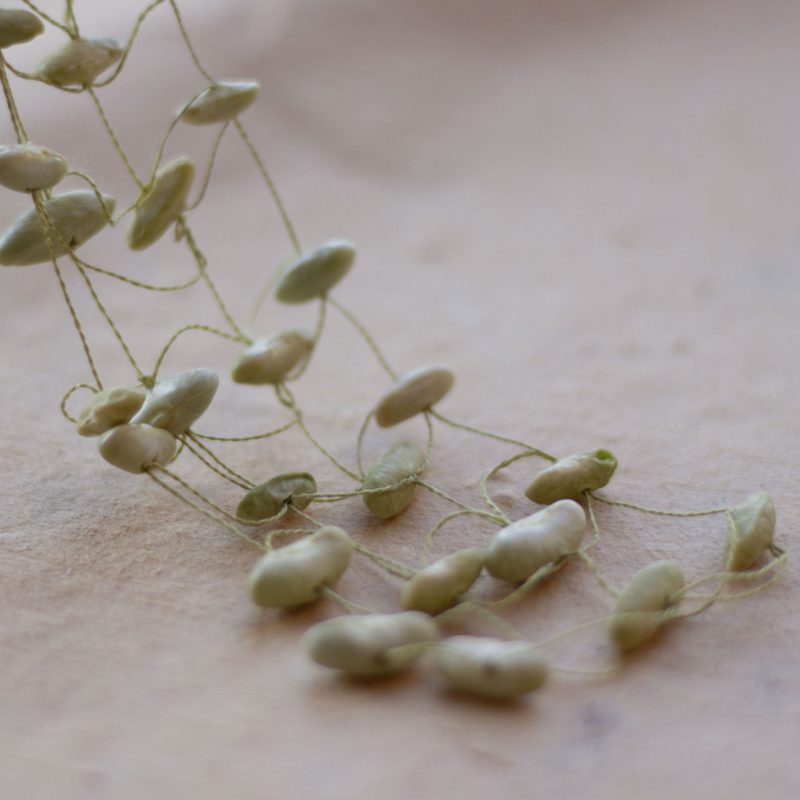
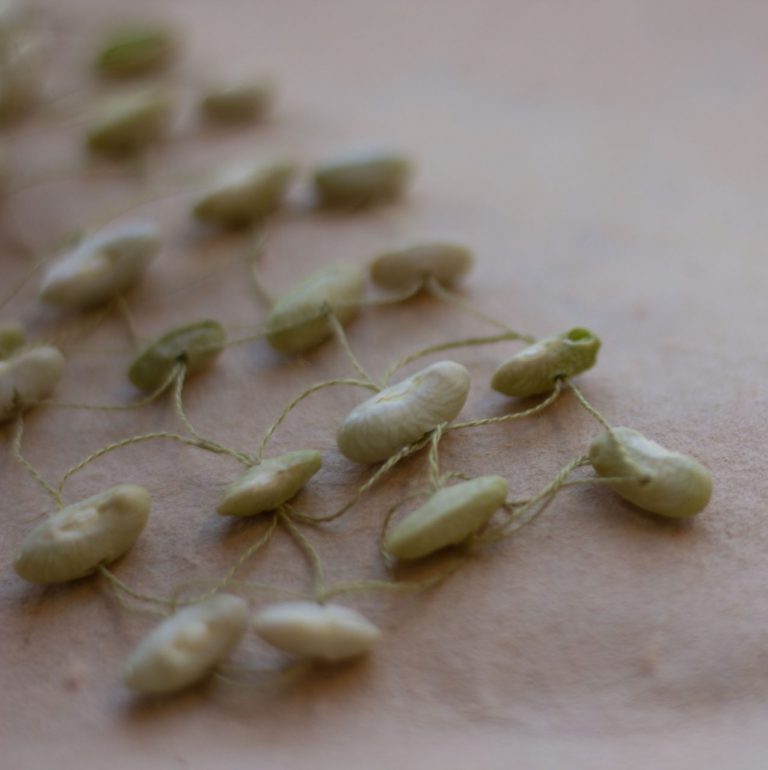
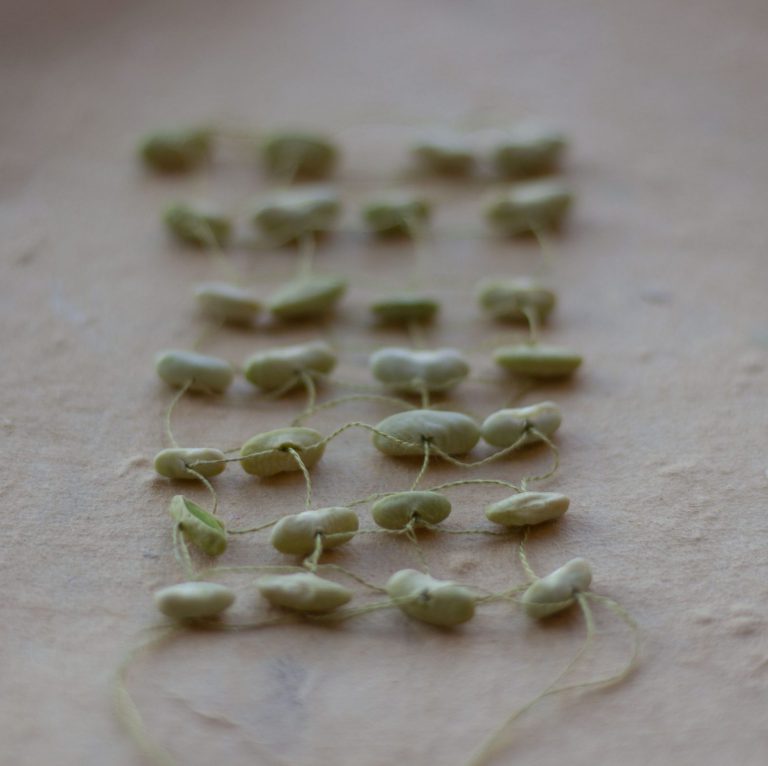
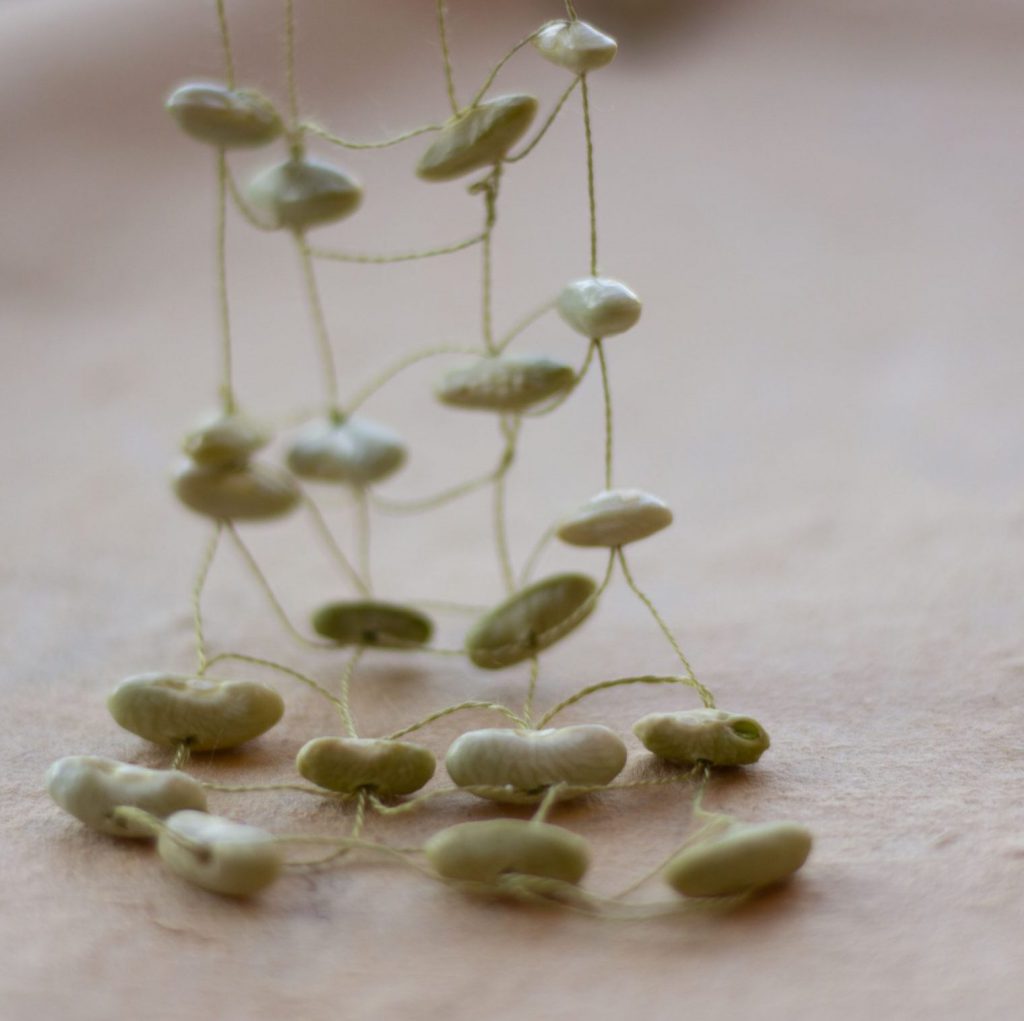
And so, some collaborating artists responded to the question, What is art for? in this time of pandemic, by honouring nature. Their works integrated organic materials as component part (beans and bark), stencil resist (leaves), and natural dye, drawing on the pigmenting capacities of local mushrooms. Through contributors’ creations we are invited to gaze out to nature’s horizon; walk in the forest; feel the ground beneath our feet; marvel at wildlife, observed within our quieter cities as though for the first time; and consider the strength and beauty of organic connections at microscopic levels.
We are also reminded of species loss, of the actuality of humans’ despoliation of nature and the continuing environmental challenges we must address to sustain life on our beautiful planet. In the early shutdowns of the pandemic, scientists came up with the term, ‘Anthropause’**, to name this time of visible, global resurgence in Other-than-human presence as a consequence of a dramatic, worldwide curtailment of human activity. They urged that we research our impact on wildlife, collect data, and collectively “challenge humanity to reconsider our future on Earth.”*** Some artists participating here are taking up this task as well, their works communicating love and longing for nature, appreciation of its gifts (especially now), and concern for the future of the Other-than-human world. A year after the pandemic started, we now know that 2020 was year of unprecedented climate catastrophes**** that have compounded the human suffering of COVID-19. The devastations, losses, and grief are real and irrevocable; but so, for the moment at least, is the lift to our spirits that comes when we contemplate a single flower.
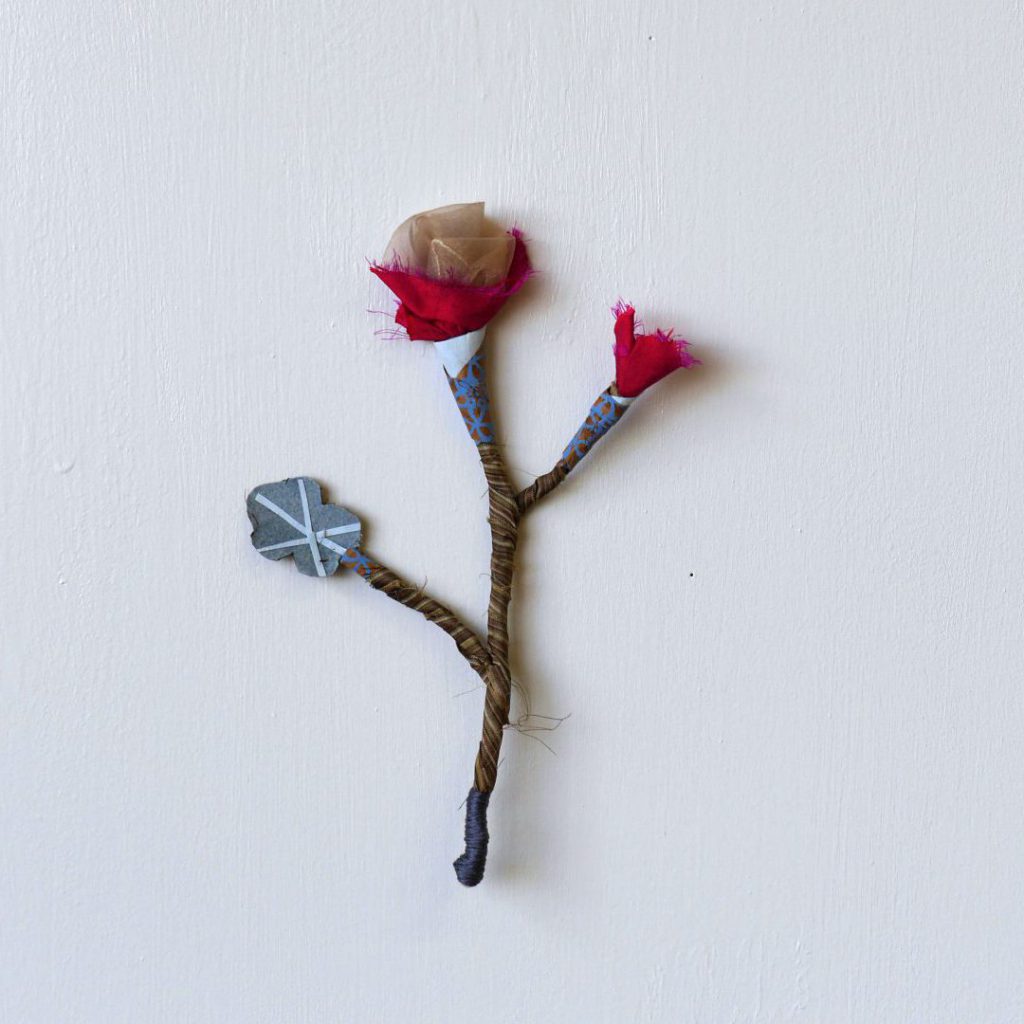
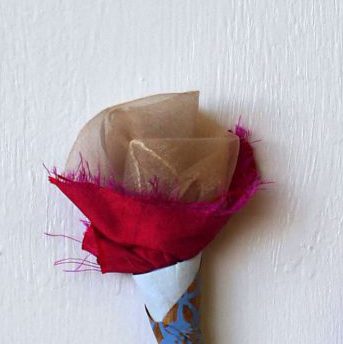
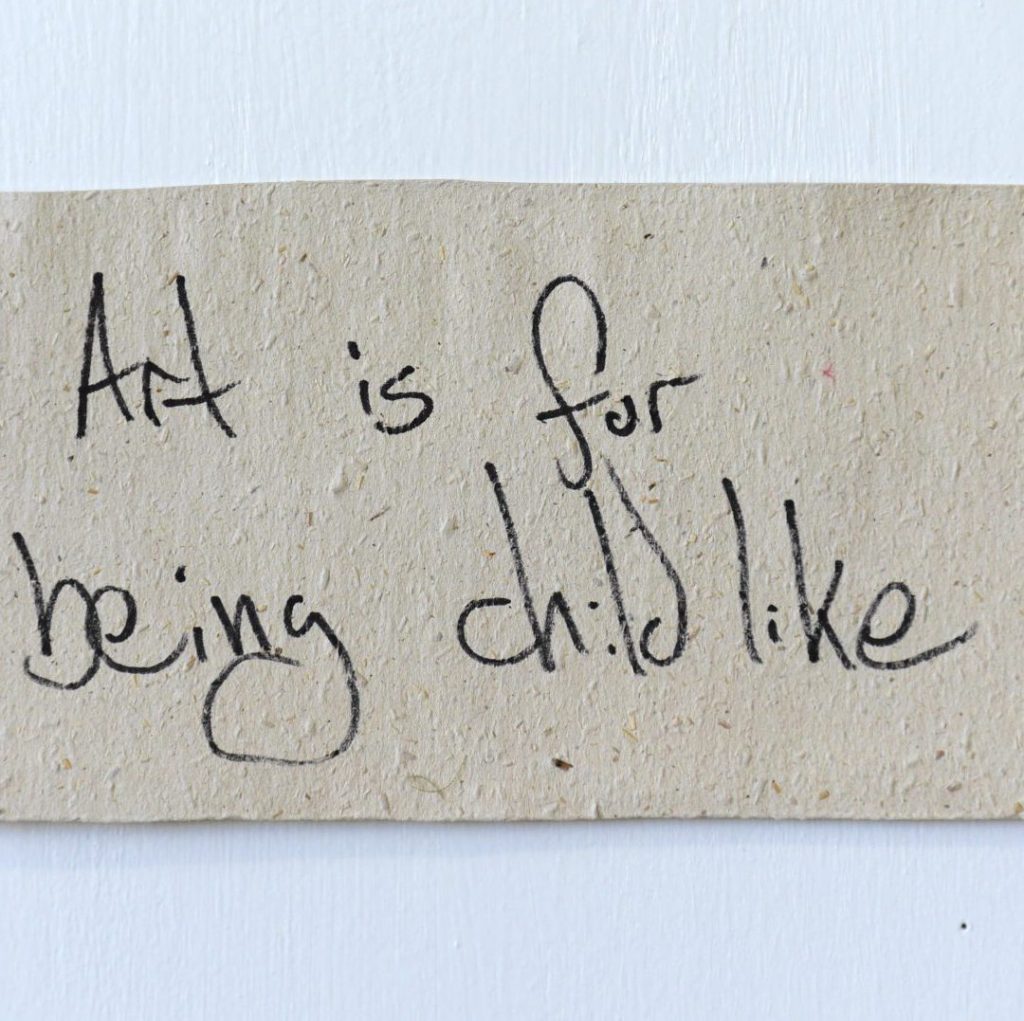
JANE ZDANSKY // Westport, Nova Scotia, Canada
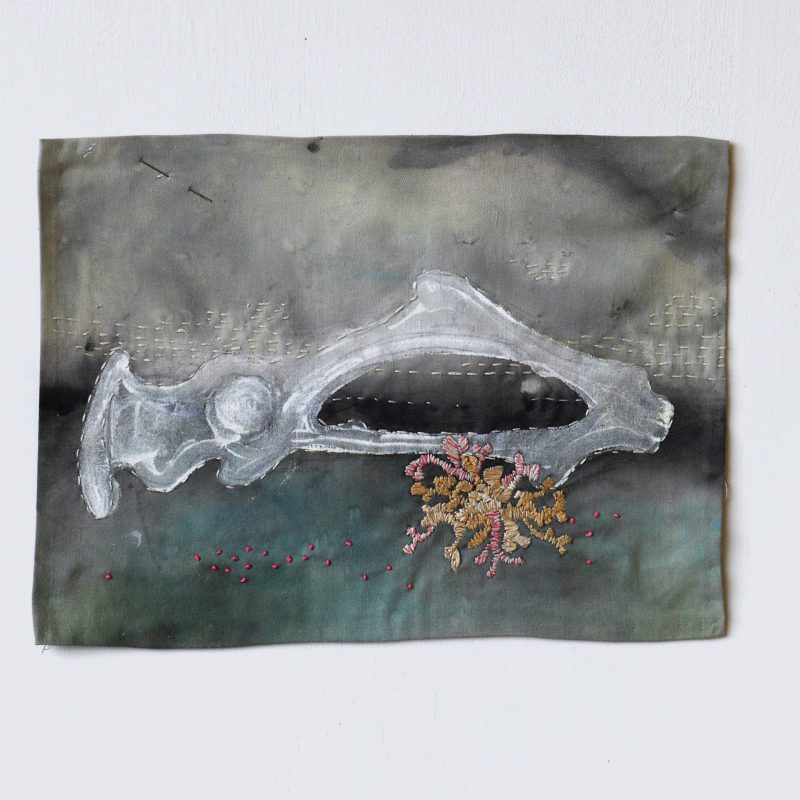
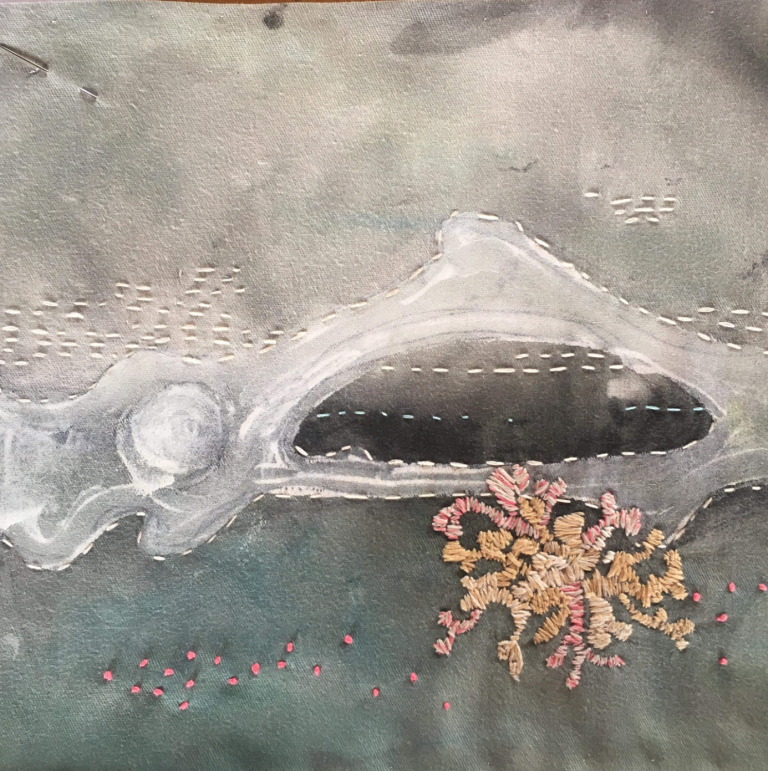
My art has always been and remains about solace. My desire now as I mature is to be part of a wider narrative on social issues using the objects found around me.
I’m currently living on a tiny island off the coast of Nova Scotia, a place that is complex and full of contradictions, a place that is facing full on the issues of climate change, declining fish stocks and a declining economy.
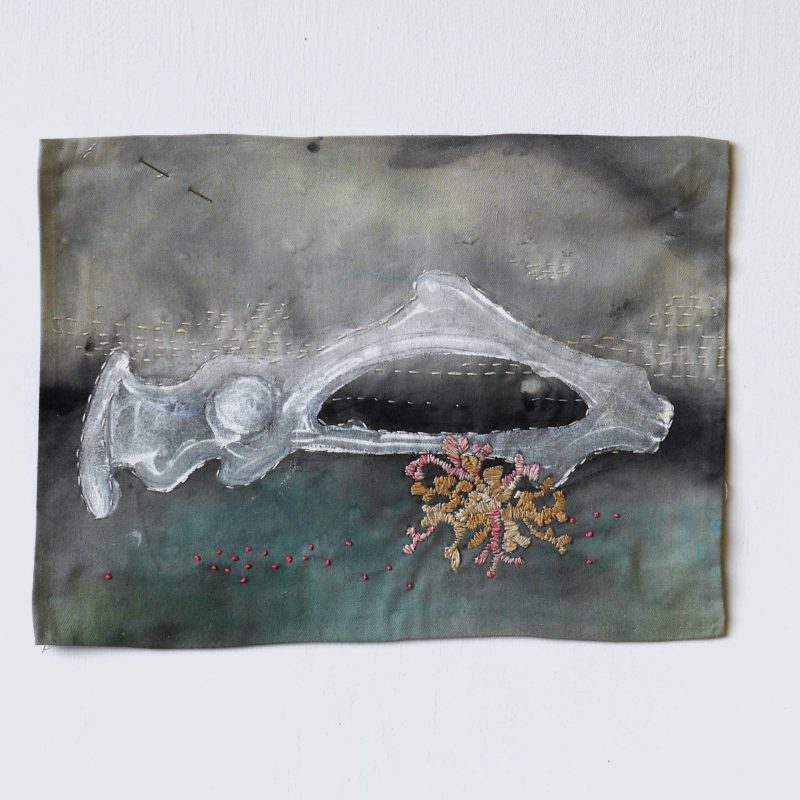
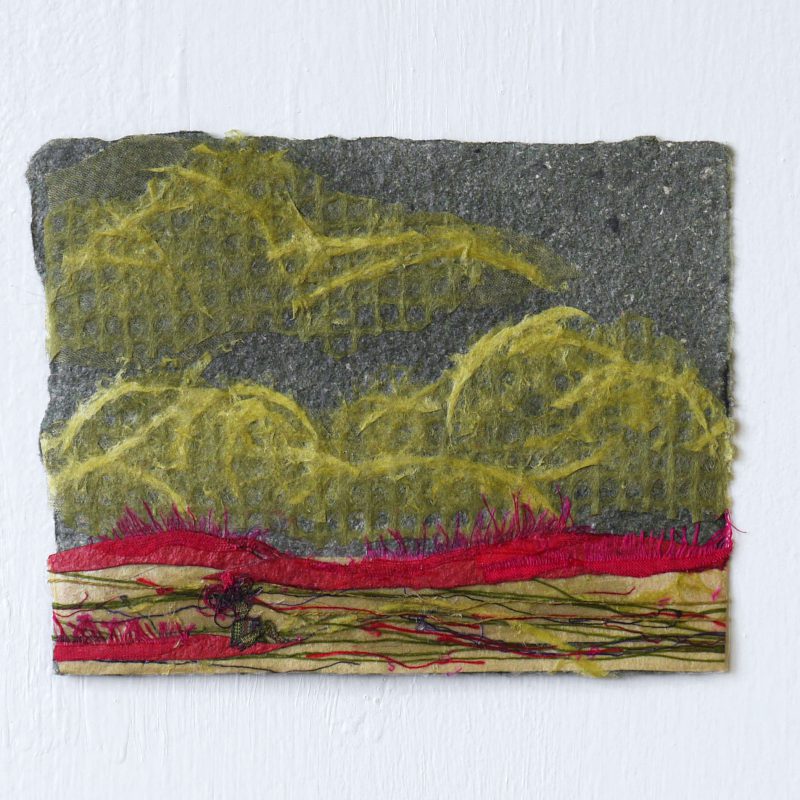
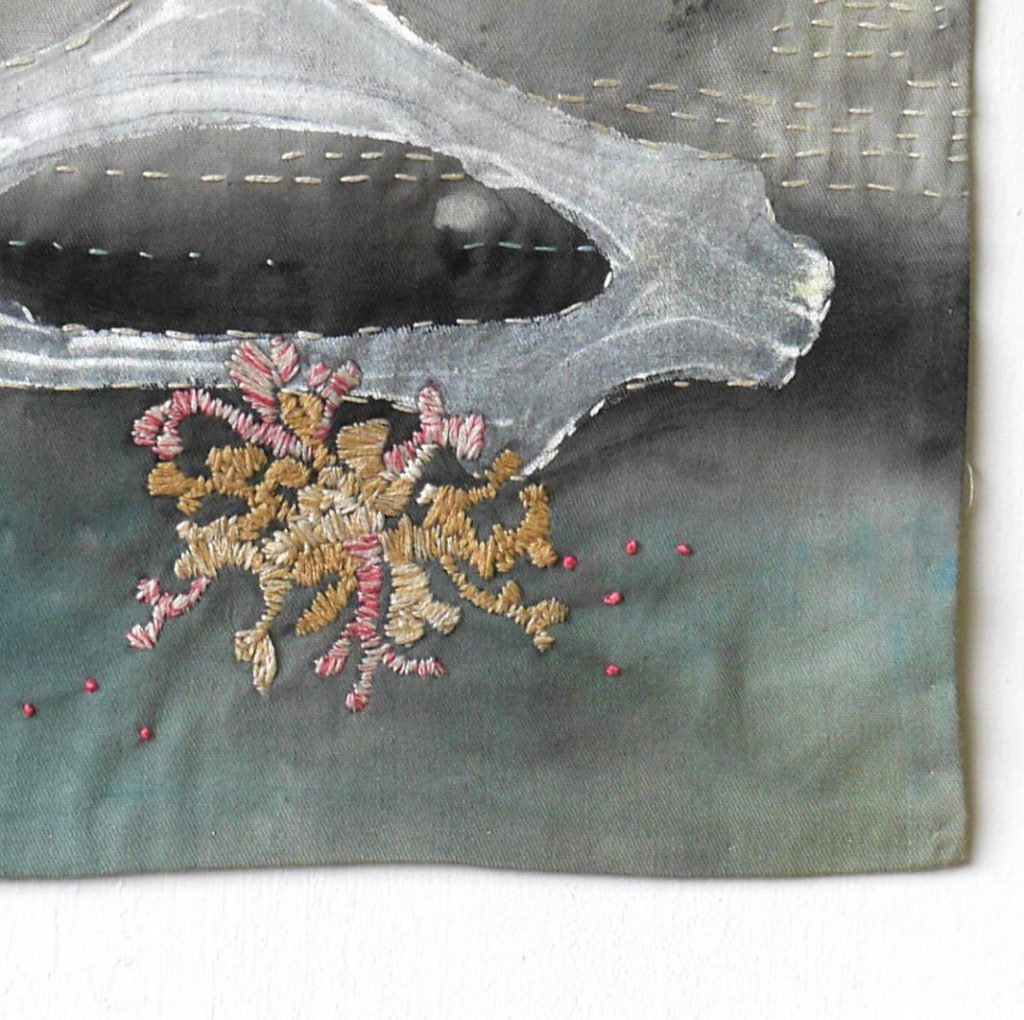
My simple shore finds depicted in the image reflect the issues, contradictions and reality found here.
The landscape image was copied from a pattern found on a stone. It actually looks like the existing land and sky scenes in the area. The gleaming white seal bone is all that was left of a seal that was shot a few years ago. It was shot by a local either in a belief that all seals are pests that eat too many of the few fish that are left or it was just for the fun of it. The flower, a seaweed washed ashore, is one of hundreds of seaweed varieties that exist in the area. There are scientists who are calling for the area to become a marine sanctuary on this fact alone. There are also some within the fishing community that are calling for all the Bay of Fundy to be made into a marine sanctuary with only handline fishing allowed. Handline fishing would allow more people to get their fair of fish, distributed the wealth created more evenly and protect the fish stocks within the bay. More people would be encouraged to stay, the economy would recover and the environment would be protected.
AILEEN PUGLIESE CASTRO // Dorval, Quebec, Canada
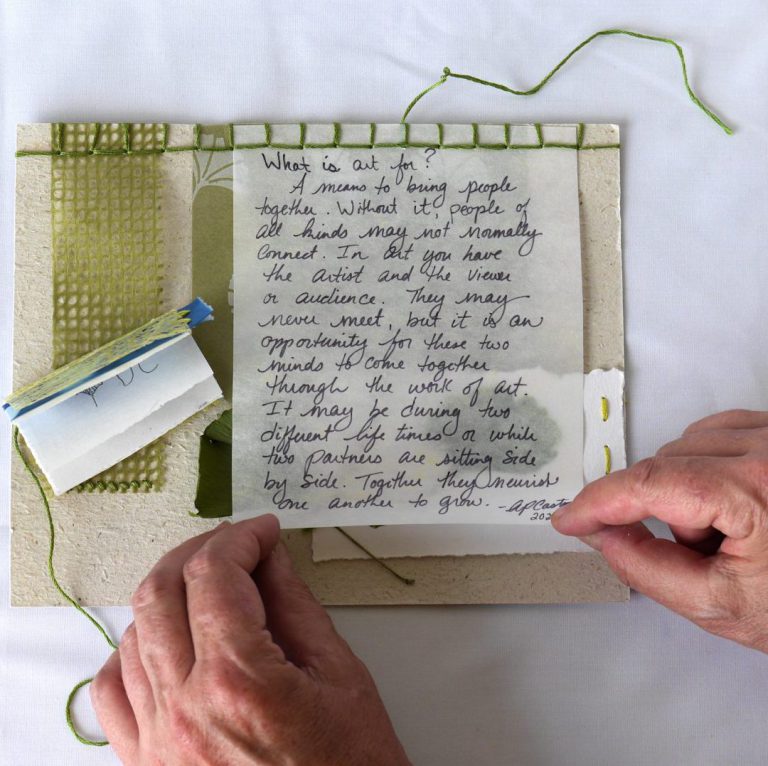
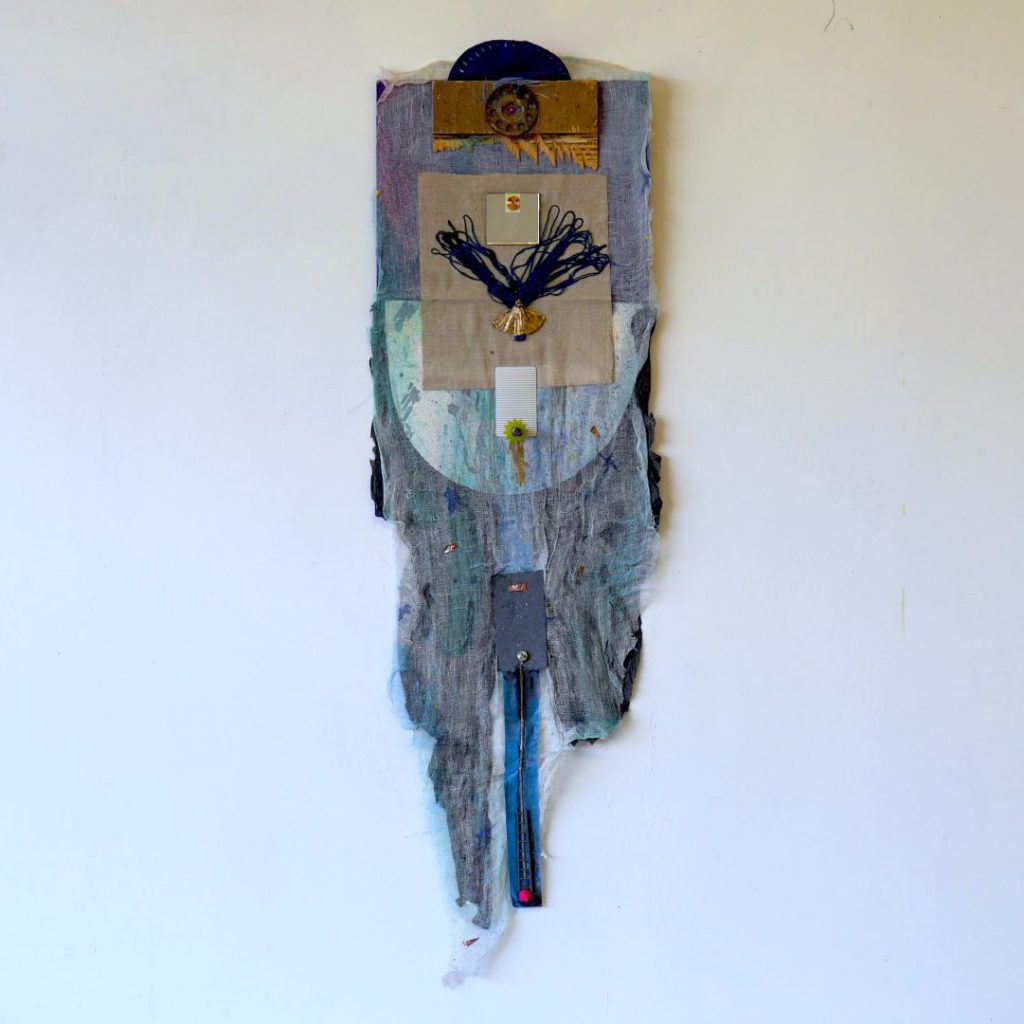
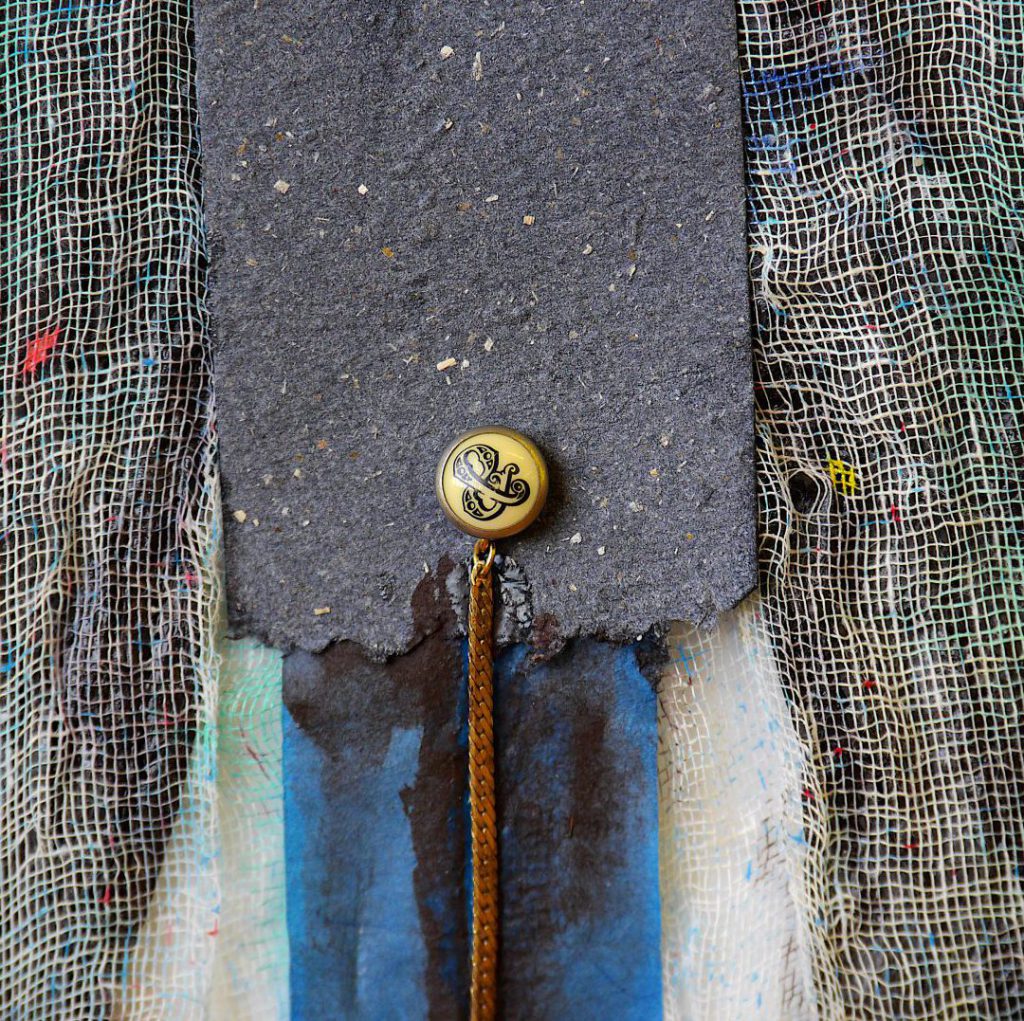
What is art for? A means to bring people together. Without it, people of all kinds may not normally connect. In art you have the artist and the viewer or audience. They may never meet, but it is an opportunity for these two minds to come together through the work of art. It may be during two different life times or while two partners are sitting side by side. Together they nourish one another to grow.
NATALIE OLANICK // Montréal, Quebec, Canada
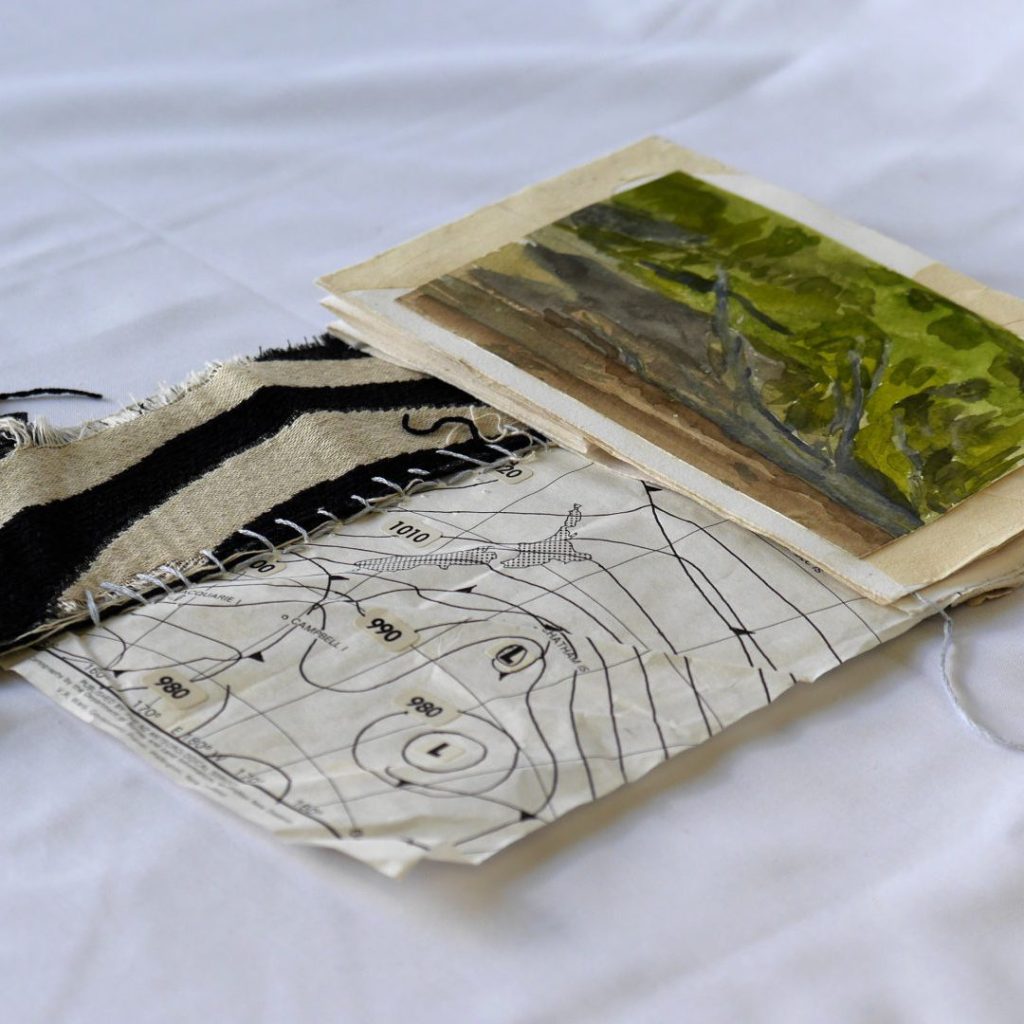
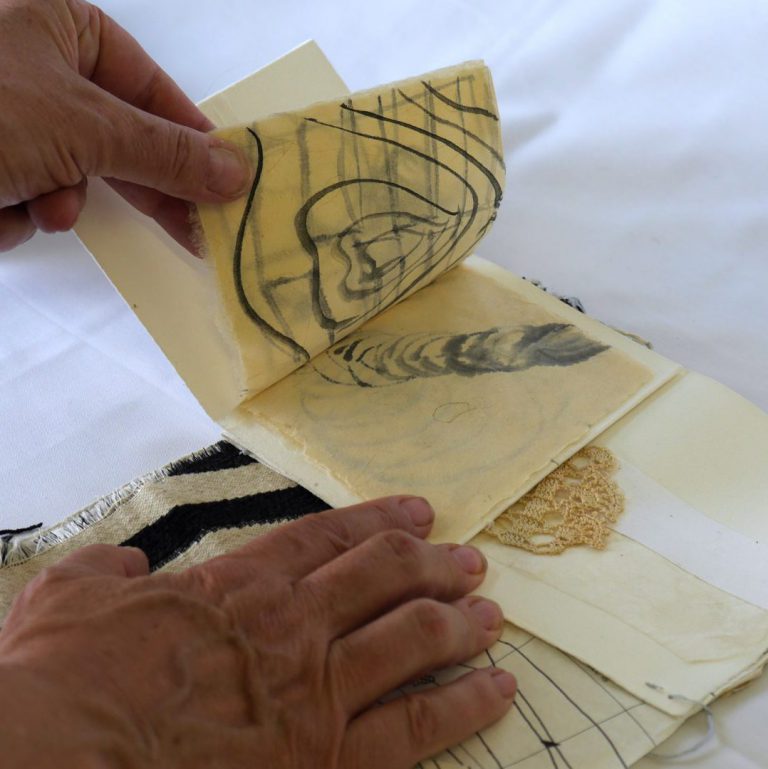
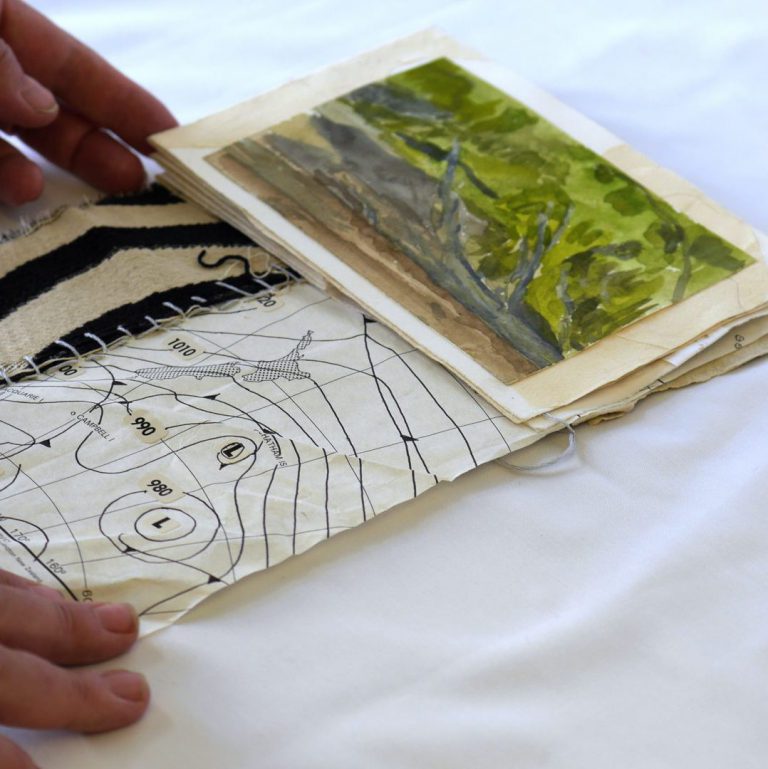
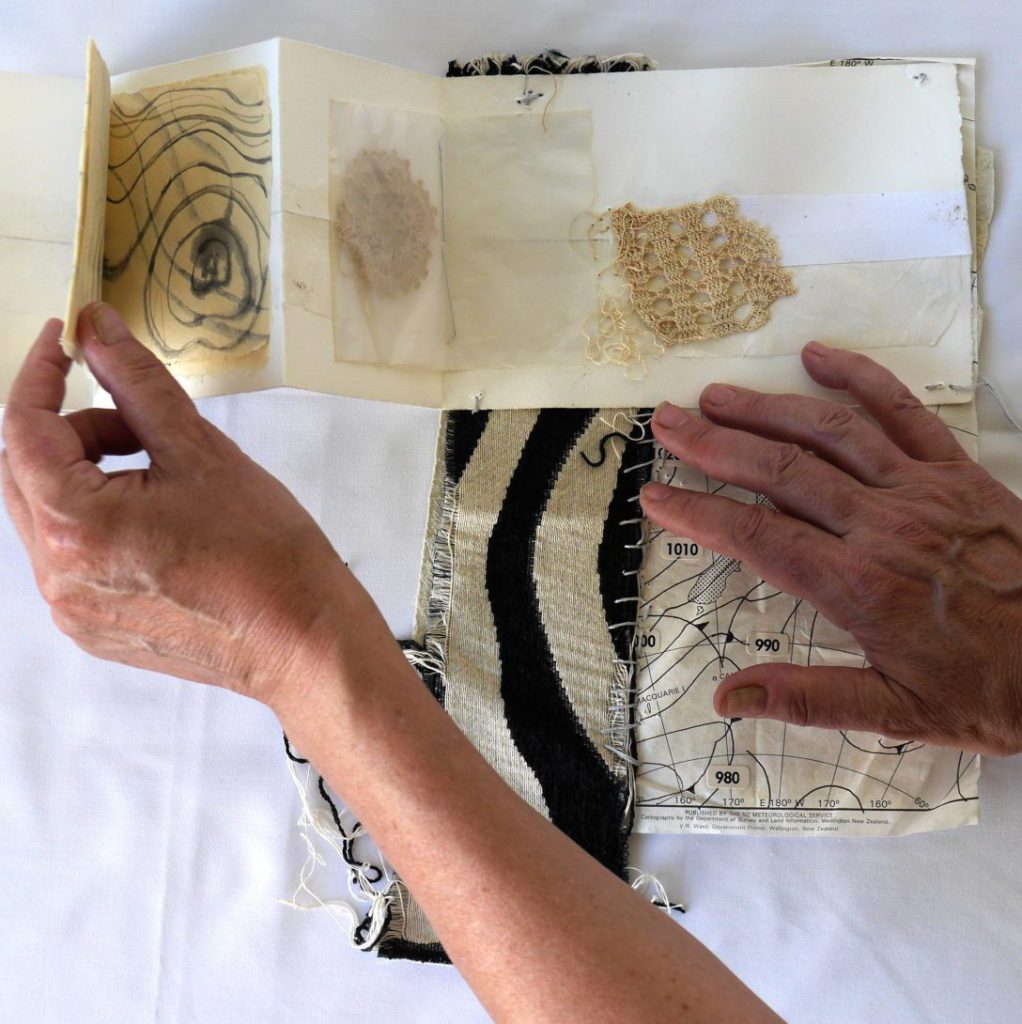
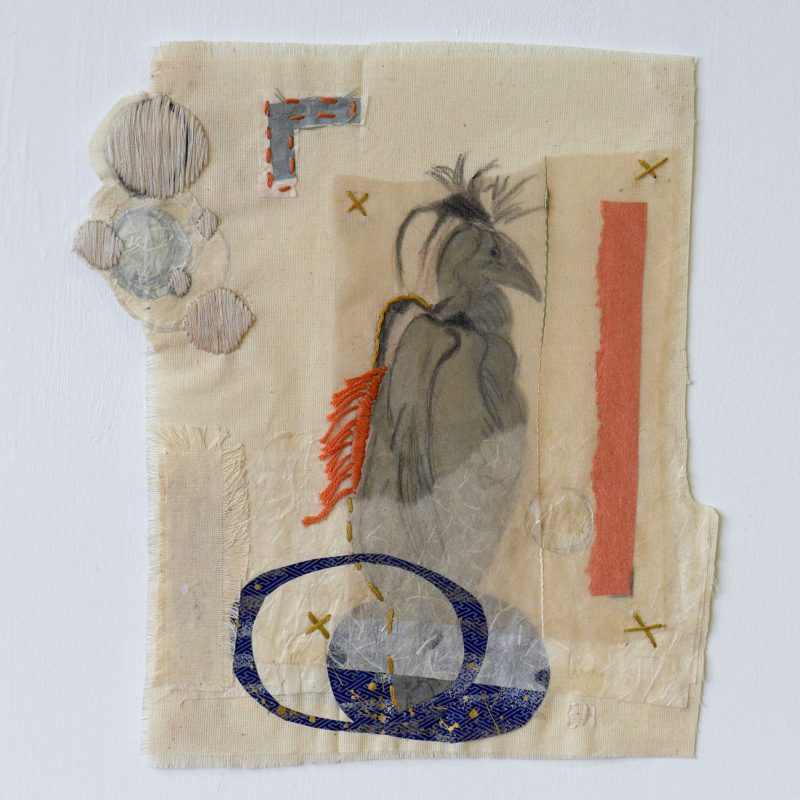
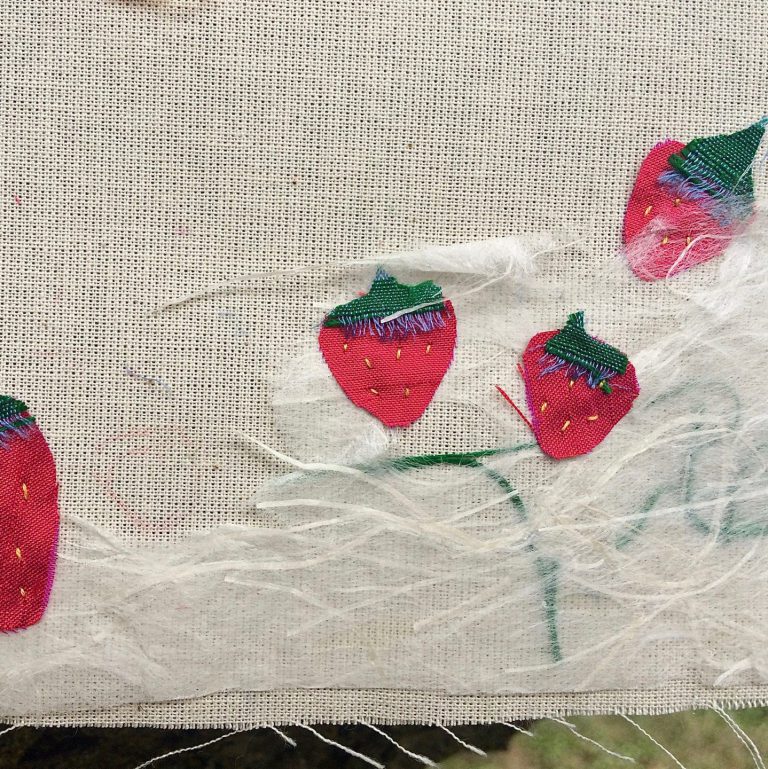
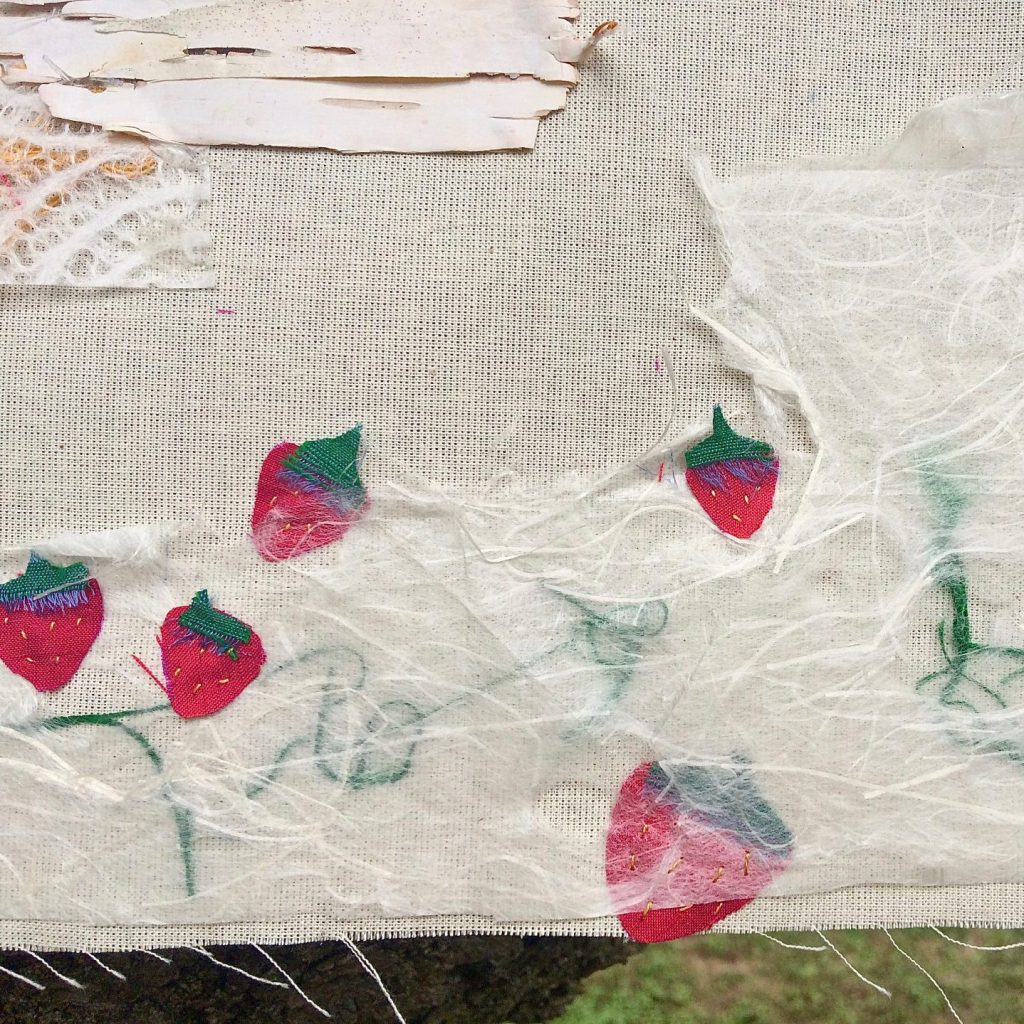
I am interested in how shared meanings can also evoke personal familiarity. In making paintings and book works, I ask myself questions which results in works that have messages and possible interpretations that shift between social and personal histories. I weave a fabric of my thoughts with the shapes and forms of our world. My process of working includes an open field of signification in which established associations and potential readings are layered. I work with my materials as tools to illustrate ideas rather than as a skill that must be mastered.
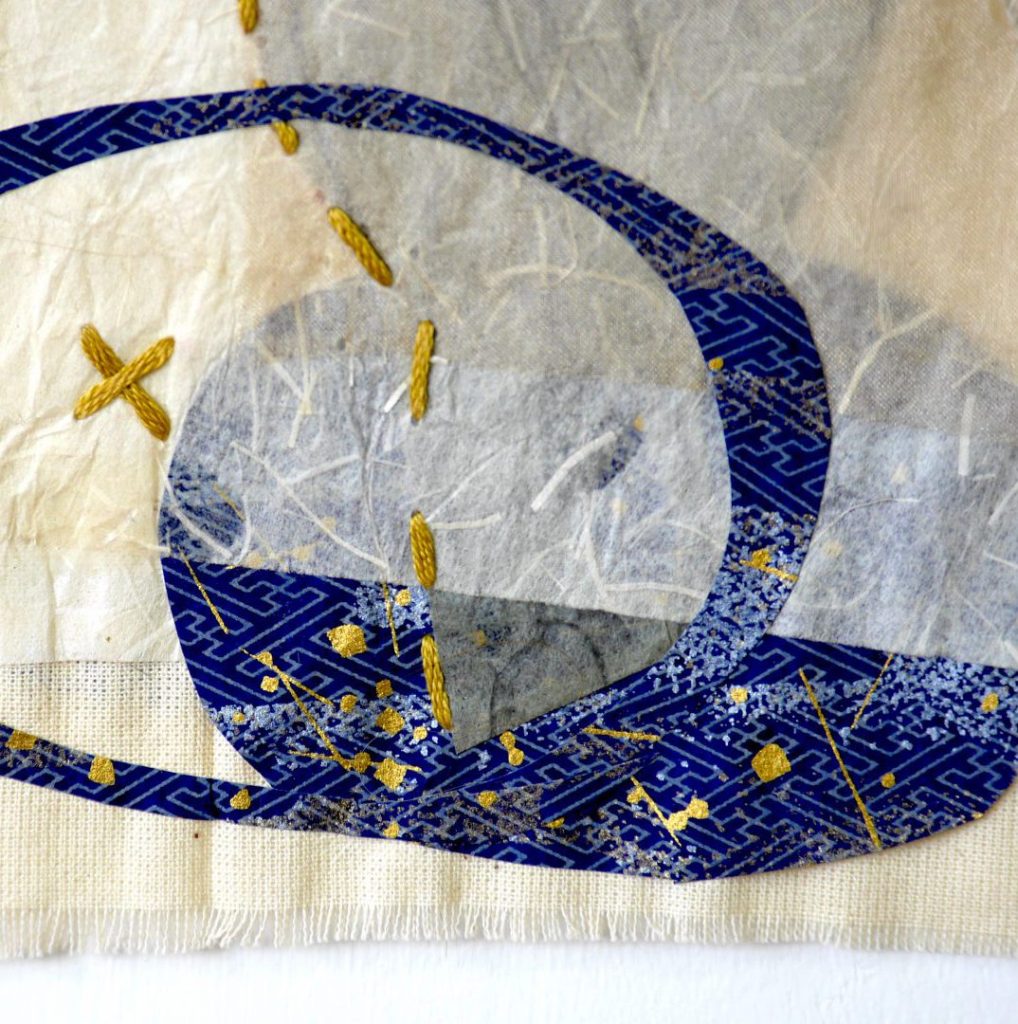
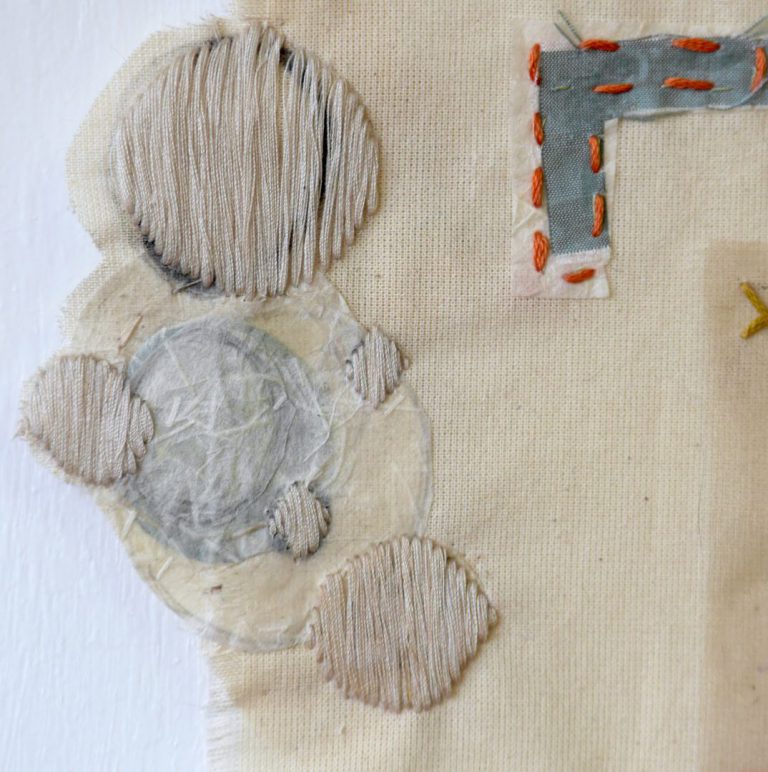
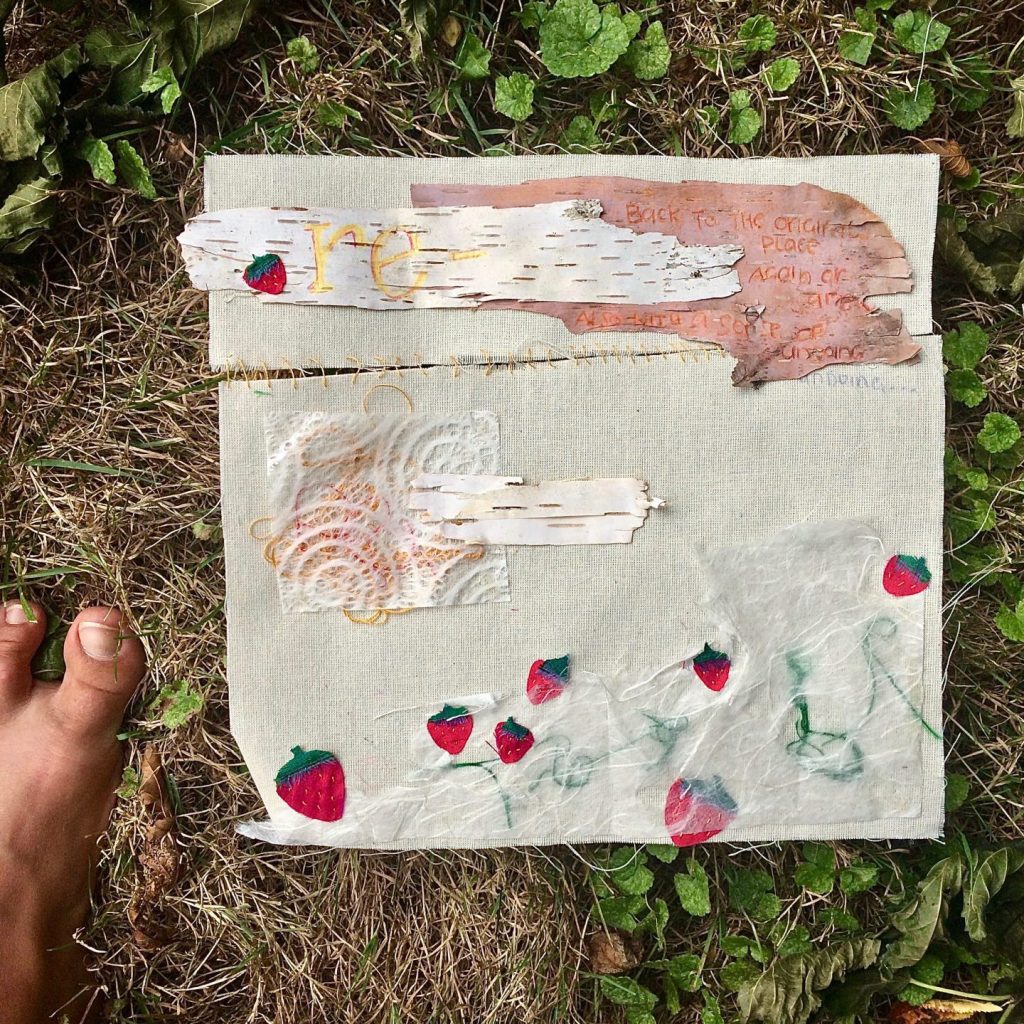
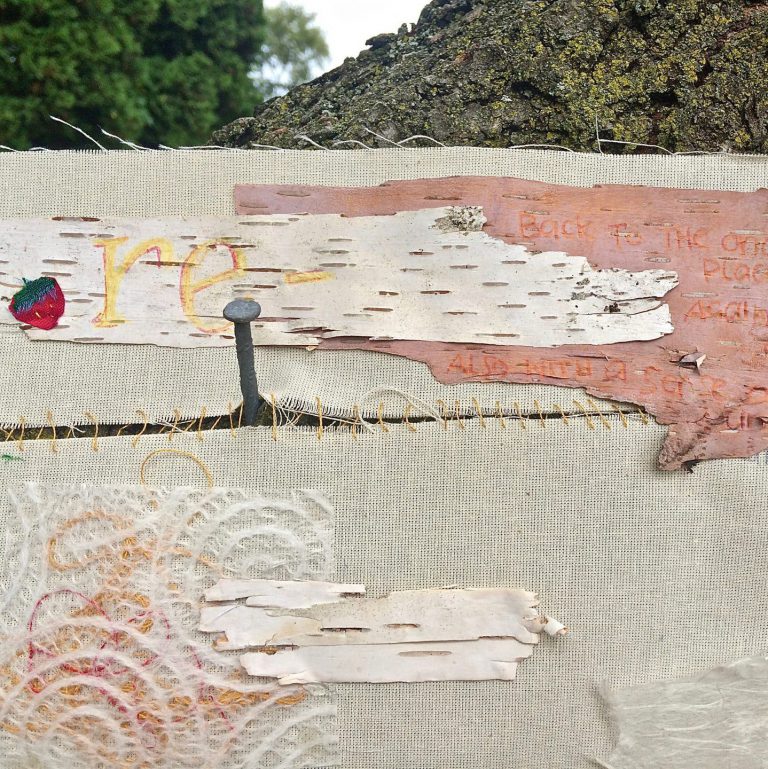
NICOLE MACORETTA // Verdun, Quebec, Canada
For me, art seems to extend time and empathy. Whether in making, reflecting on or appreciating, art expands.
During this time (and always), art reminds me that I can deeply connect to everything around me, and I am just the tiniest part of the greatest whole.
NGA NGUYEN // Montréal, Quebec, Canada
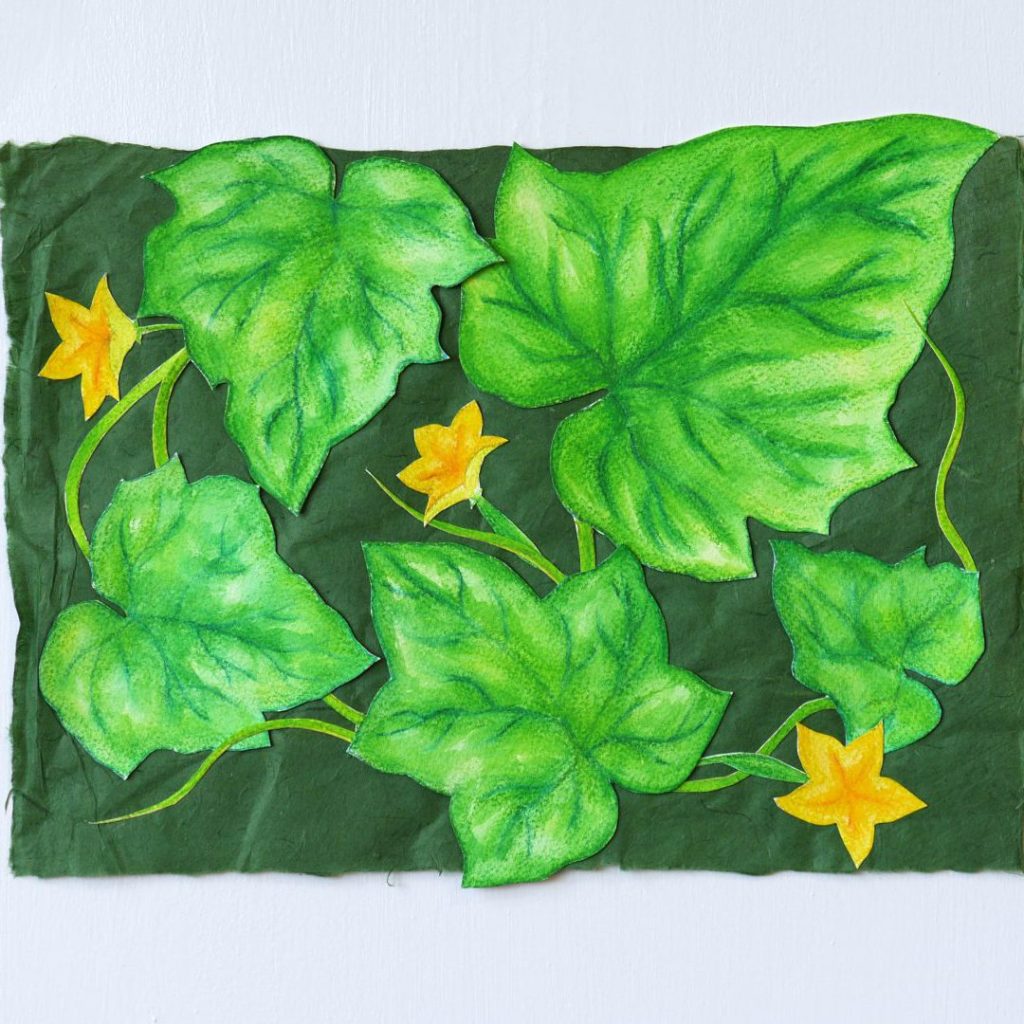
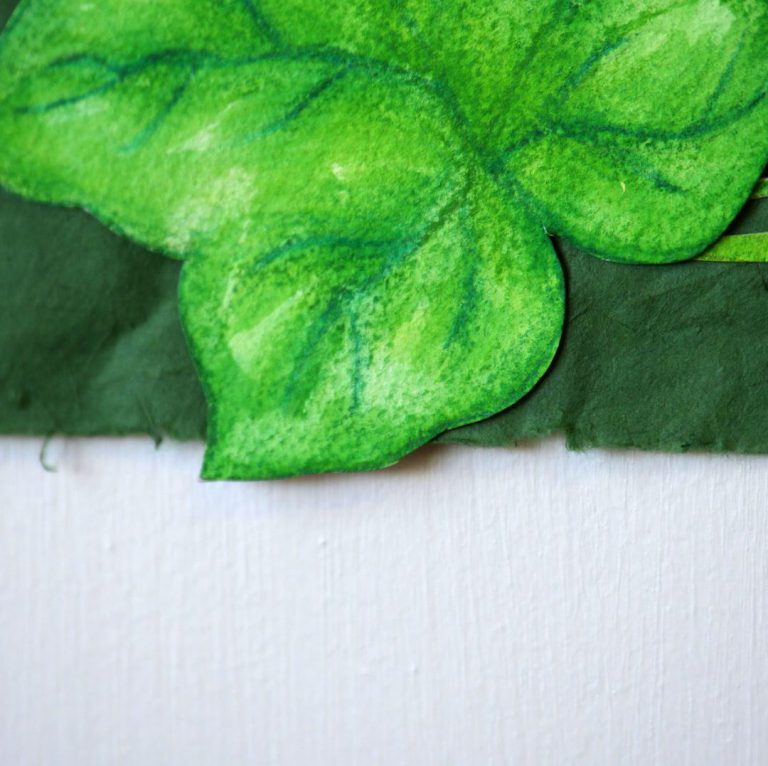
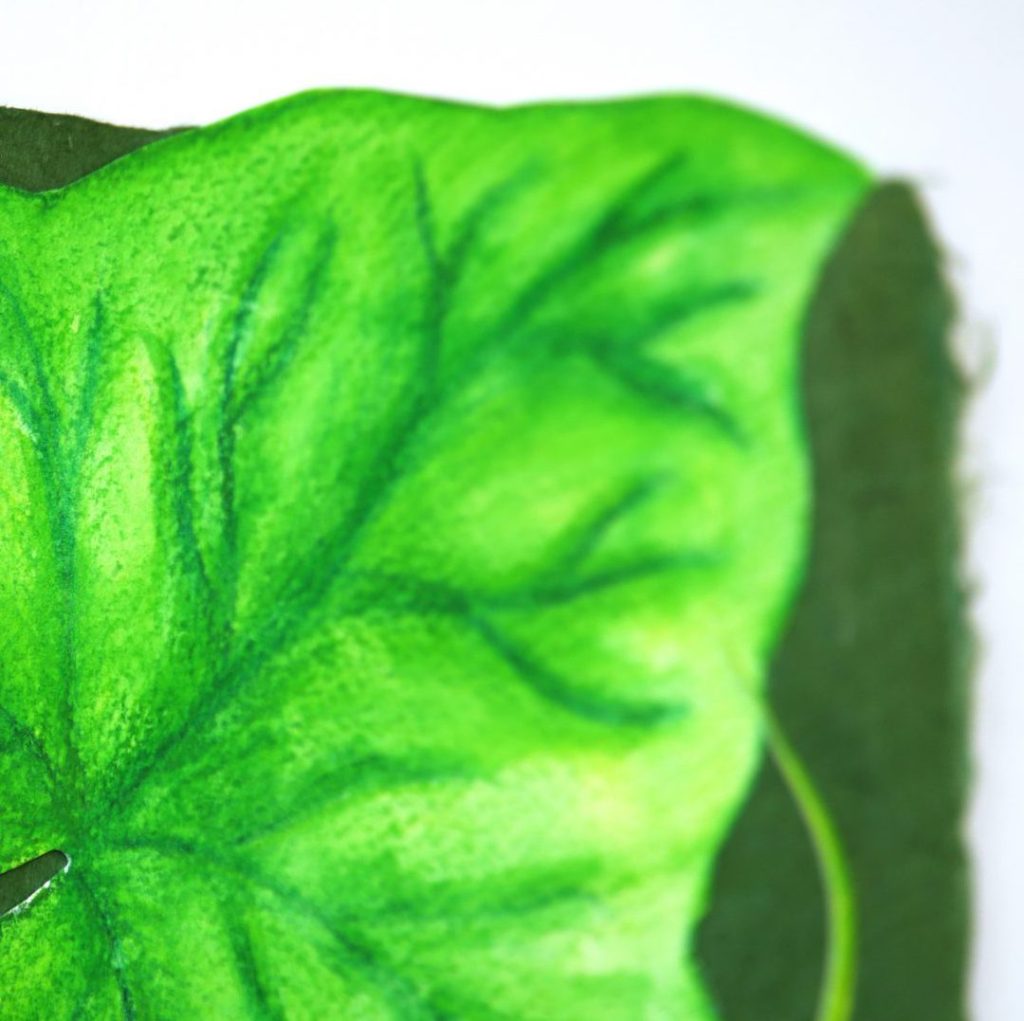
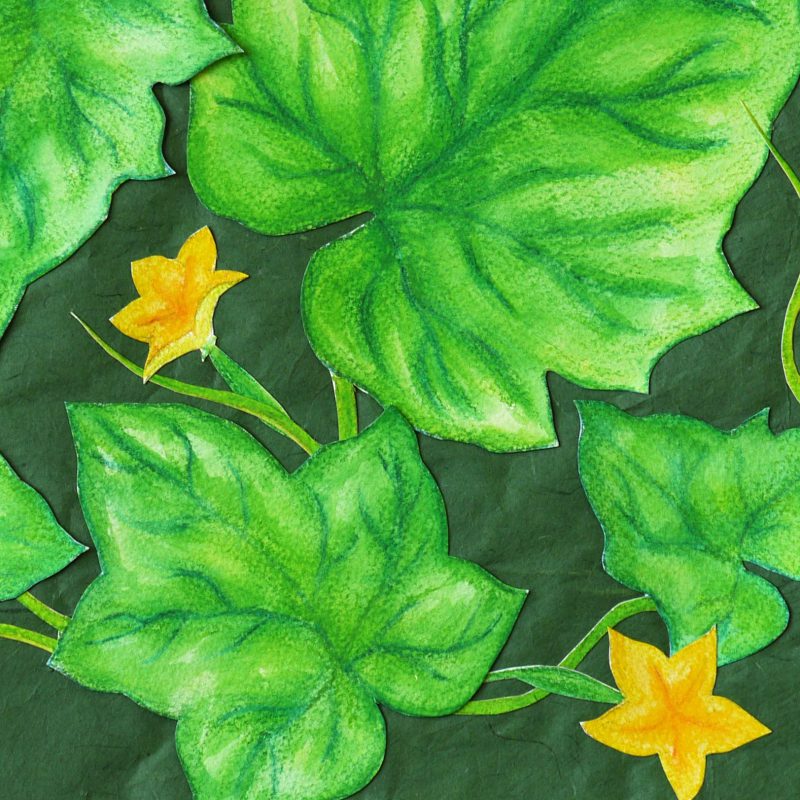
To me art is nature and vice versa. I love spending my summer days in my garden, where I can relax and forget about life problems. Although I still have to deal with another problem: the squirrels! They try to steal my tomatoes and cucumbers right under my nose! It is upsetting and funny at the same time. I could say that to me, painting and gardening are two best forms of therapy.
MAIA IATZOVA // Montreal, Quebec, Canada
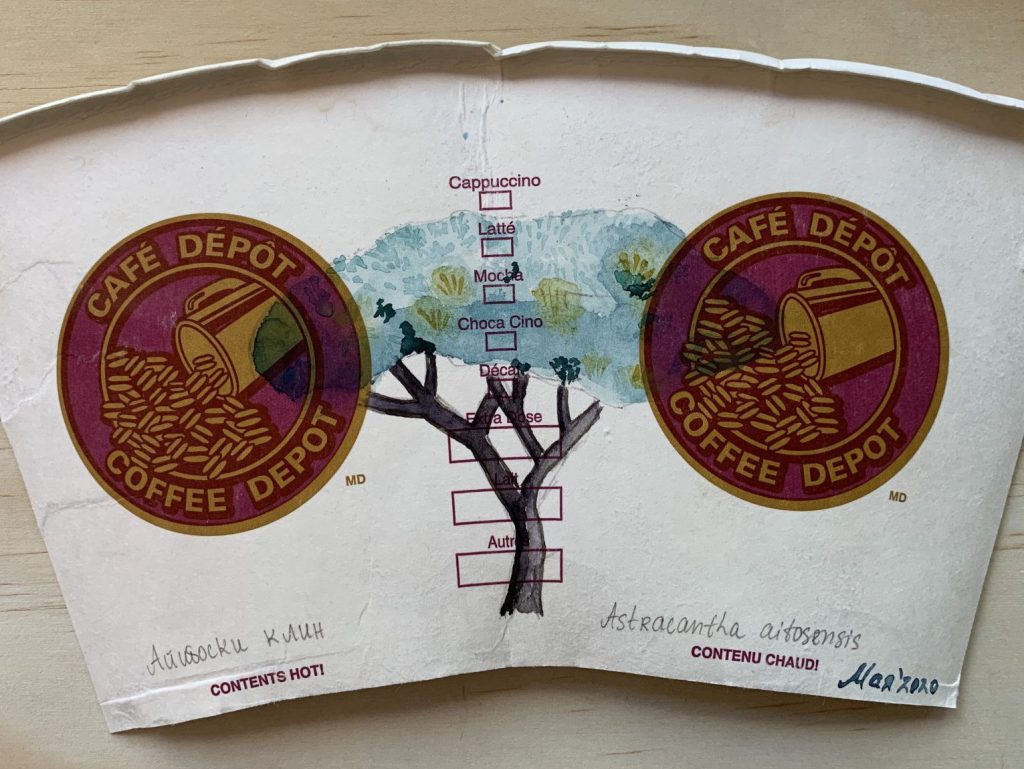
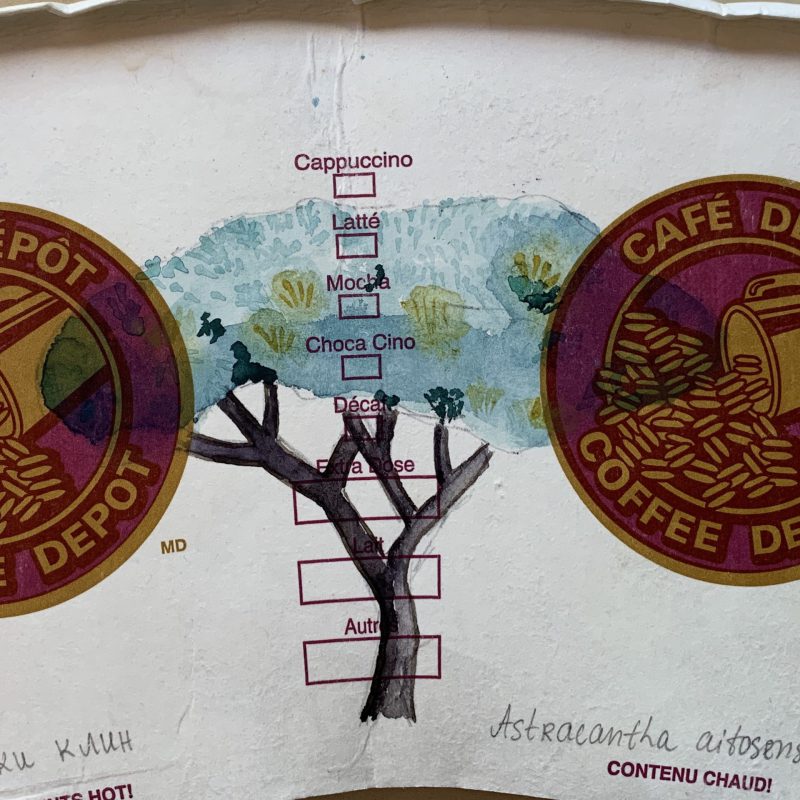
The writing I added is the name of the shrub. On the left side, it is the name in Bulgarian, as the shrub is found in Bulgaria, and on the right is the Latin name. It is an endangered species in Bulgaria, and I chose to paint it on a recycled cup.
JANETTE HAGGAR // Senneville, Quebec, Canada
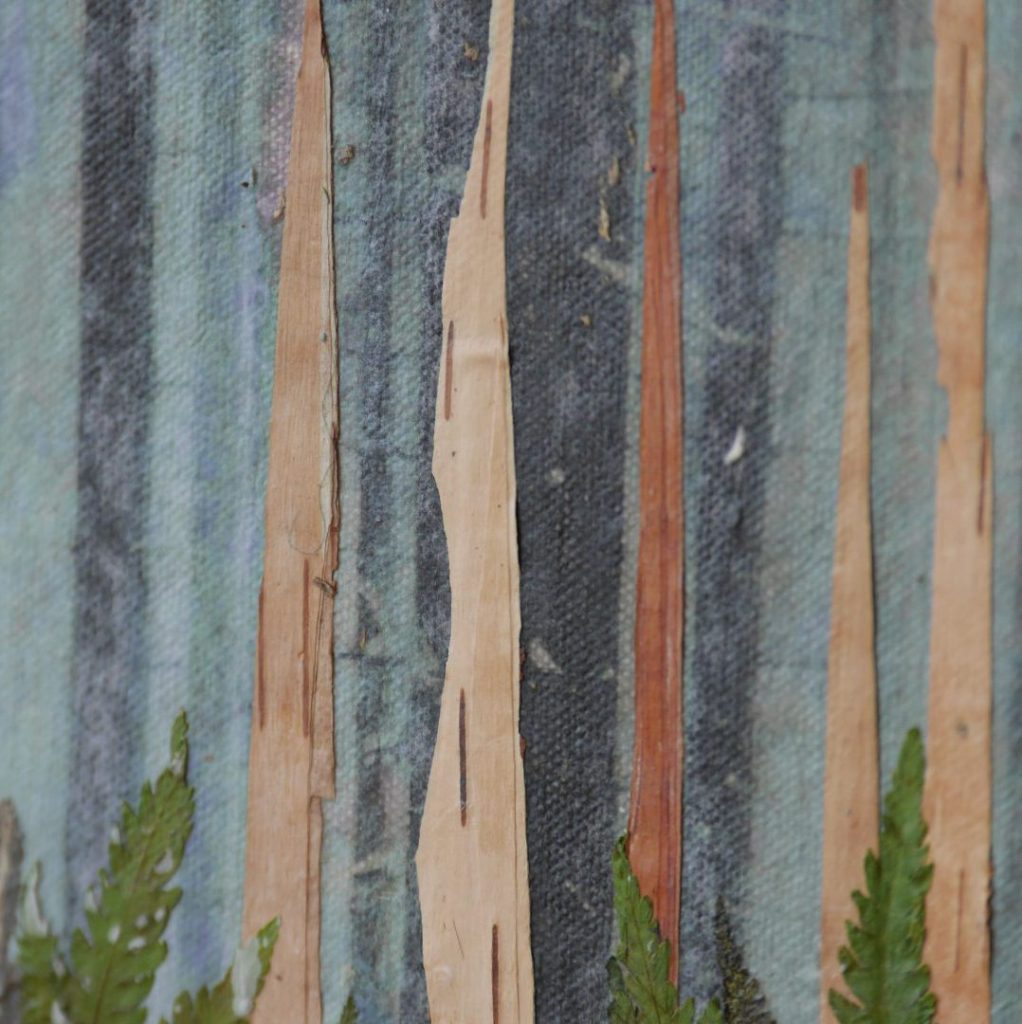
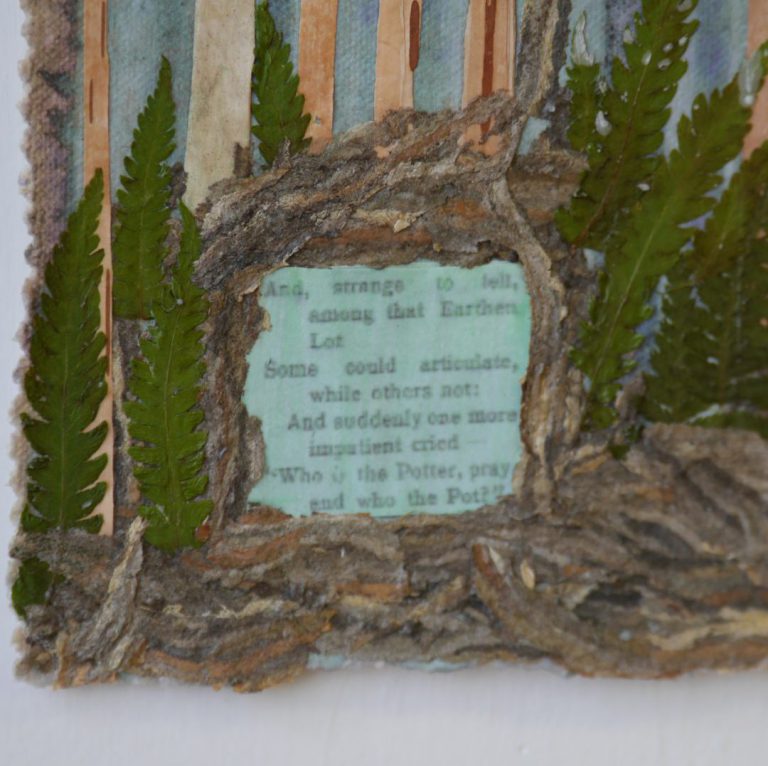
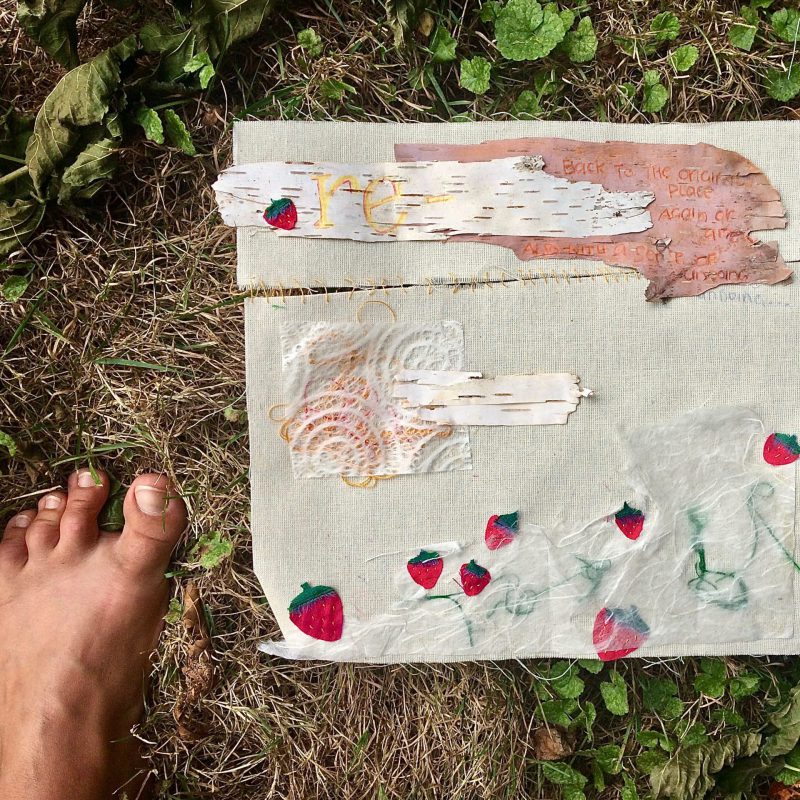
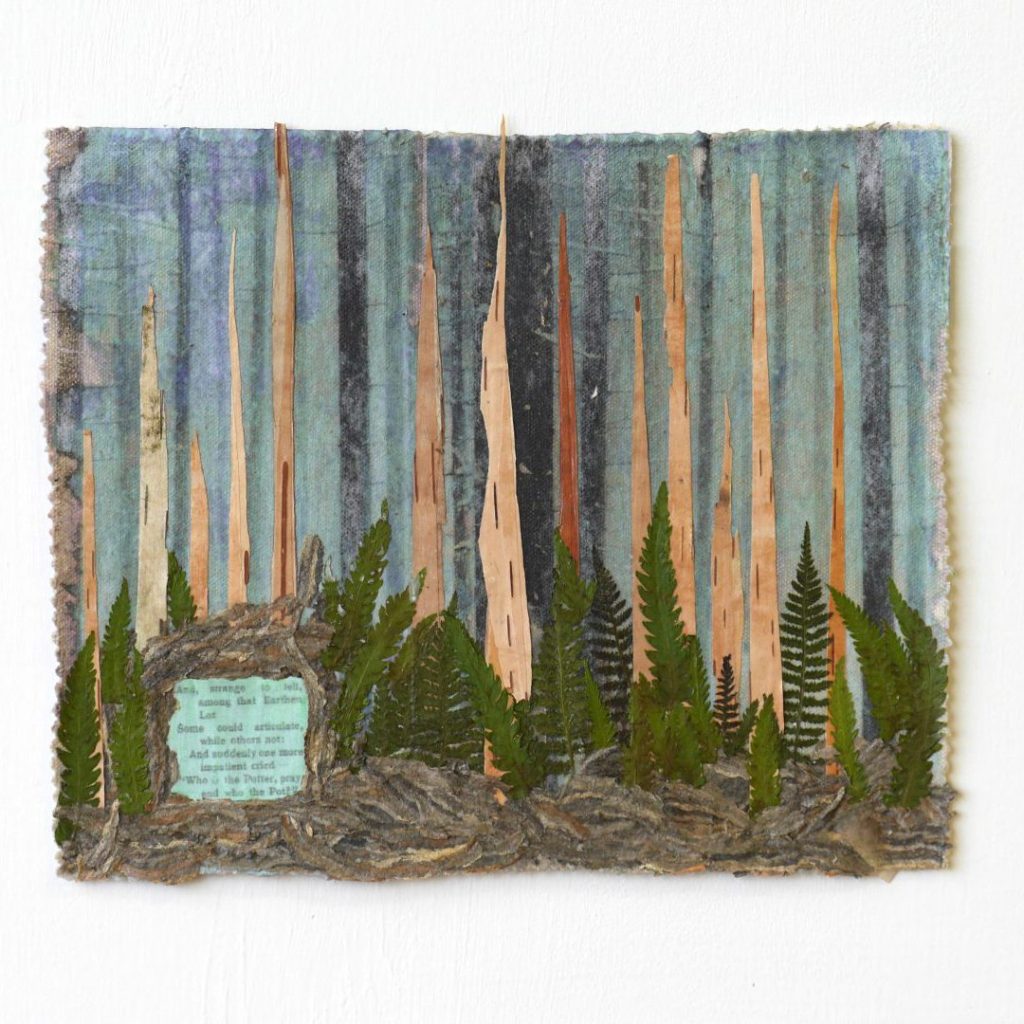
Title: Can’t see the woods for the Trees – Clarity in the Times of Confusion
Method/Materials: Collage and Acrylic Image transfer/Ferns, birch bark, paper wasp nest
In times of stress and confusion, I find solace in nature. My inner child seeks out a safe space, sheltered by bushes and surrounded by forests. It’s the beginning of pandemic lock down and the world shrinks to what is at hand, what we can touch and see. Inspired and intrigued by the words of Omar Khayyam in the Rubaiyat, I began to play with the natural materials gathered during my walks. What has emerged is a dreamscape of the forest floor, a secret den and words that have come to define my journey during this past year of COVID.
The Rubaiyat of Omar Khayyam – the Astronomer Poet of Persia
Done into English by Edward Fitzgerald
New York, Thomas Y. Cromwell Company Publishers – c. 1879
LX
And, strange to tell,
Among that Earthen
Lot
Some could articulate,
While others not:
And suddenly one more
Impatient cried
‘Who is the Potter pray,
and who is the Pot?
LORRIE BLAIR // Lachine, Quebec, Canada
What is art for? The answer to this question profoundly changed during my COVID-19 isolation. I read a Facebook post, “You’re not in quarantine, you’re on an artist’s residency.” I appreciated this positive attitude and decided to try my hand at print making. I purchased (online) a Gell plate and some acrylic paint and transformed the small space between my washer and dryer into a “studio.” There, I had a sink and about a half-metre of working space. After viewing several YouTube instructional videos, I began my monoprint residency.
The leaves I gathered from my yard and from the empty school yard behind my house served as my muse. A friend suggested an app that identified leaves, and prevented me from picking poison ivy.
One day, I gathered the courage to post one of my prints on the Facebook site dedicated to monotypes. I was surprised by the number of kind comments people left. This encouraged me to make more prints and take more chances. I felt part of this virtual community. I wrote comments to others.
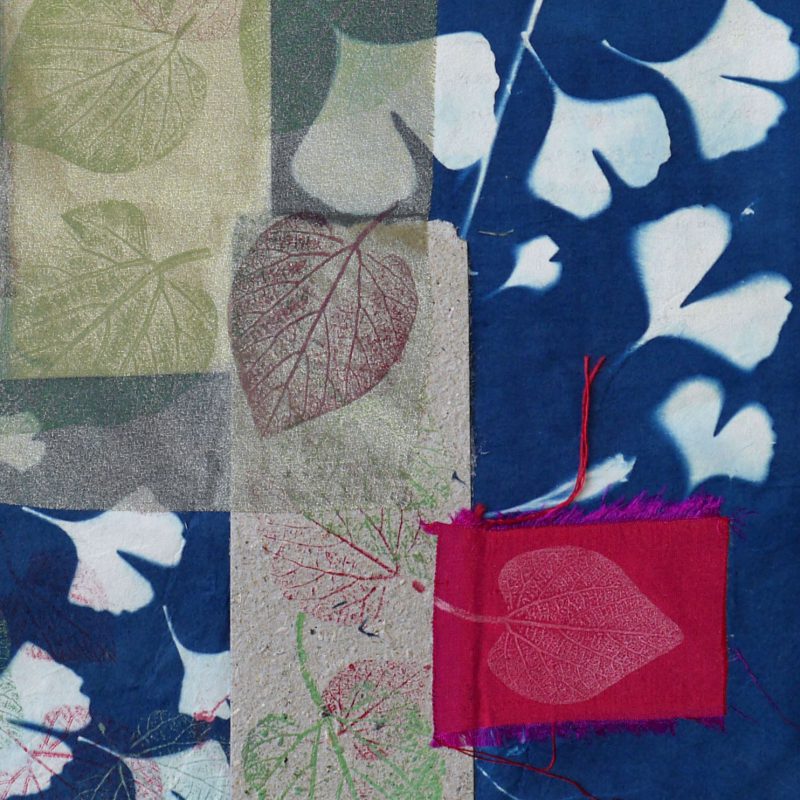
My contribution to this research features the leaves from Aristolochia tomentosa, Dutchman’s pipe. They absorb the ink, leaving a perfect ghost print. I made cyanotypes of gingko leaves, which are called living fossils. My art doesn’t address the big issues but it gives me a connection to others and reminds me to appreciate the gifts of nature during a time of isolation.
ELISE TIMM-BOTTOS // Nelson, British Columbia, Canada
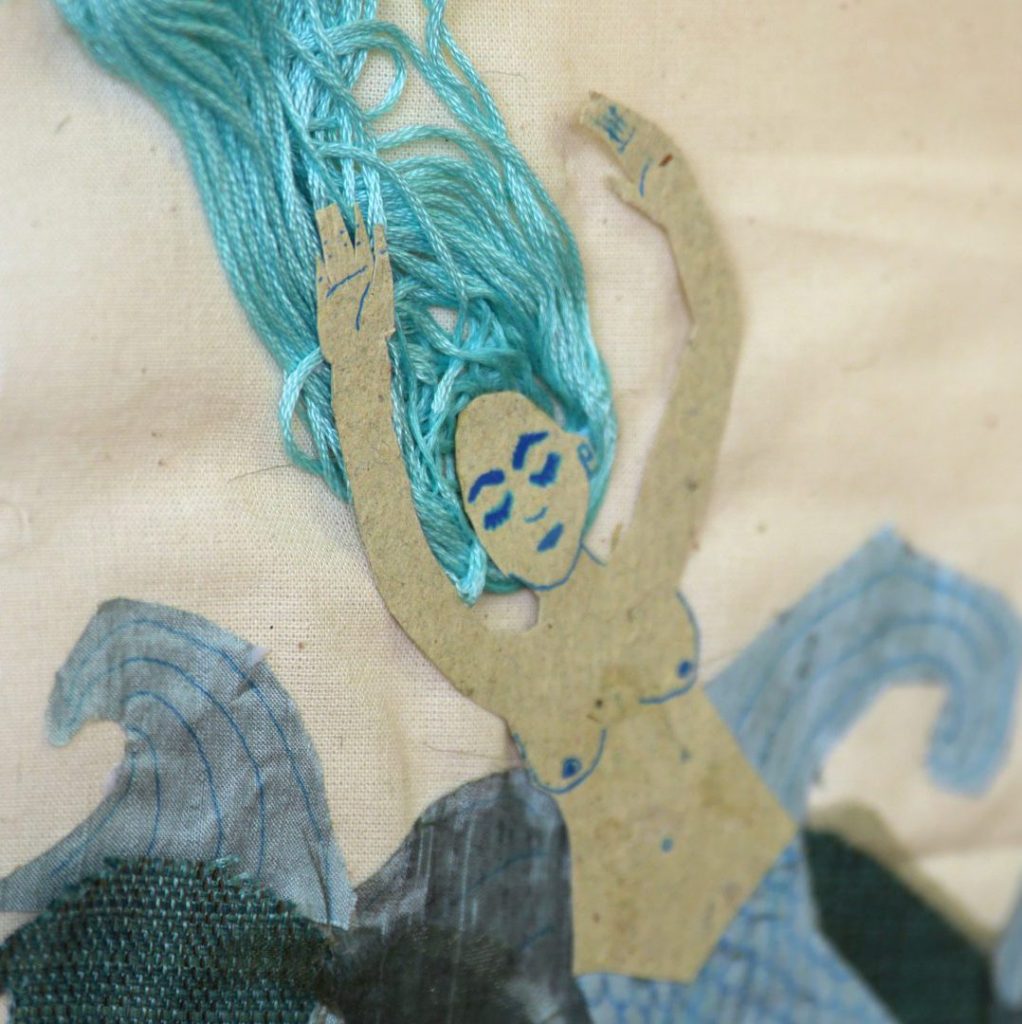
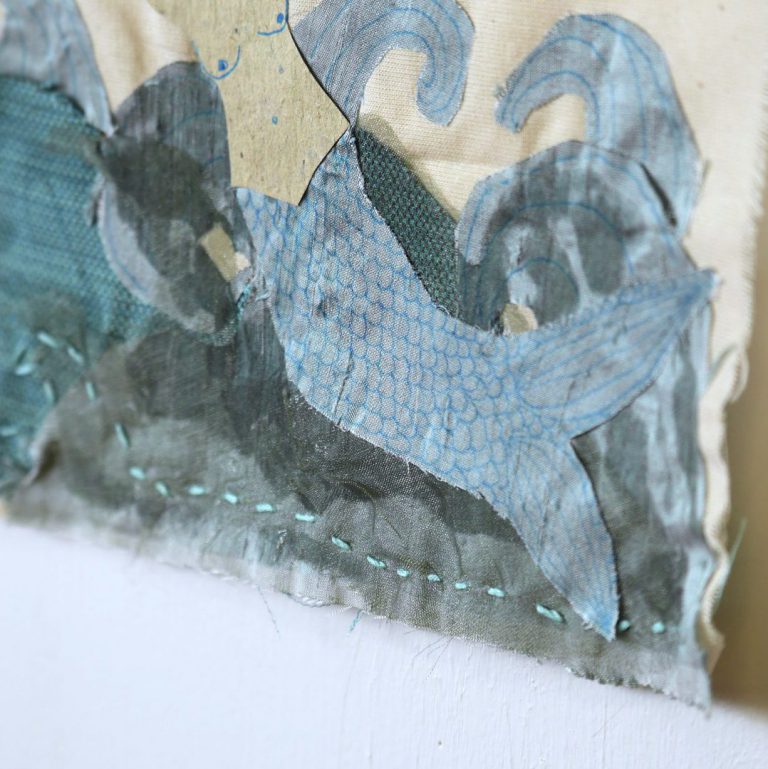
When looking at the question, ‘What is art for?’ I was inspired by the use of textiles and colours found in nature. The beauty of nature allows us to contemplate a microcosmic world, and focus on something both smaller and larger than ourselves. When we stop to see a ladybug crawl along a leaf, we are momentarily removed from ourselves. How we express that moment is our art. Art is a reflection of our own inner nature. By creating, I am able to bring sense to inner turmoil and participate in nature’s cycle of regeneration. I can make something entirely new.
To smell the ocean waves, when you cannot see the sea
To appreciate the little things, a flying bumble bee
To wonder at mighty nature’s way – it lives, it grows, it dies
To propagate a rainbow on a day of cloudy skies
LEILA REFAHI // Montreal, Quebec, Canada
Art is for …
Resonance
– the quality or state of being resonant
– a quality of evoking response
– a synchronous gravitational relationship
Merriam Webster
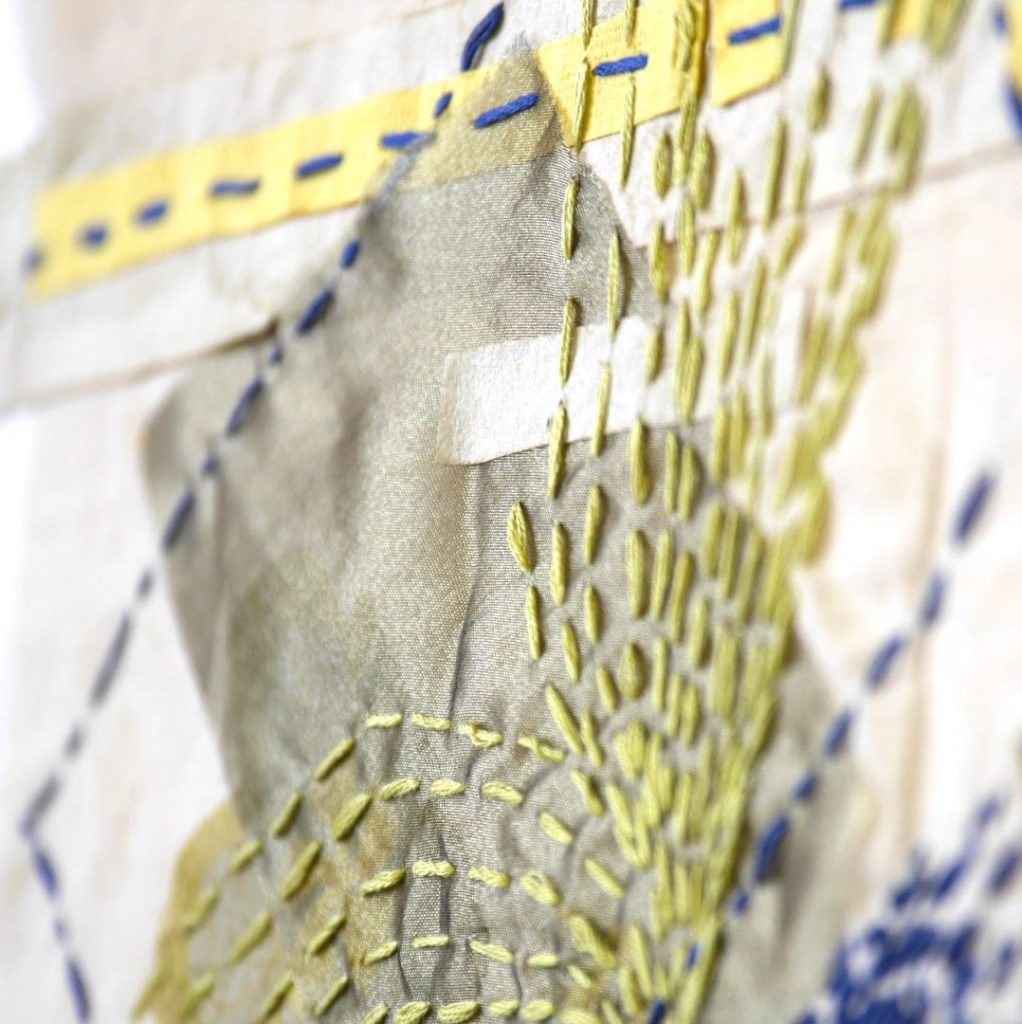
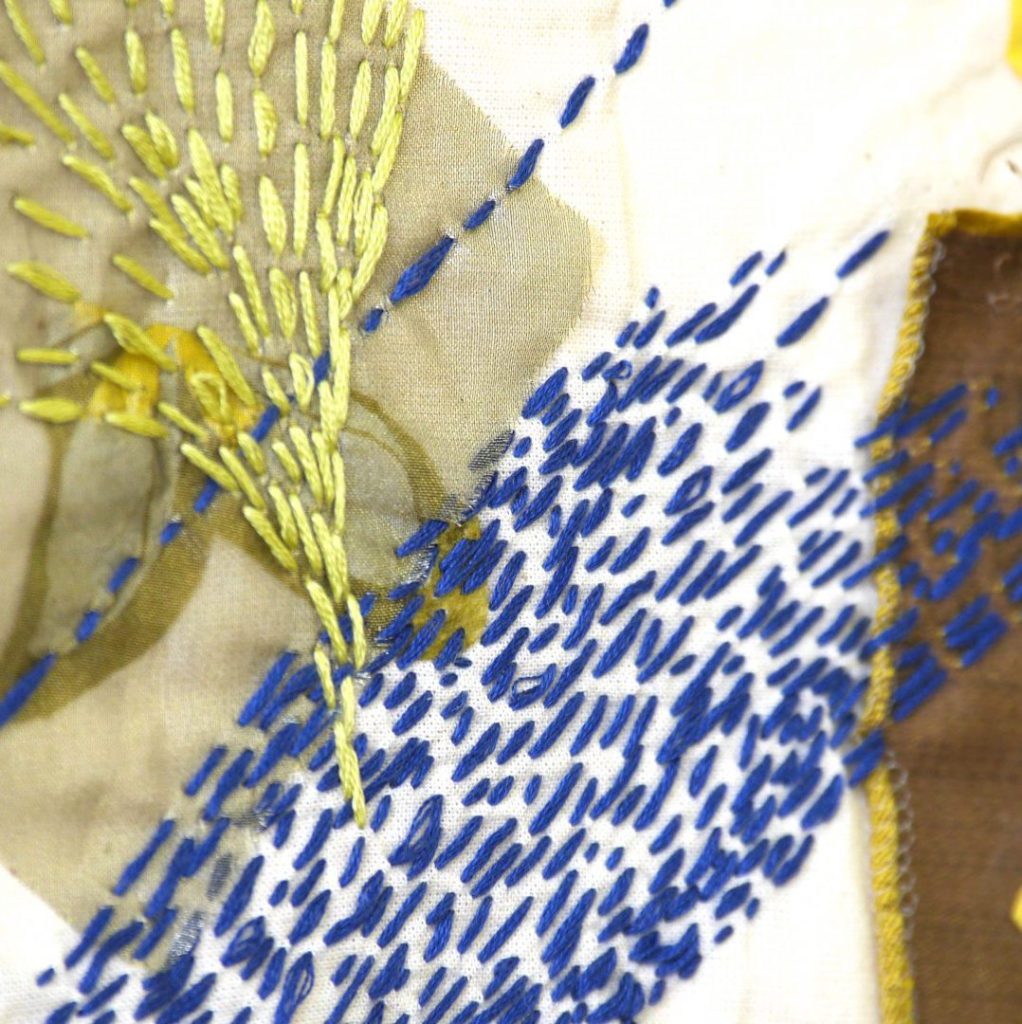
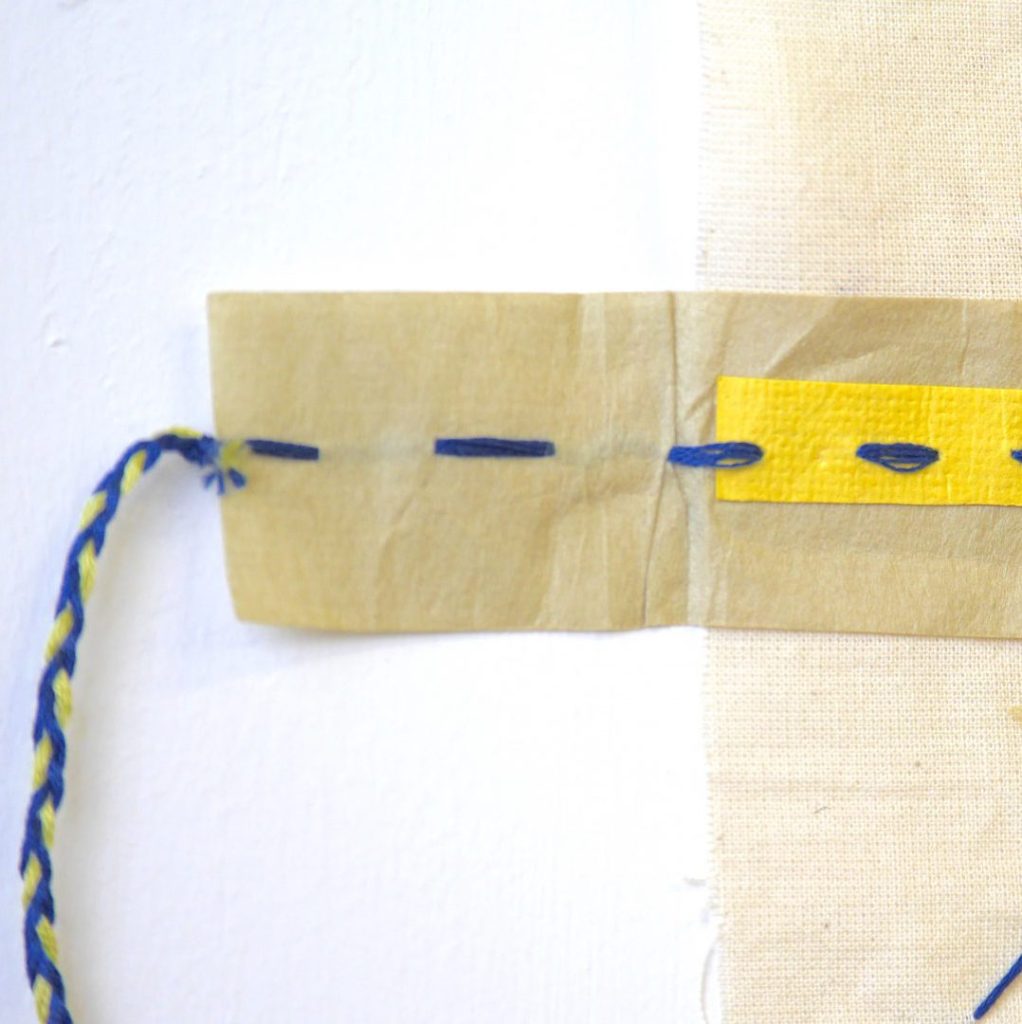
Art is for experiencing resonance. When my ideas are manifest in the materials and the way they are put together, and when I lose the sense of time passing while creating, I experience resonance.
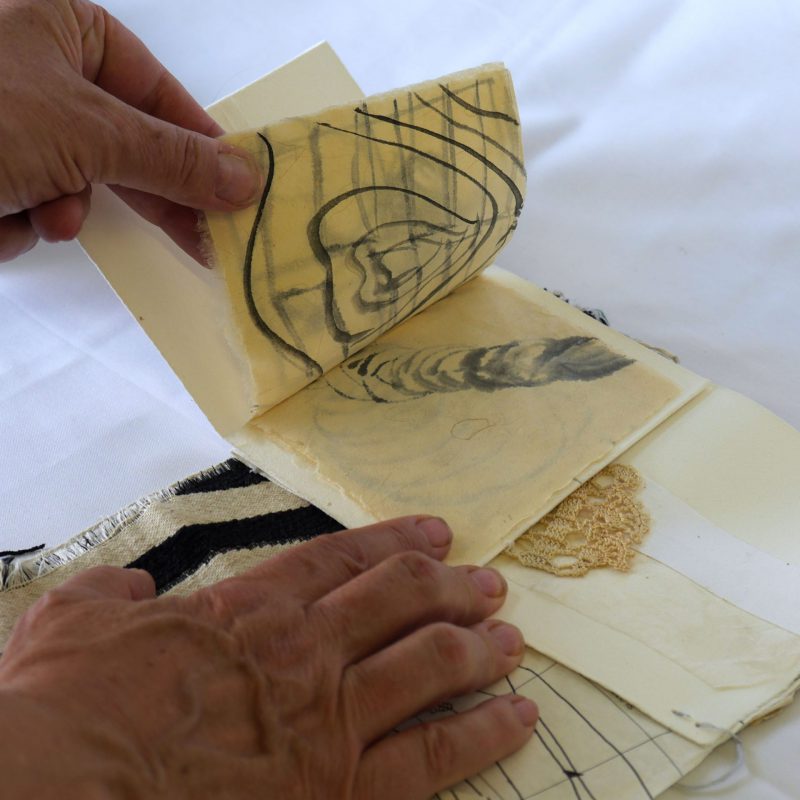
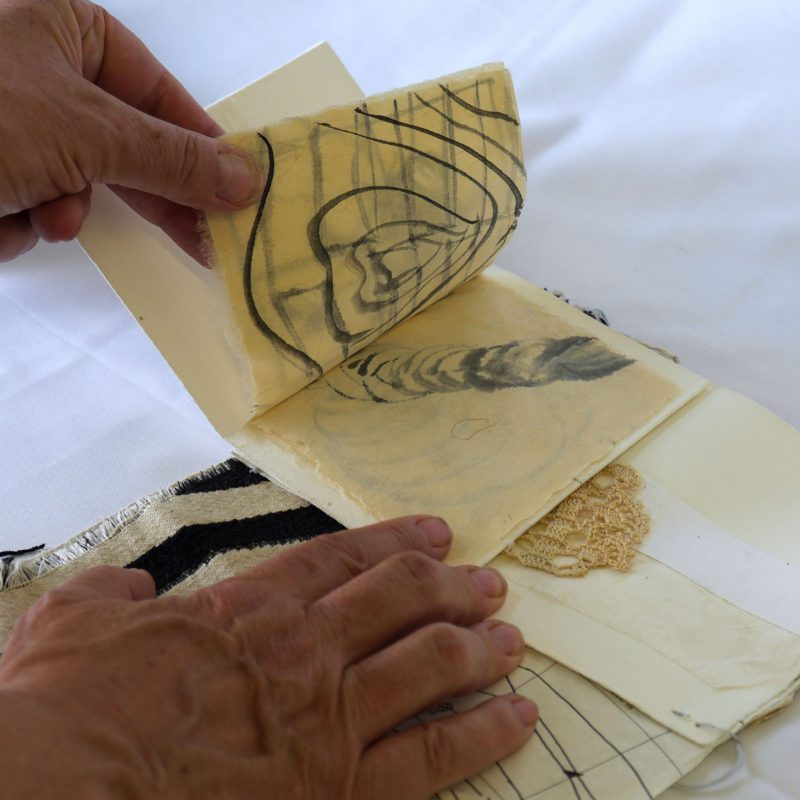
During the lockdown I sewed face coverings for my family and friends. Although it gave me great pleasure to do so, it also made me angry because we had to wear them for our safety. Suddenly, we all became fearful of a threat that we couldn’t see or fully understand. While making masks, I stopped to take photos of sights that caught my attention: a pile of fabric remnants, sunlight on the iron, a tangle of thread on the floor. I printed these on vellum and made them into a book. I wanted to show the beauty in the repeated domestic gestures that are often unseen and underappreciated, tucked away in the pages of the everyday.
AMELIE BRINDAMOUR // Montréal, Quebec, Canada
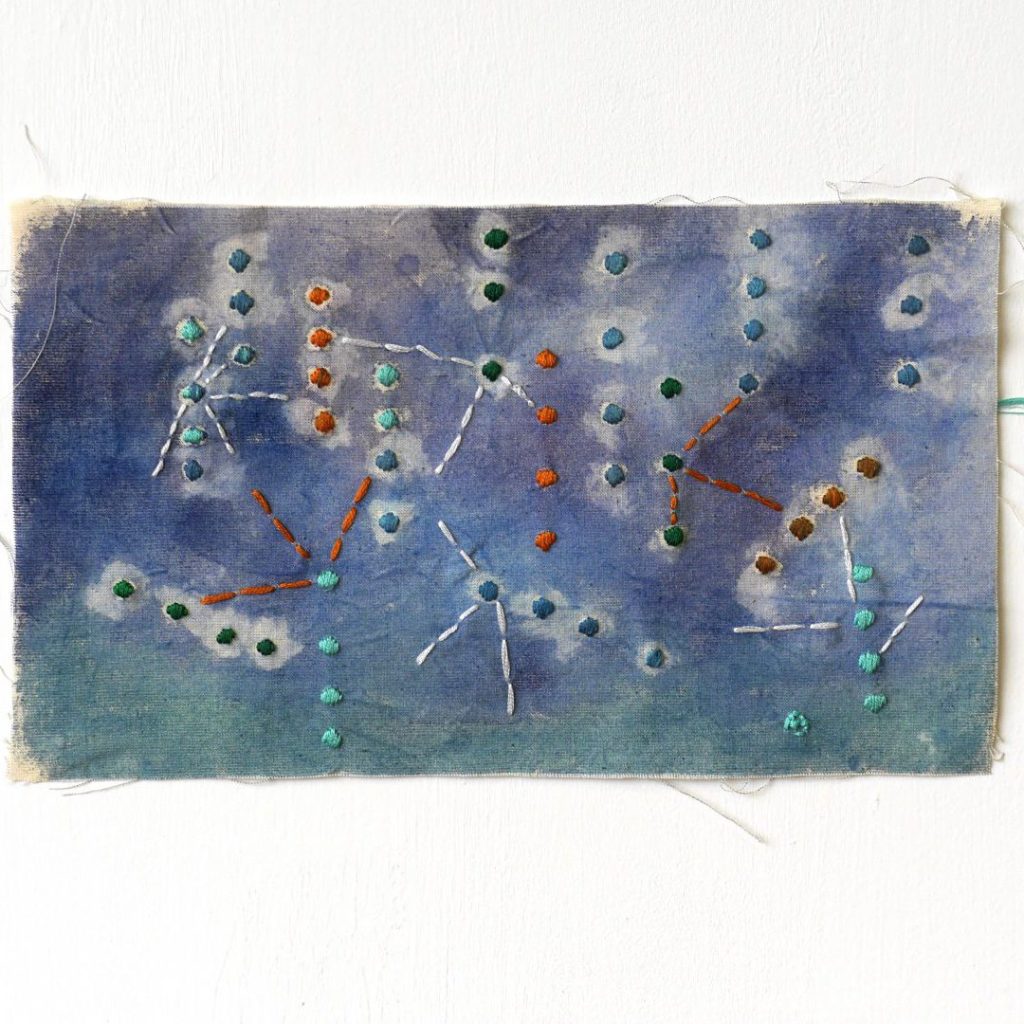
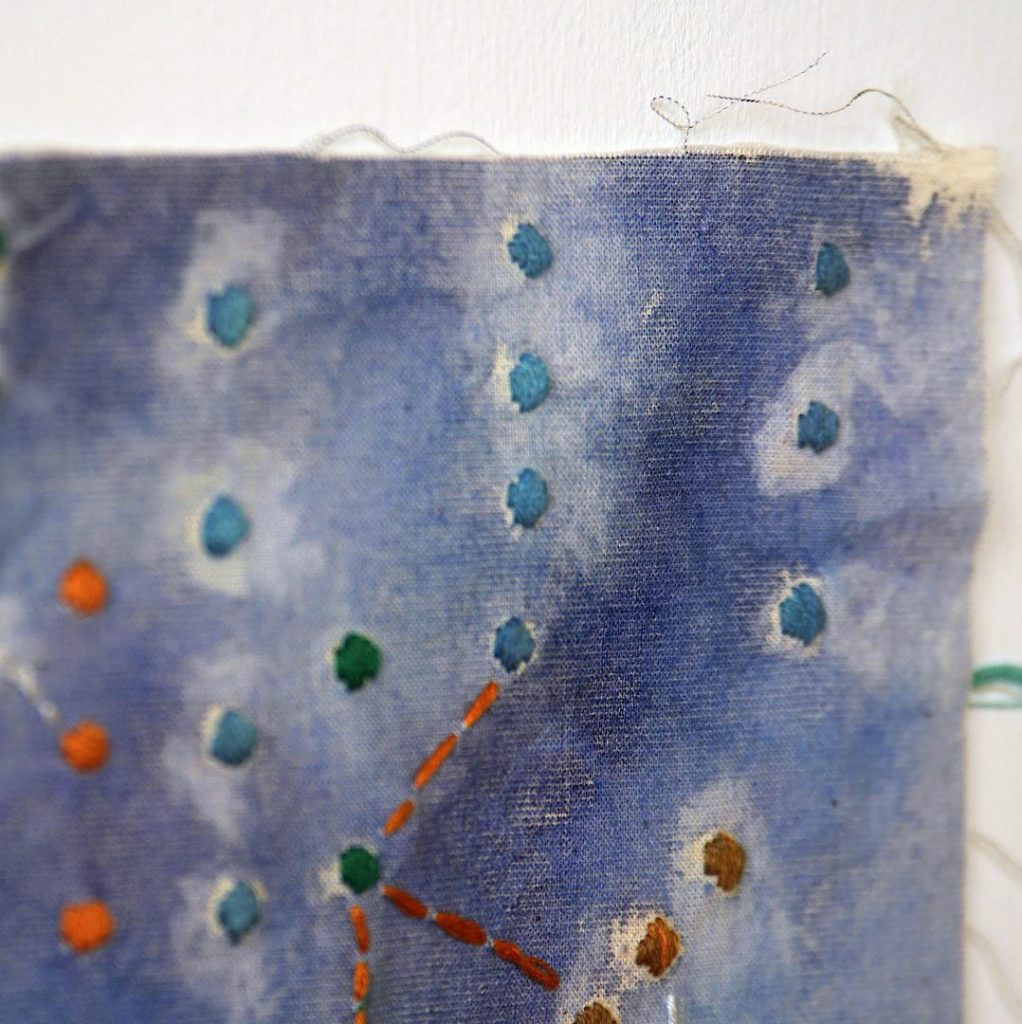
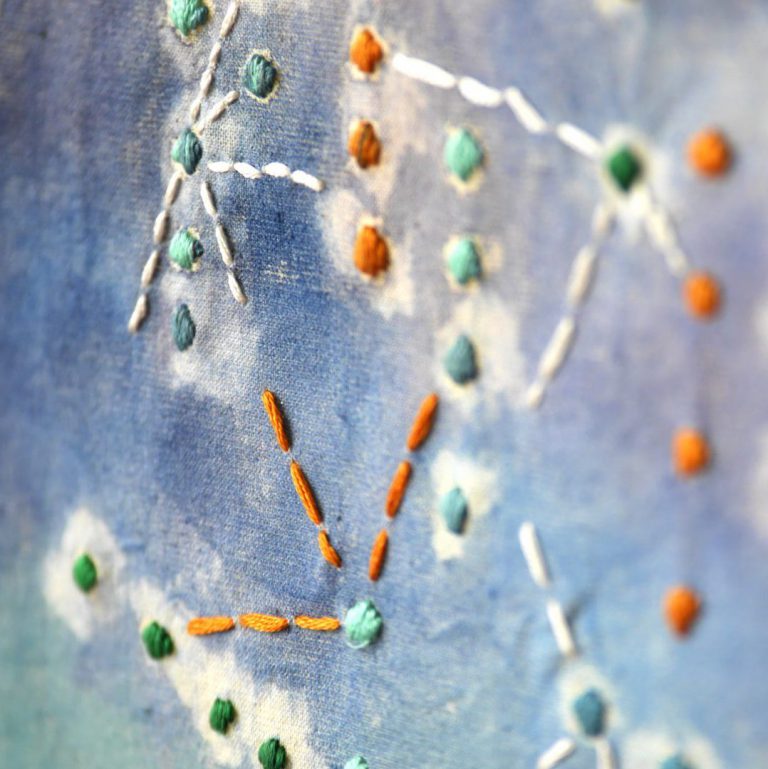
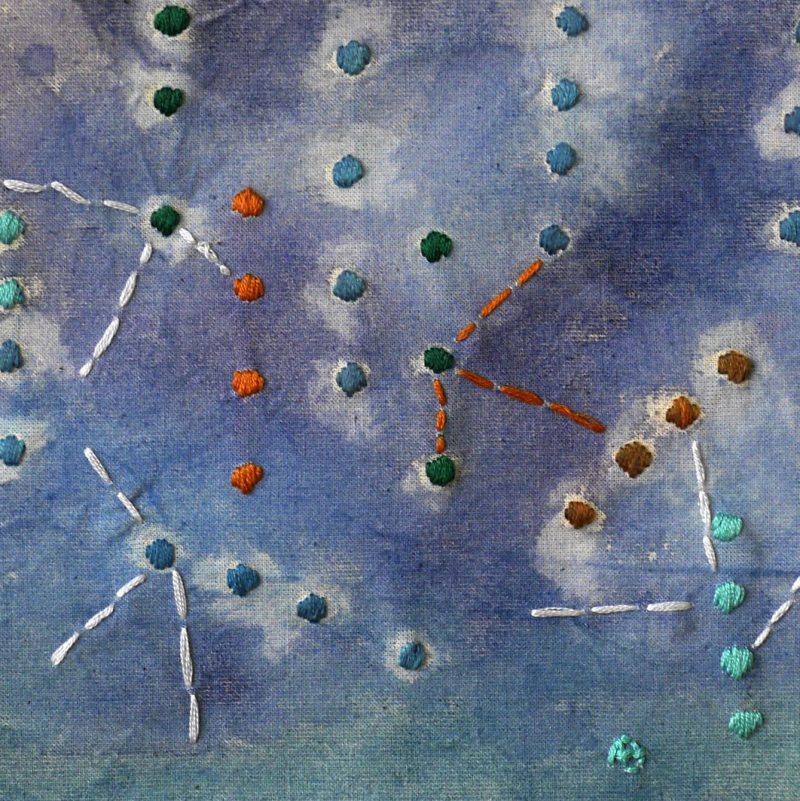
For my piece I was inspired by the courtships of cypridinid ostracod, a tiny bioluminescent sea creature. Males of the species employ different patterns of blue light pulses to attract females, first in a stationary phase, and then they spiral vertically up and down with more rapid pulses. Other males from the same species synchronize in similar rhythm, producing a show of luminous blue dots in the depth of the ocean attuned to one another. I found this image mirroring the way one’s artwork – sculpture, photography, community projects, public performances, etc. – can act as a signal to other viewers, artist or not, and prompt a response in the form of a creative action. This is a reminder that we are all signals to one another.
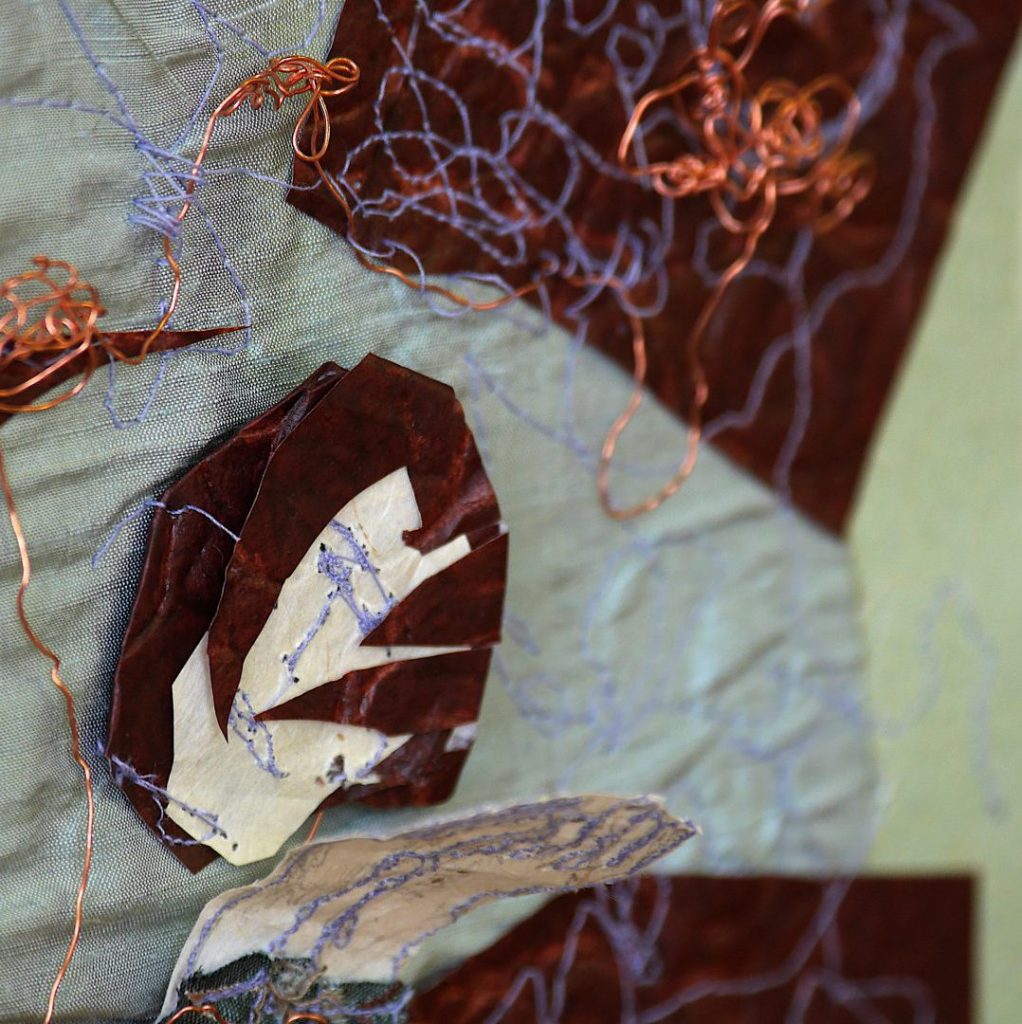
JUDITH BAUER // Parrsboro, Nova Scotia, Canada
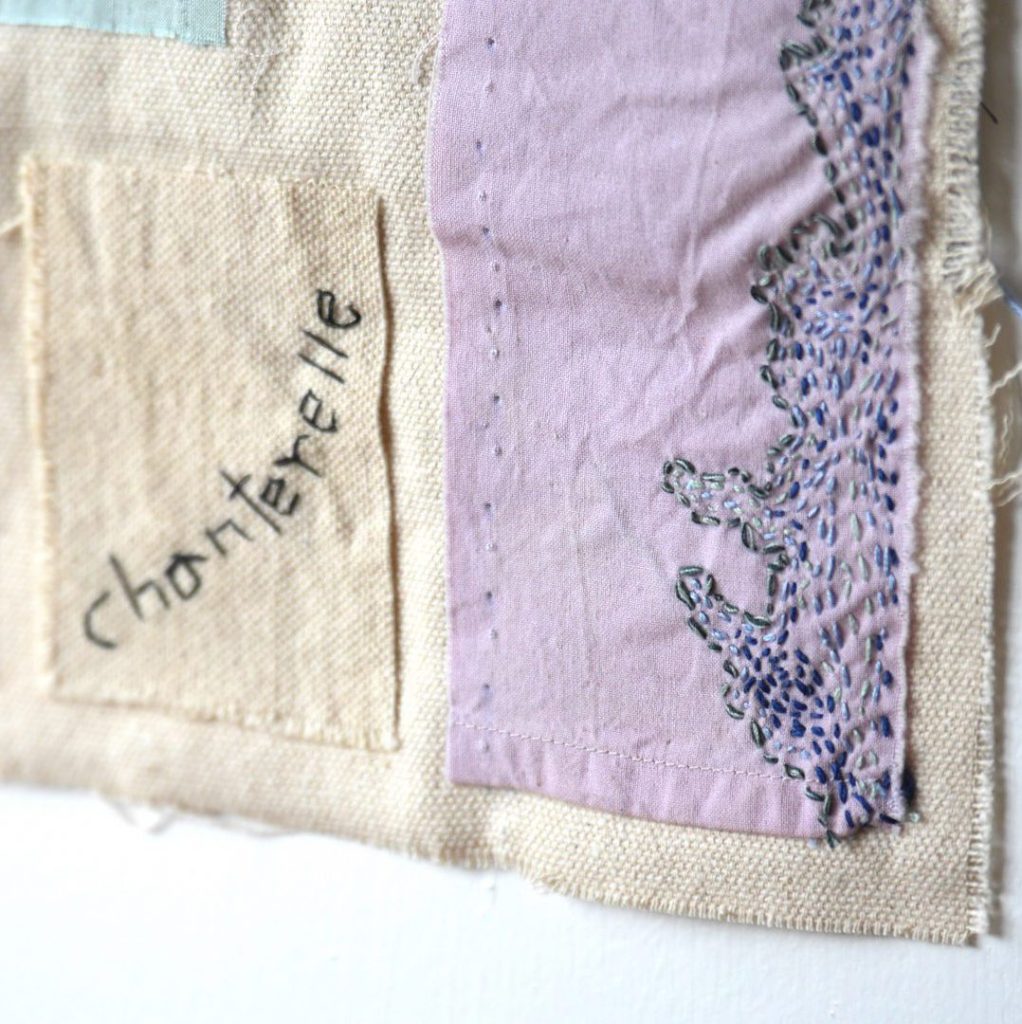
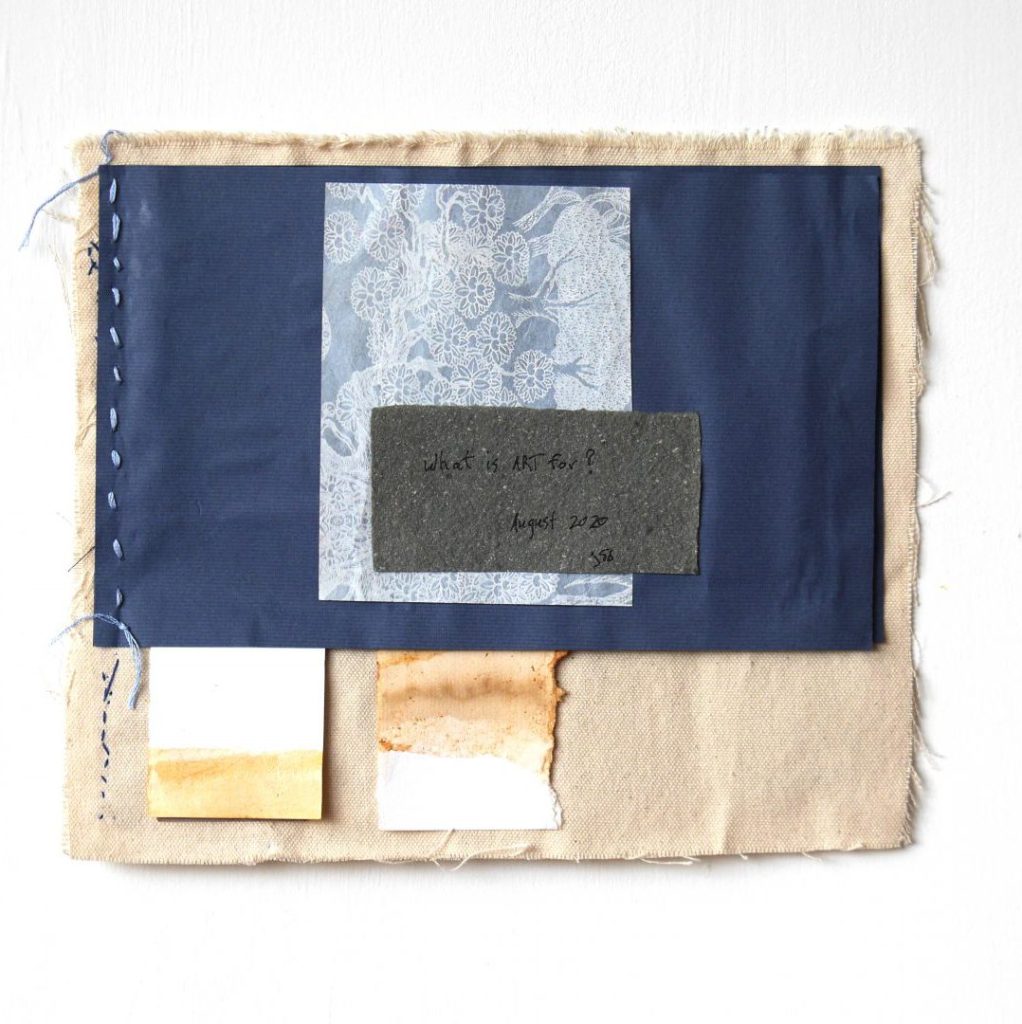
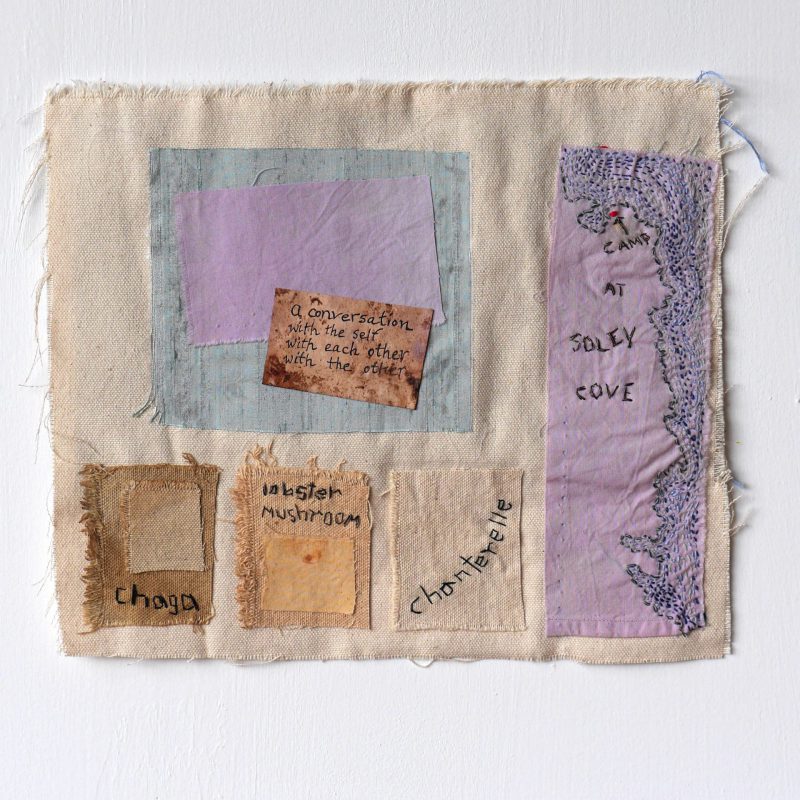
Art is for connecting – with the self, with each other, and with the other. This is true during pandemics, revolutions, war, and peacetime.
We recently bought a piece of land where we have been camping out in a tent whenever weather permits. Like art, it provides respite. As a lifelong forager it was natural for me to make use of what is in my own backyard. The swatches labelled “lobster mushroom,” “chaga,” and “chanterelle” were dyed using those mushrooms found on the land at Soley Cove. The pinkish fabric was dyed with raspberries and blackberries from the same place.
LUCIE LEDERHENDLER // Brandon, Manitoba, Canada
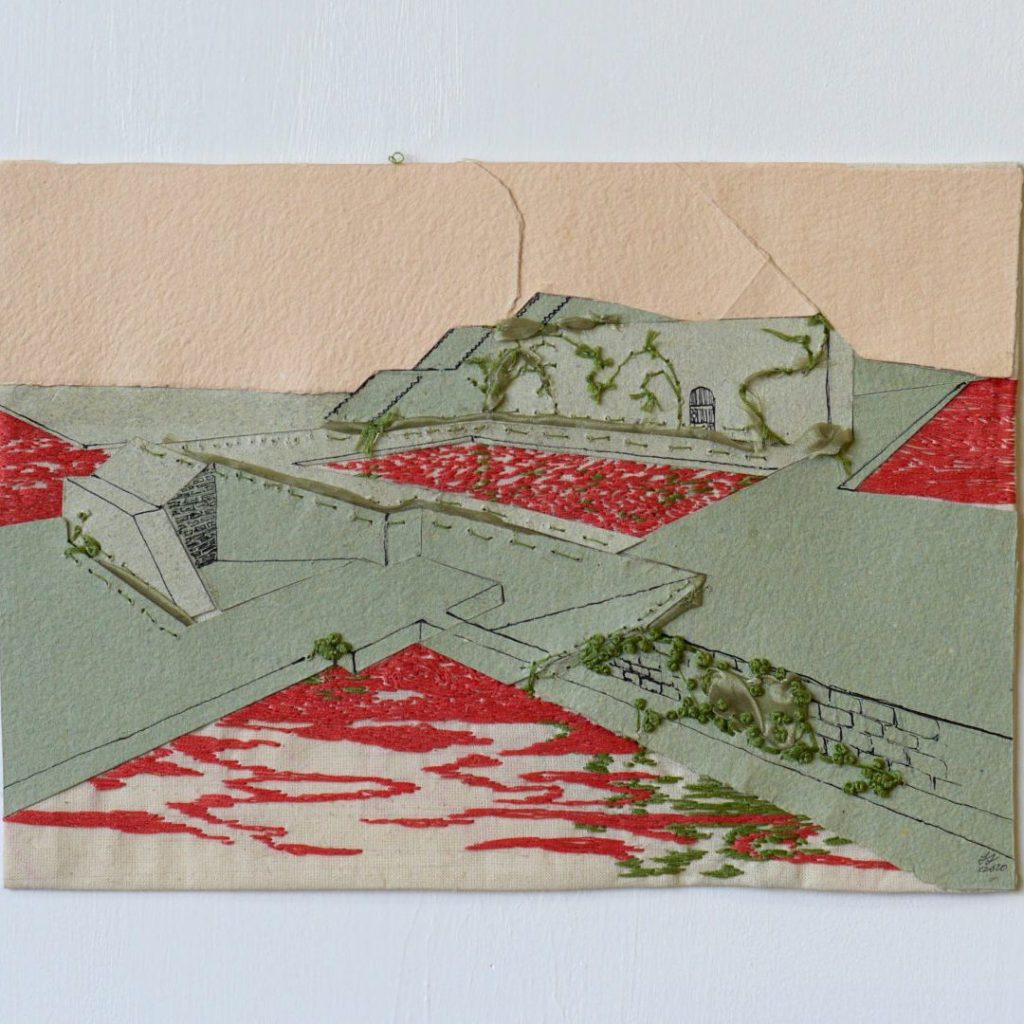
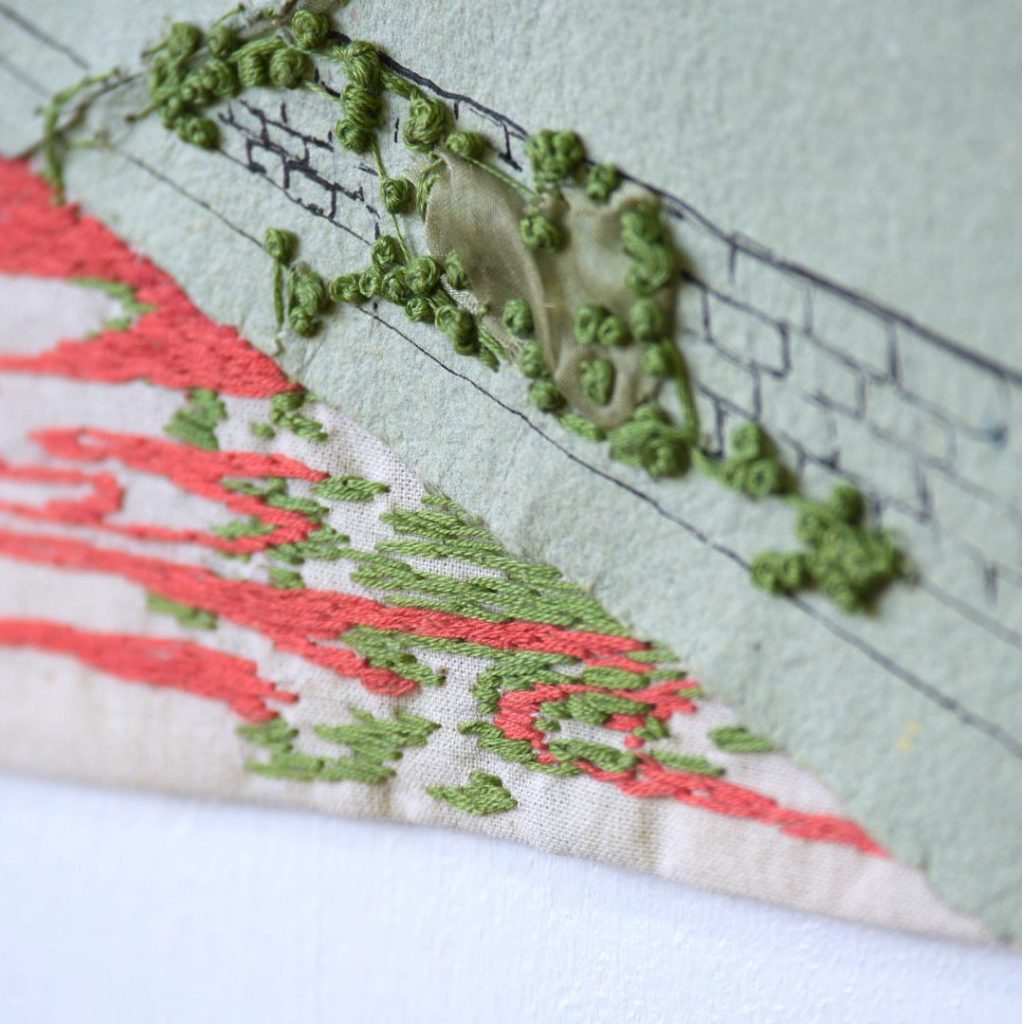
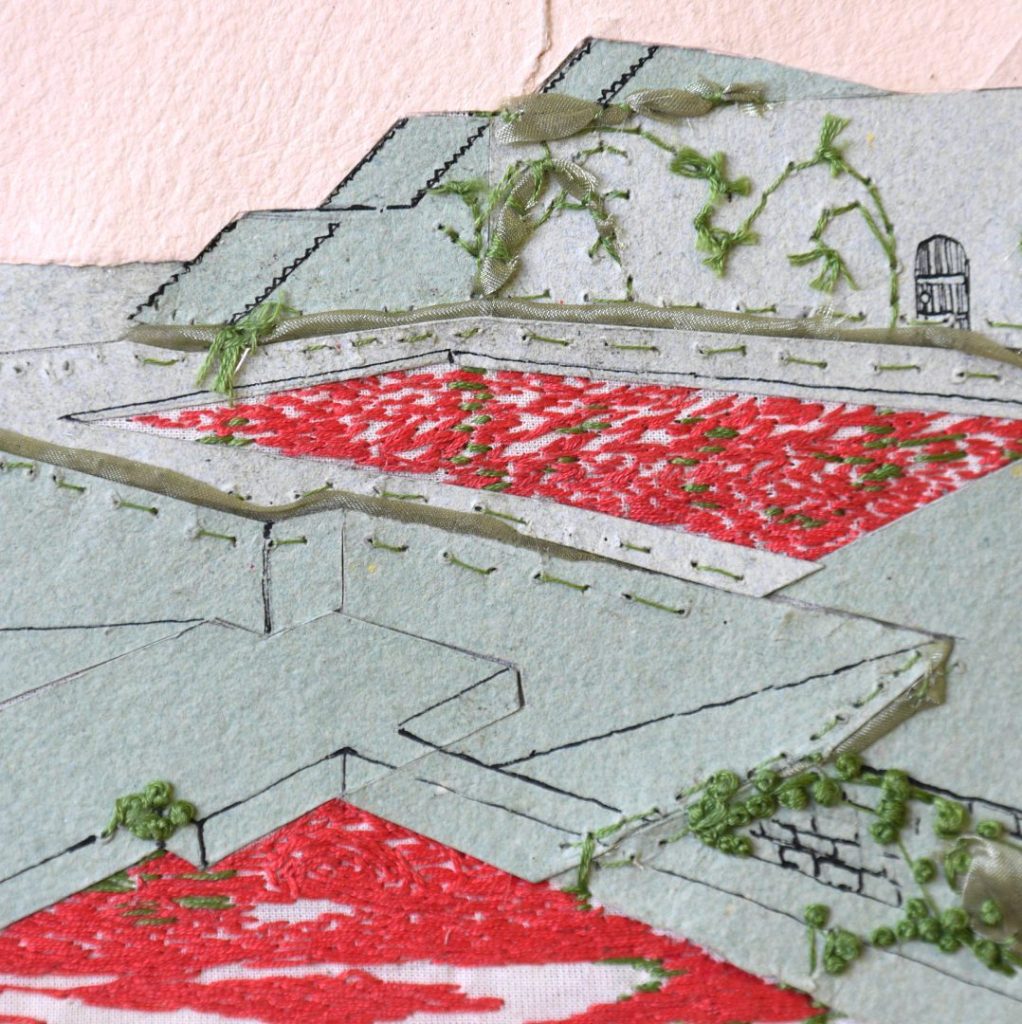
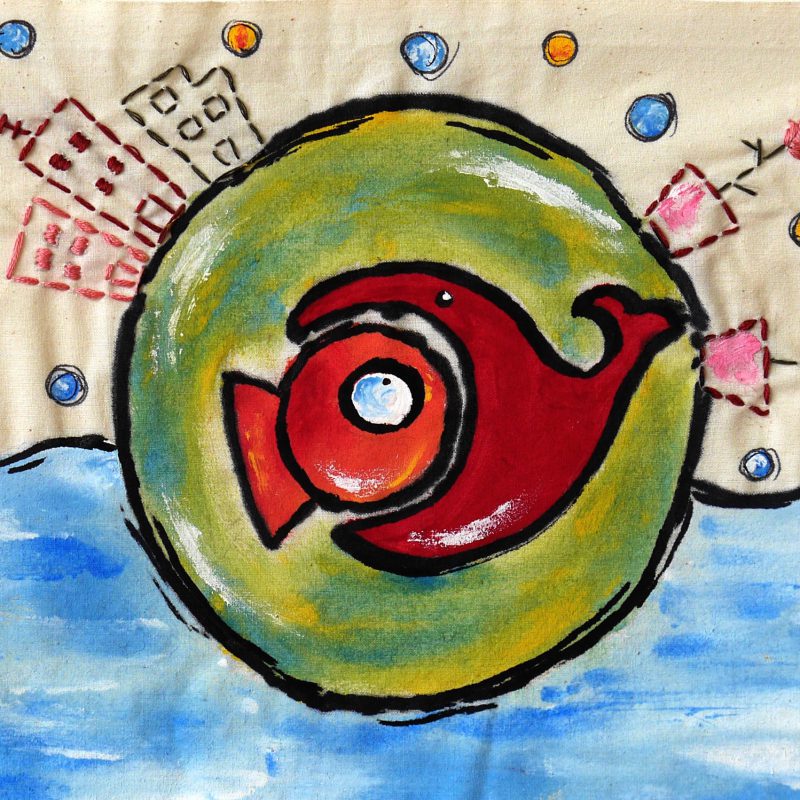
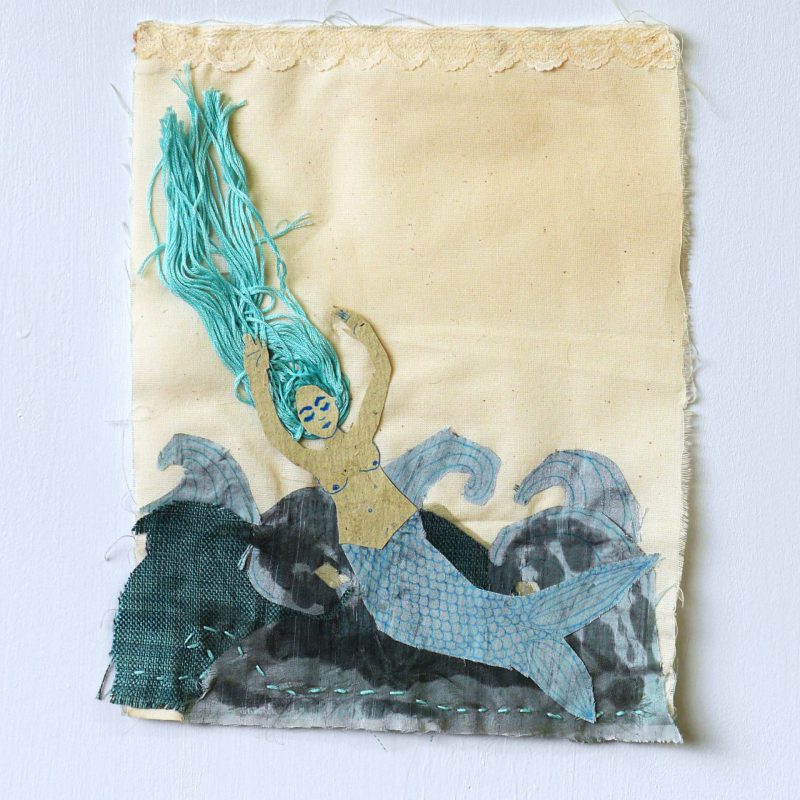
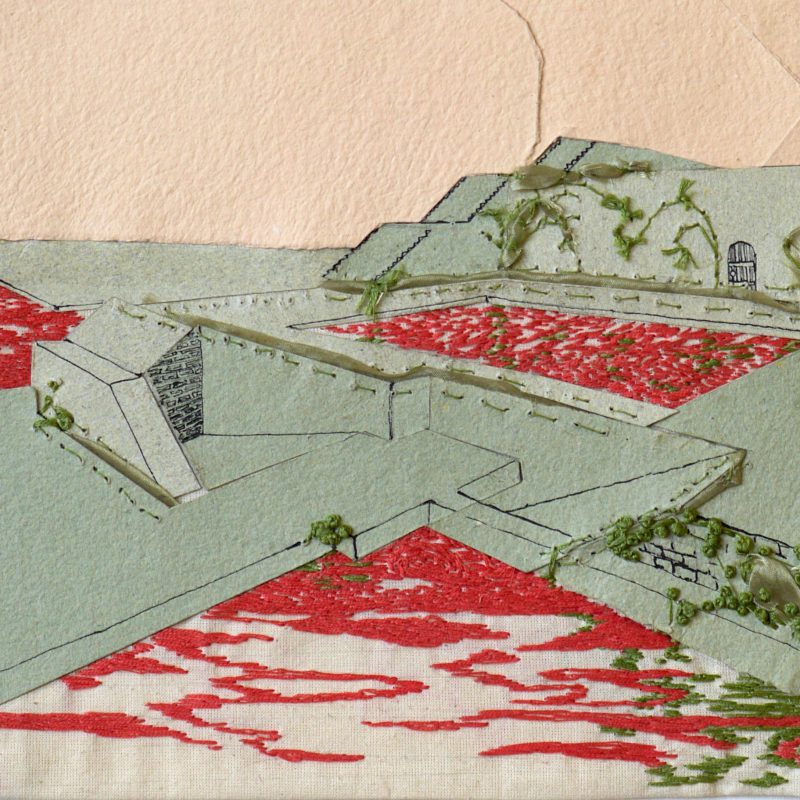
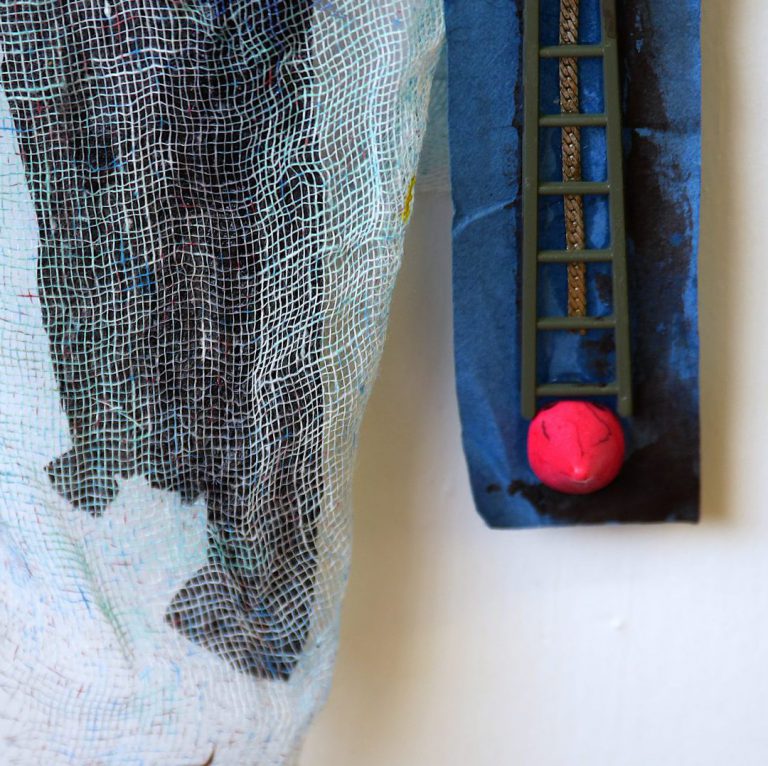
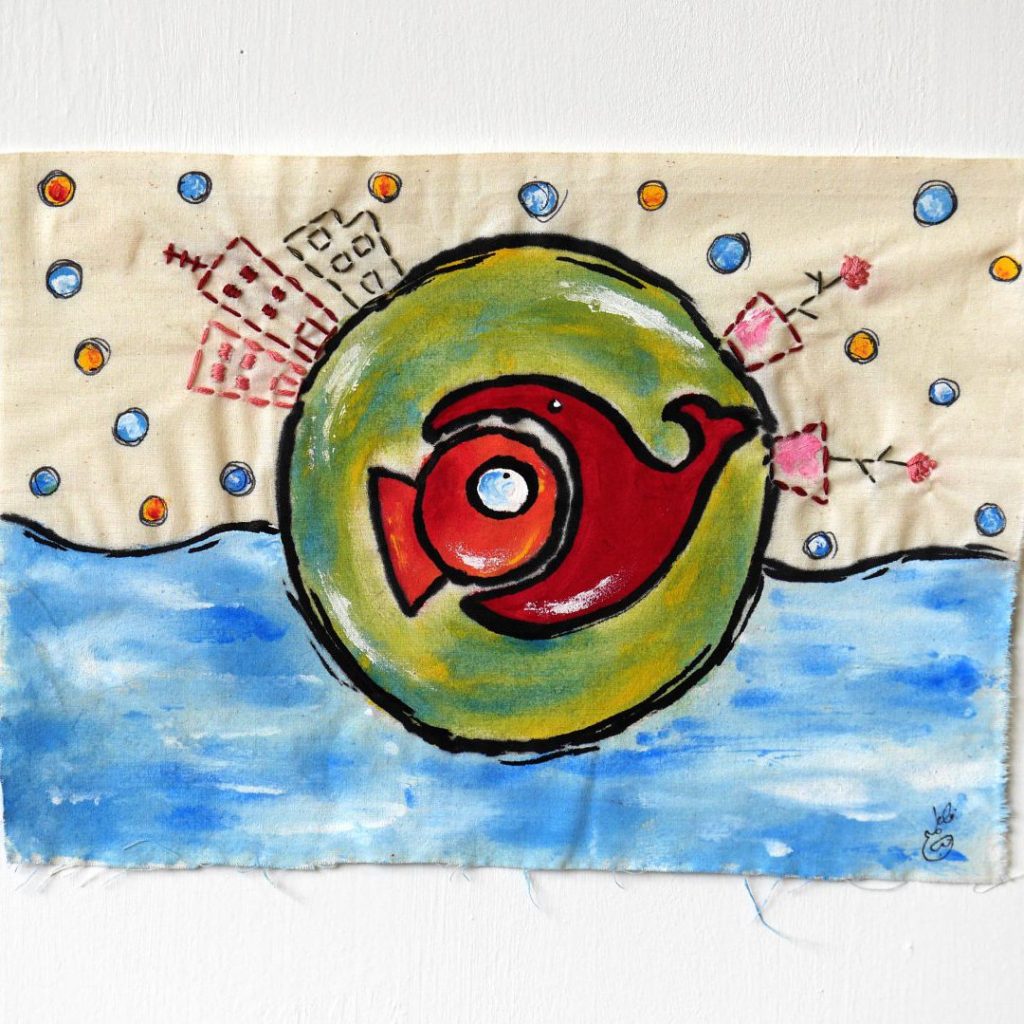
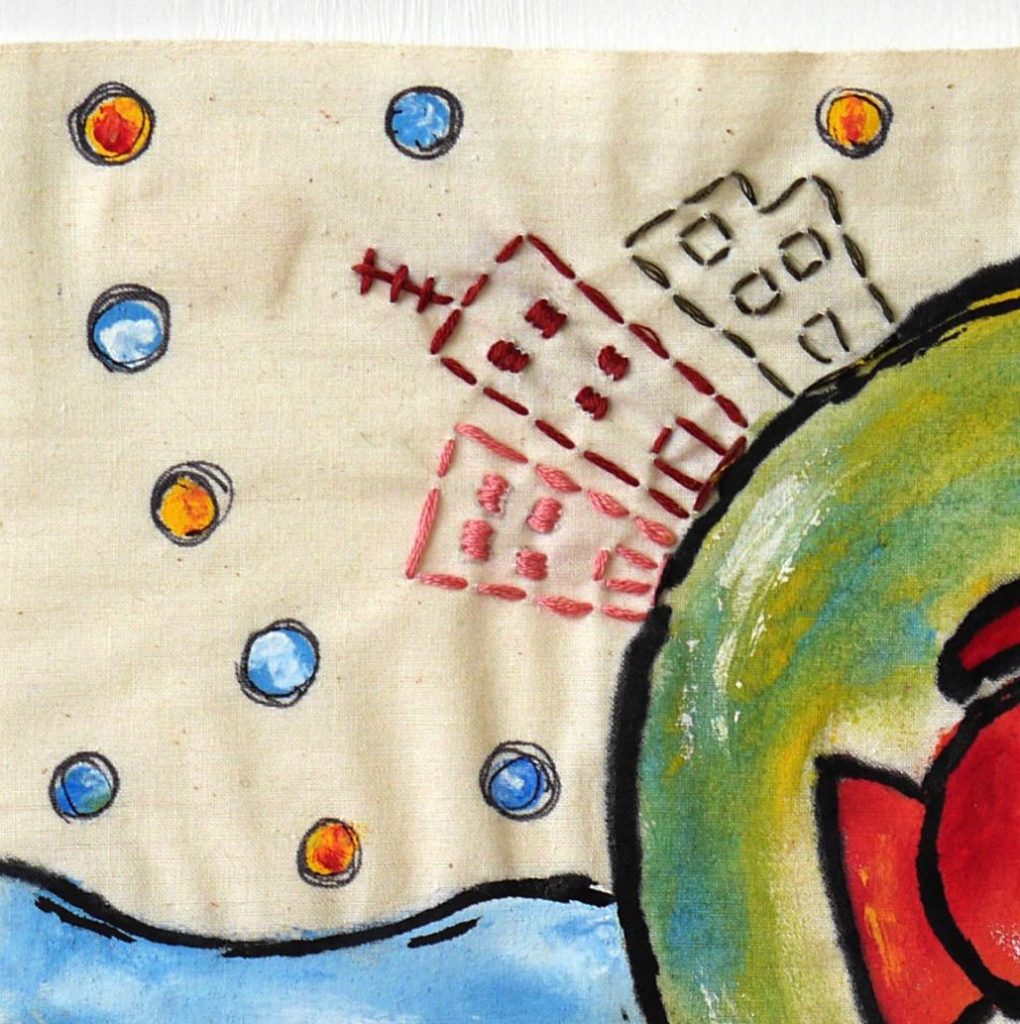
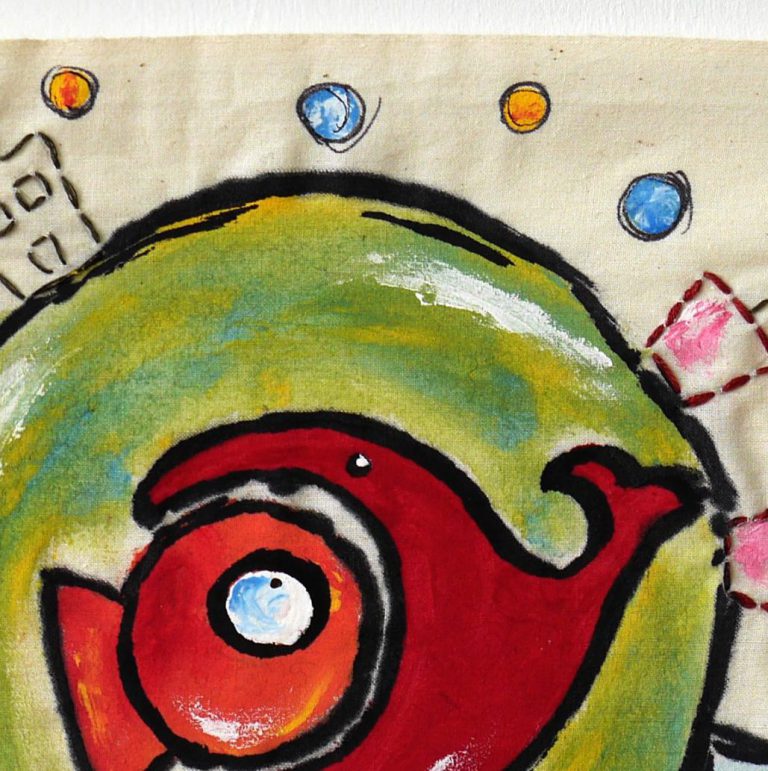
When I dream, I dream in impossible architectures. Structures and landscapes unfold with the storylines—chutes, ladders, and barriers that cannot be and yet are. Often, I stumble into what a dear friend of mine calls “water temples,” which take the form of baths, pools, or oceans. In the solitude of my dreamscape, I immerse myself and glide with the freedom of a fish. This is my proposition: art is for expressing the utterly inconceivable.
* A team of international researchers came to this knowledge through surveys with participants about their mental health. They found that when lockdowns prohibited outdoor activity, a view out the window was crucial to combating depression and promoting resilience. Direct access to the ‘blue and green’ outdoors was crucial once that was permitted. For more, see Pousa, S., Borja, A., Fleming, L.E., Gómez-Baggethun, E., White, M.P., & Uyarra, M.C. (2021). Contact with blue-green spaces during the COVID-19 pandemic lockdown beneficial for mental health. Science of the Total Environment 756, 1-12.
**This term was coined by an international group of scientists who urged that this time be used scientifically and productively to study humans’ impact on wildlife, in a ‘Comment’ piece published in September 2020 in Nature, Ecology and Evolution.
***See the article above, page 1158.
**** For an enumeration of the top 15 catastrophic events linked to climate breakdown, see the December 2020 report, Counting the Cost: A Year of Climate Breakdown, by the UK-based Christian Aid organization.