The pandemic confronted us with ourselves, forced us to be in a little explored space, our body, mind and spirit. I also think it opened like a new window. The confinement forces us to look, to search, to explore. Some of us have cracked inside, we have had to pick up broken pieces of the floor, of what we were, what we thought we were. We have dug out our oldest memories and learnings in this time. We have searched our experiences, our fears and wishes to try to rebuild a place.
A place that allows us to look again. This old and broken that we have found is not a waste, it is what we have been, neither good nor bad, it is what we were. But all this material is not a waste, it is matter and pure energy that can be reconstructed to create a new frame of a new window, that gives us indications of the past, but that allows us to see, explore and open our gaze again to a new horizon. Art is that framework from which to look, our creativity is the key for our imagination to build new landscapes.
Marycarmen Arroyo M.
2020-21 has been a year of tragic deaths and exceptional injustice: the pandemic conditions have provided fertile ground for devastating acts of cruelty and racism. The toll from COVID-19 is extreme and growing: Canada is poised to surpass 1 million total cases shortly,* while the number of cases worldwide adds up to 128 million.** Those of us in affluent countries in Europe and North America seem to be in a race between the galloping spread of more contagious variants and vaccination programs that can seem inequitable and haphazard. In Canada, inoculations began with the most vulnerable people in December 2020 and is scheduled to be completed later this year. Our Prime Minister Justin Trudeau has promised that all Canadians who want a vaccine will be fully inoculated (usually two doses) by September 2021.*** Indeed, high- and upper-middle income countries have secured more that 6 billion out of the current 8.6 billion doses, with issues of nationalism and intellectual property rights slowing a more just global roll-out that would protect as many people as possible.****
At the same time that we are counting sad anniversary statistics and bracing ourselves for more contagion and death, we are focused on the start of the trial of the former Minneapolis police officer who is charged with counts of murder and manslaughter in the death of unarmed civilian George Floyd. Canada is seeing a surge in anti-Asian racism and attacks,***** and here in Quebec, we’ve been shocked by two murderous acts of racist hatred against First Nations women seeking medical help within our hospitals — known to us because the victims managed to post the perpetrators’ actions on social media before dying. Parallel to this social heartbreak is the ongoing climate catastrophe that extends injustice to the Other-than-human world.
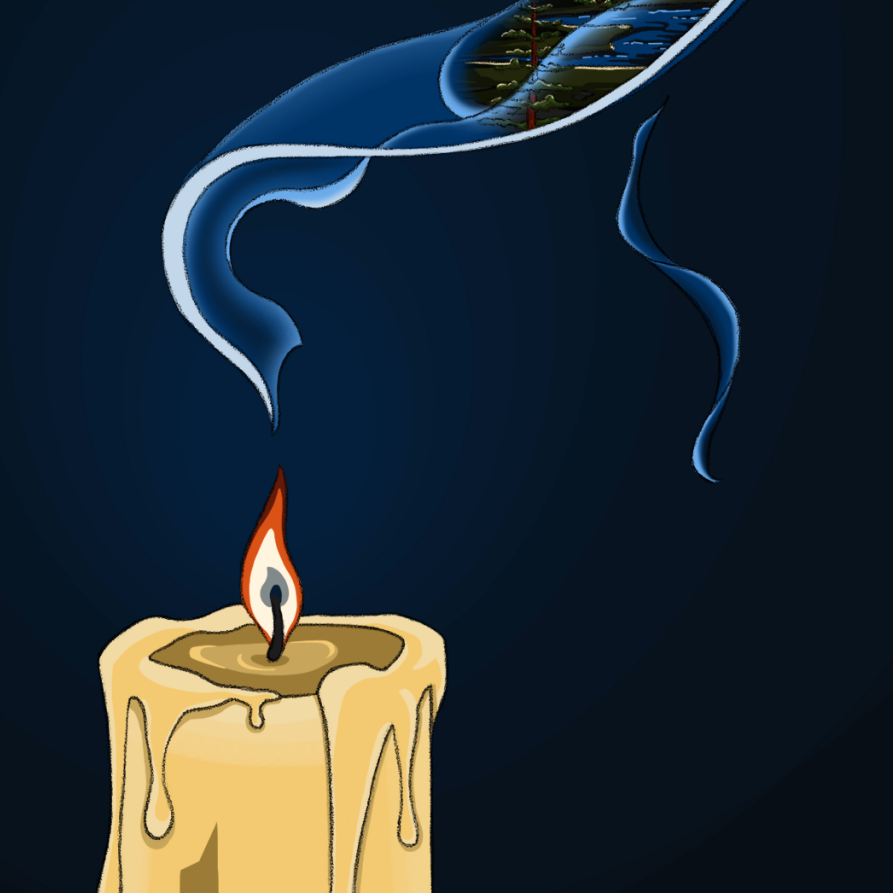
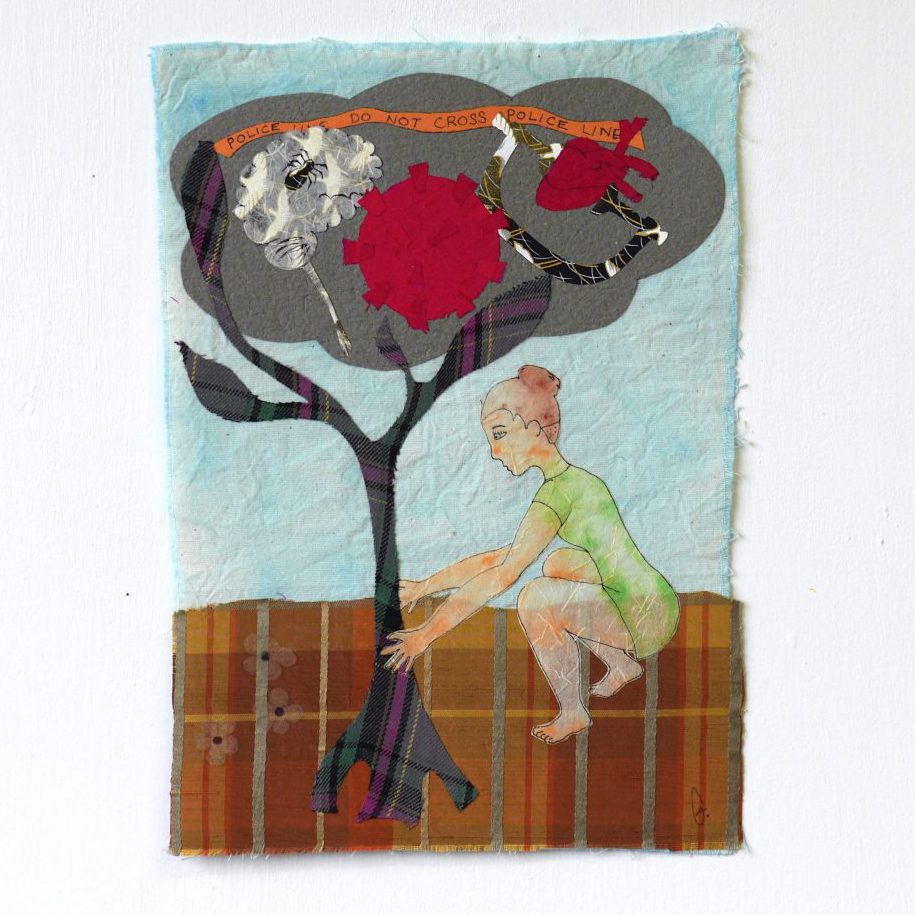
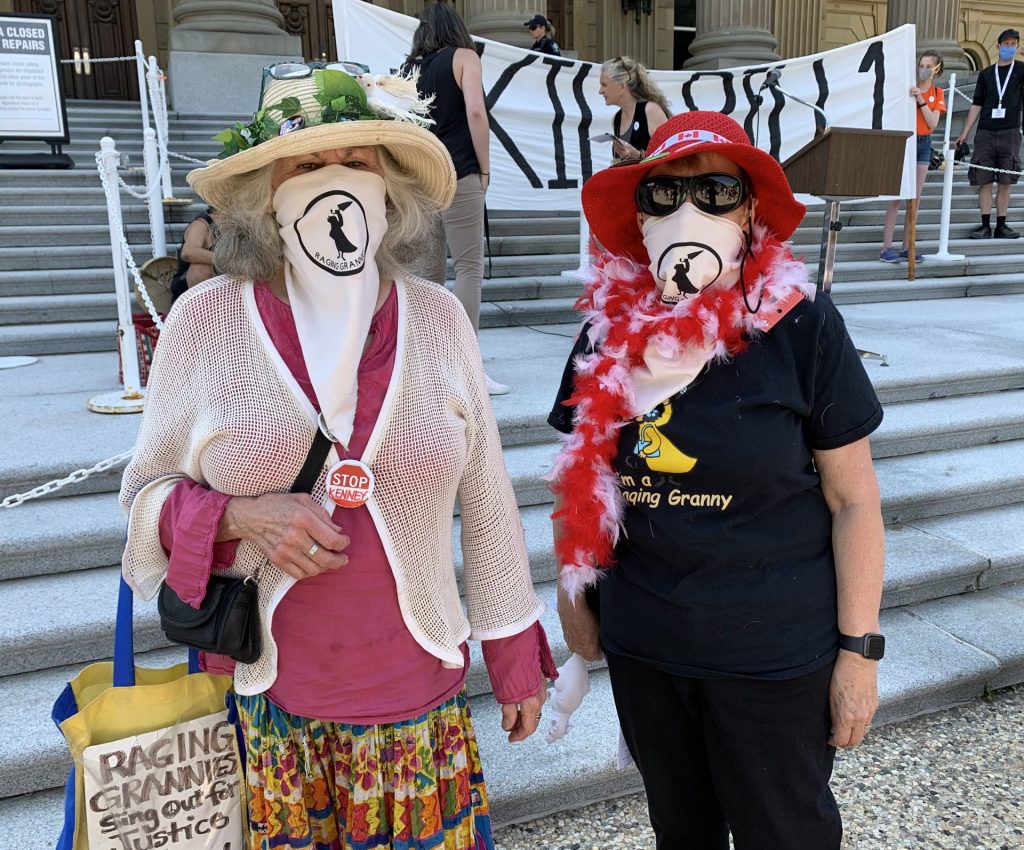
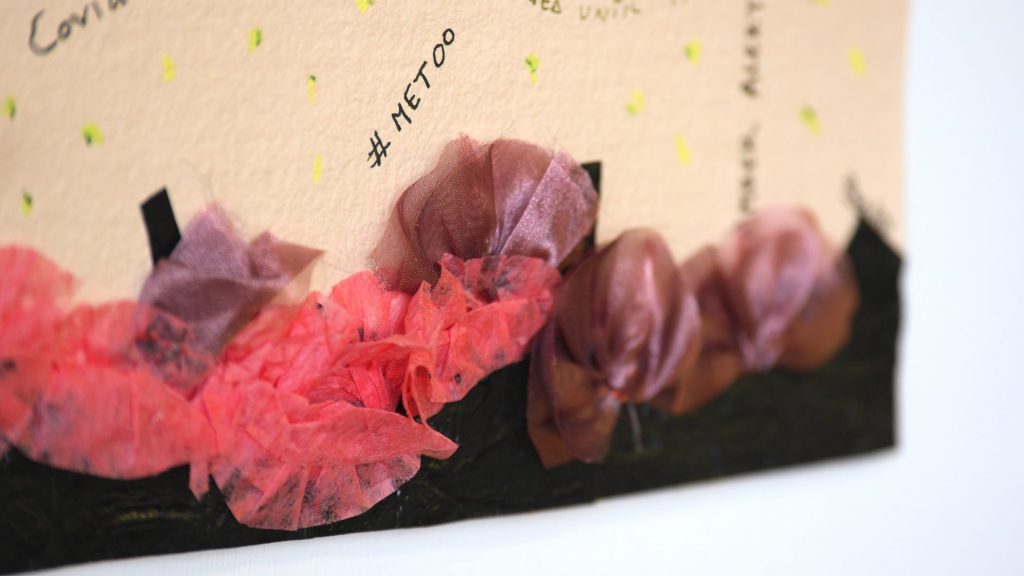
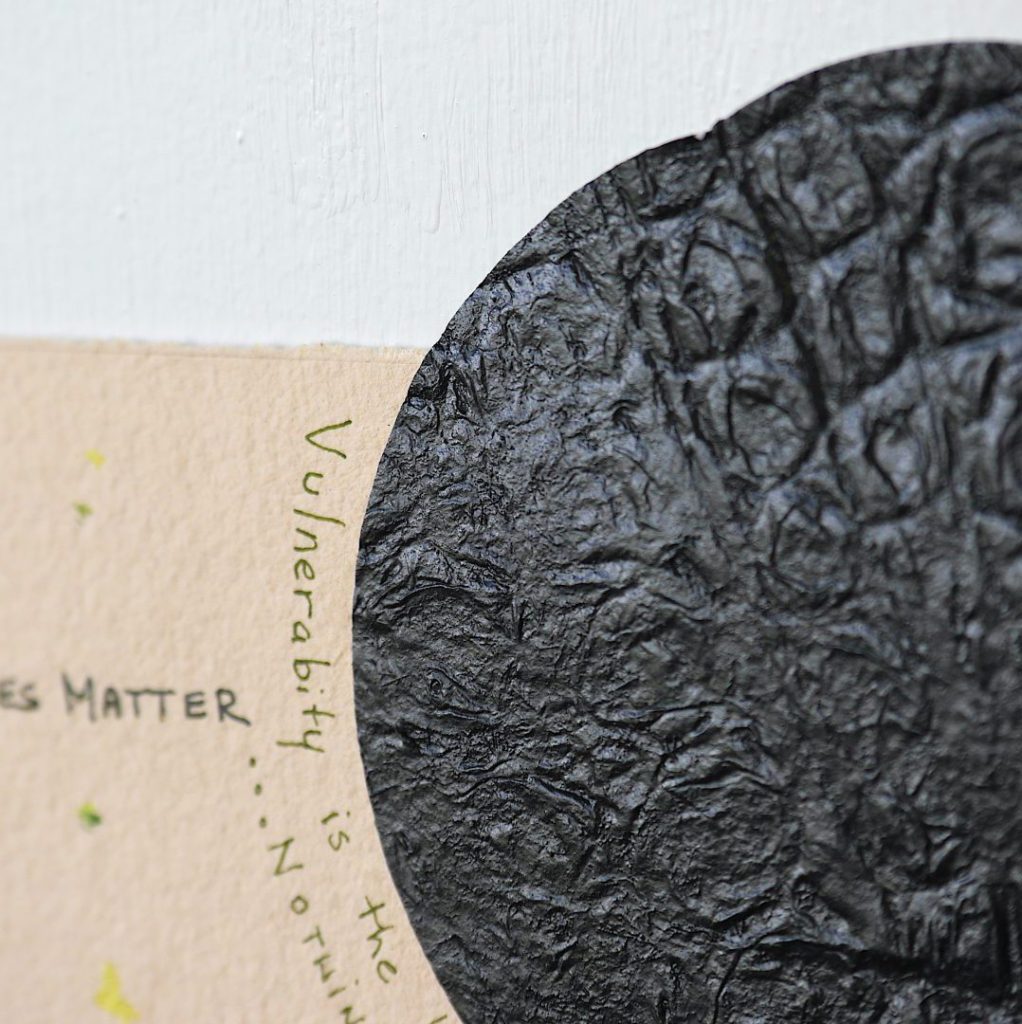
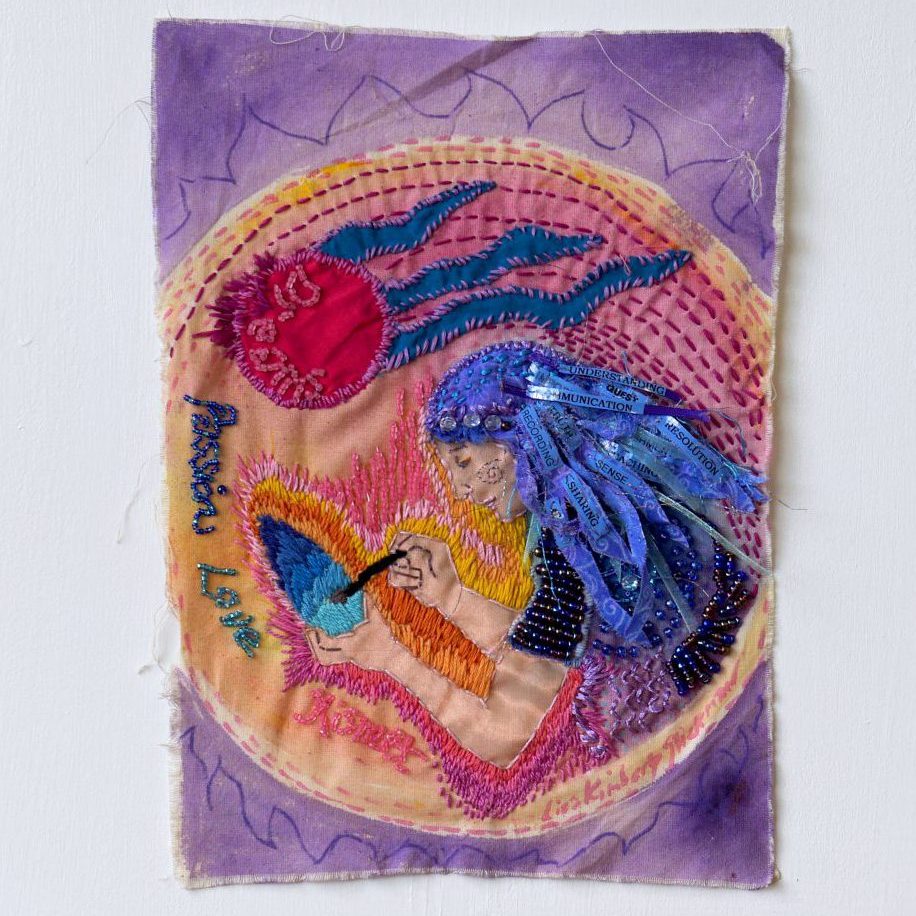
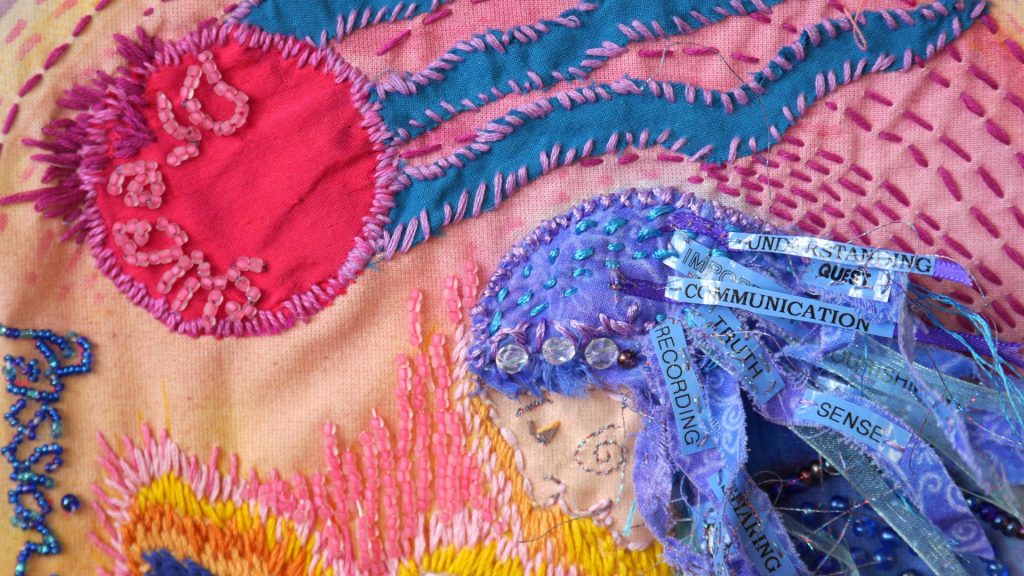
To redress these wrongs, many of us are working through art and direct political action. We rage against injustice, dream of better worlds, and make change. Artworks in this category include a sample of the bandana-masks worn by the ‘Raging Grannies’ in demonstrations at the Edmonton Legislature as well as a community healing project in Hawaii. Rich in text and integrating multiple languages, some Raging, Dreaming, Making Change contributions proclaim exhortations of our time: ‘abolish capitalism,’ ‘black lives matter,’ ‘police line do not cross police line’ and reveal us to be ‘puppets in raincoats’ of narcissistic oligarchs. Other pieces remind us that ‘it is better to light a candle…’ and that we have the capacity for ‘dreams, passion, love, kismet.’ One artist expresses the fervent hope that we might still evolve to heal the traumas and repair the damage we’ve caused. If we are encouraged to make the changes that the pandemic emphasizes are urgent, then that, in part is what art is for, now.
MARIE LYNDA BILODEAU // Montréal, Quebec, Canada
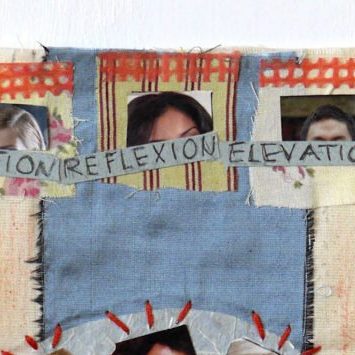
What is art for?
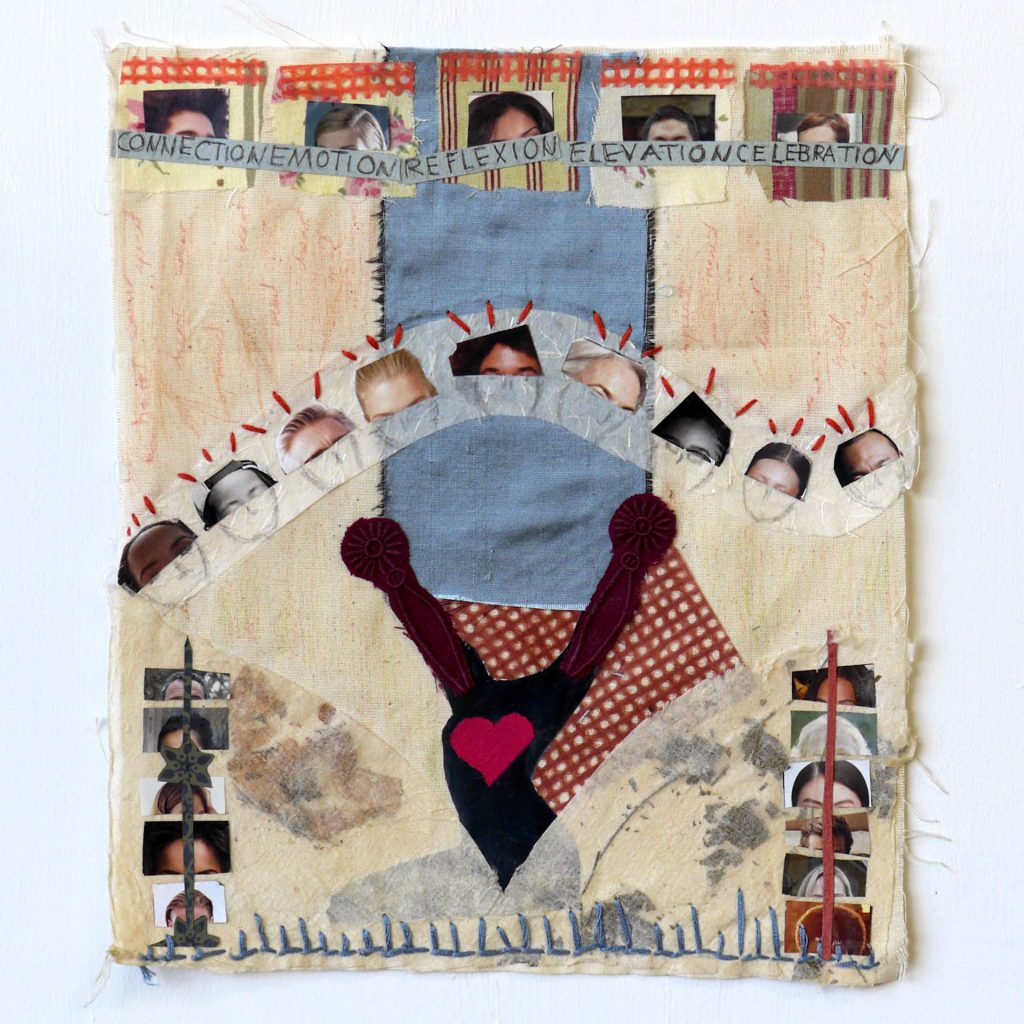
Connection
Emotion
Reflexion
Elevation
Celebration
To accompany us in life.
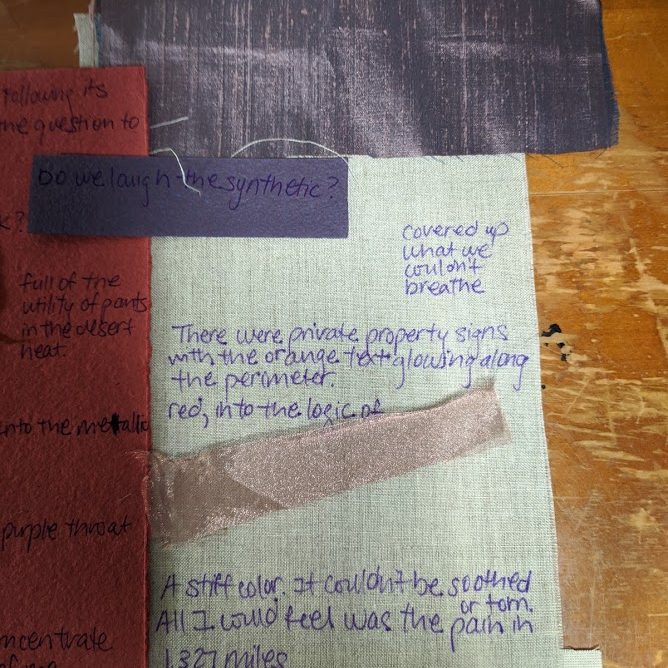
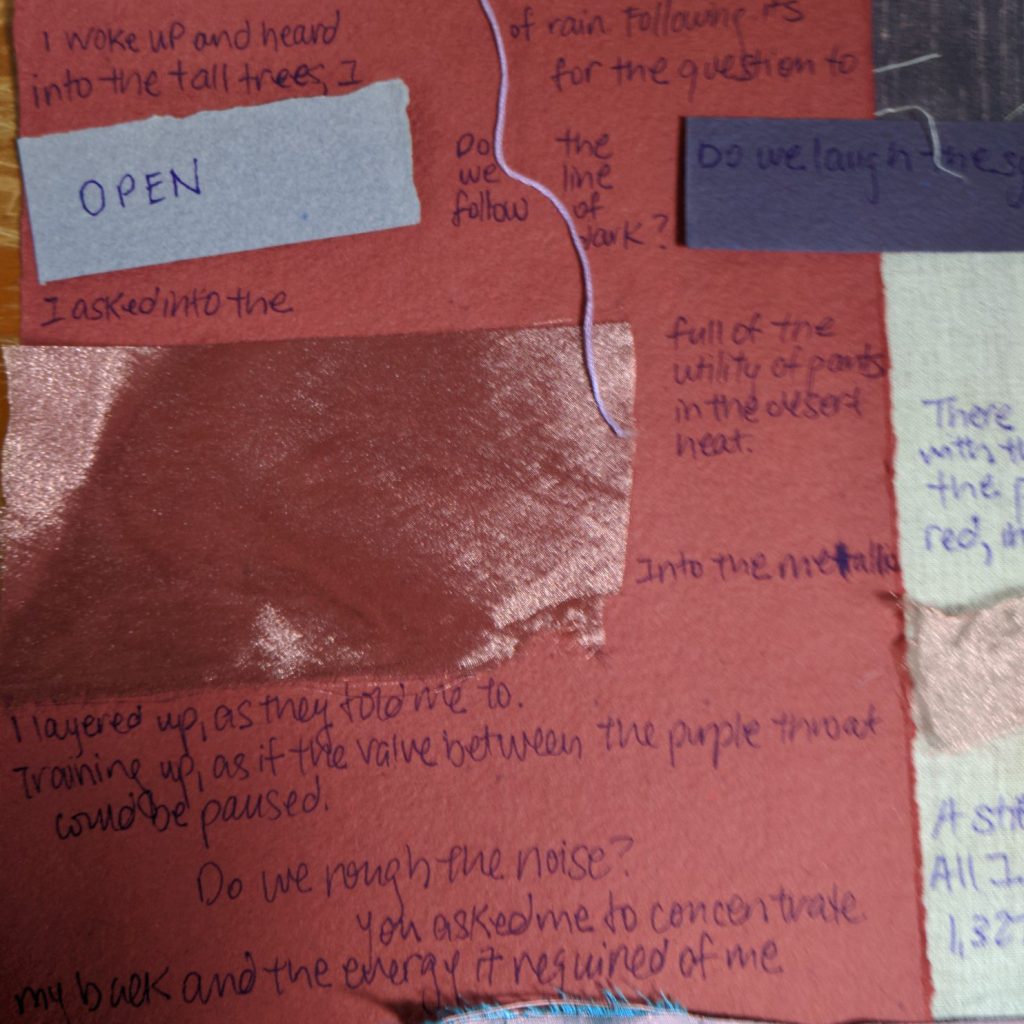
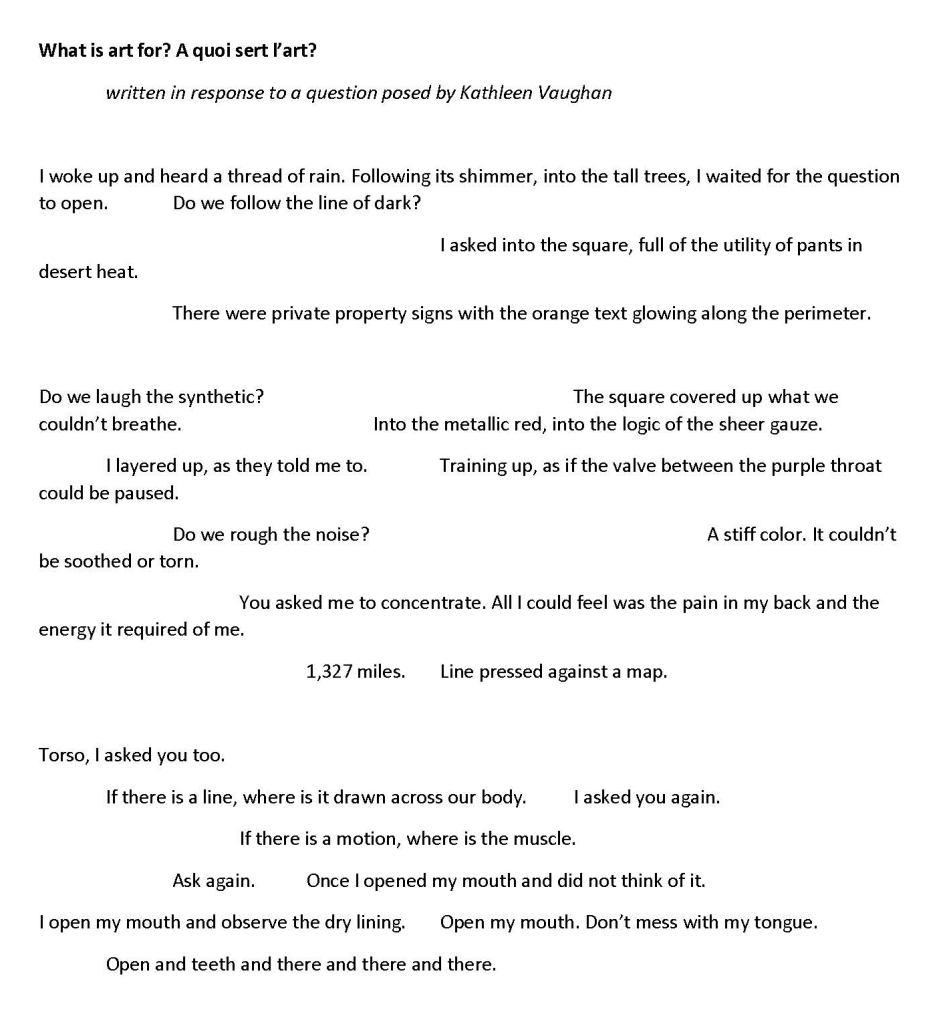
SHAHRZAD ARSHADI // Verdun, Quebec, Canada
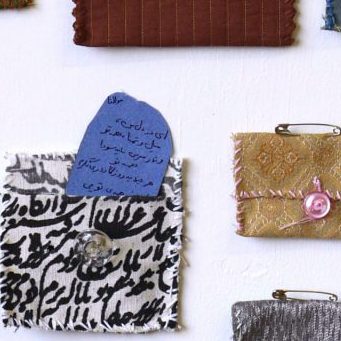
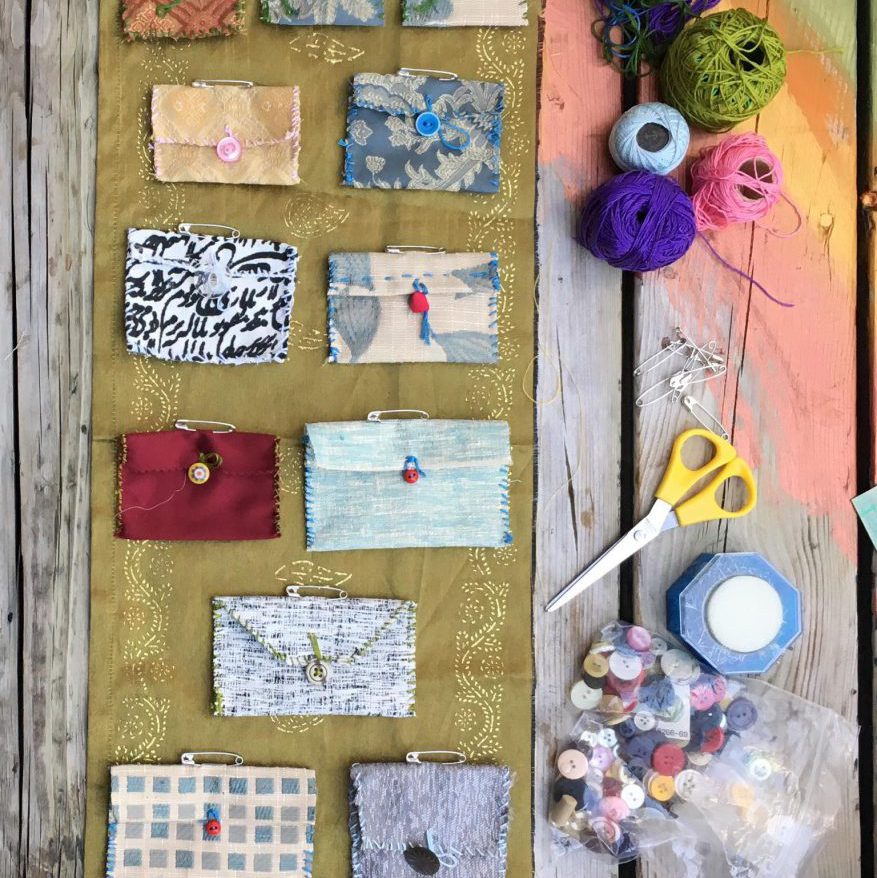
The first two months of the pandemic and the continuous injustice happening to humanity near and far, the realization or maybe the confirmation that our governments (capitalist systems) are never ready to protect us, became stronger! The healthcare systems, even in the most “developed” or “progressive” countries are only based on profit and money, not on the actual welfare of their citizens.
Death, death, and death was everywhere! Even a virus as bad as COVID-19 couldn’t bring humanity to be kind and understanding towards each other. Turkish fighter jets were still bombarding Kurdish villages. Iran was still imprisoning and executing dissidents. Young Black men and women were still getting killed on the streets of the United States because of the colour of their skin. Syria was still at war and the Indigenous people of Turtle Island were still being mistreated and disrespected!
I was feeling my HOPE fade away! The light of struggle was leaving my heart! It was the strangest feeling that I’d ever experienced. It was always hope that allowed me to survive the hardships of the brutal fundamentalist revolution, war, displacement, and exile. Nothing could take away my hope and my wish for a better world. What was happening now?! I had no answer. All I knew was that I couldn’t even bring myself to think about my artwork.
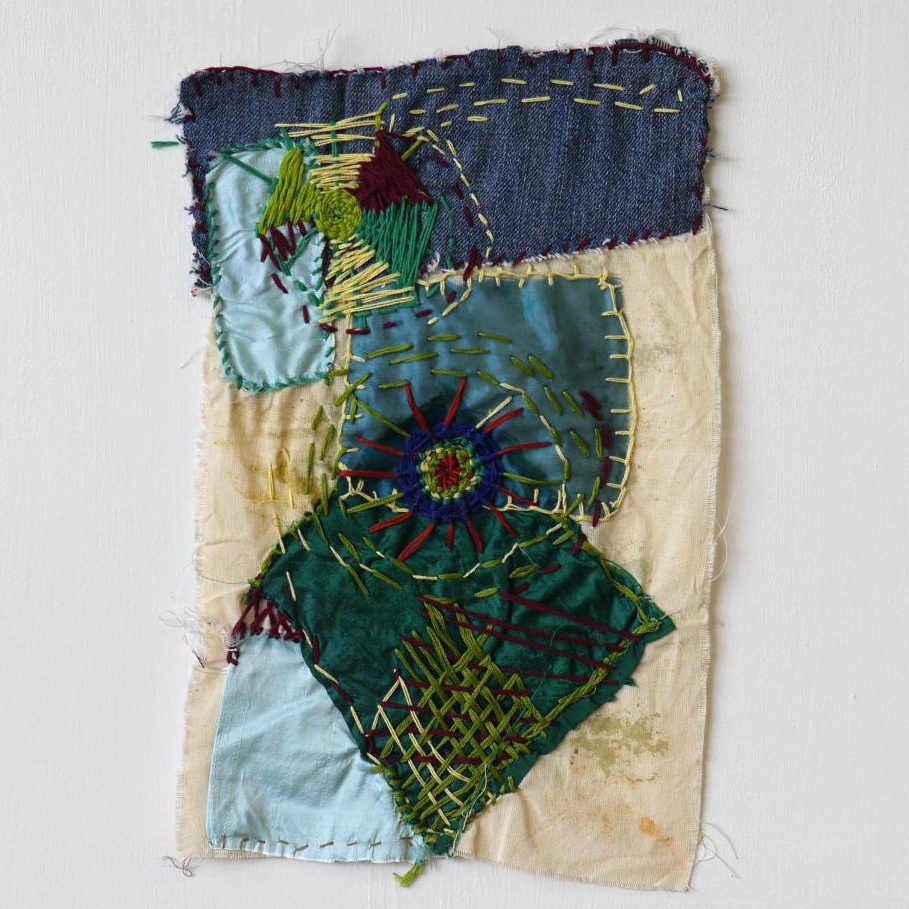
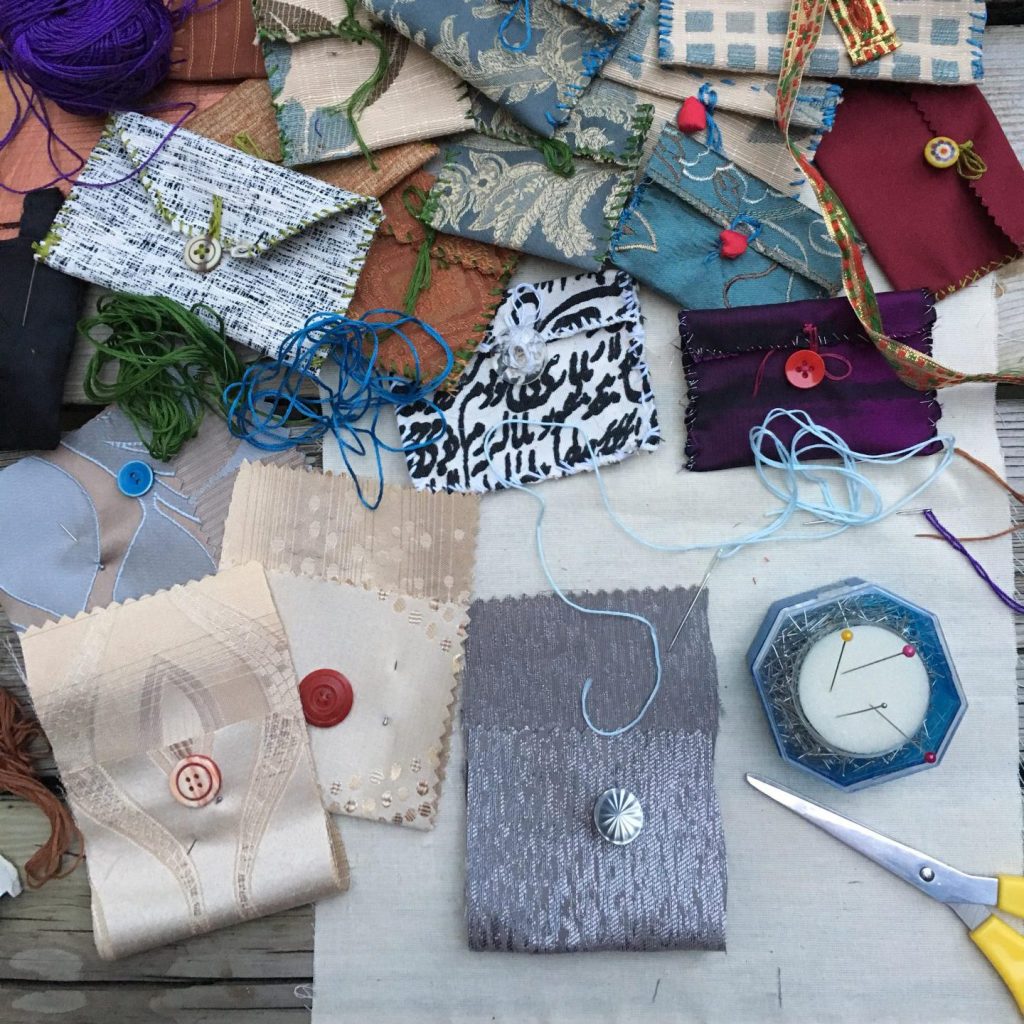
On one cold spring night of isolation, feeling deeply restless, I went to the basement to bring up my big plastic container of pieces of colorful fabrics. I dug into the container and emptied the kitchen table to make a place to work. I brought out the pieces that caught my attention and put them beside each other. I took out my needle and thread box and started sewing the first two pieces of cloth that most drew my attention.
Next thing I noticed, it was 2:30 a.m. and I had been stitching one piece after another for the past four and half hours.
Since that cold spring night، I have repeated my quilt ritual frequently, at every opportunity I can find. I stitch pieces of fabric, one by one, with great patience and with the understanding that it is only our unity that can make us stronger against any odds, regardless of our differences, regardless of our gender or our colour.
What is art for? To find different ways of expressing our thoughts and to share memories and stories that are otherwise difficult to share.
MARYCARMEN ARROYO M. // Mexicali, Baja California, Mexico
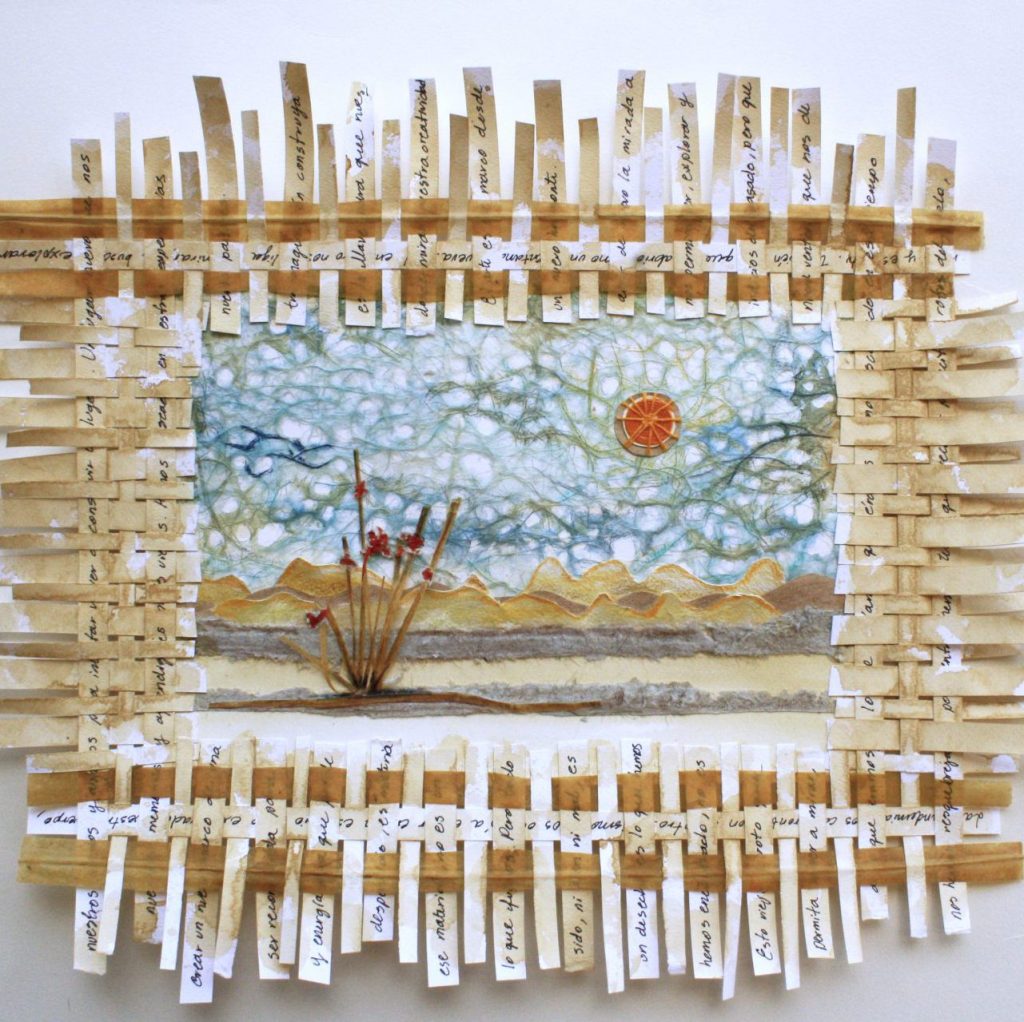
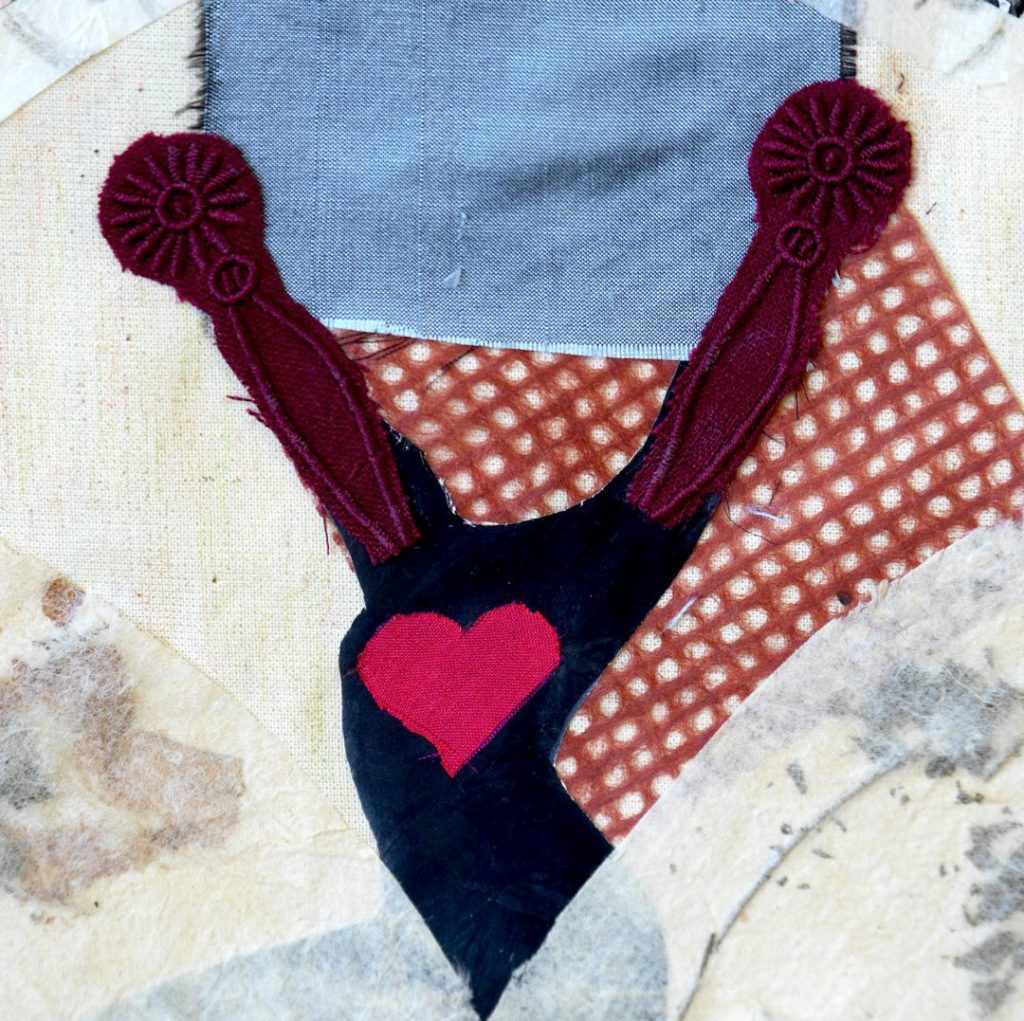
La ventana
La pandemia nos confrontó con nosotros mismos, nos obligó a estar en un espacio poco explorado, nuestro cuerpo, mente y espíritu. También creo que se abrió como una ventana nueva. El encierro nos obliga a mirar, a buscar, explorar. Algunos nos hemos resquebrajado por dentro, hemos tenido que recoger pedacitos rotos el suelo, de lo que éramos, lo que creíamos que éramos. Hemos escarbado en este tiempo nuestras memorias y aprendizajes más viejos. Hemos buscado en nuestras experiencias, nuestros miedos y anhelos para intentar volver a construir un lugar.
Un lugar que nos permita volver a mirar. Esto viejo y roto que hemos encontrado, no es un desecho, es lo que hemos sido, ni bien ni mal, es lo que fuimos. Pero todo ese material no es un desperdicio, es materia y energía pura que puede ser reconstruida para crear un nuevo marco de una nueva ventana, que nos de indicios del pasado, pero que nos permita ver, explorar y abrir de nuevo la mirada a un nuevo horizonte. El arte es ese marco desde donde mirar, nuestra creatividad es la llave para que nuestra imaginación construya nuevos paisajes.
The window
The pandemic confronted us with ourselves, forced us to be in a little explored space, our body, mind and spirit. I also think it opened like a new window. The confinement forces us to look, to search, to explore. Some of us have cracked inside, we have had to pick up broken pieces of the floor, of what we were, what we thought we were. We have dug out our oldest memories and learnings in this time. We have searched our experiences, our fears and wishes to try to rebuild a place.
A place that allows us to look again. This old and broken that we have found is not a waste, it is what we have been, neither good nor bad, it is what we were. But all this material is not a waste, it is matter and pure energy that can be reconstructed to create a new frame of a new window, that gives us indications of the past, but that allows us to see, explore and open our gaze again to a new horizon. Art is that framework from which to look, our creativity is the key for our imagination to build new landscapes.
JEN BERGER // Burlington, Vermont, USA
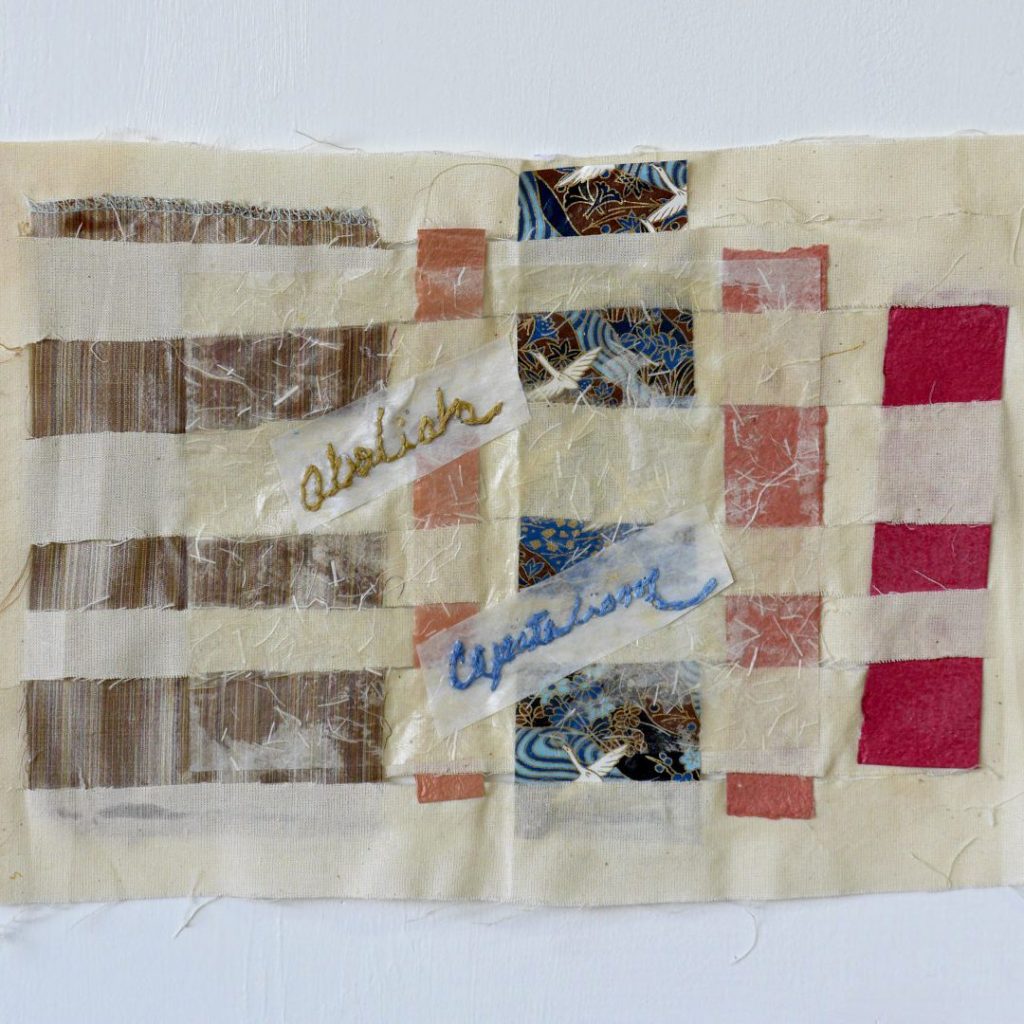
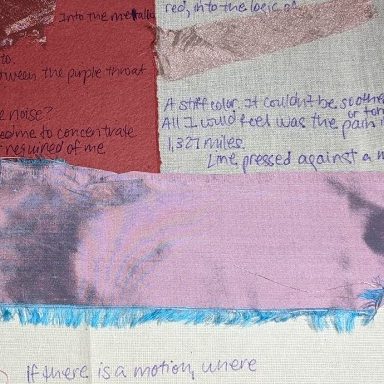
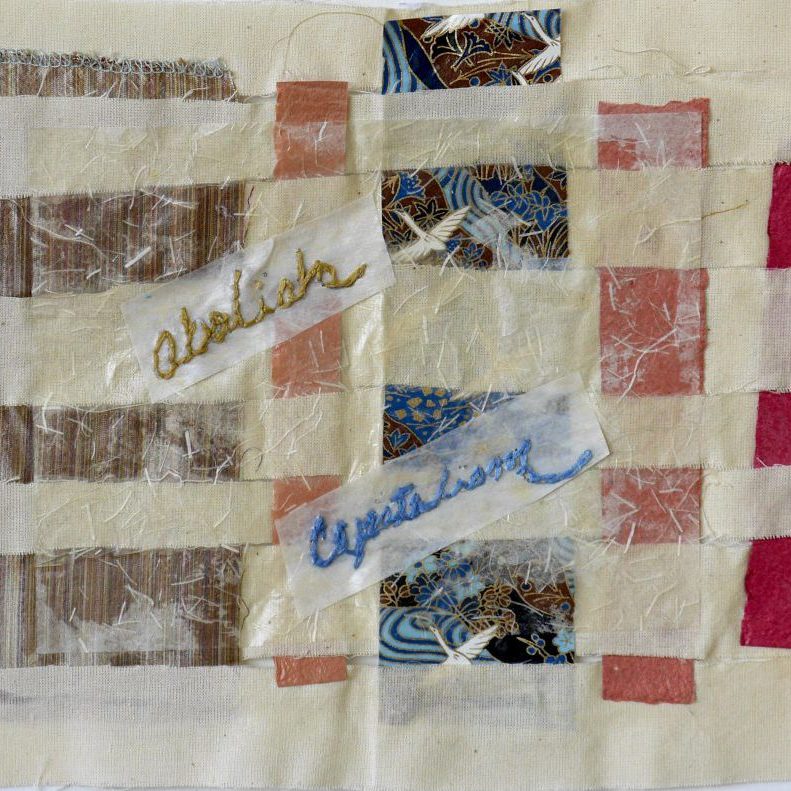
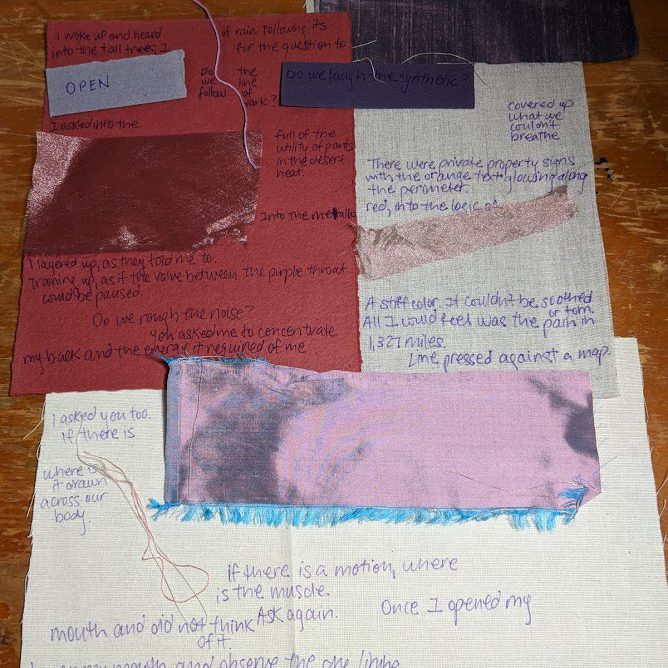
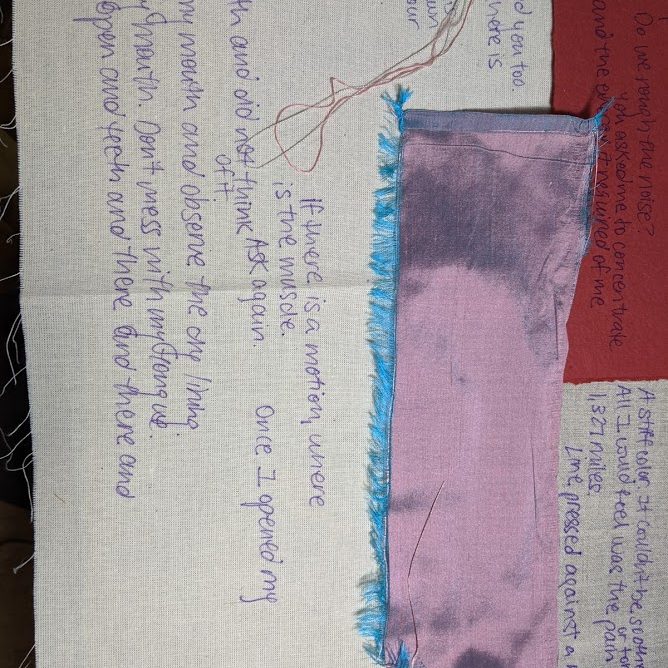
I had the pleasure of participating in a participatory art project with Kathleen Vaughan, Professor of Art Education at Concordia University in Montreal. The questions “What is art for? What does art mean to you in this time of pandemic and direct social action?” were central to the creation of my piece. In the mail, I received a kit. There was a purple dual envelope folder with paperwork on one side, two copies of a contract, and an instruction sheet. And on the right, a pile of material with an embroidery needle in a flap of magenta fabric. The materials I received were fabric and Japanese paper, in muted neutral tones, with blue accents, and some hints of a bold salmon. The embroidery thread I received was sand color and a colonial blue. I enjoyed the complexity and simplicity of each piece together and alone. I re-read the instructions before I began, and there was the option for ‘whatever you want’. At that moment, that gave me too many options, and I realized that the structure of working with the materials was something I craved for, and didn’t know it. Having someone else give me direction is not something I come across often and it was a welcomed change. I went with the confines of what was sent in the mail. And, even within that, it wasn’t confining at all, there were so many options. I chose to weave my materials together. One, I wanted to find a way to use all, or most, of the material, and to keep the size to the allotted 10”x13”. The colors were beautiful together. Not a color palette I use on my own. I wanted to use both paper and material. And it felt, on some level, of how COVID can feel. Isolating, yet together, even though we can’t see the whole. Beautiful and also scary.
Before I started to make any cuts, I revisited the question that I was asked to think about while making this piece. “What is art for?” To me, it’s so many things. The irony is that my students are all writing 5-page papers, as I write, to present this week, on the exact same topic, and I know there is no single answer. “What is art for?” Well, for me, right now, it’s about expression, education, messaging, connecting, and always about making something in the world to make it a little more just. One thing I started to do during the early weeks of COVID, as I was getting all of my socializing and entertainment on the internet, was embroidery. I have a bunch of old vintage napkins, and other fabric, and a ton of embroidery thread, so I started to make simple images with the thread. As the world became more overtly politicized, so did my embroidery. I was watching an interview with Angela Davis, and in talking about abolishing the police, she said we also need to abolish capitalism. YES, I thought. This, this is the root here. This is how we find our souls again. And I put that on a napkin, feeling joyful and smug. As I made this piece, I thought about how beautiful the material and papers were together, but it was missing the justice aspect. I tried something new and began to embroider on a piece of paper. I wrote “abolish capitalism” in both of the thread colors, and adhered it to the larger piece. I enjoyed the way it kind of blended in until you read the actual words. I imagined that if I saw that piece, I would smile, and then I would think about it for the rest of the day. And I guess, that is mostly what I hope art does, is make us think.
ARIANNA GARCIA-FIALDINI // Montreal, Quebec, Canada
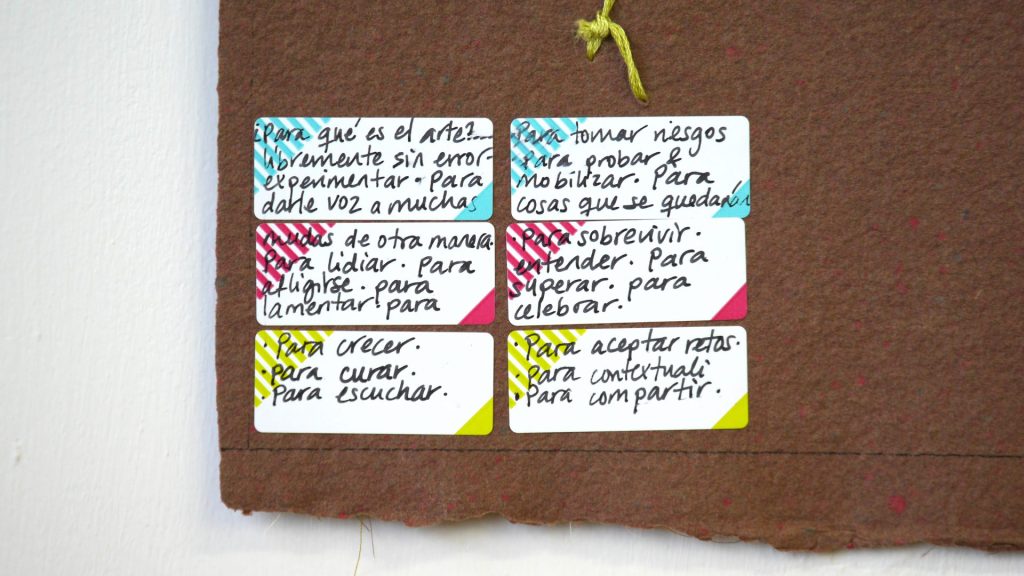
¿Para qué es el arte?….
Para tomar riesgos libremente sin error – Para probar & experimentar – Para mobilizar – Para darle voz a muchas cosas que se quedarían mudas de otra manera – Para sobrevivir – Para lidiar – Para entender – Para afligirse – Para superar – Para lamentar – Para celebrar – Para crecer – Para aceptar retos – Para curar – Para contextuali – Para escuchar – Para compartir
WENDY CALL // Seattle, Washington, USA
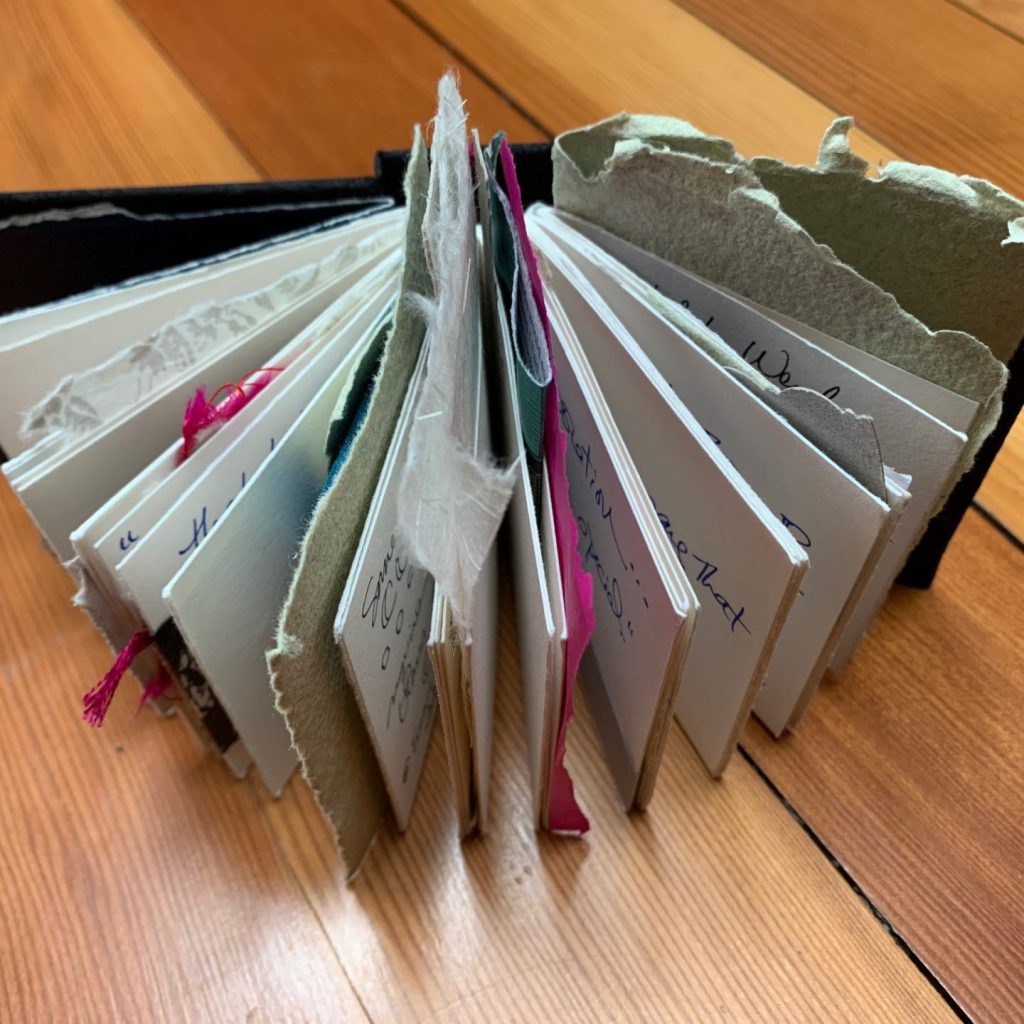
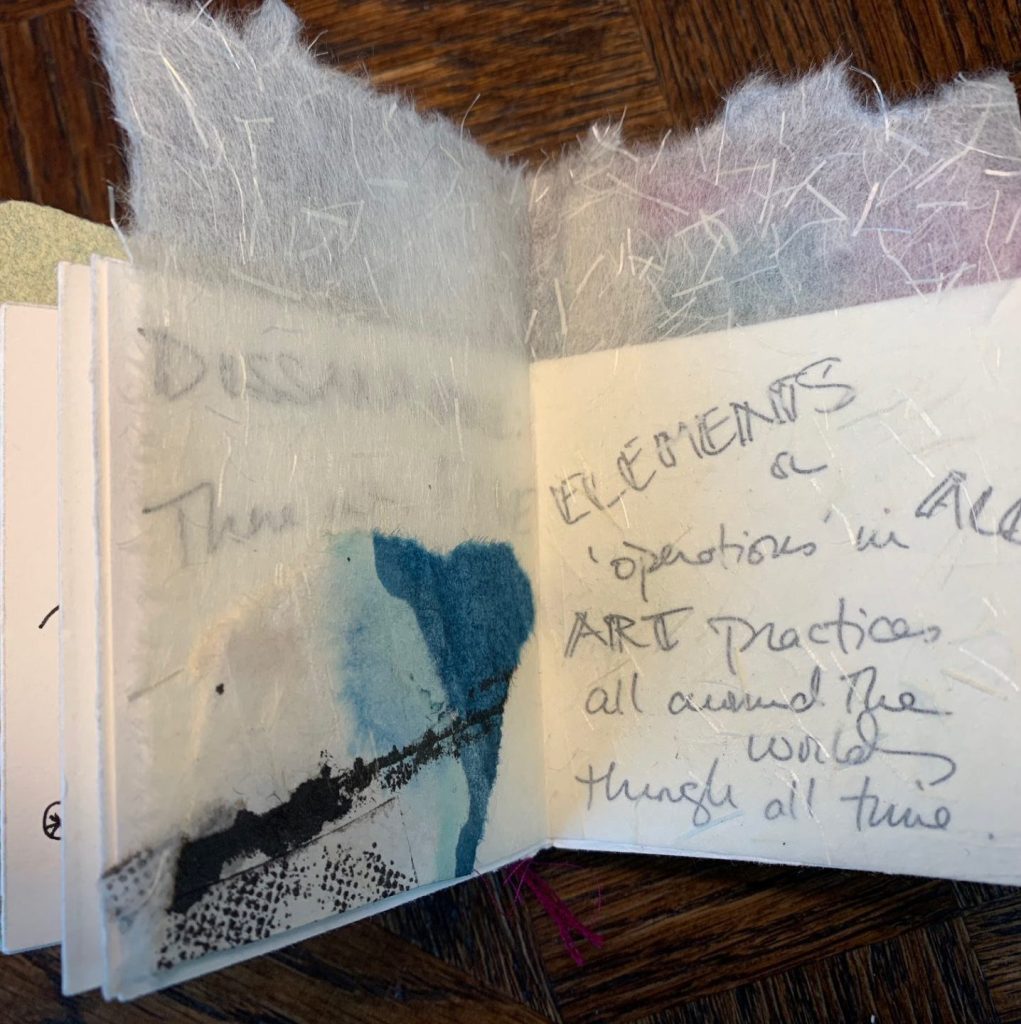
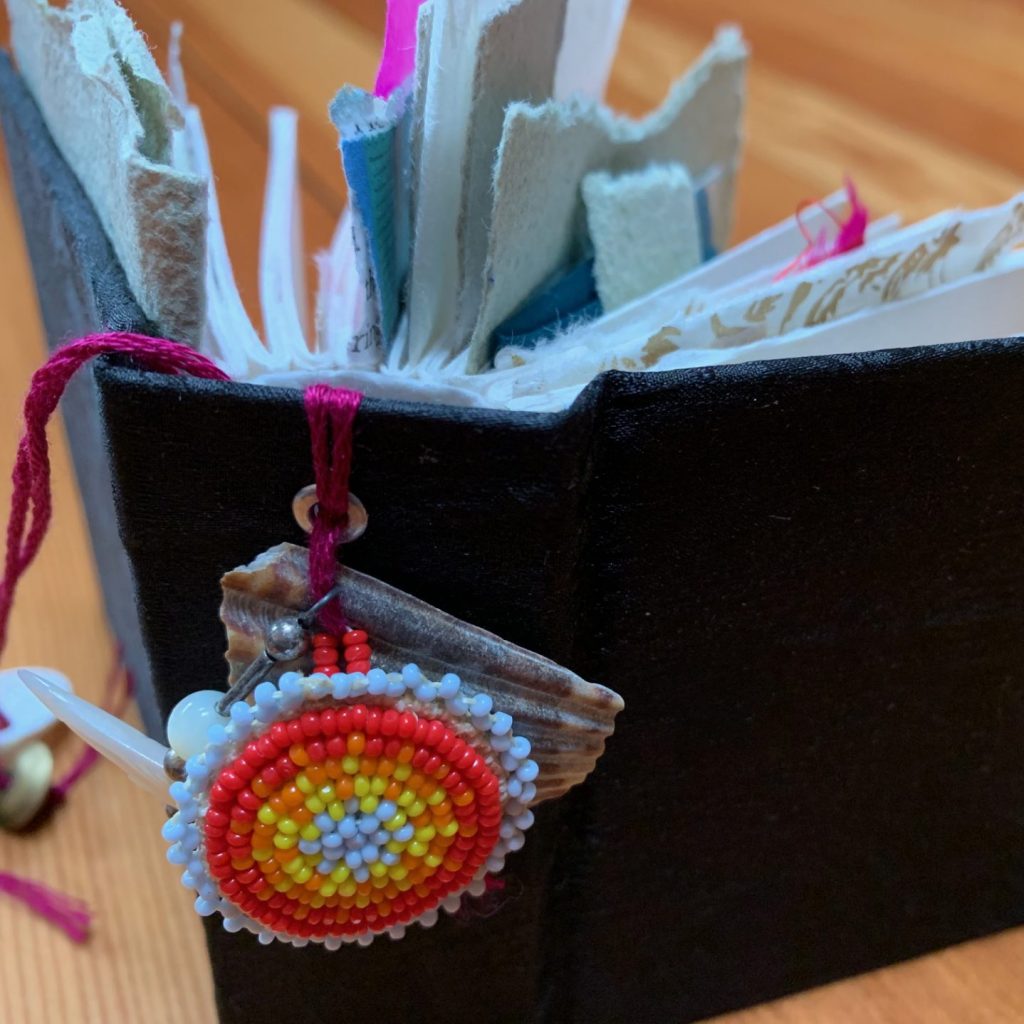
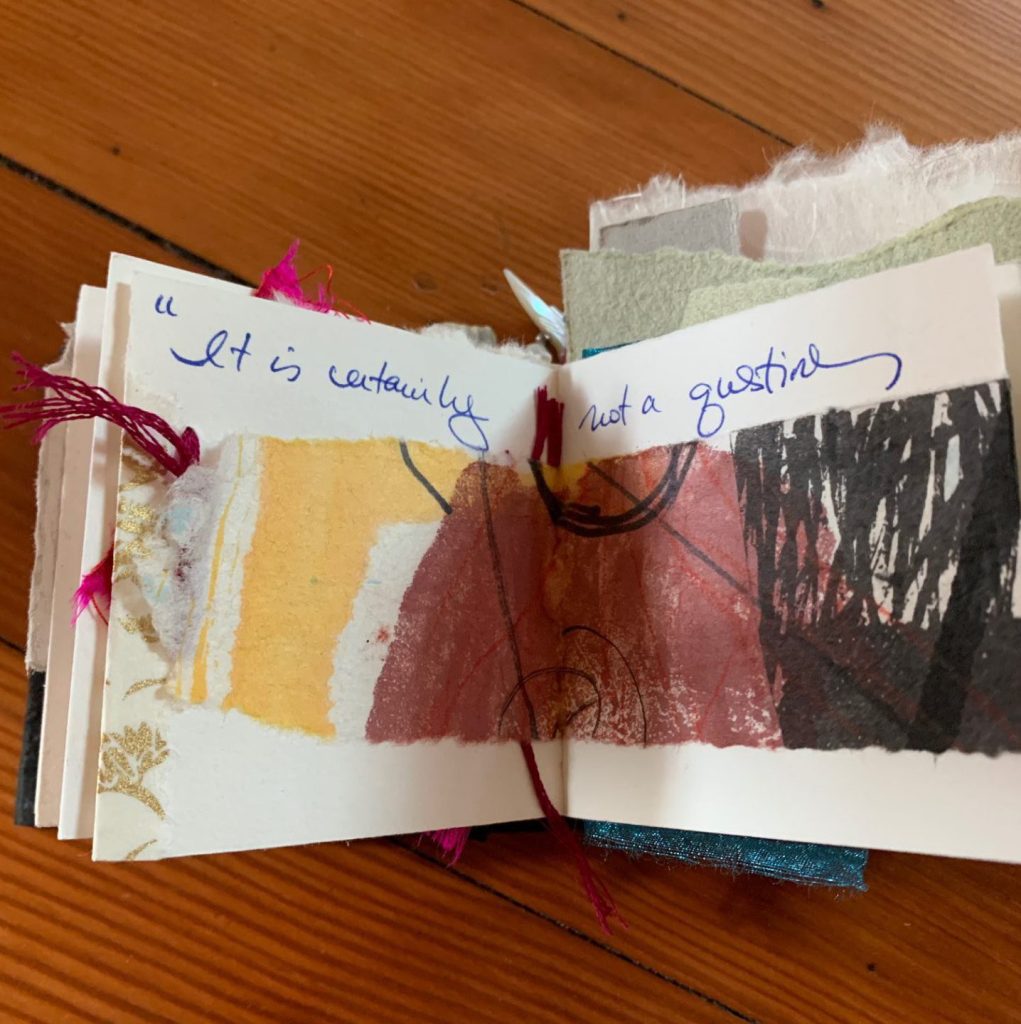
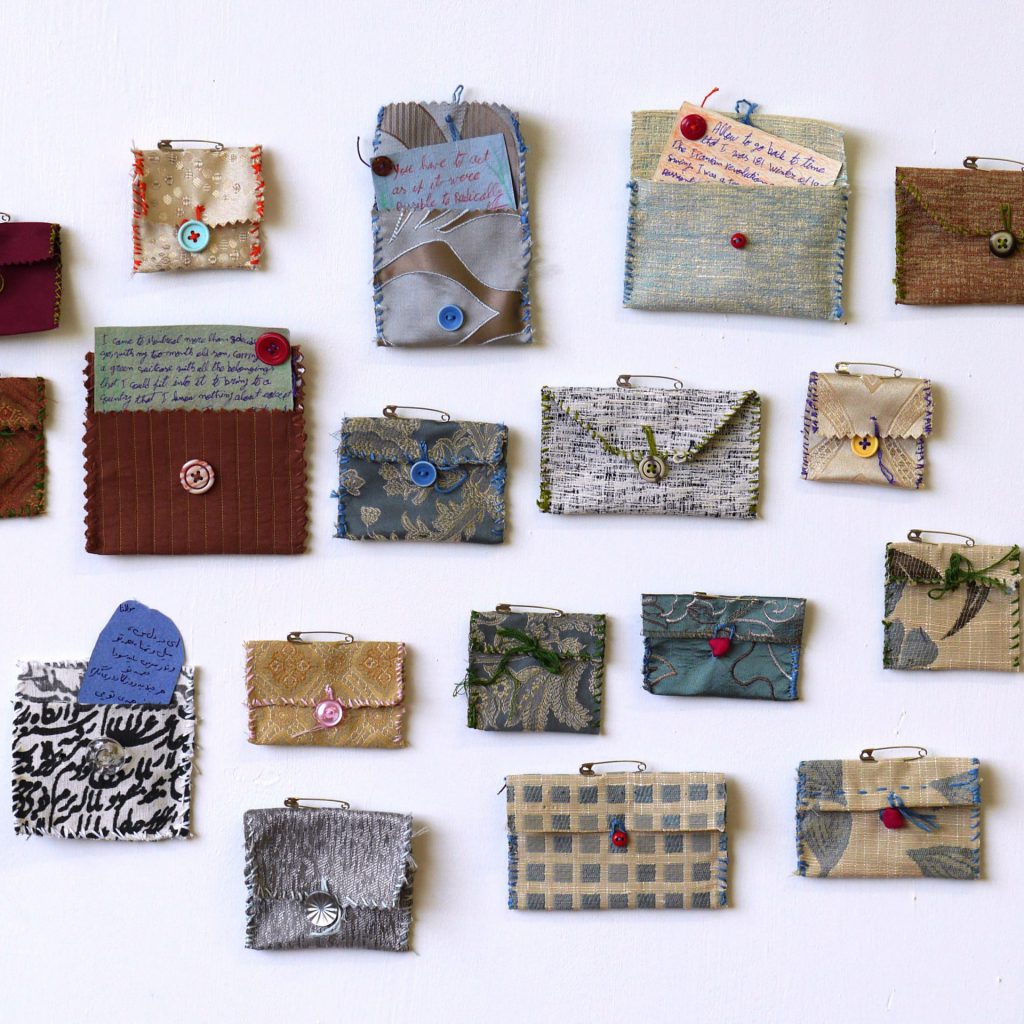
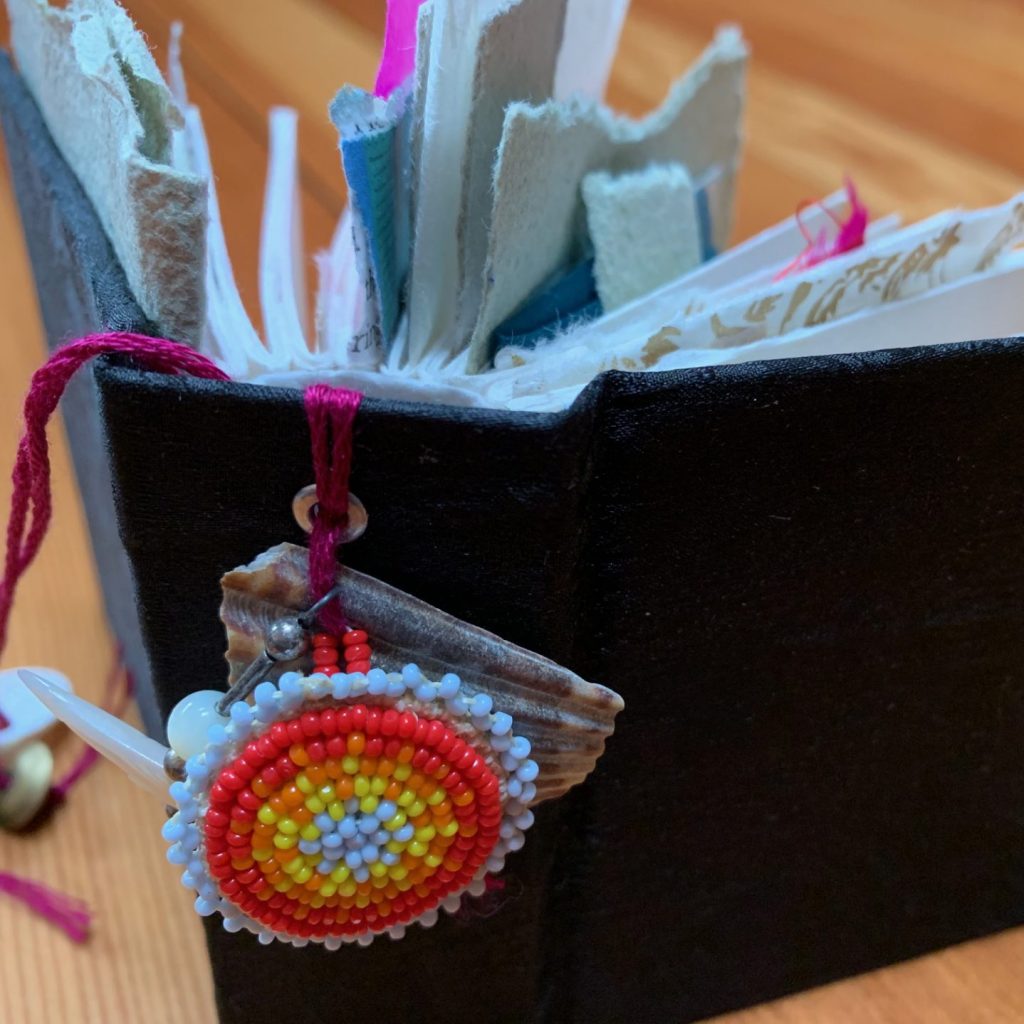
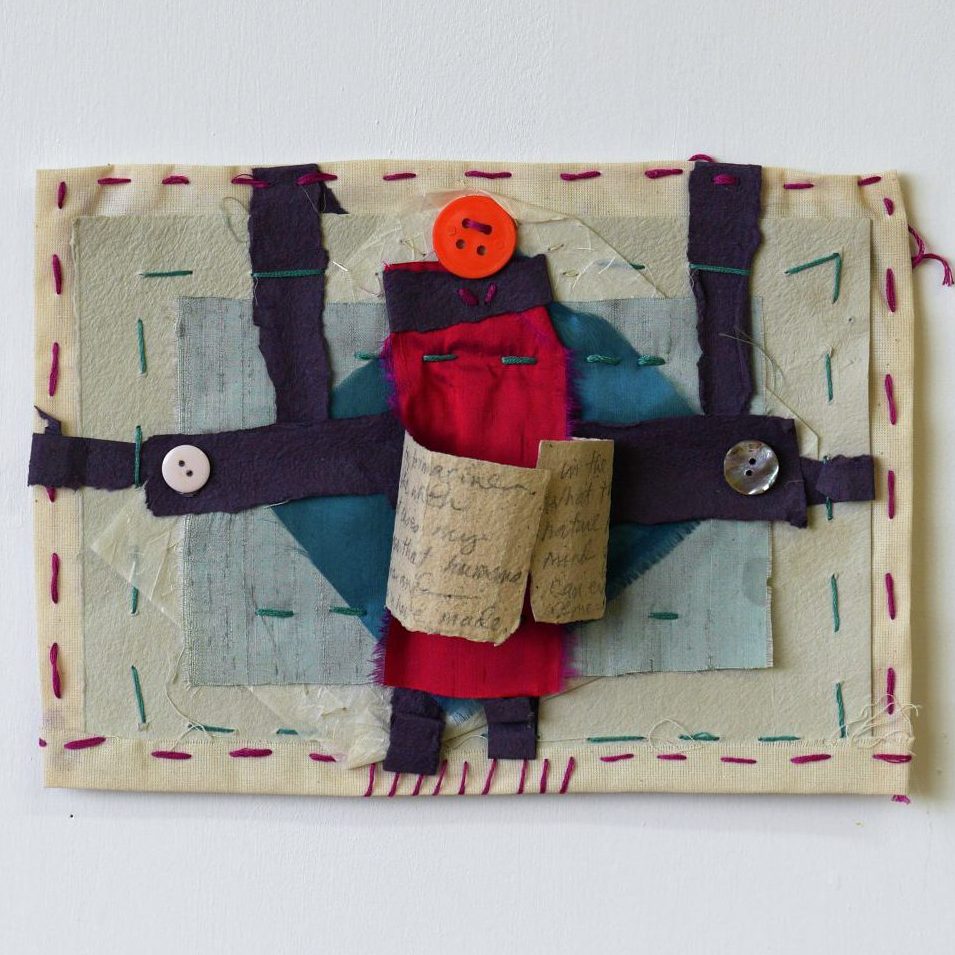
My answer to the question “What is art for?” is deeply informed by Ellen Dissanayake’s book by that name. I designed my response (tiny handmade book) around ideas gleaned from her book and other writings and conversations with her.
“It is certainly not a question that bothers ARTISTS.”
SARAH PEDLOW // Amsterdam, Netherlands
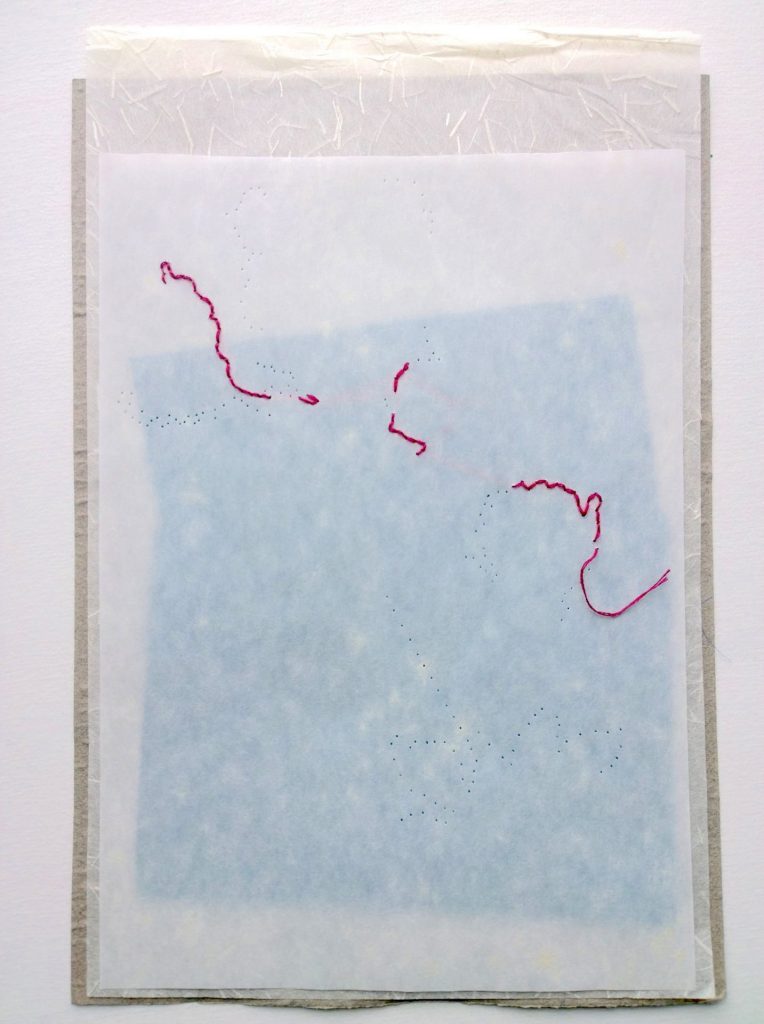
My textile and photo-based work is a form of way-finding and map-making. I distill patterns to their contours: outlines of memory, heritage, identity, and culture. I am interested in junctions– where cultures, symbols, forms, and past and present meet– and the aesthetics of the everyday. Windows, curtains, walls, and sidewalks serve as transitional spaces– portals to another time or the possibility of a changed self. My imagery draws from decorative art traditions and cultural emblems of Hungary, Romania, and Ukraine where I have worked with embroiderers, as well as a personal vocabulary from my life as an American expat in The Netherlands.
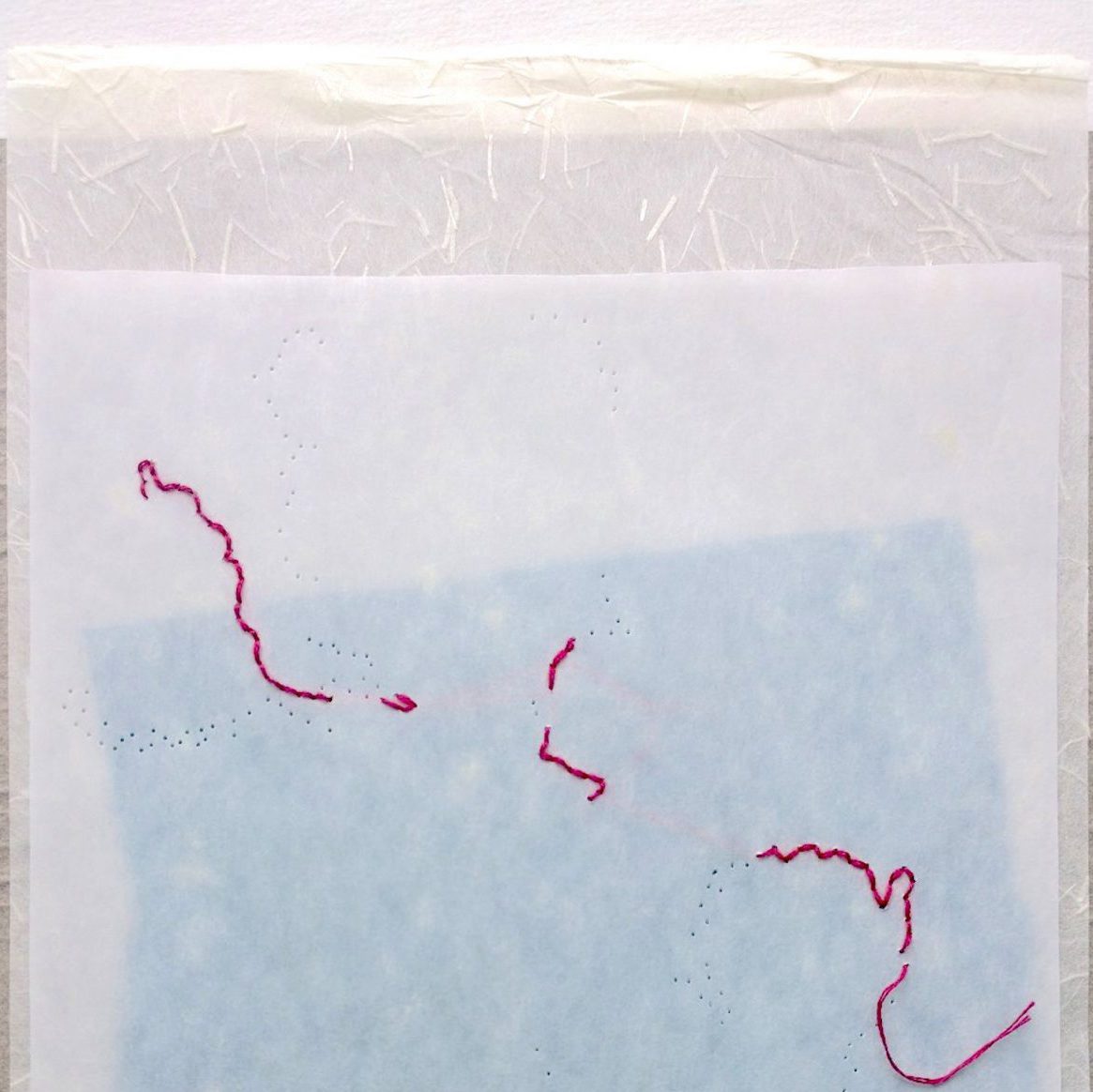
This piece accompanies my practice of stitching on paper and photographs that I began during COVID. The drawing in stitches and needle-poked holes comes from flowers on a Ukrainian scarf, a symbol of (albeit romanticized) folk culture, warmth, and comfort. Some holes were left unstitched, marking unfulfilled plans while leaving the possibility for something new to be created.
MELISSA-ANN LEDO // Montréal, Quebec, Canada
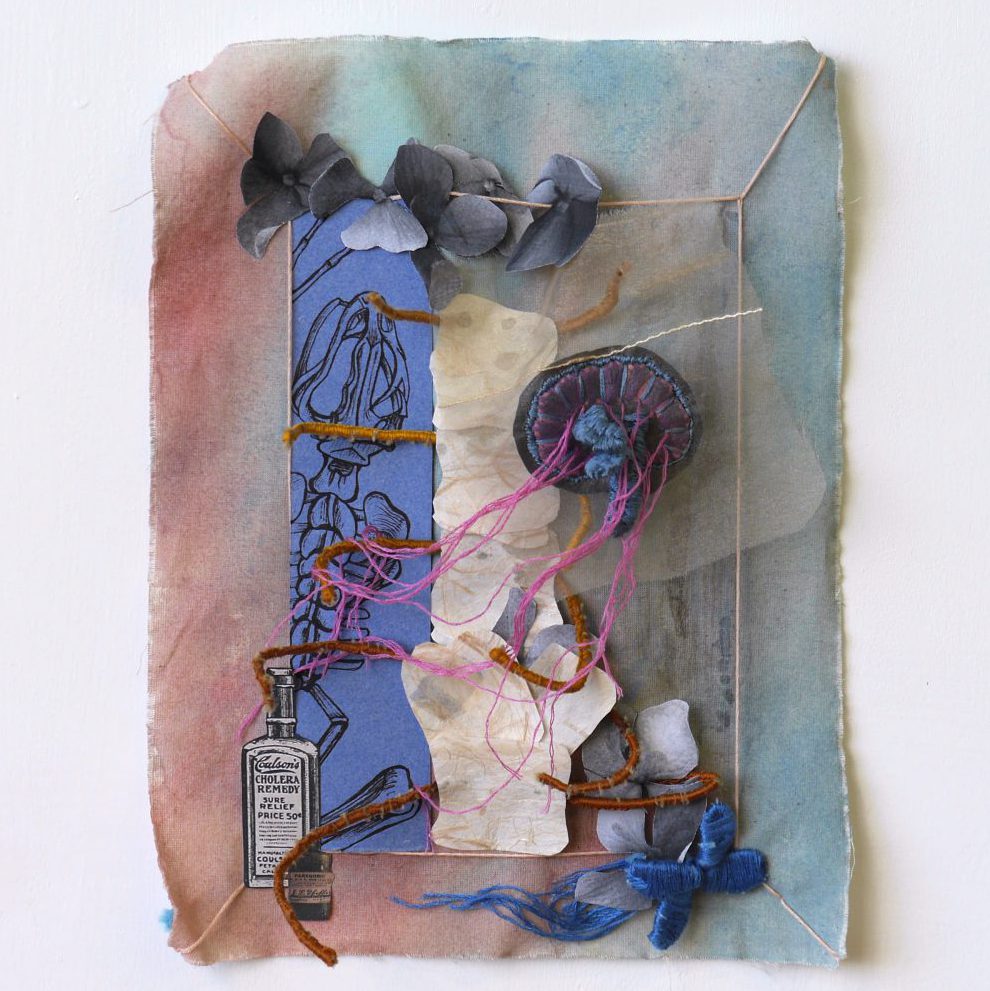
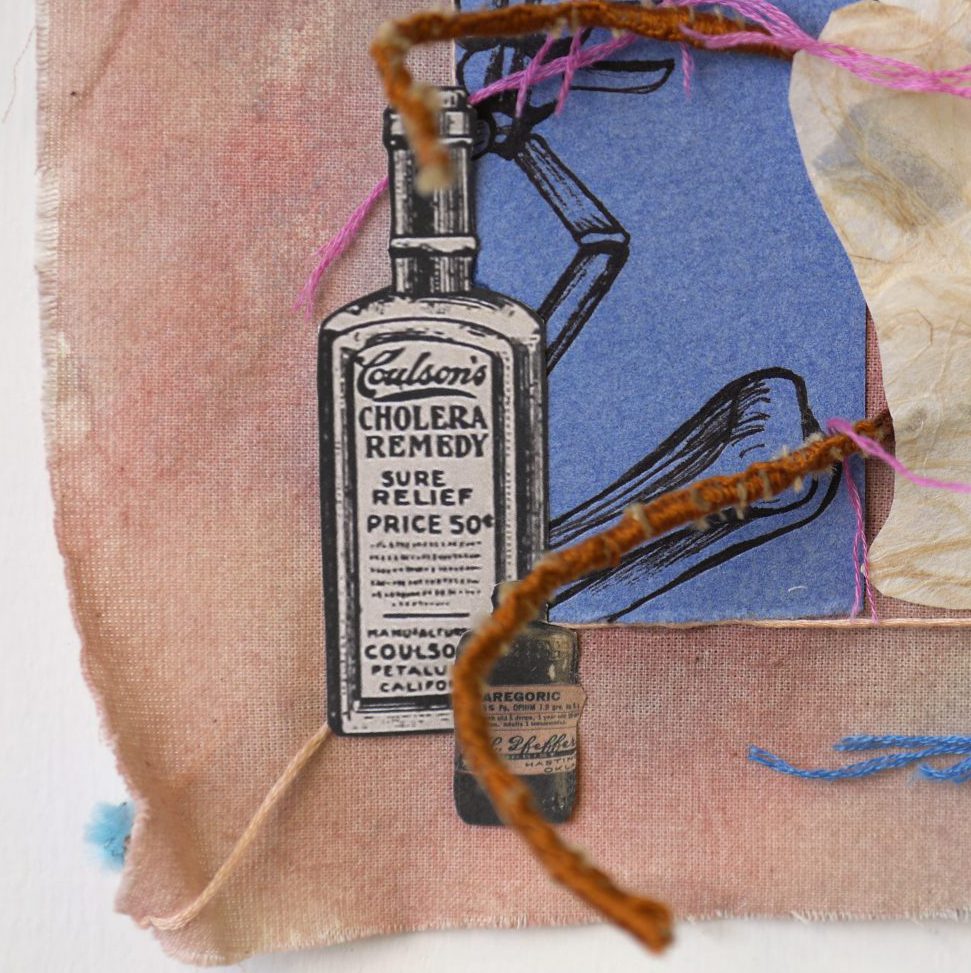
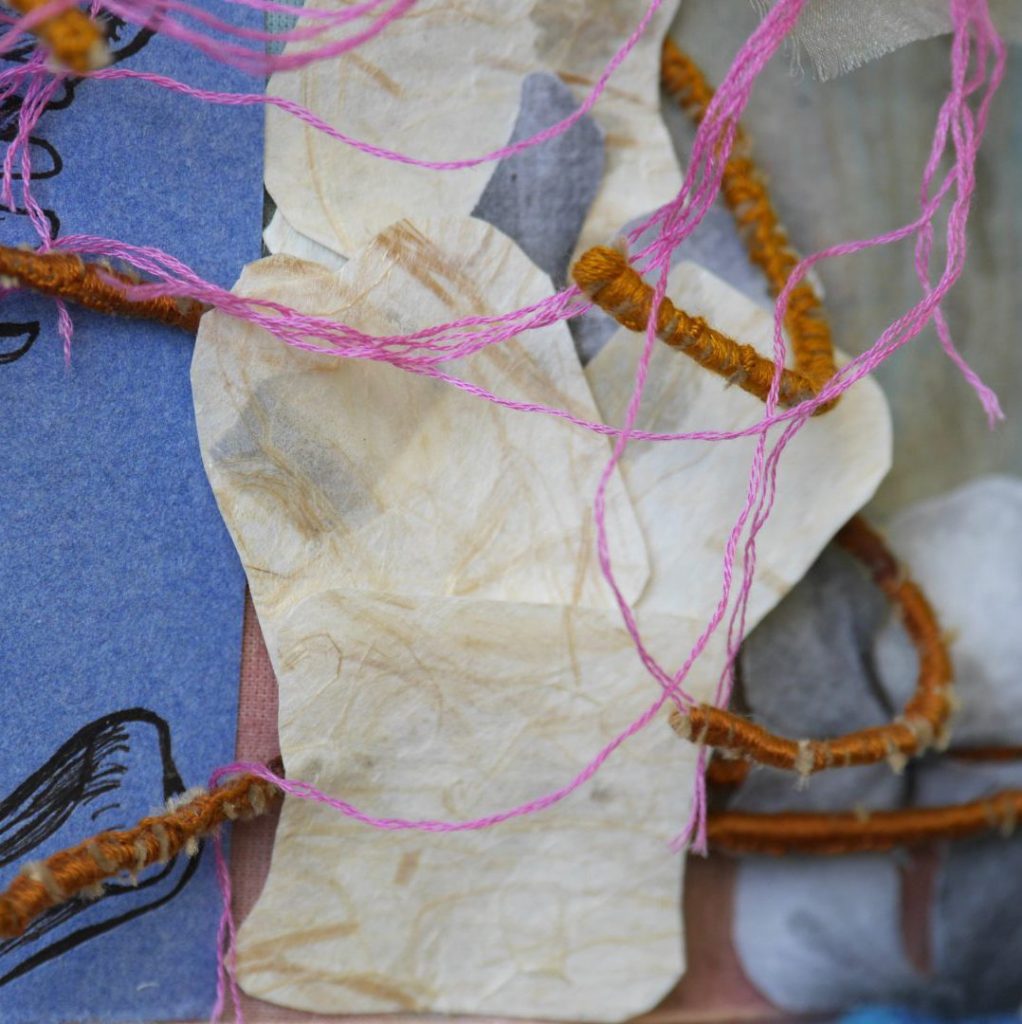
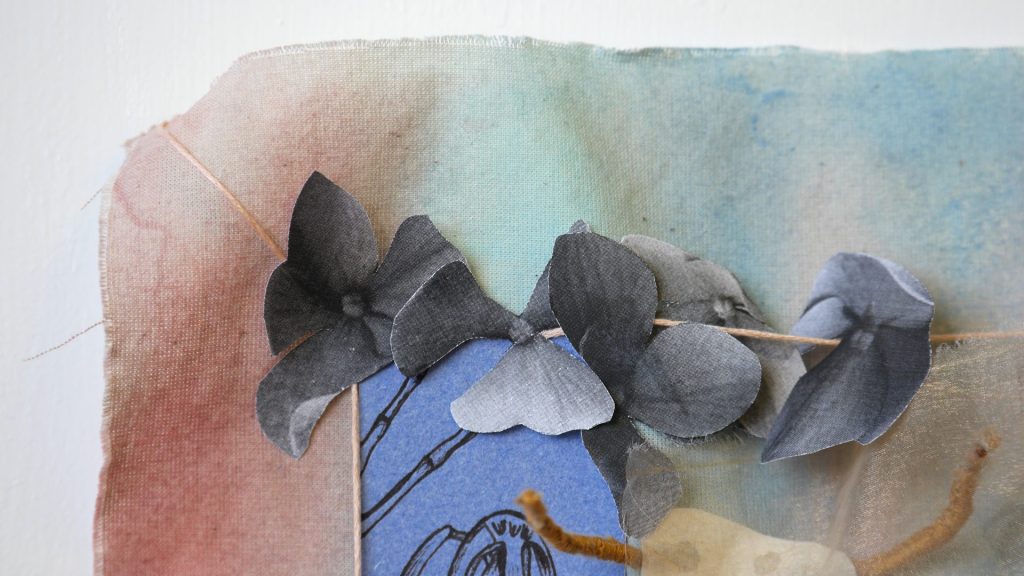
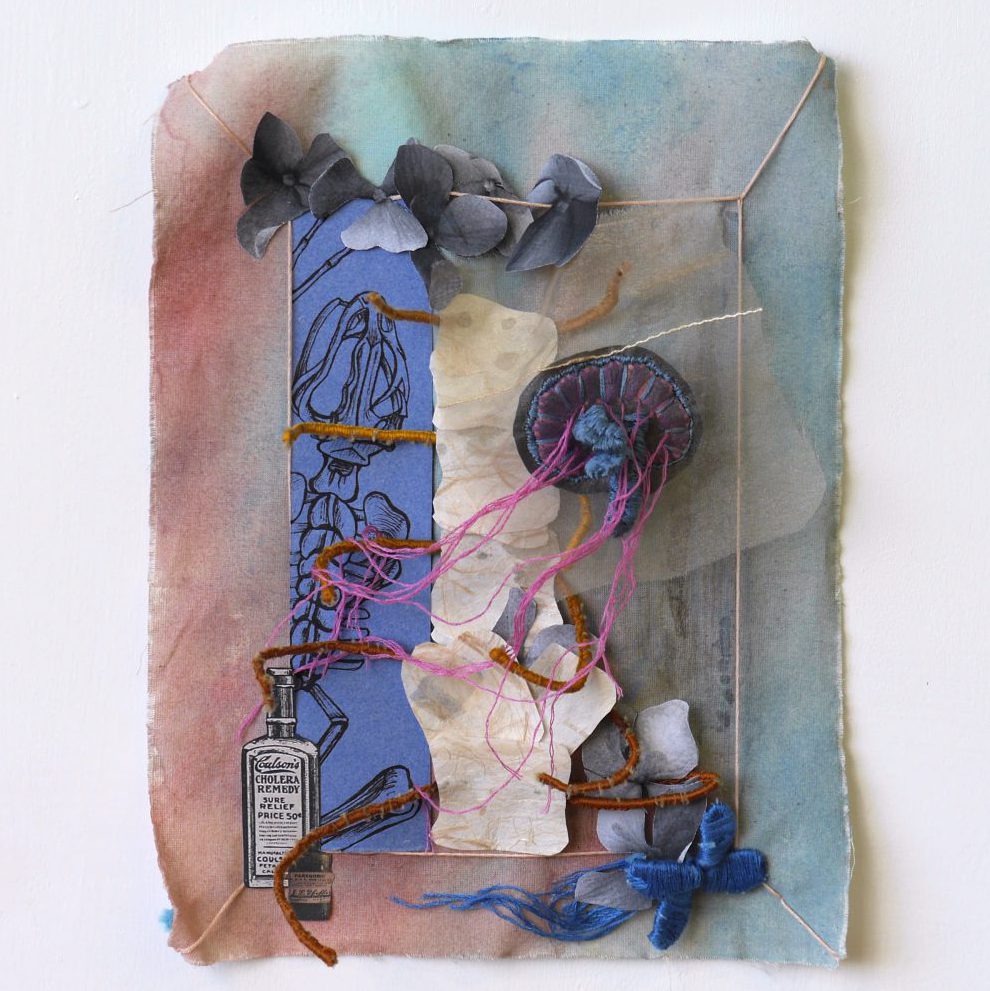
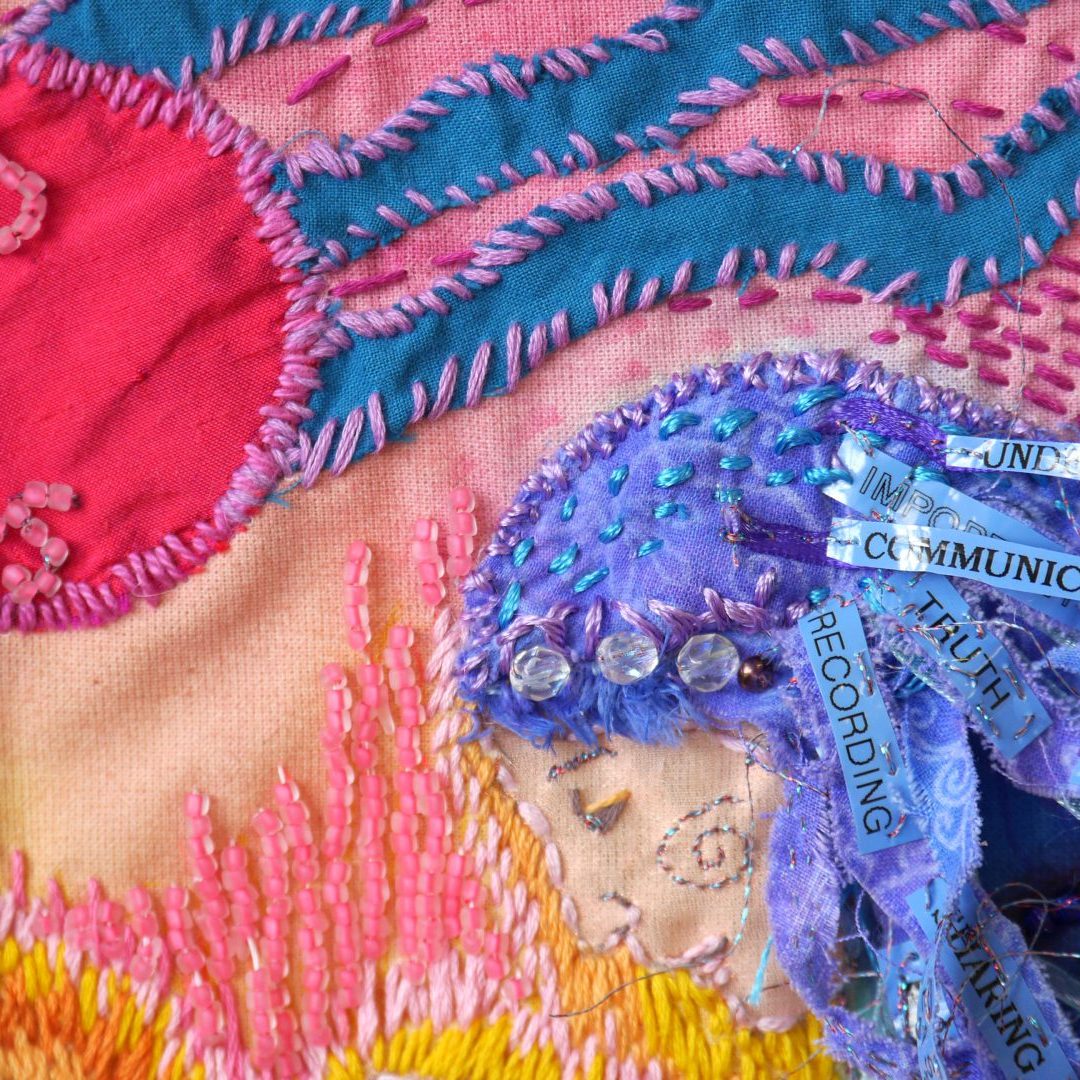
Held within the four walls. Unpermitted to leave this space. Forced to turn inward. Outward is out of reach for the moment. I notice my hands. The quiet space invites them to begin making things again: an attempt to connect the experience to other’s experiences. What is art for? To function through difficult moments like these.
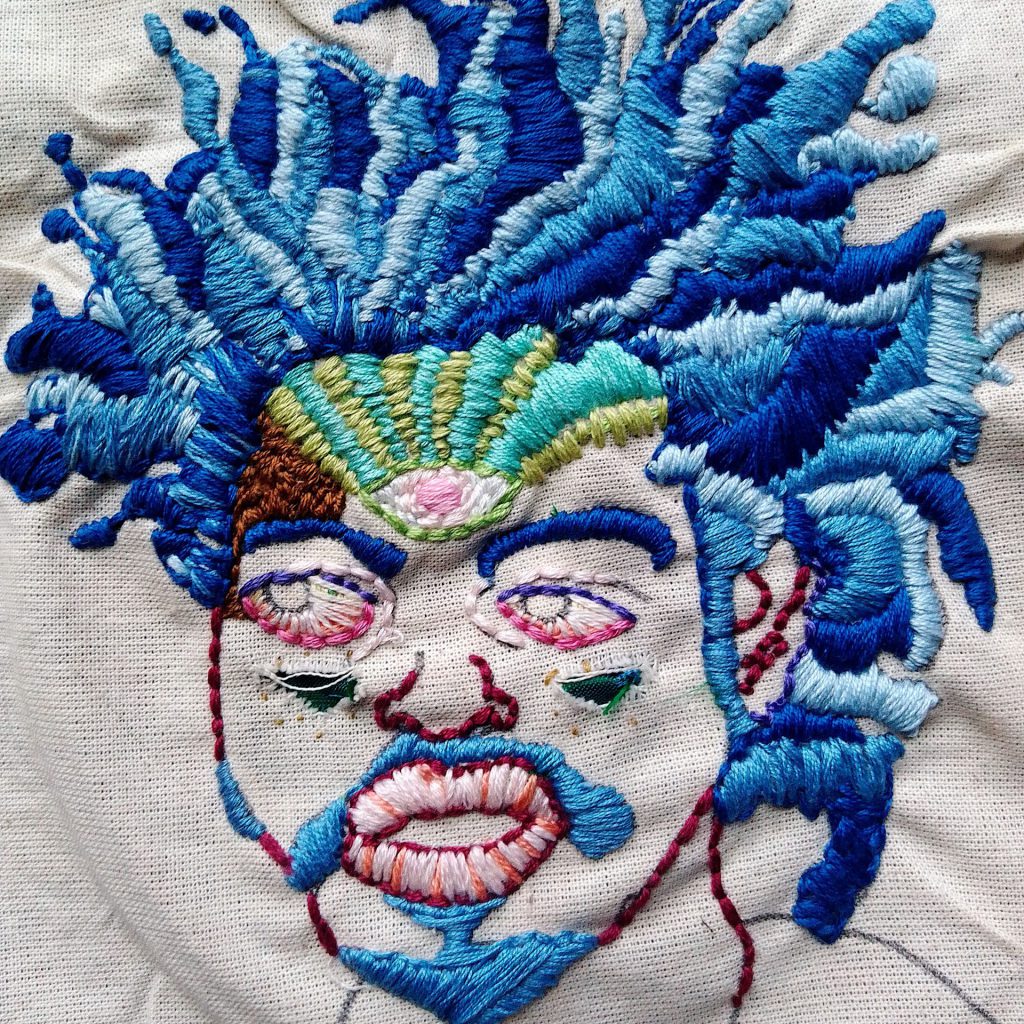
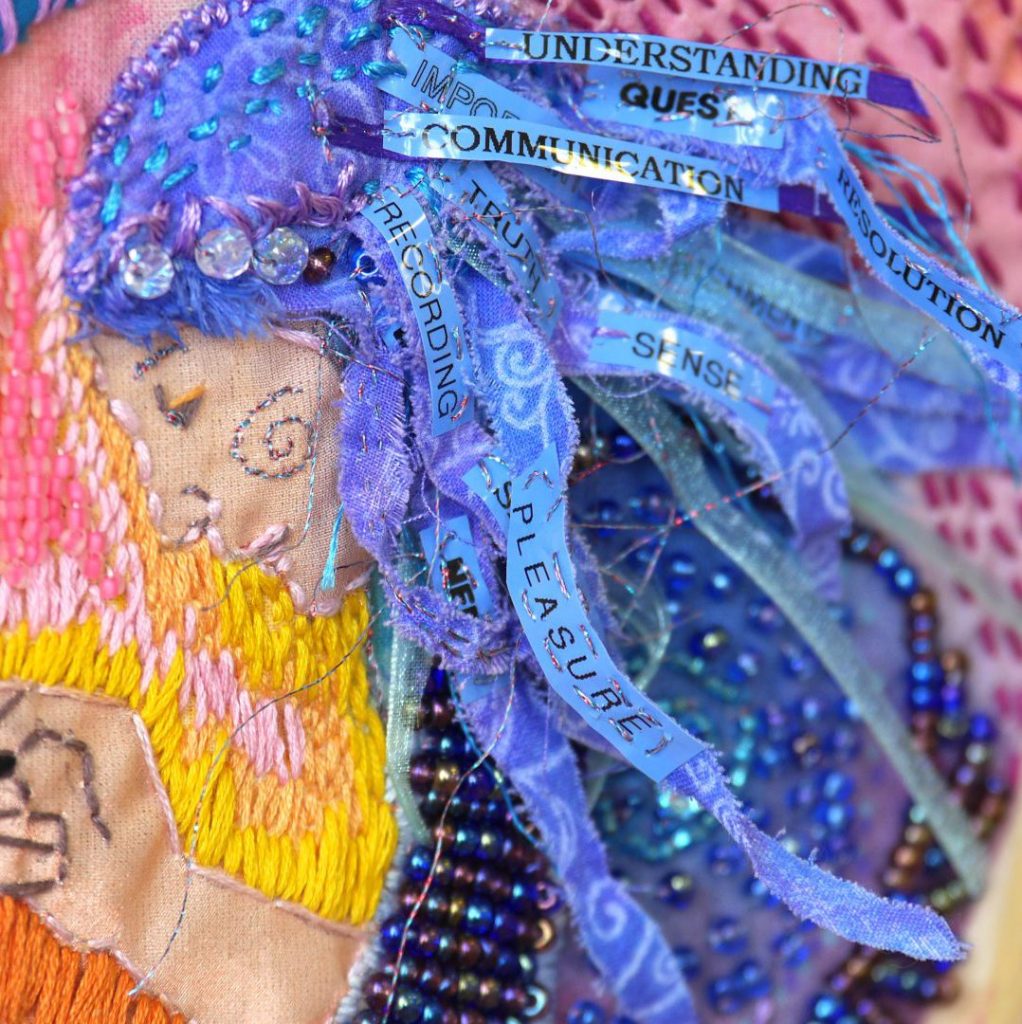
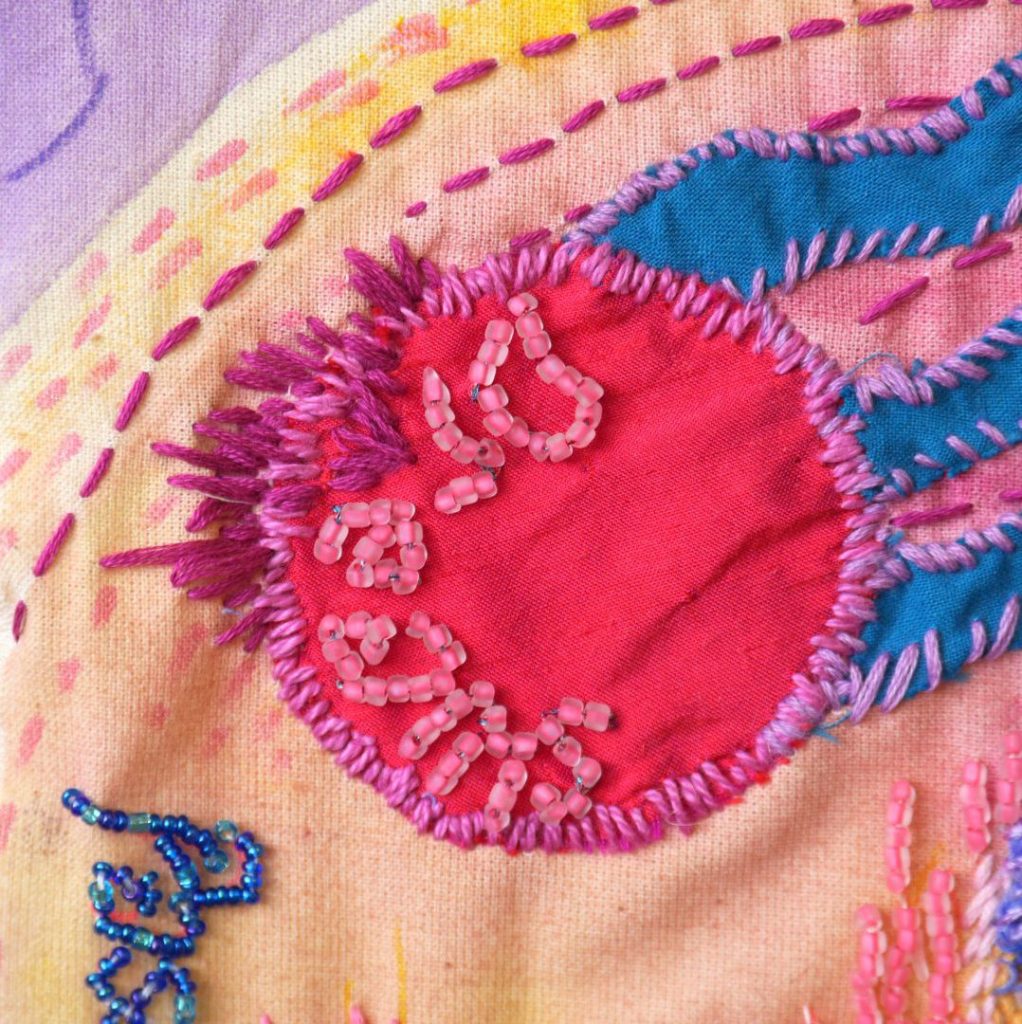
My spine exposed, ribs thin and wiry and twisted out of shapery, I attempt to look for a cure for the ache. Exposed amphibian bones holding me up, and flowers overgrowing the spaces between me. The spaces between the pain of the old and the taste of the beautifully unknown next thing. The flow of the heart, moving like a jellyfish, dangerous in the wrong hands and in the wrong waters. Remembering who I was, who I am in this moment, and who I am becoming.
PETRA HOSS // Breadalbane, Prince Edward Island, Canada
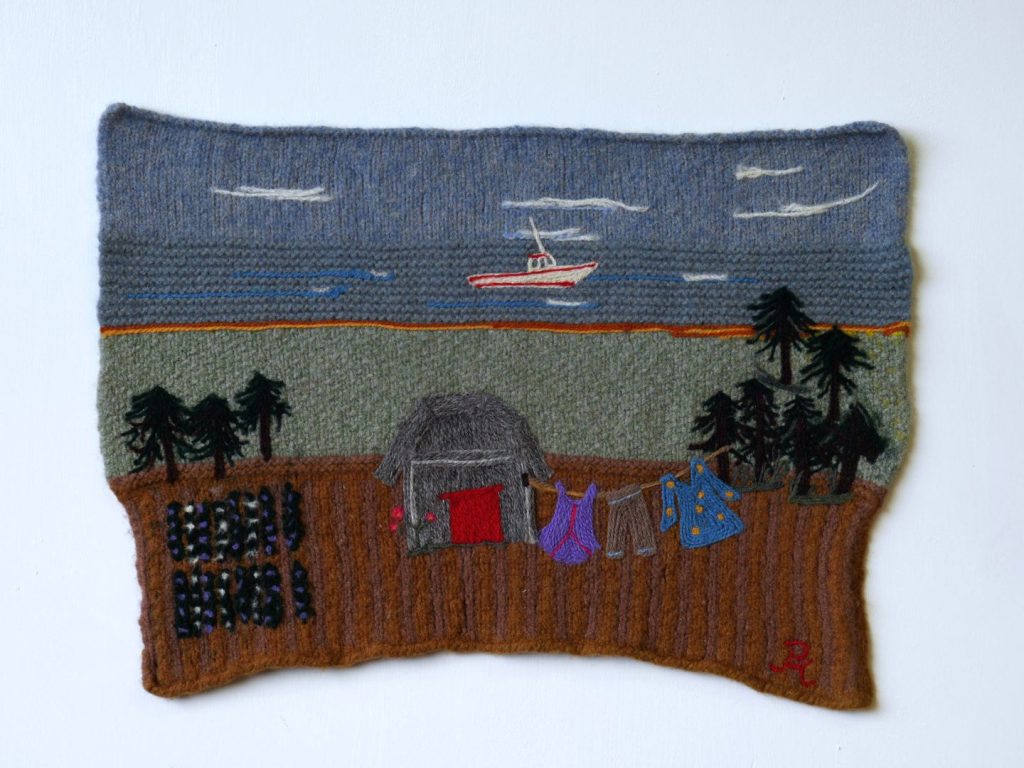
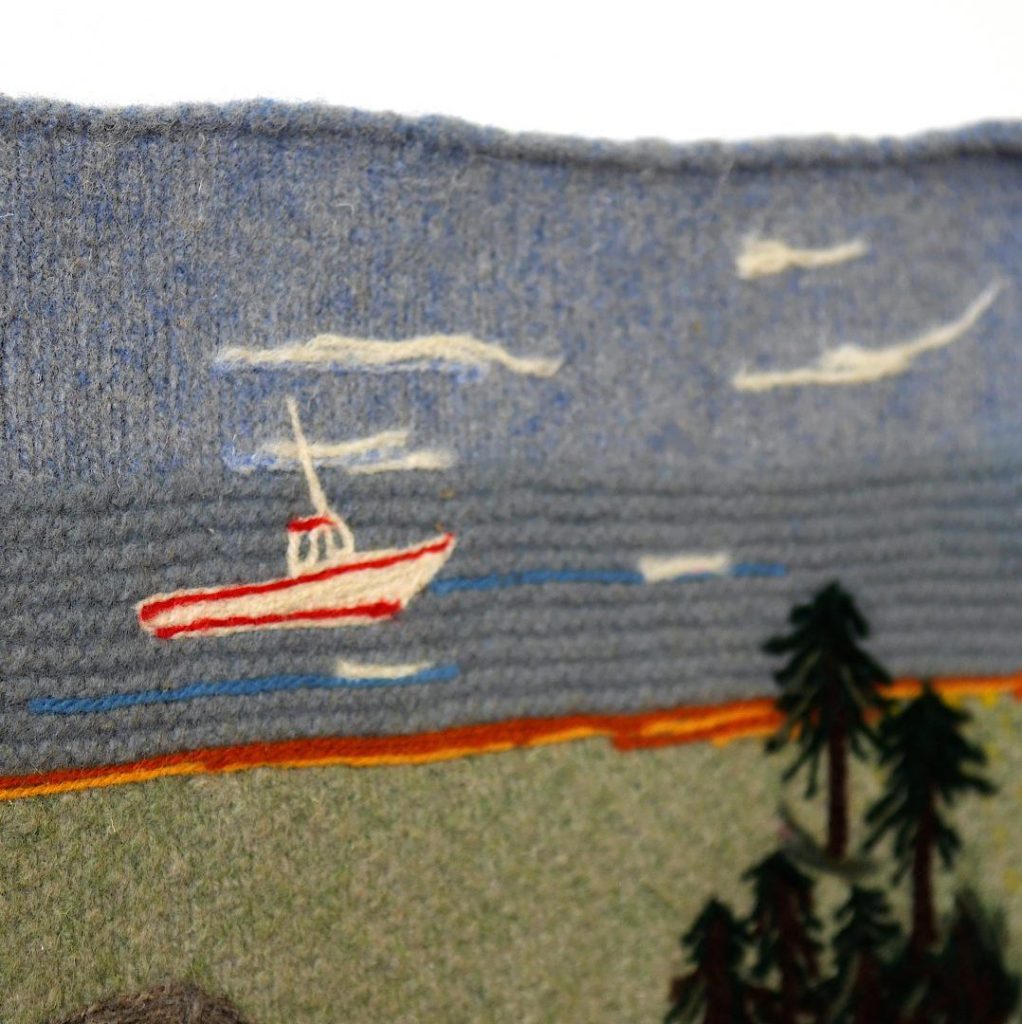
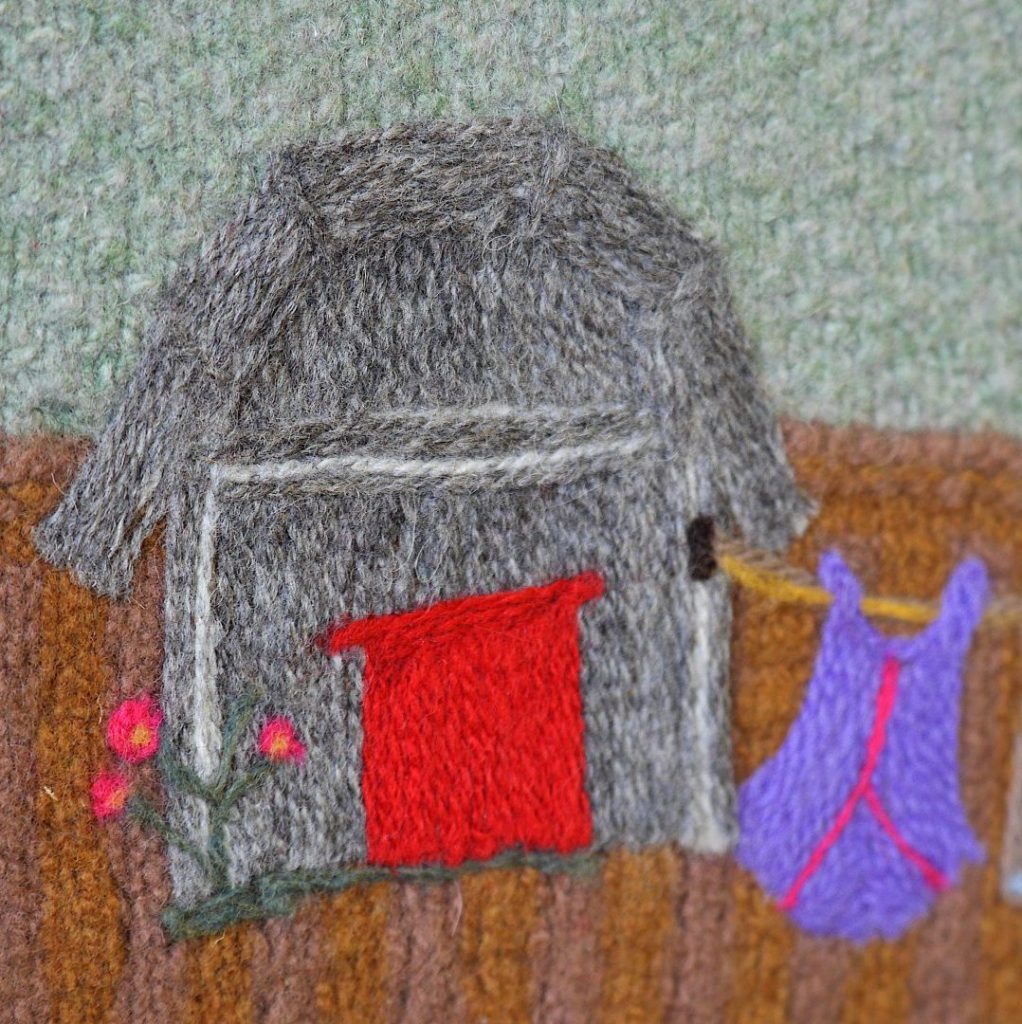
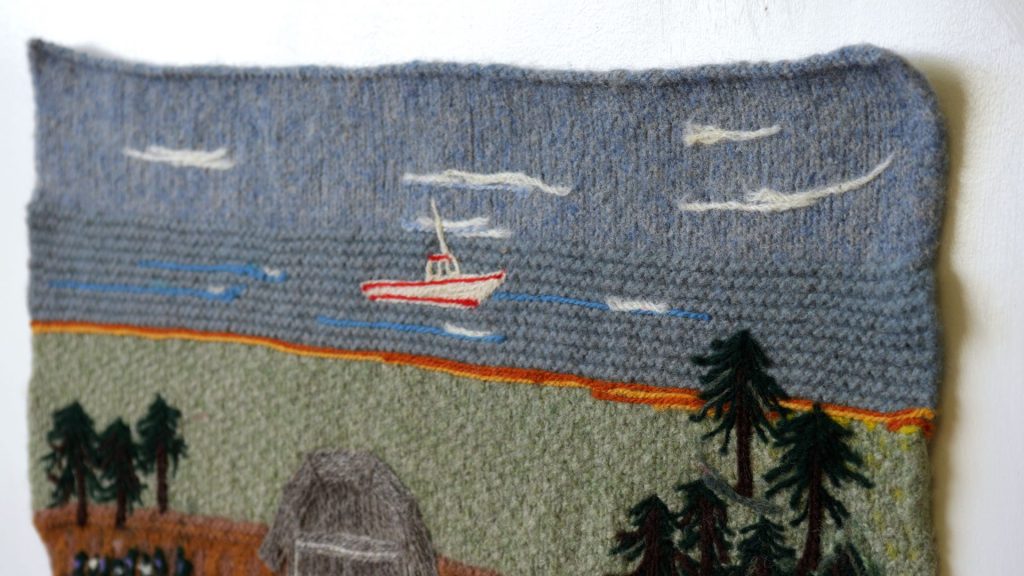
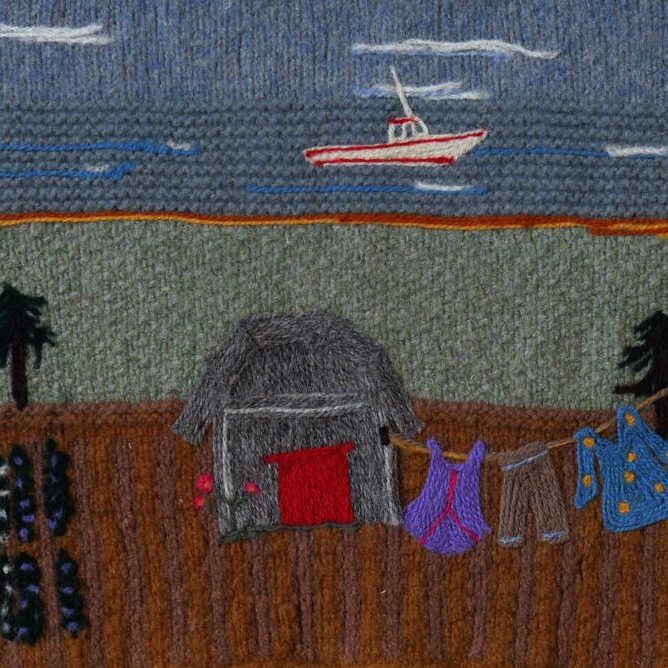
I used wool as my art material, which was grown and processed by McAusland Woolen Mills in Bloomfield here on PEI, where I live presently. The smell of lanolin is a comforting sensation and cradled in the knowledge of sustainability, an effort we all should try to achieve in order to survive this pandemic.
This project gave me time and space to acknowledge and reflect on our out of control consumerism and the unsustainability of it. PEI is one of the few places that could sustain itself with its agriculture and fisheries. Most of the population lives in rural areas and grows vegetable gardens. Many people still practice the art of gathering wild herbs, beneficial plants and mushrooms, a practice that has been forgotten by many.
Art gives me comfort in the knowledge that we can survive this pandemic with the resources provided by the nature combined with our ancient knowledge of procuring food, clothing and shelter without exploiting our planet.
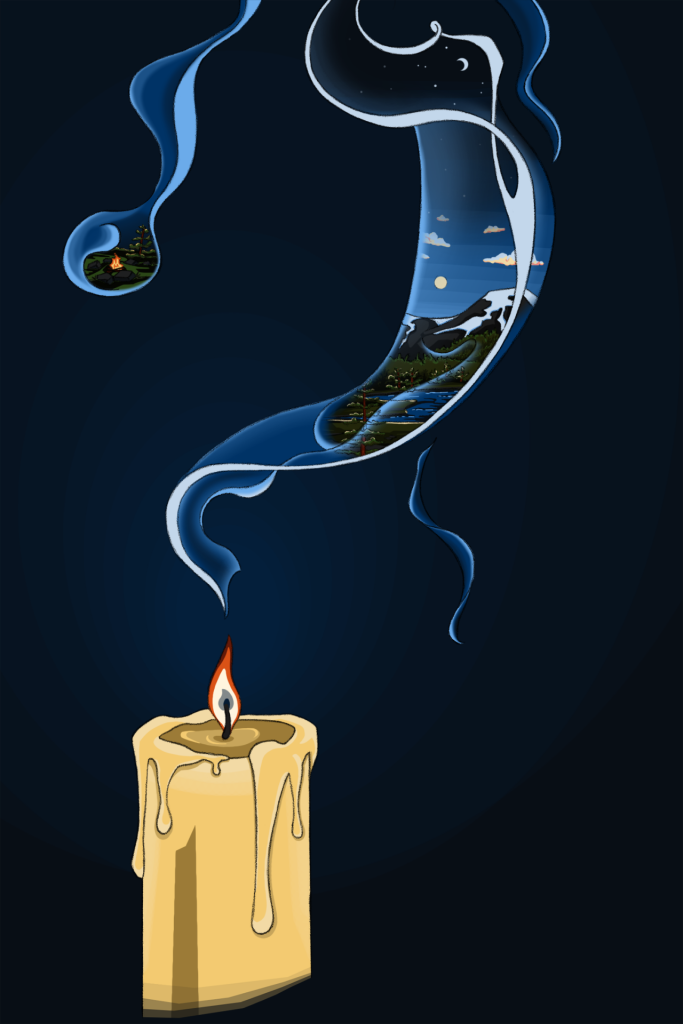
PANDORA HOBBY // Montréal, Quebec, Canada
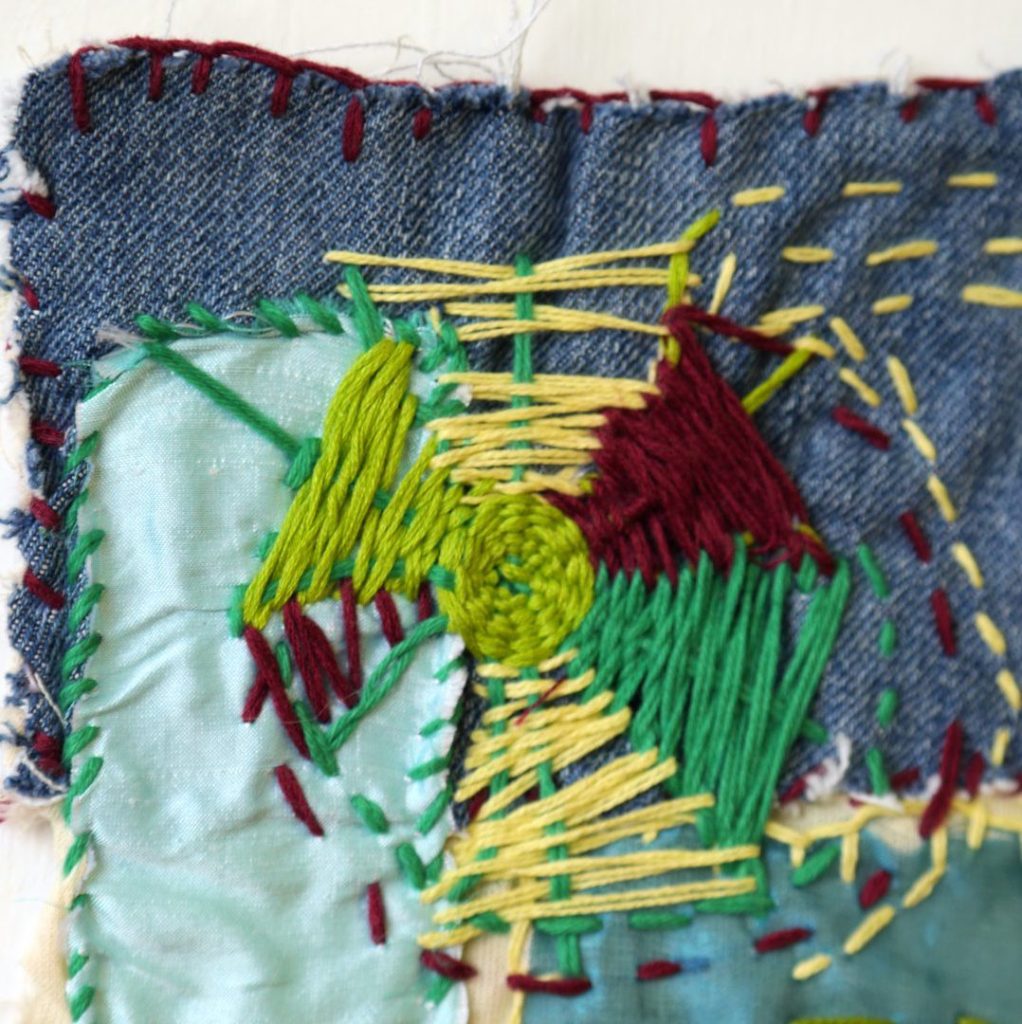
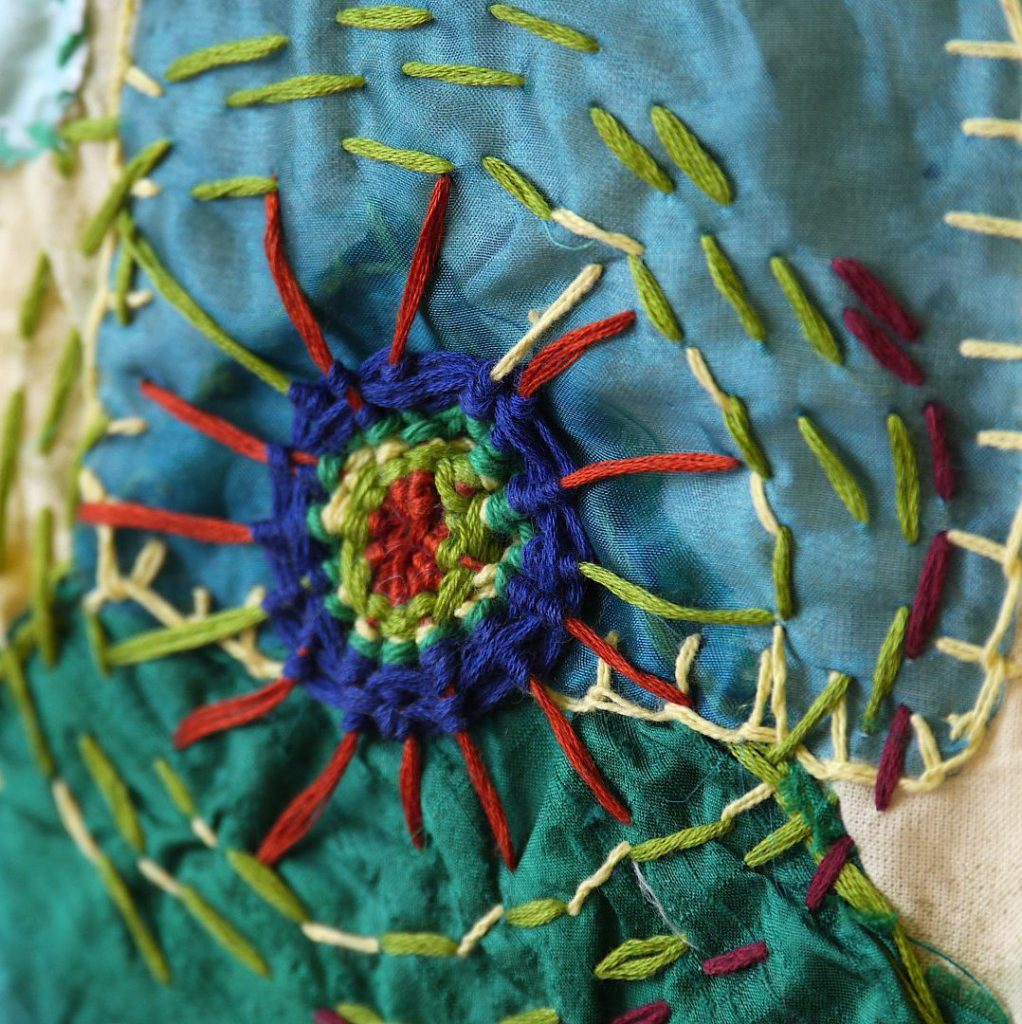
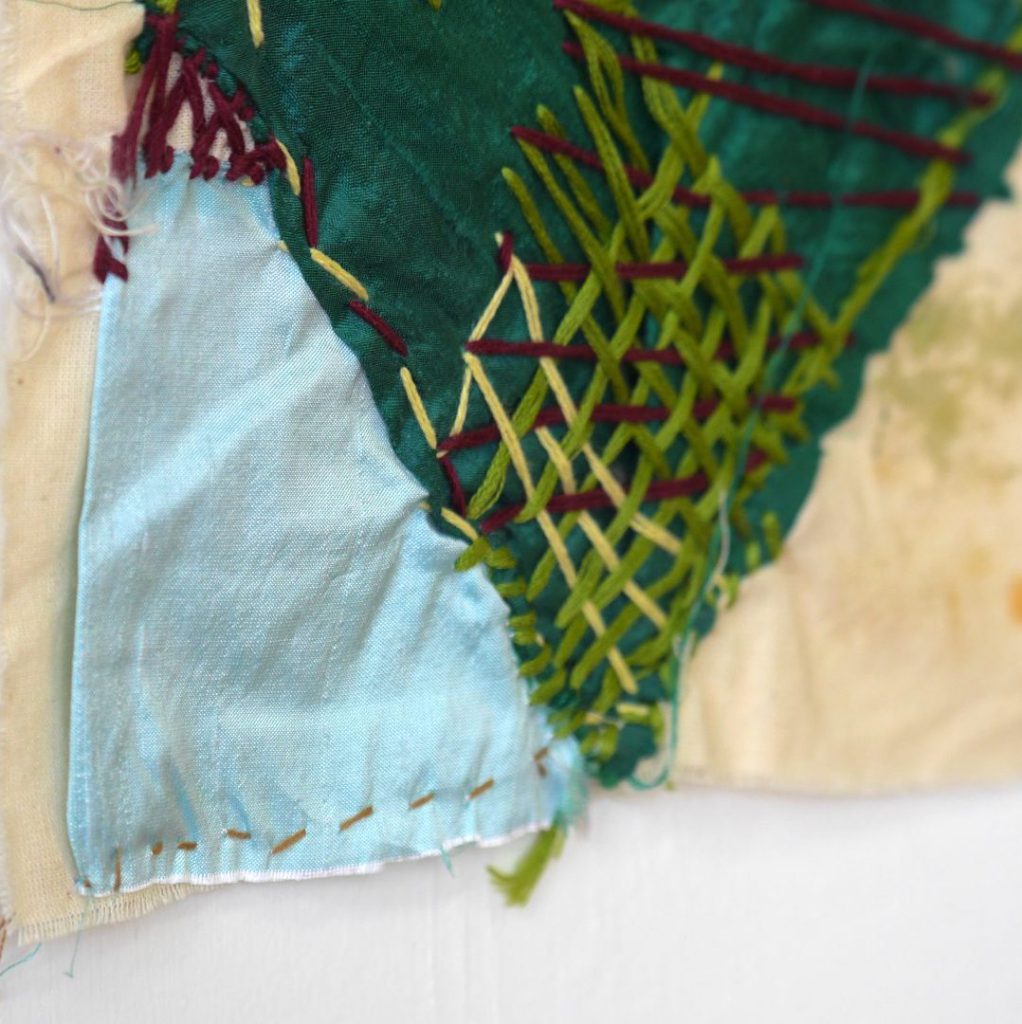
What is art for?
Art is for reflecting and refracting
Droplets falling in a pool
Causing resonating, reverberating potentialities
Until they are seen as solutions
Orbits encircling in
Or
Reverberating out
NANCY LONG // Montréal, Quebec, Canada
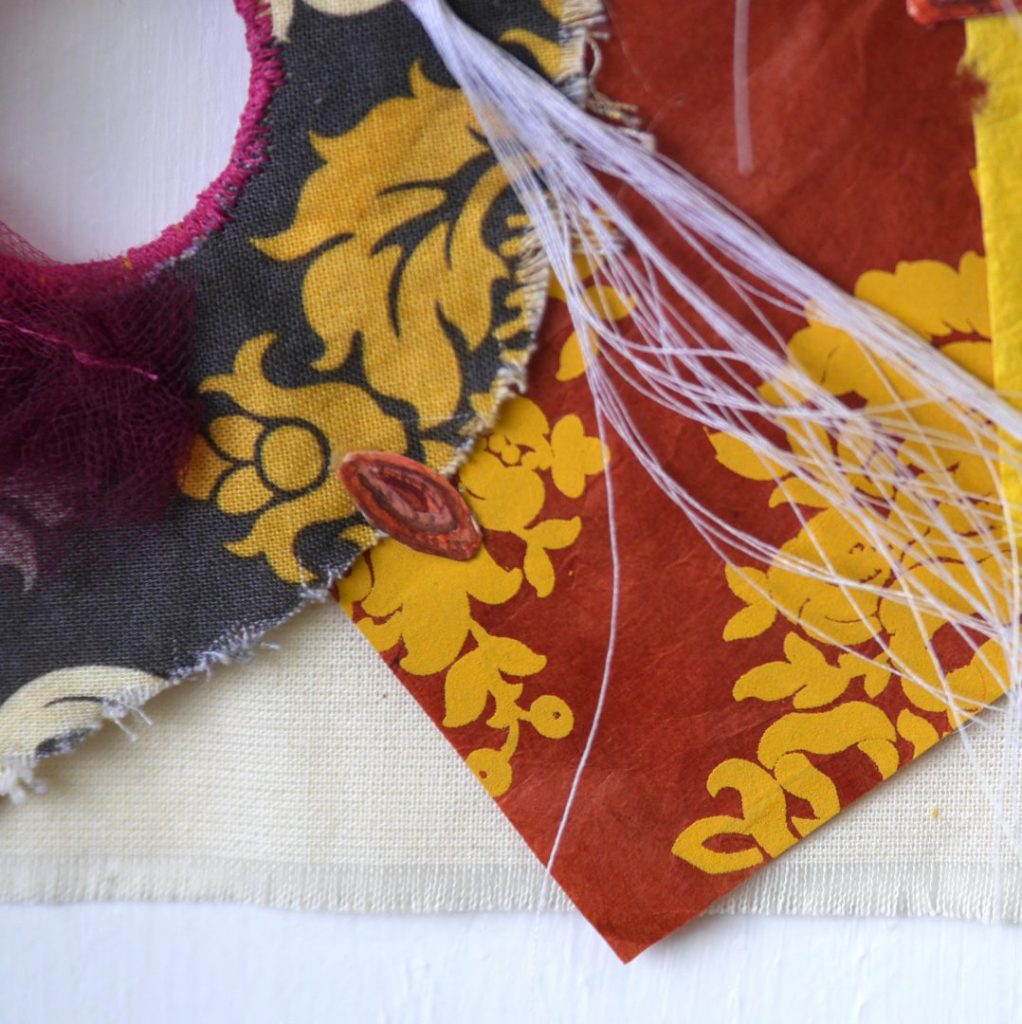
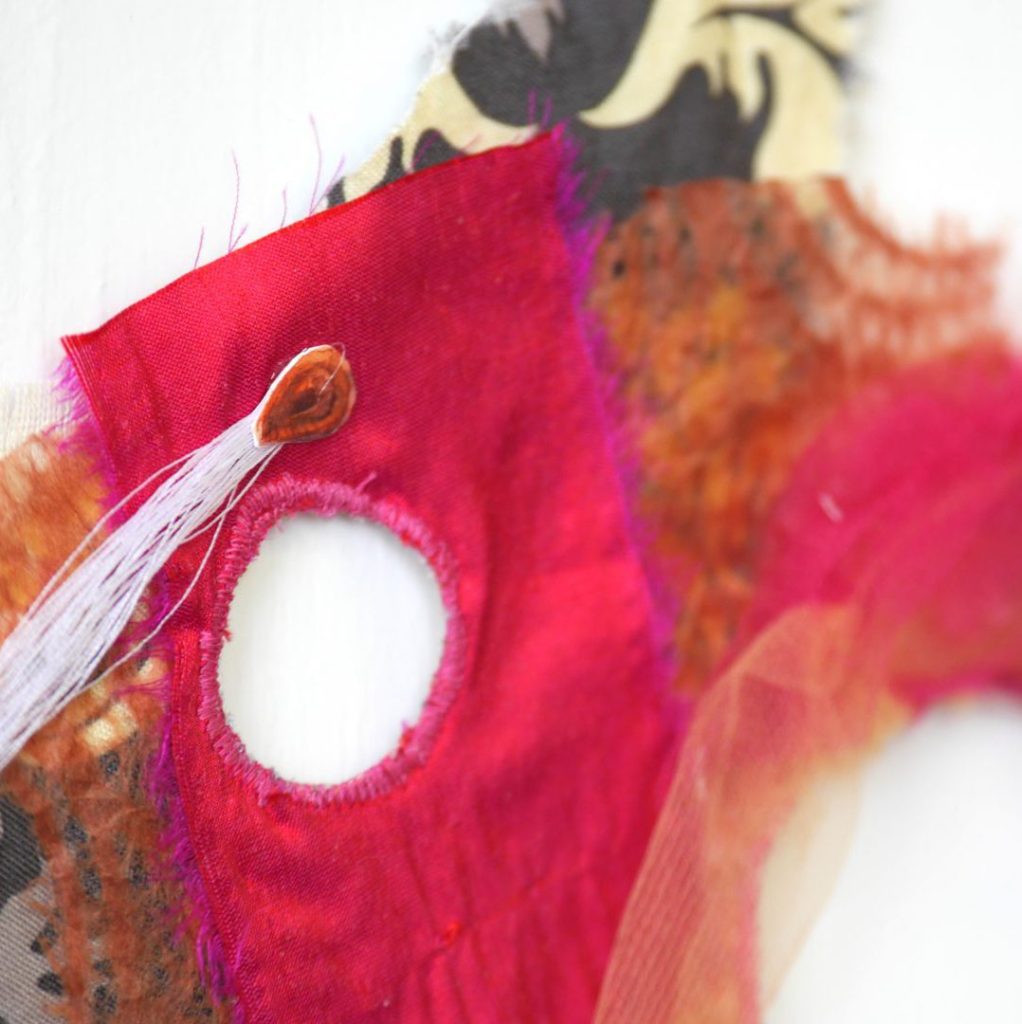
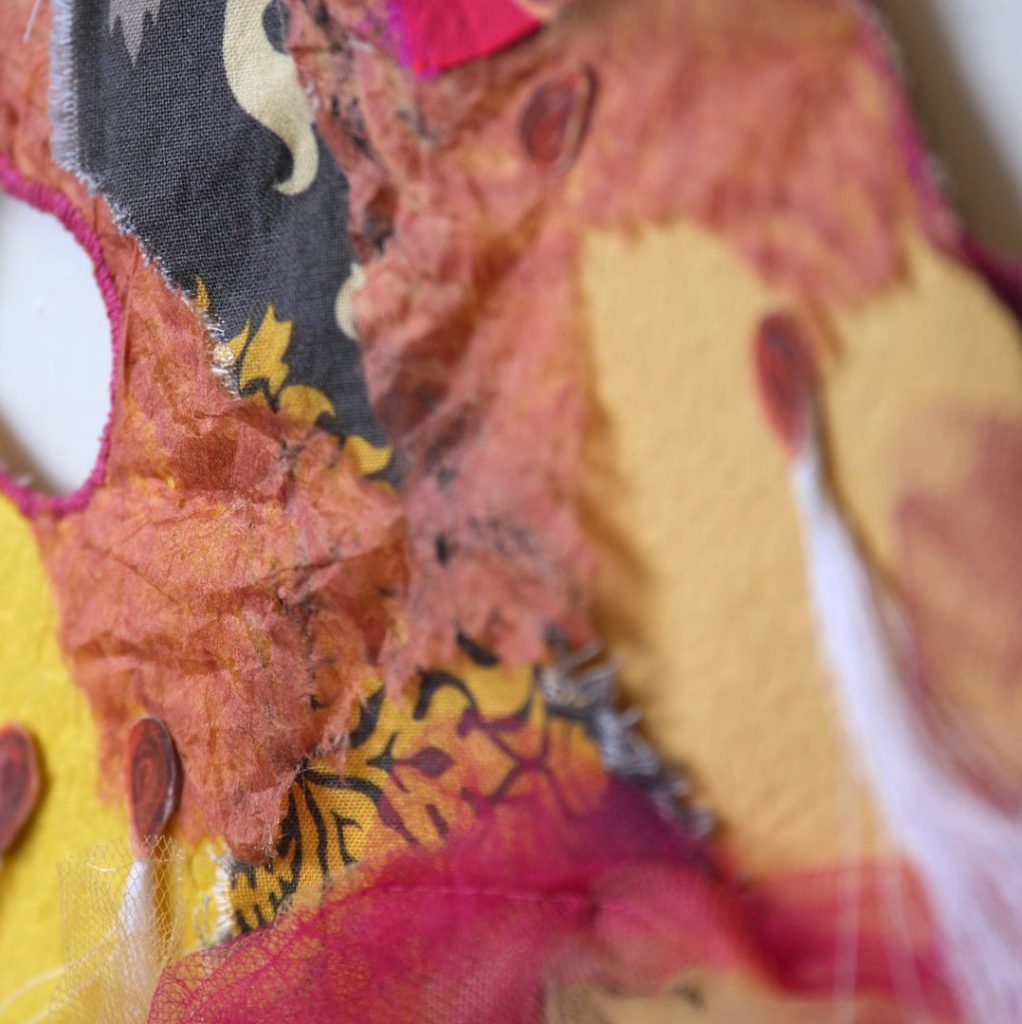
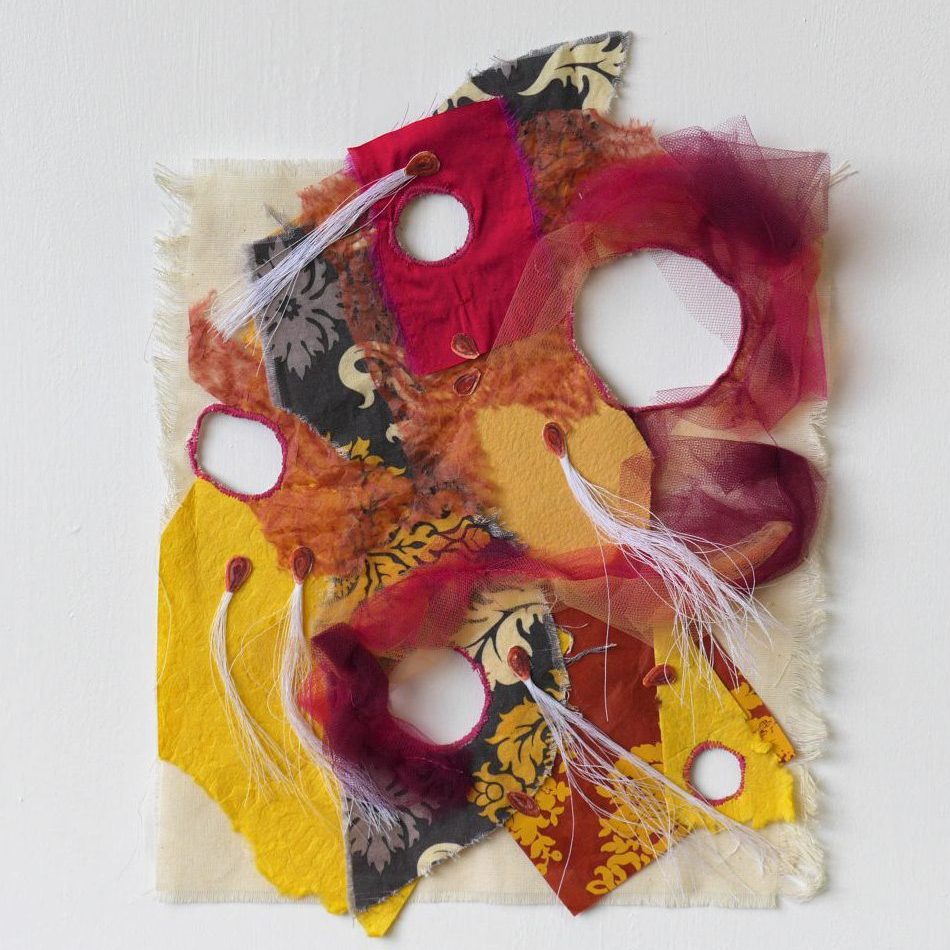
The abandon with which I put my materials together for this piece was something foreign to me. I am a planner. I never start with an experiment; I start with an idea. The idea is worked out as far as I can take it in my sketchbook, and only then do I start the process of making. This time however, I simply started cutting holes in the canvas and pulling some of the threads out, cut more fabric, glued and sewed things together, and voilà, done with no pre-determined plan. Ok, not quite. I couldn’t abandon my methods entirely. In contemplating the result, I wasn’t completely at ease submitting a purely instinctually-made piece because it felt unfinished. It seemed out of balance having no deliberate element. So, I stared at it a long time until an idea made its way in, and I reached for my sketchbook. The abandoned threads I had plucked out reminded me of the tails of milkweed seeds; their tails riding the wind to unknown destinations of hope. In replicating these seeds and adding them to the piece, I both acknowledged my established scrupulous planning process and allowed for the unfamiliar to have been my initial guide. I really enjoyed making this piece, especially during the difficult times we’ve been facing. It fueled my hope.
MARILYN GAA // Edmonton, Alberta, Canada
The project that explores artists’ reactions to the COVID-19 pandemic has prompted me to examine my personal response to these times.
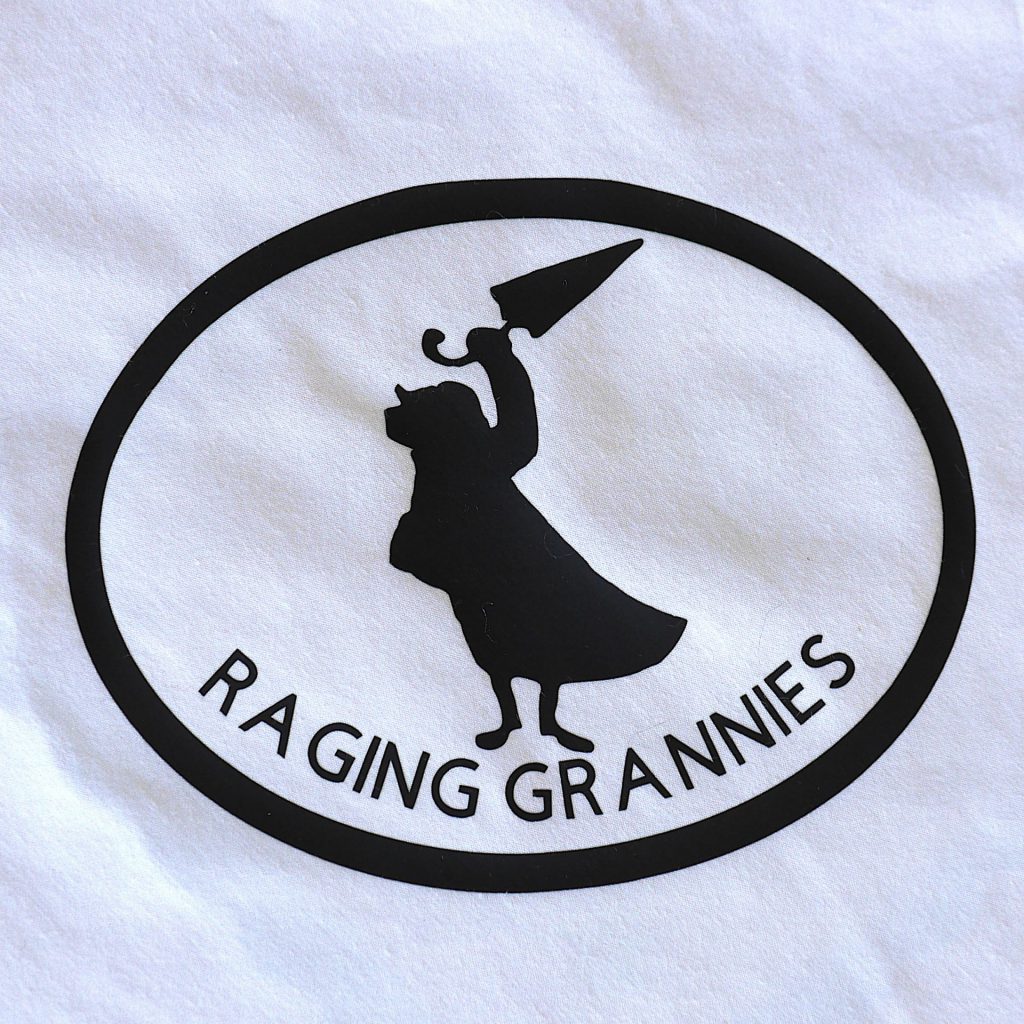
My main creative outlet in recent years has been the Edmonton Raging Grannies. Edmonton Raging Grannies is more than 25 years old, with a few founding members and many interesting women from many professional backgrounds: teachers, librarians, a minister, and more. We communicate with the public in many ways, but our main practice is singing songs with original words that “speak truth to power” about the provincial, national and international issues.
We are partners with numerous groups that work for positive change in our society: Friends of Medicare, Public Interest Alberta, Occupy Edmonton, Greenpeace, Idle No More and many others. We have earned respect as dedicated activists who offer a lighthearted musical message that supports the specific issue of the day. Our role as allies to these groups is valued. We can work behind the scenes to make the event more effective and we sometimes coach novice organizers to get a better result.
The restrictions of social distancing and masking have presented creative challenges to those that feel issues require a public event. Raging Grannies have performed and demonstrated wearing our usual attire, flouncy hats and skirts, shawls and decorated with many political buttons. Our new accessory is a bandana mask with the Granny logo to identify us as a group. The concept is “contagious.” Two other Granny gaggles, in Calgary and Victoria, have placed orders for our masks. Other activist groups have also expressed interest in ordering masks to identify them.
GENEVIÈVE BOISVERT // Sacramento, California, USA
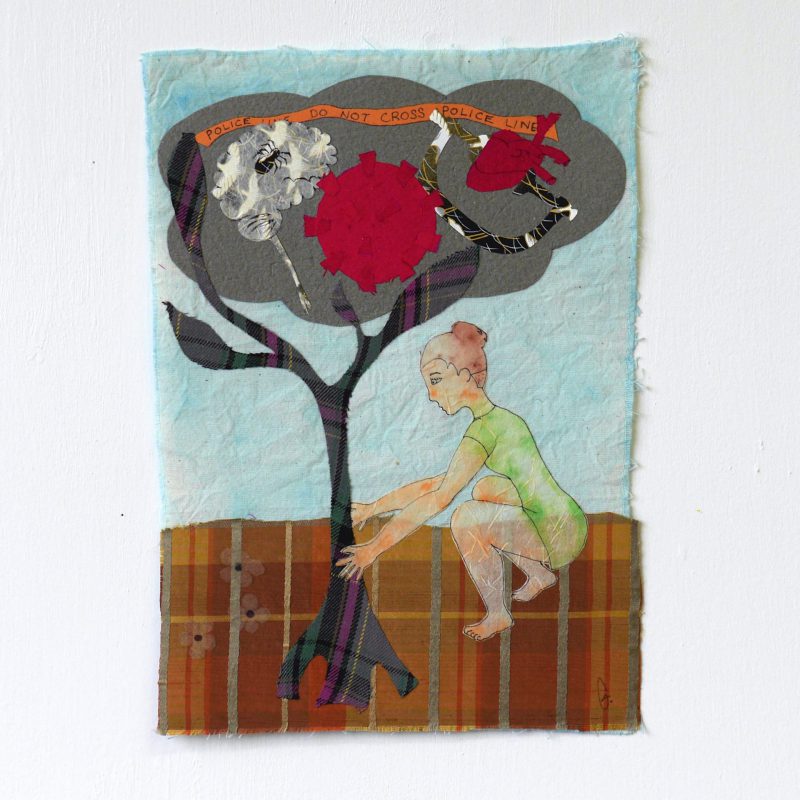
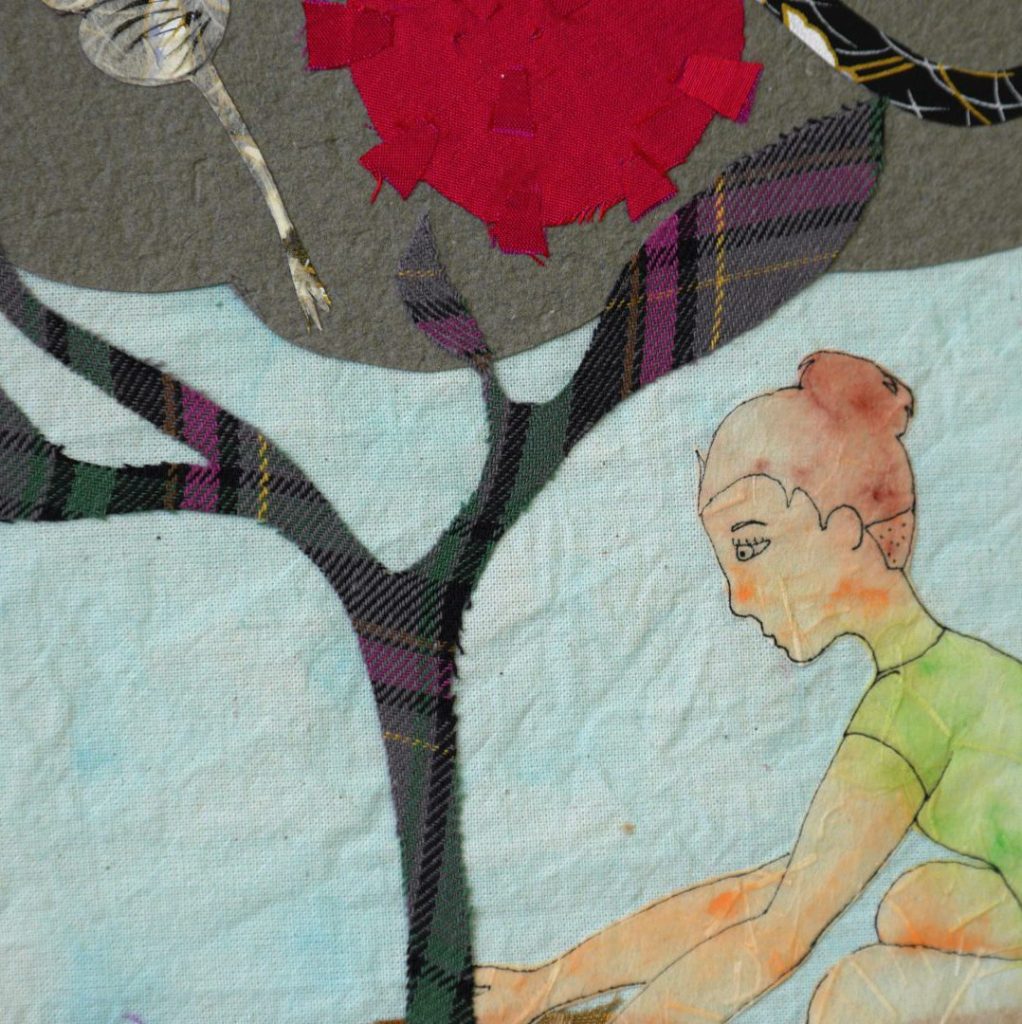
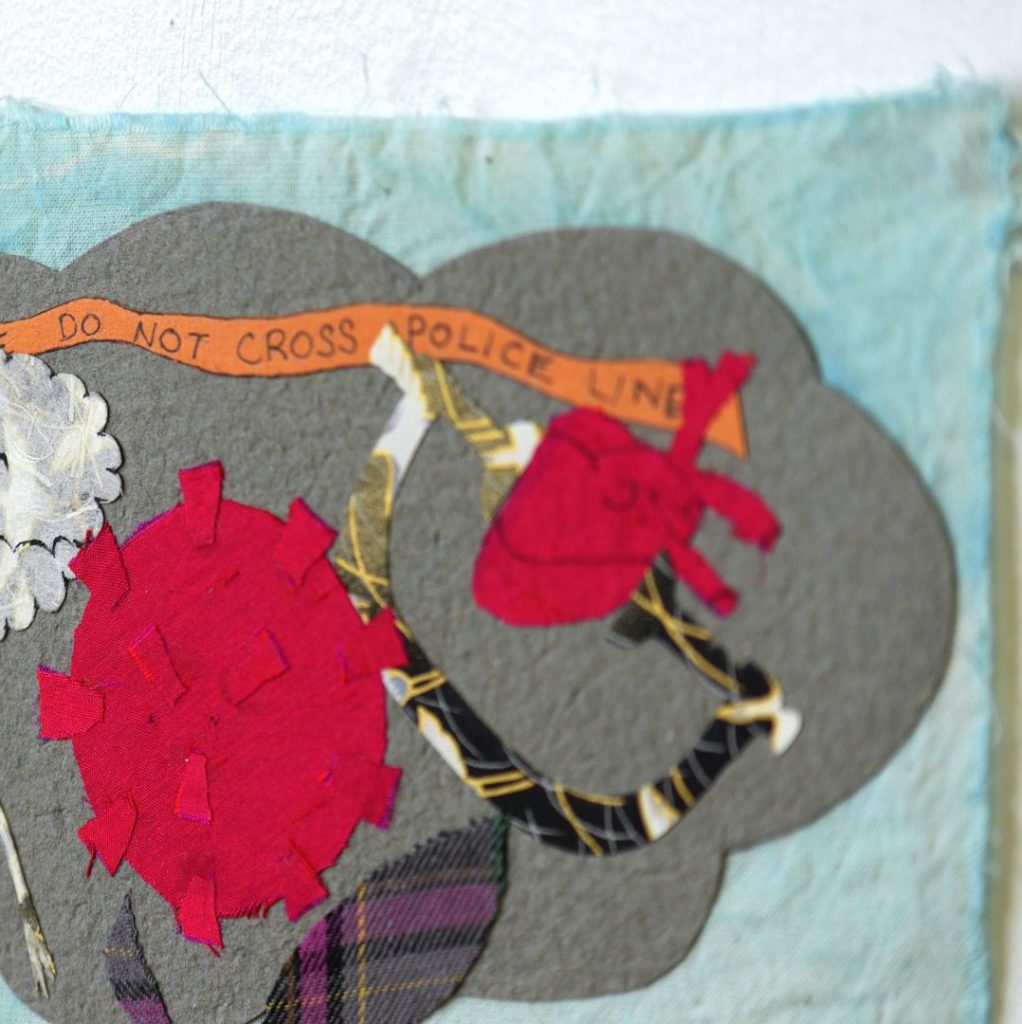
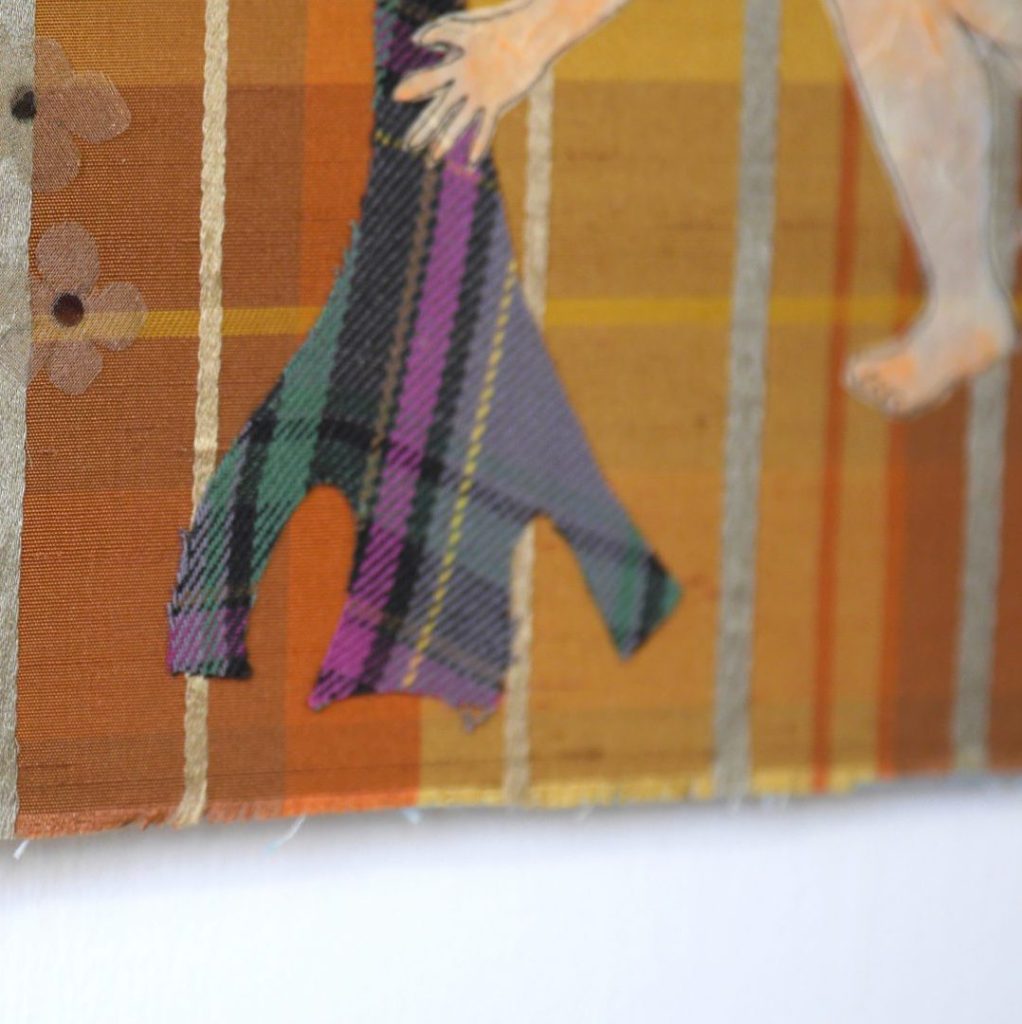
L’art est un filigrane dans ma vie auquel je m’adonne que trop peu. Comme le jardinage, il m’apporte un baume dont j’ai plus que besoin. Ce projet m’est venu lorsque la pandémie, les feux de forêt et la violence étatique rageaient au-dehors et cet espace intérieur a été salvateur.
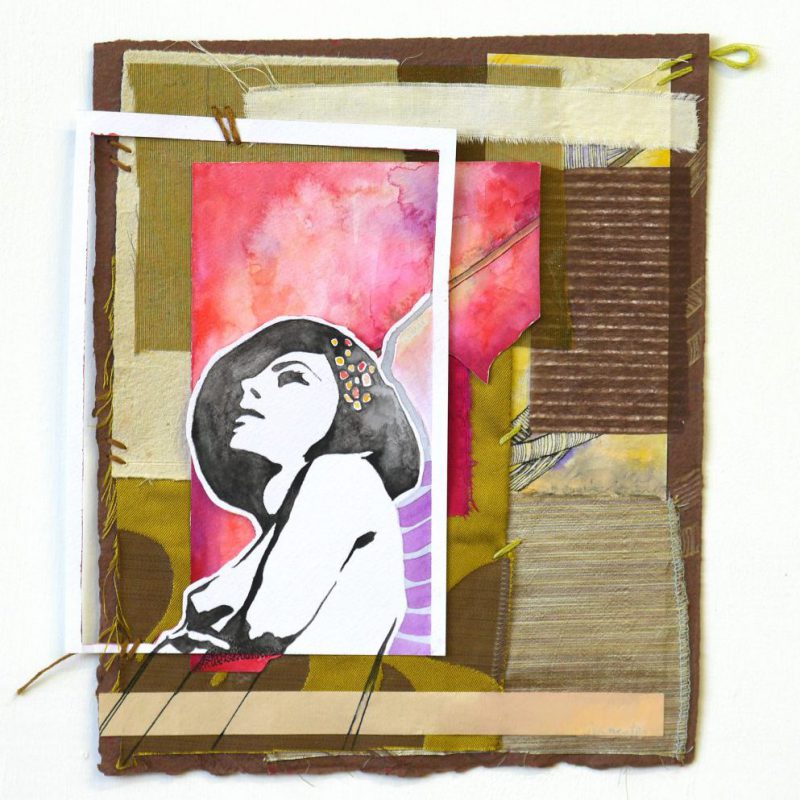
J’ai choisi d’utiliser tous les matériaux mis à ma disposition (ou presque!) et j’en ai rajouté un. Cette pièce est donc constituée de textiles divers, carton, papiers, encre et aquarelle.
KATE MADIGAN // Kaneohe, Hawaii, USA
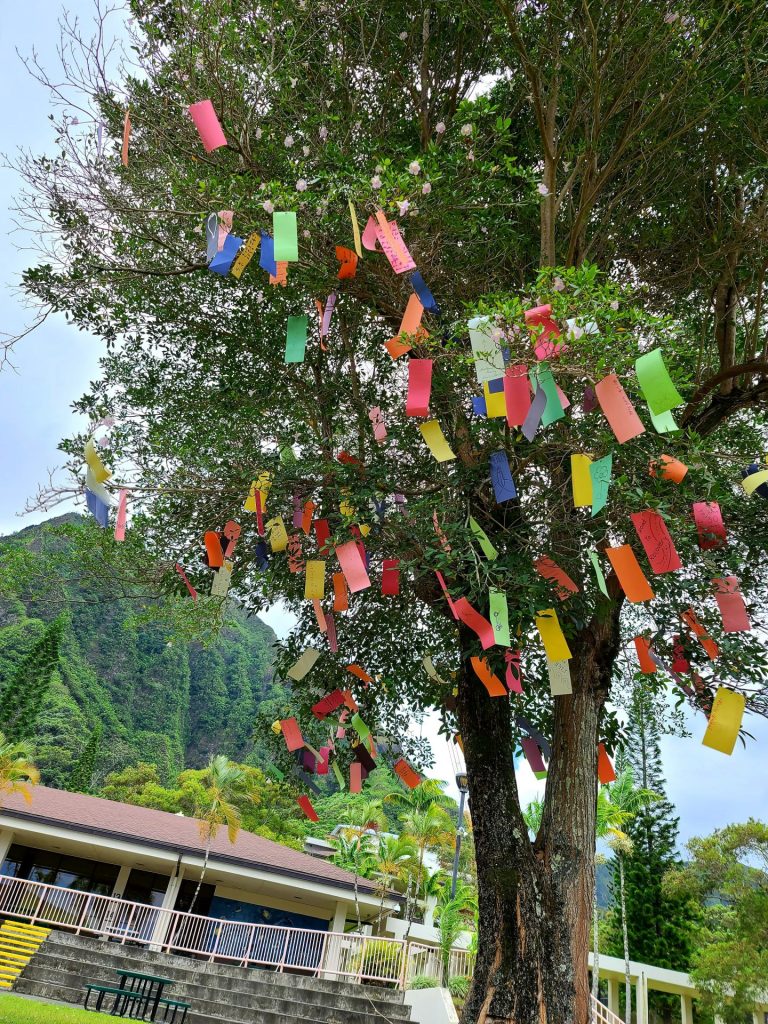
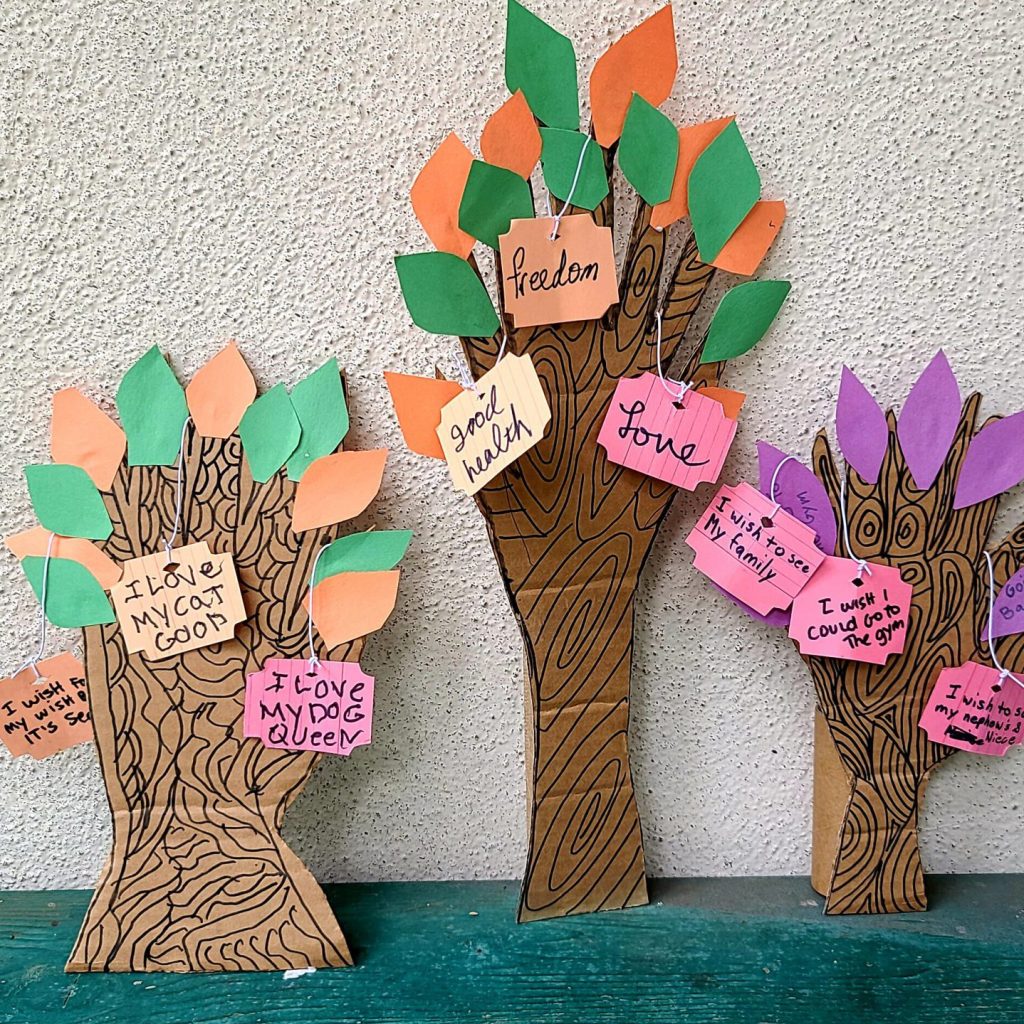
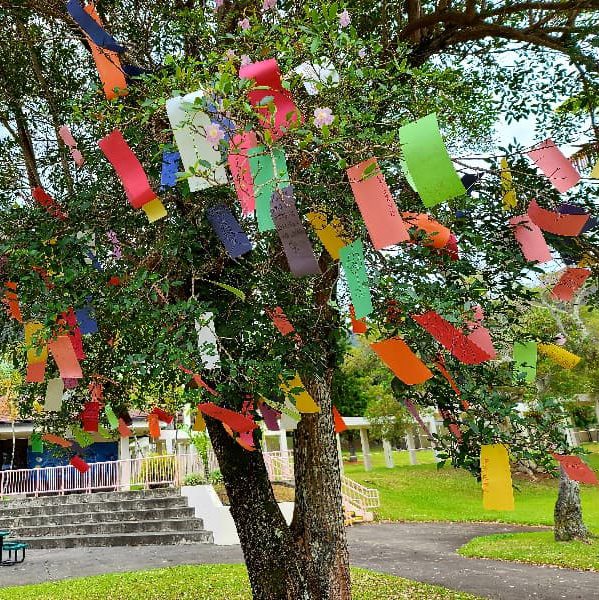
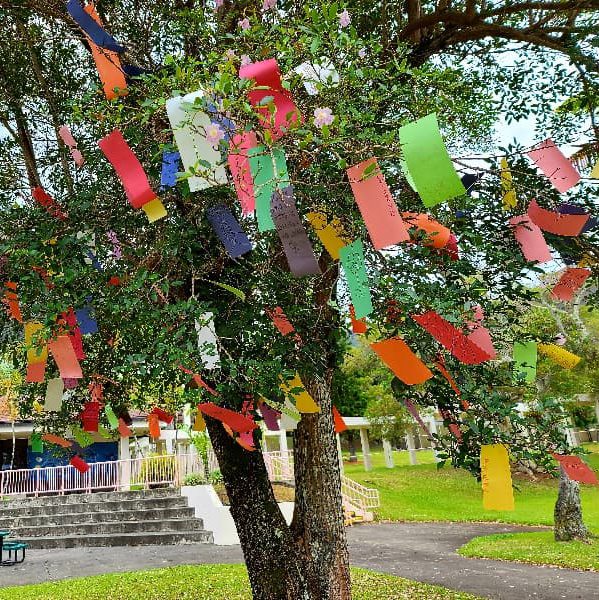
Tuesday at Hawaii State Hospital we made a “wish tree.” July 7rh is traditionally celebrated in Japan with a celebration called Tanabata Festival and they make wish trees. A couple of days ago hundreds of patients and staff wrote down their wishes and they hung them up. Art that excites me is art that brings people together, brings out the best in people. In this wish tree our Hospital community was able to be reminded how strong we are, how much we have, care about each other, and would do for each other.
One level of healing is an effort to address cultural healing between Japanese and Americans here on Oahu where Pearl Harbor is.
BEVERLY NAIDUS // Tacoma, Washington, USA
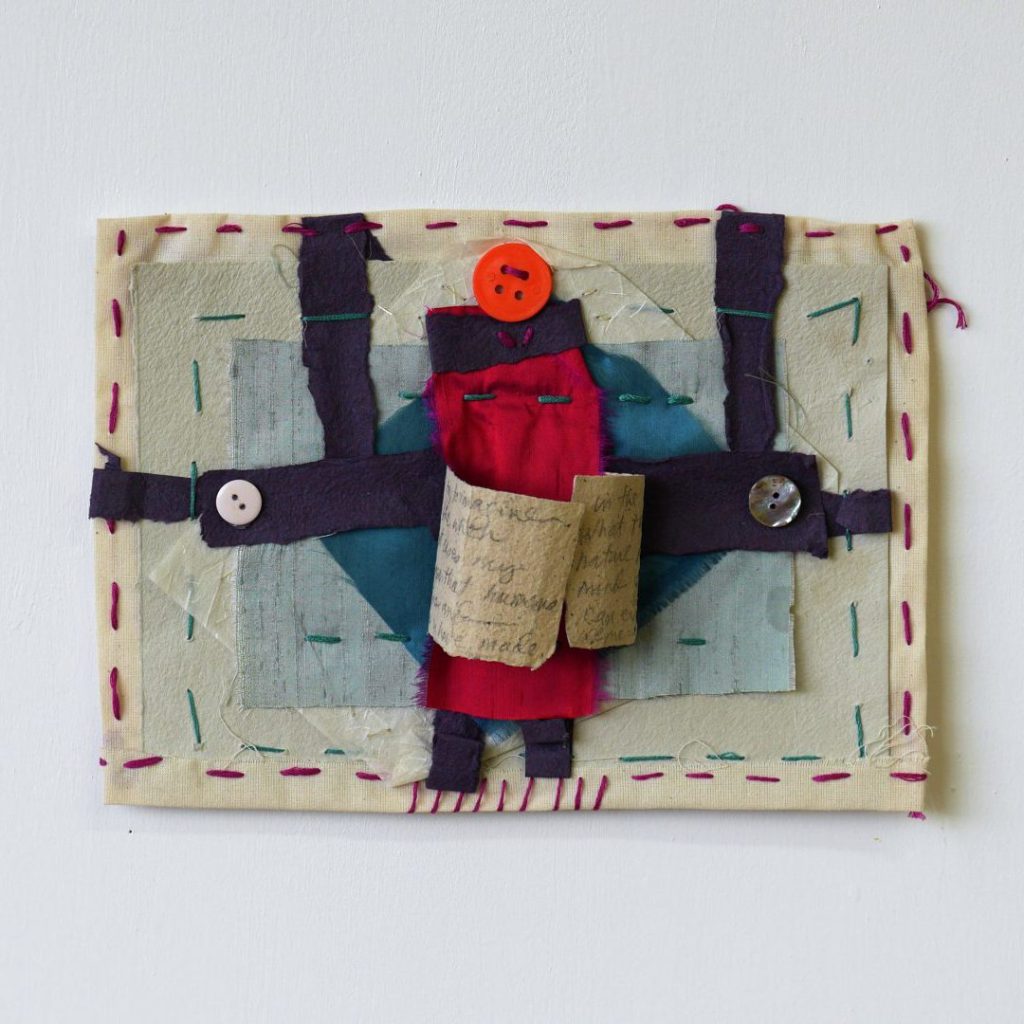
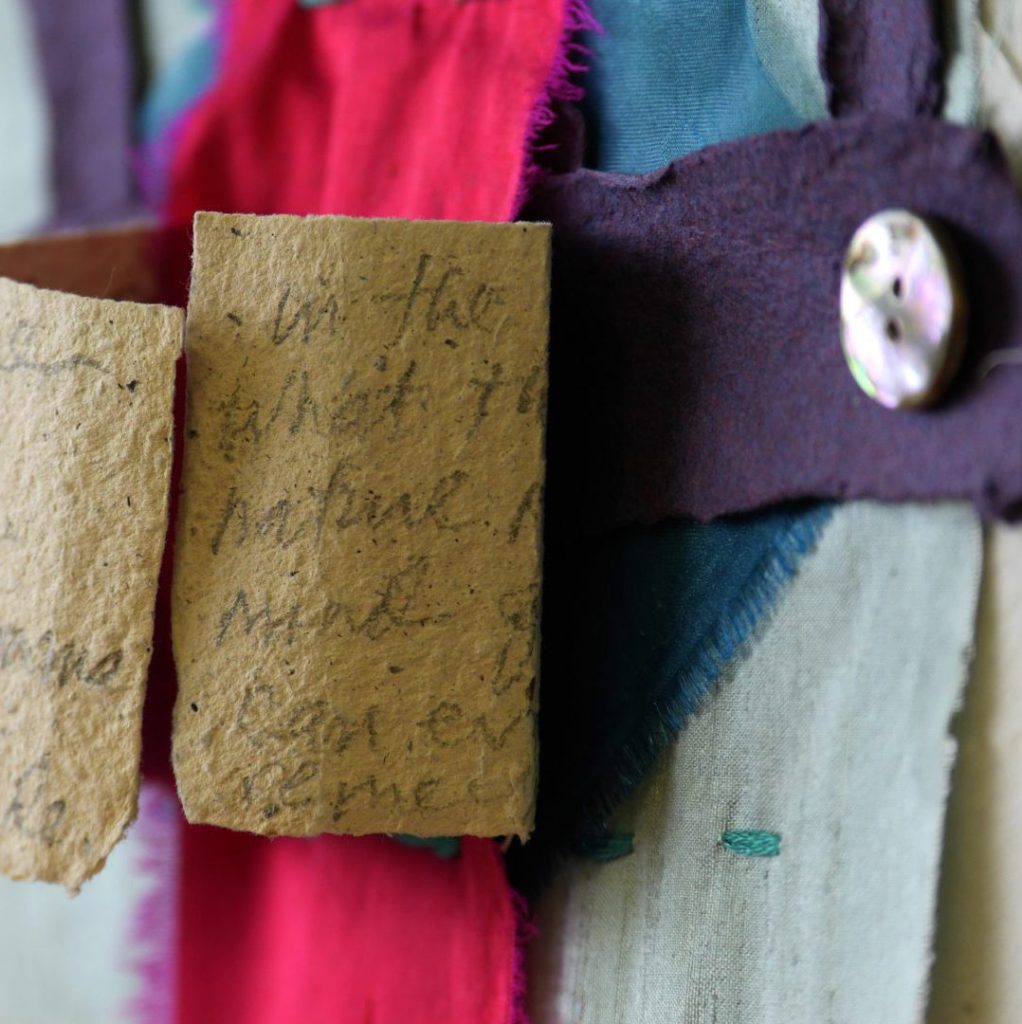
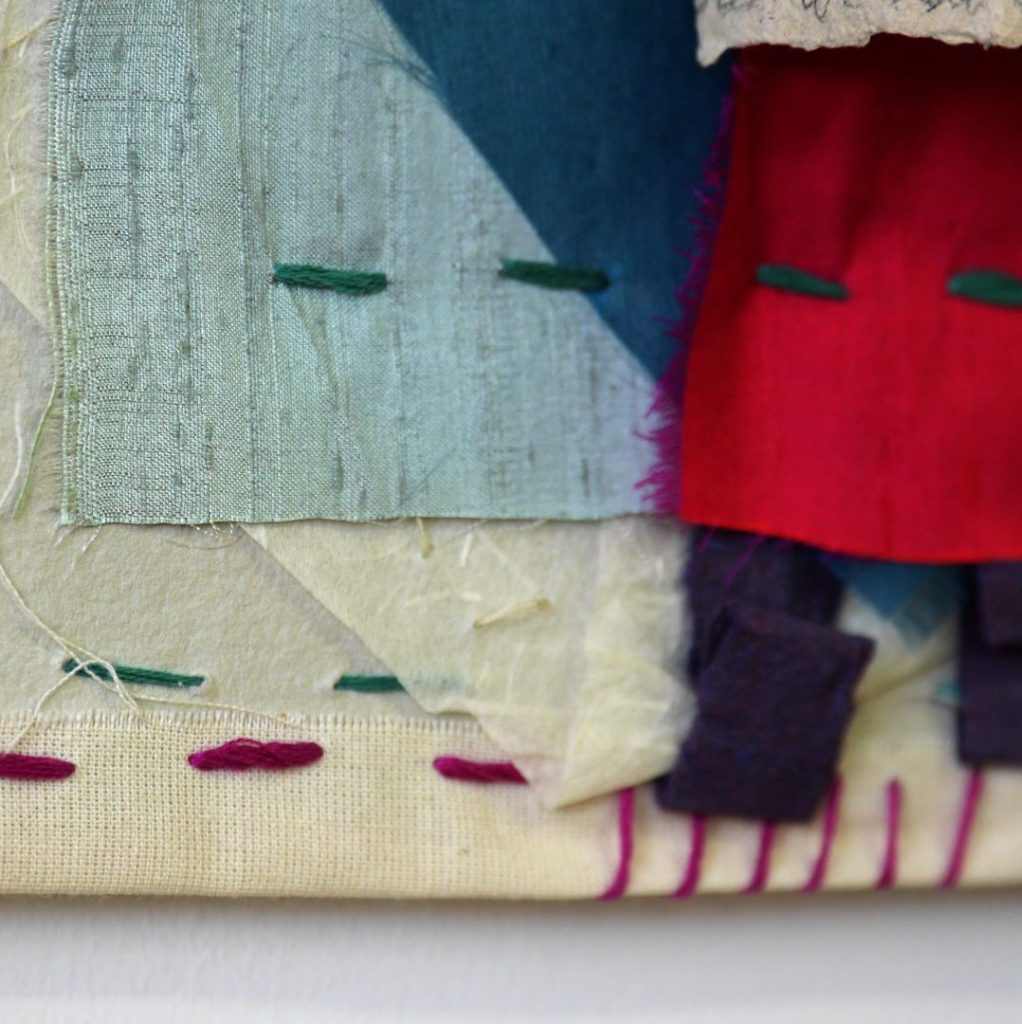
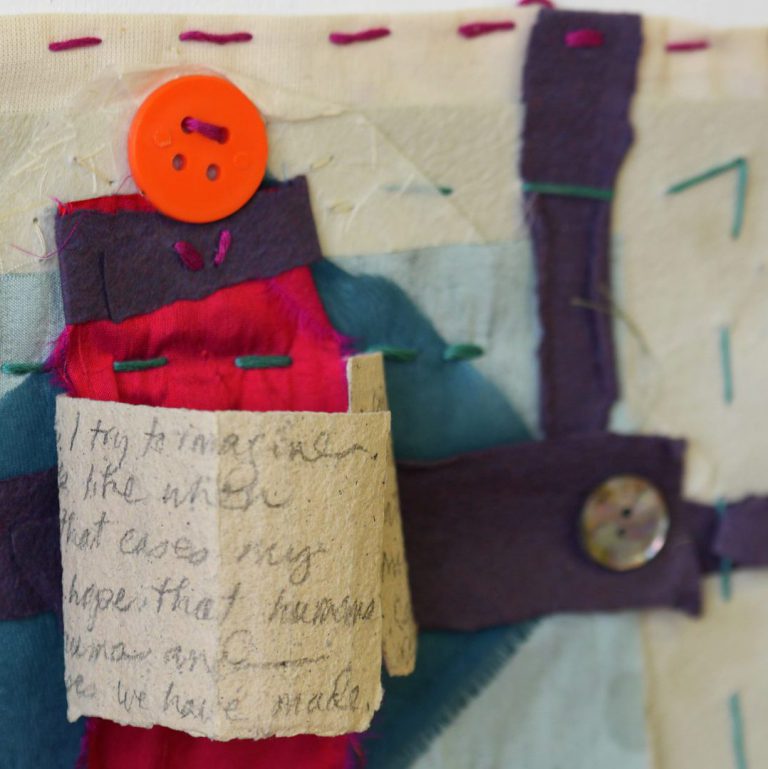
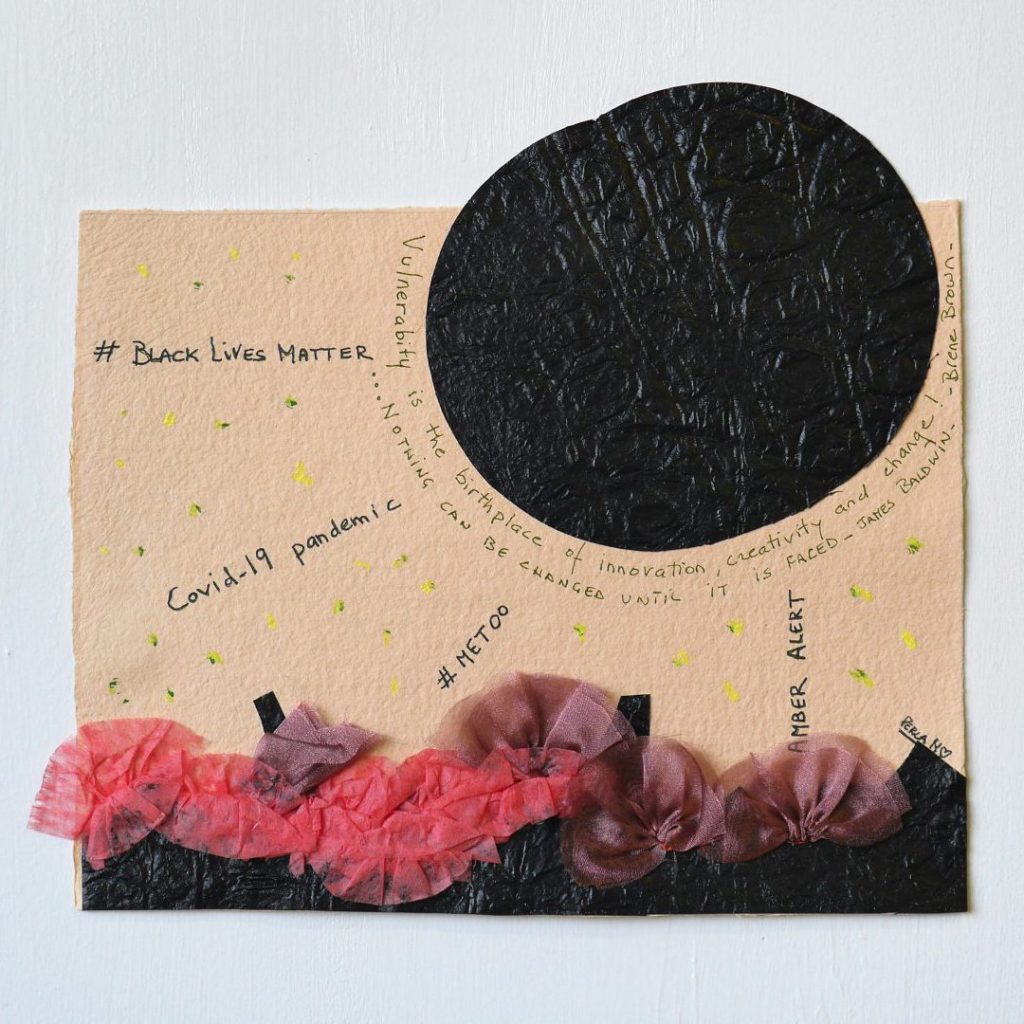
When I look out the window of my studio, I feel a profound sense of sadness. It is not just seeing neighbors isolated in their apartments, day after day, but it is also the devastation of native land visible in the Port of Tacoma. I try to imagine what this place will look like when nature reclaims it, and that eases my mind quite a bit. I still hope that humans can evolve to heal the trauma and remediate all the messes we have made.
Improvising with found and gifted materials to create something with text and image is one of my favorite ways to create. The process allows me to tap into what’s floating just outside my range of vision and helps me articulate feelings and observations in ways that are unexpected. The pandemic has vividly thrown into almost everyone’s laps realities that may not have been so visible to those with various privileges, economic, skin, etc. The traumas that have been unveiled are innumerable. Some of art’s essential purposes are to process, document, communicate, provoke, and validate the experience of living in this difficult time. I want my work to inspire strategies for taking action that will heal or generate new systems of care for our world and each other. A small art piece can’t do this alone. It’s best done in collaboration with communities invested in transformative justice.
LISA KIMBERLY GLICKMAN // Beaconsfield, Quebec, Canada
The first two months of the pandemic and the continuous injustice happening to humanity near and far, the realization or maybe the confirmation that our governments (capitalist systems) are never ready to protect us, became stronger! The healthcare systems, even in the most “developed” or “progressive” countries are only based on profit and money, not on the actual welfare of their citizens.
Death, death, and death was everywhere! Even a virus as bad as COVID-19 couldn’t bring humanity to be kind and understanding towards each other. Turkish fighter jets were still bombarding Kurdish villages. Iran was still imprisoning and executing dissidents. Young Black men and women were still getting killed on the streets of the United States because of the colour of their skin. Syria was still at war and the Indigenous people of Turtle Island were still being mistreated and disrespected!
I was feeling my HOPE fade away! The light of struggle was leaving my heart! It was the strangest feeling that I’d ever experienced. It was always hope that allowed me to survive the hardships of the brutal fundamentalist revolution, war, displacement, and exile. Nothing could take away my hope and my wish for a better world. What was happening now?! I had no answer. All I knew was that I couldn’t even bring myself to think about my artwork.
On one cold spring night of isolation, feeling deeply restless, I went to the basement to bring up my big plastic container of pieces of colorful fabrics. I dug into the container and emptied the kitchen table to make a place to work. I brought out the pieces that caught my attention and put them beside each other. I took out my needle and thread box and started sewing the first two pieces of cloth that most drew my attention.
Next thing I noticed, it was 2:30 a.m. and I had been stitching one piece after another for the past four and half hours.
Since that cold spring night، I have repeated my quilt ritual frequently, at every opportunity I can find. I stitch pieces of fabric, one by one, with great patience and with the understanding that it is only our unity that can make us stronger against any odds, regardless of our differences, regardless of our gender or our colour.
What is art for? To find different ways of expressing our thoughts and to share memories and stories that are otherwise difficult to share.
In addition to the works in the grid above, Marc Nerenberg’s video, Puppets in Raincoats: A Distopic, Clawhammer Banjo Ballet takes up this theme using drawings and performance.

*According to the Public Health Agency of Canada, as reported by the CBC.
**According to the Worldometer, March 31, 2021.
*** While vaccine importation is being handled by the federal government, health care is under provincial jurisdiction in Canada, meaning that the provinces are organizing the ‘largest vaccination program in history.’
****Current issues of vaccine inequality have been reported by Nature.
***** The report was compiled by the Toronto chapter of the Chinese Canadian National Council.