“I can’t make a decision. I’m writing I’m crying I’m sitting
— Daniel Smeby
I’m breathing I’m breathing I’m breathing”
Breath has been a motif of the pandemic as much as it is a prerequisite of human life. We inhale our way into life in this world and, by the time we’re adults, take an average of 20,000 breaths per day. If we’re healthy and safe, we can take for granted this complex physiological activity – until it isn’t possible. COVID-19 often affects the lungs’ capacity to draw oxygen into the body; they can need the extra support of a ventilator in a hospital’s Intensive Care Unit. The ventilator helps the person to breathe until their own immune system either fights off the virus and their lungs recover, or they succumb. With the virus so present around us, we have become more conscious of the precariousness and necessity of breath.
“I can’t breathe” has become the terrified appeal not only of those afflicted with COVID-19, but also of victims of police violence being suffocated in restraints begging for mercy. On May 25, 2020, unarmed African-American George Floyd repeatedly uttered these words while a White police officer kneeled on his throat for 8:26 minutes,* even after Floyd had fallen unconscious and died and the summoned paramedics had arrived.
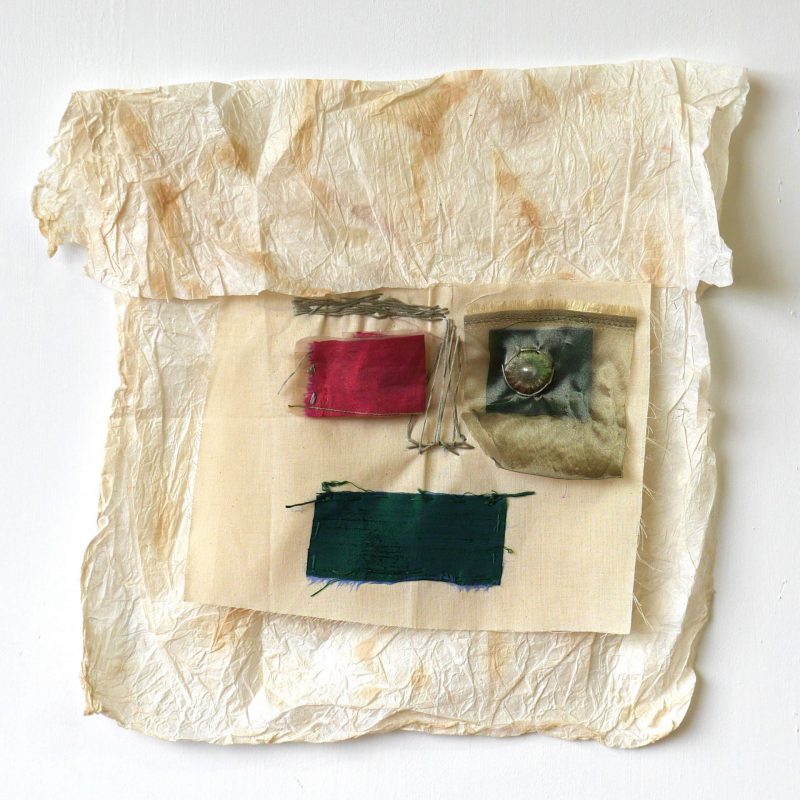
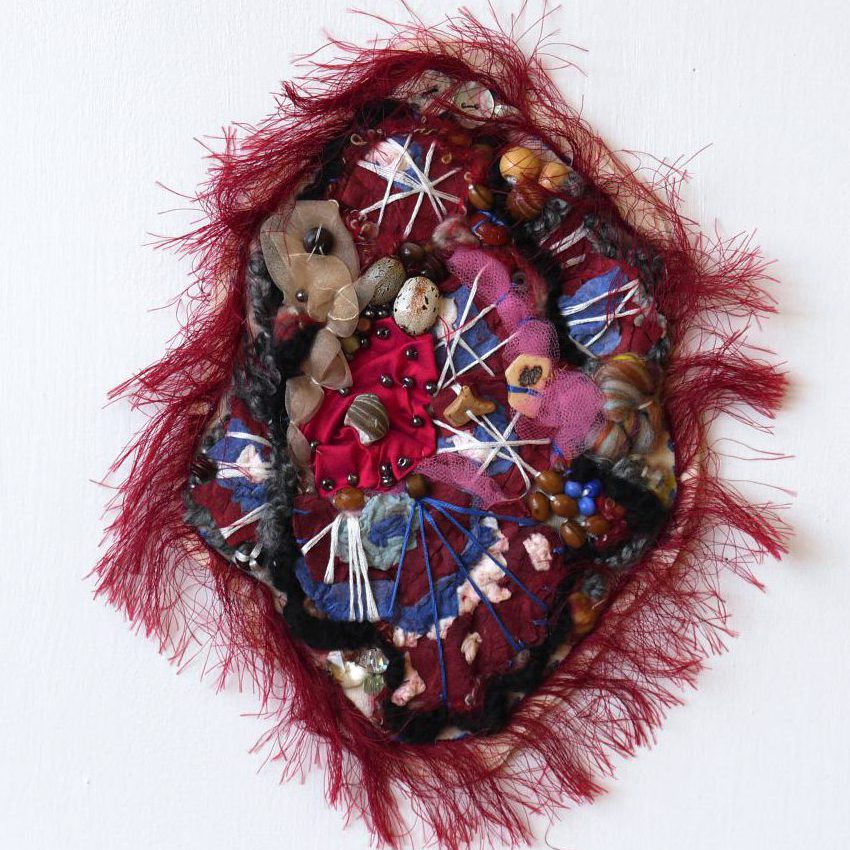
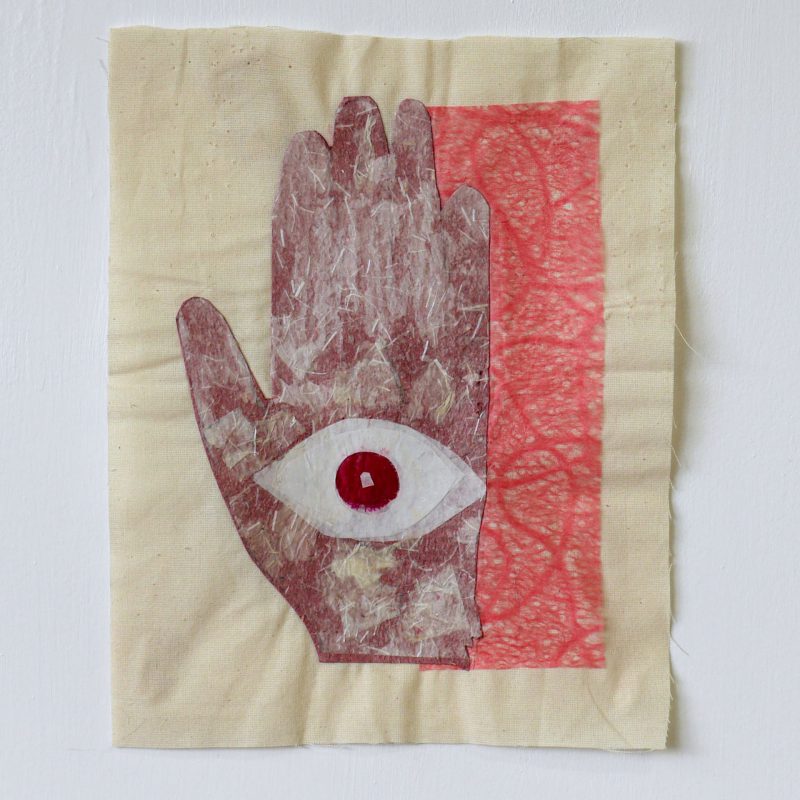
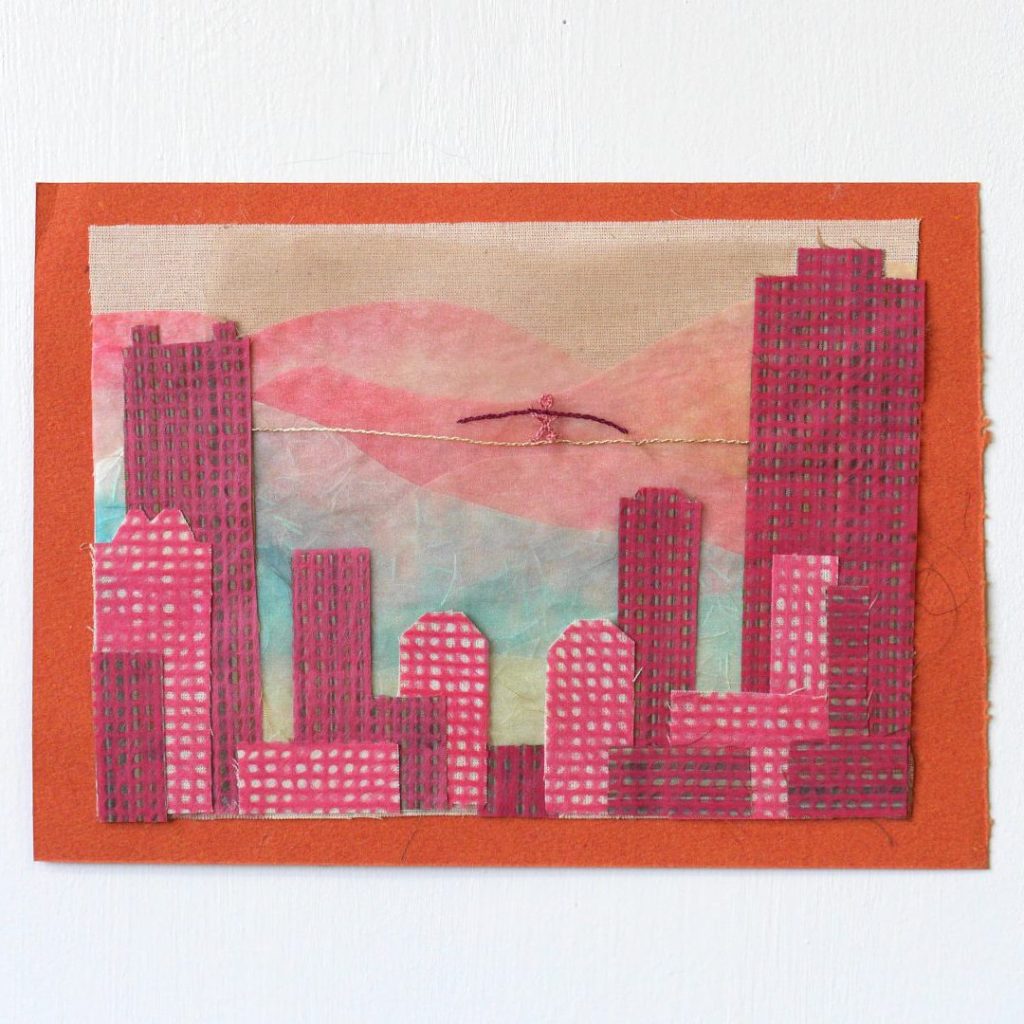
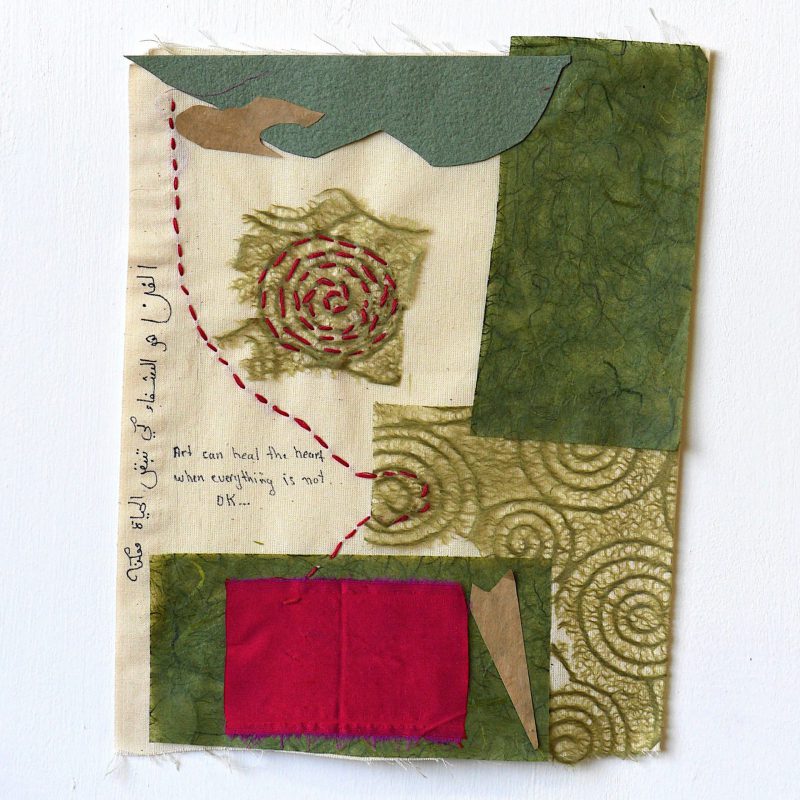
So, when asked in July 2020, What is art for?, some contributors here answered with breath, with body, with material essences. Some suggested that art is as necessary as breath to sustain life and imagination. The artworks of this grid explore breath and breathing as well as the embodied experience of human life. Masks feature among repeated motifs, reflecting the reminder that the virus is spread in aerosol particles through our own exhalations: we must mask up to keep others safe. Some contributions gathered in this grid represent an anatomical human heart, the core of us; many emphasize the incarnadine and sanguine colours of our insides. Here, the rich use of art materials to embody ideas reminds us of the present materiality of our own bodies. A body of art is, after all, a body even if it one whose animacy comes from ideas and materials rather than breath.
What is art for? contributor Daniel Smeby’s text reminds us how fundamental breathing is to human being, and that sometimes in extreme distress such as that provoked by COVID-19, the most we might ask of ourselves is to breathe, to continue breathing, and to recognize in our own breathing our existence.
JOHN DOING // Lugano, Switzerland
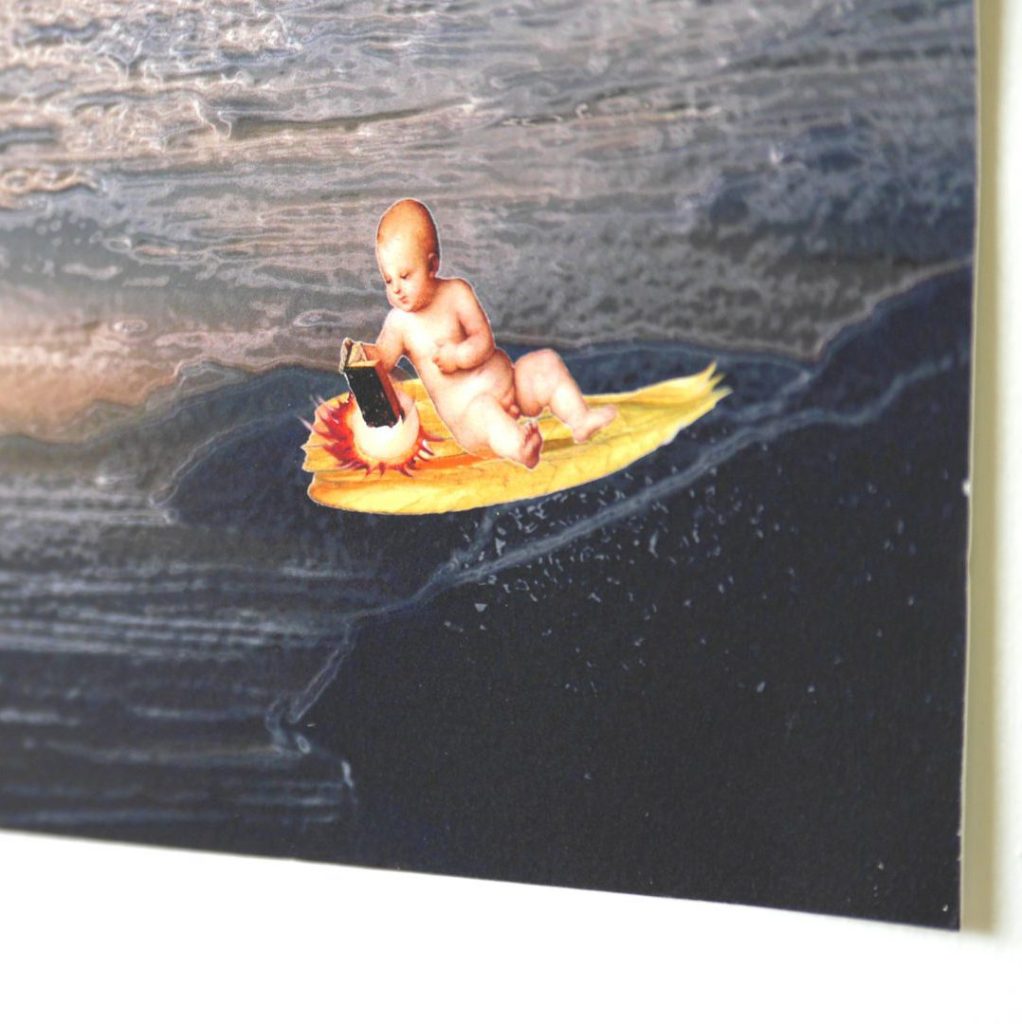
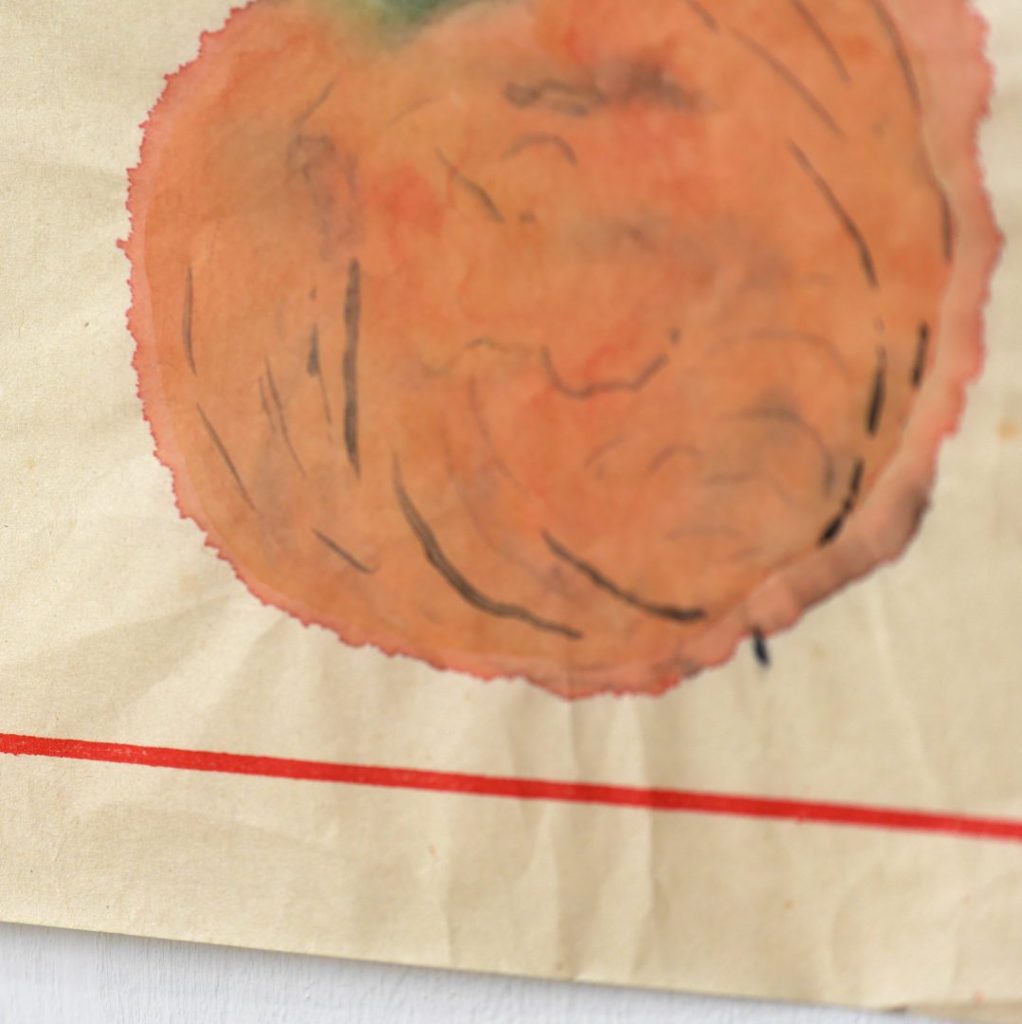
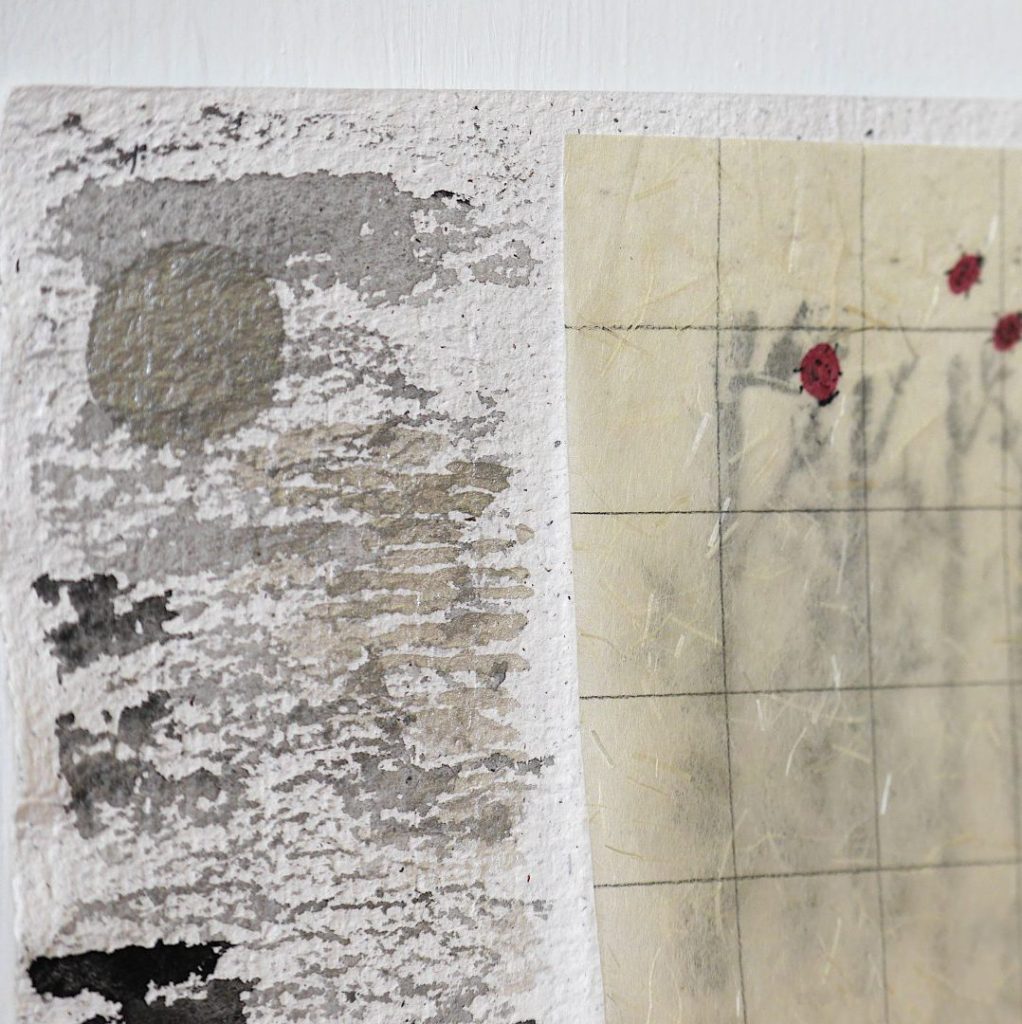
What is art for? It is a signal of existence, since the cave age human beings have left traces of their passage. Why? To spend time creatively during the storm, or to defend themselves from danger. The cave was their habitat, the walls on which they could express fear and joy, what remained of their dreams. Now, just as then, we are in the same condition. In fear of a virus – identified, yet without cure. As we are all staying more at home, creativity manifests itself in various aspects. It might be baking bread, turning eggs into an omelette or soufflé, painting, making ceramic. One of the walls where we can express ourselves is the huge cave that is the internet: social media allows an immediate exhibition of whatever we may produce. We might receive some feedback on it, or pass on to oblivion, nonetheless we have expressed our signal of existence (“I AM HERE ON THIS PLANET”), thus completing our wholeness as a reactive being.
The art production of 7.7 billion people cannot end up in physical museums or galleries. It seems at present only 50 artists can make a living out of their art: not only are they famous, they put their art on sale at unimaginable prices – as if the higher the price, the more their artworks contain. Is this true, or just the result of a sophisticated marketing strategy? Nobody knows. Yet, the great capital of art and the software produced by unknown talents is excluded from the cultural scene.
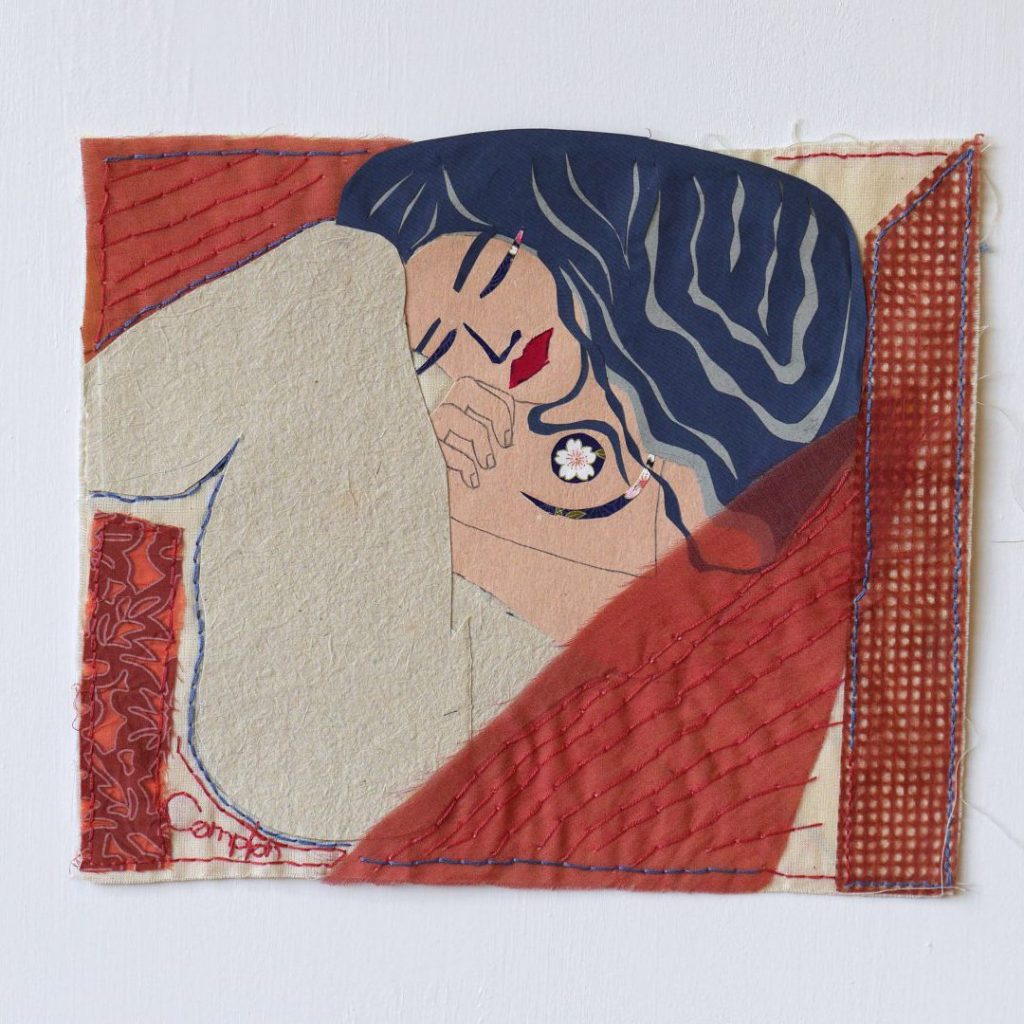
ZOE COMPTON // Georgeville, Quebec, Canada
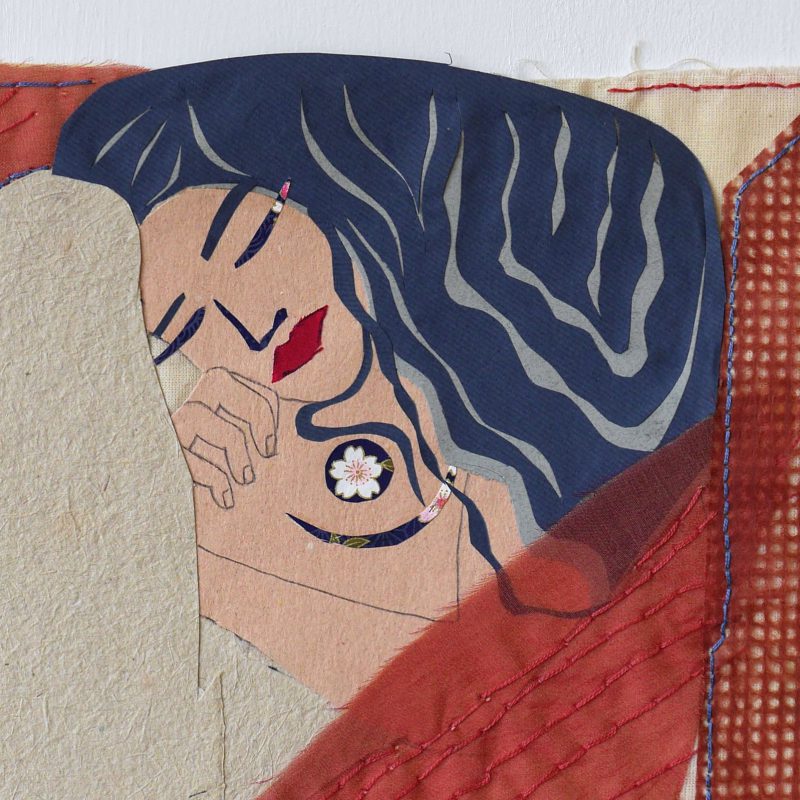
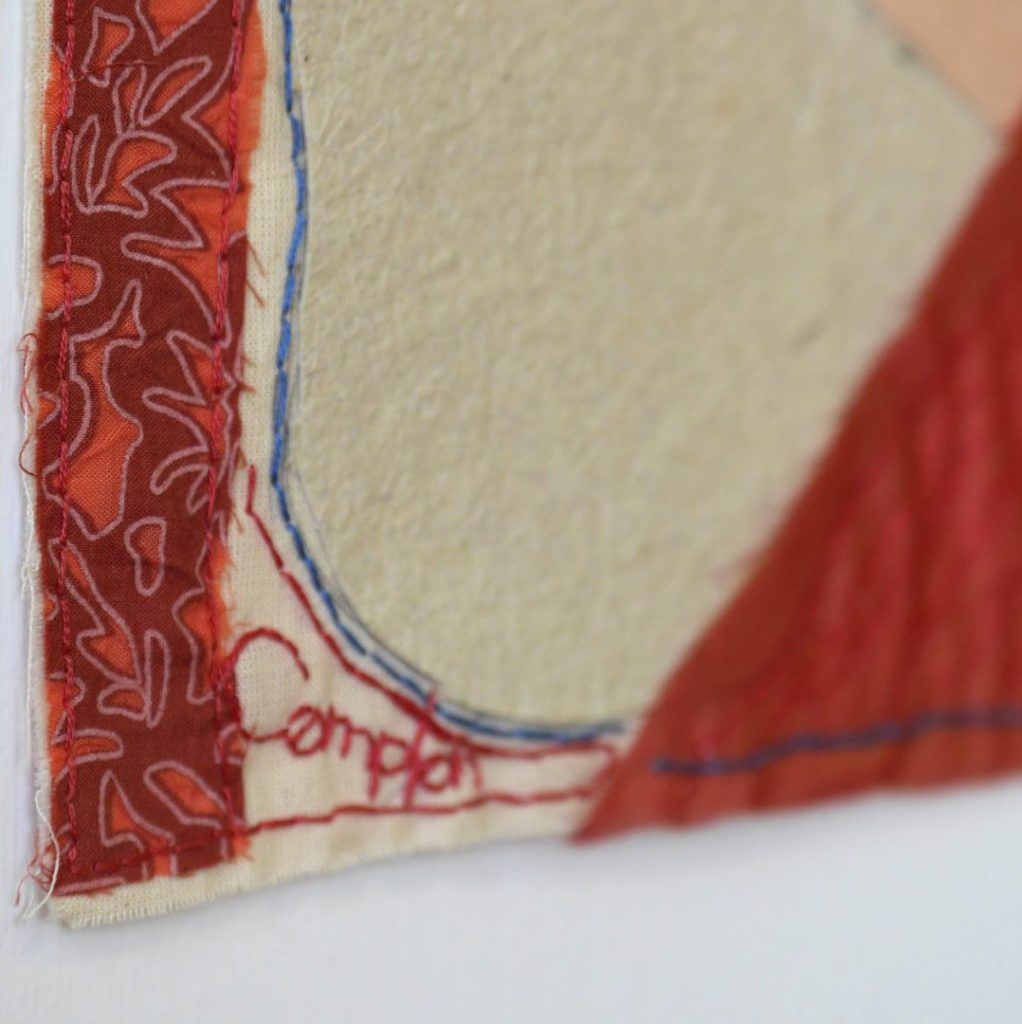
Art is an unnecessary necessity.
WHITEFEATHER HUNTER // Gatineau, Quebec, Canada
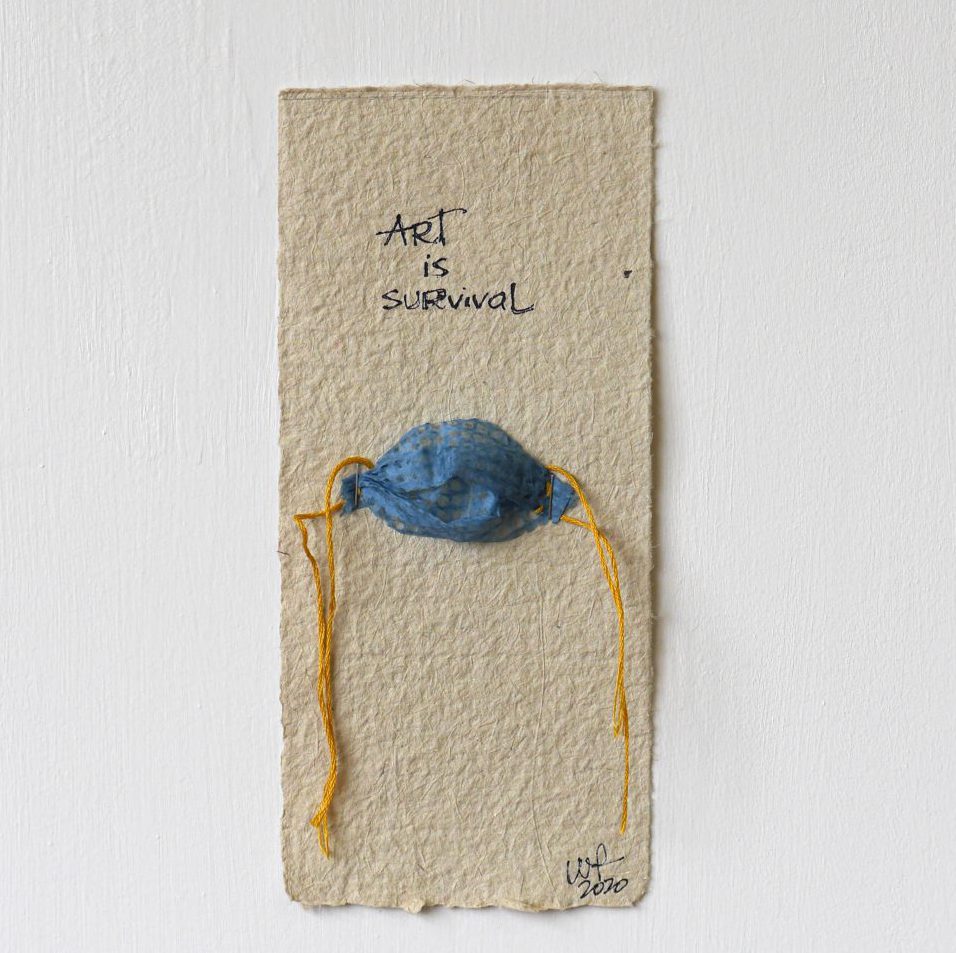
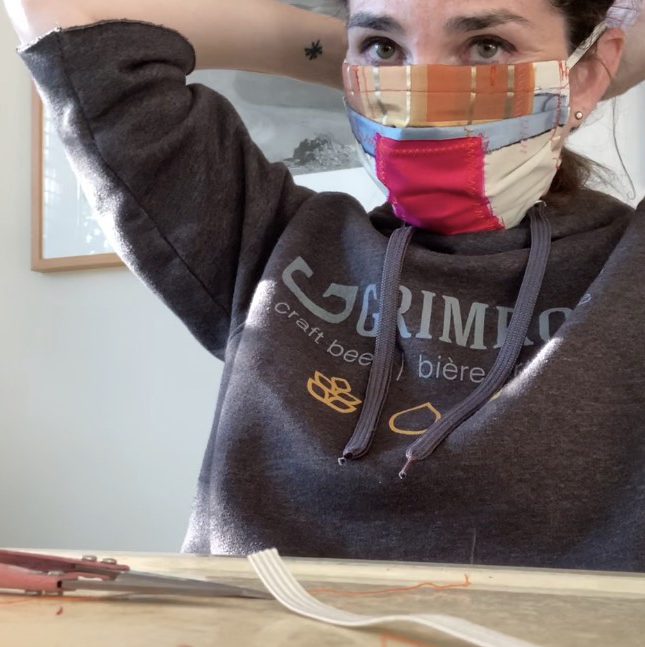
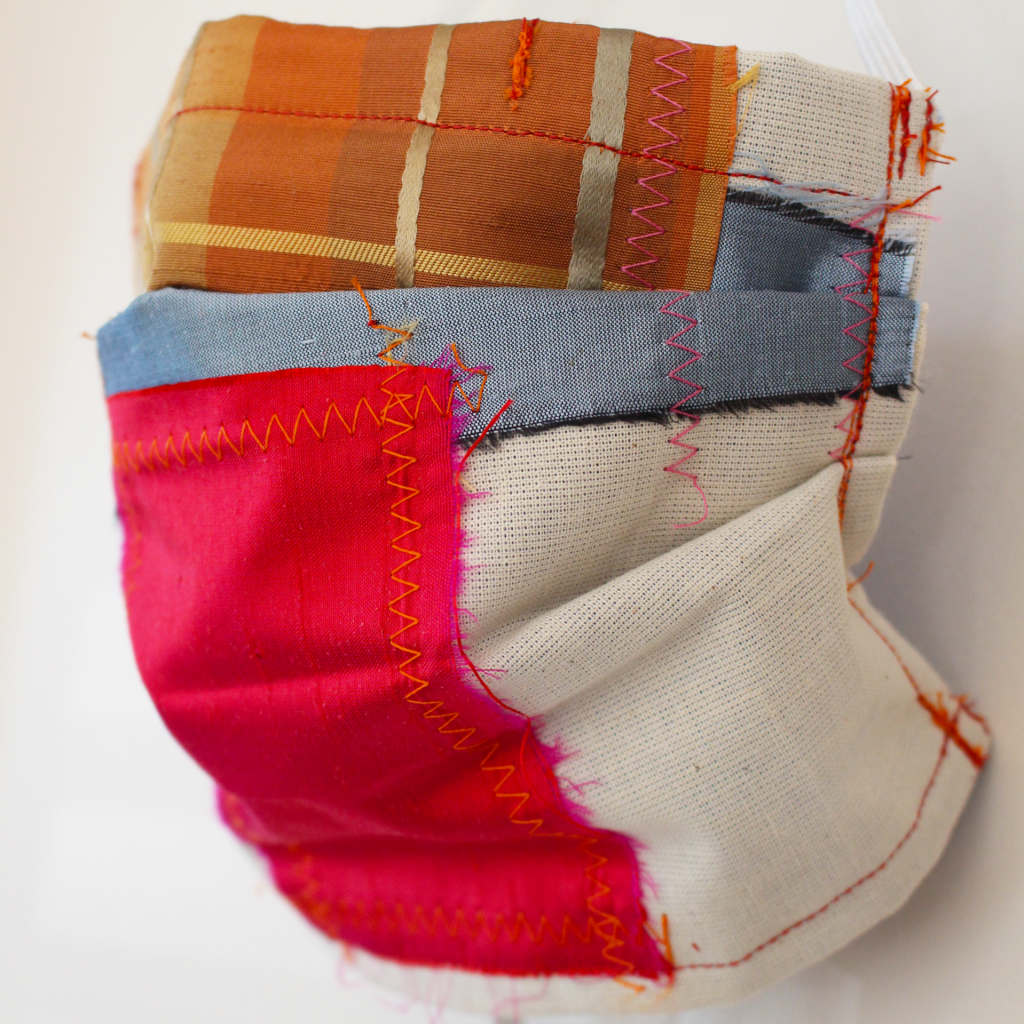
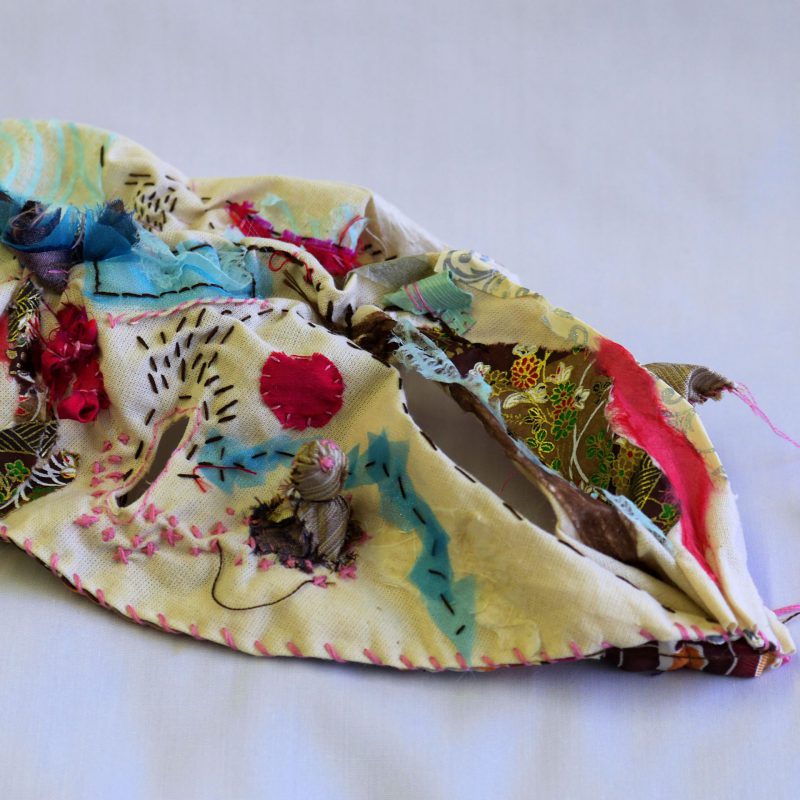
In March 2020, I became infected with the novel coronavirus, SARS Cov-2 after my partner returned from travel overseas. Once I battled my way through the horrifying, acute phase of infection and survived, I became what is now known as a, “COVID longhauler.” When I first became infected, almost nothing was known about COVID-19, and thus, many like me (those initially deemed ‘mild’ cases) were left to process and grapple with a terrifying disease that morphed and lingered, mostly on our own. We experienced being gaslighted, disbelieved, and silenced by the medical community and society at large.
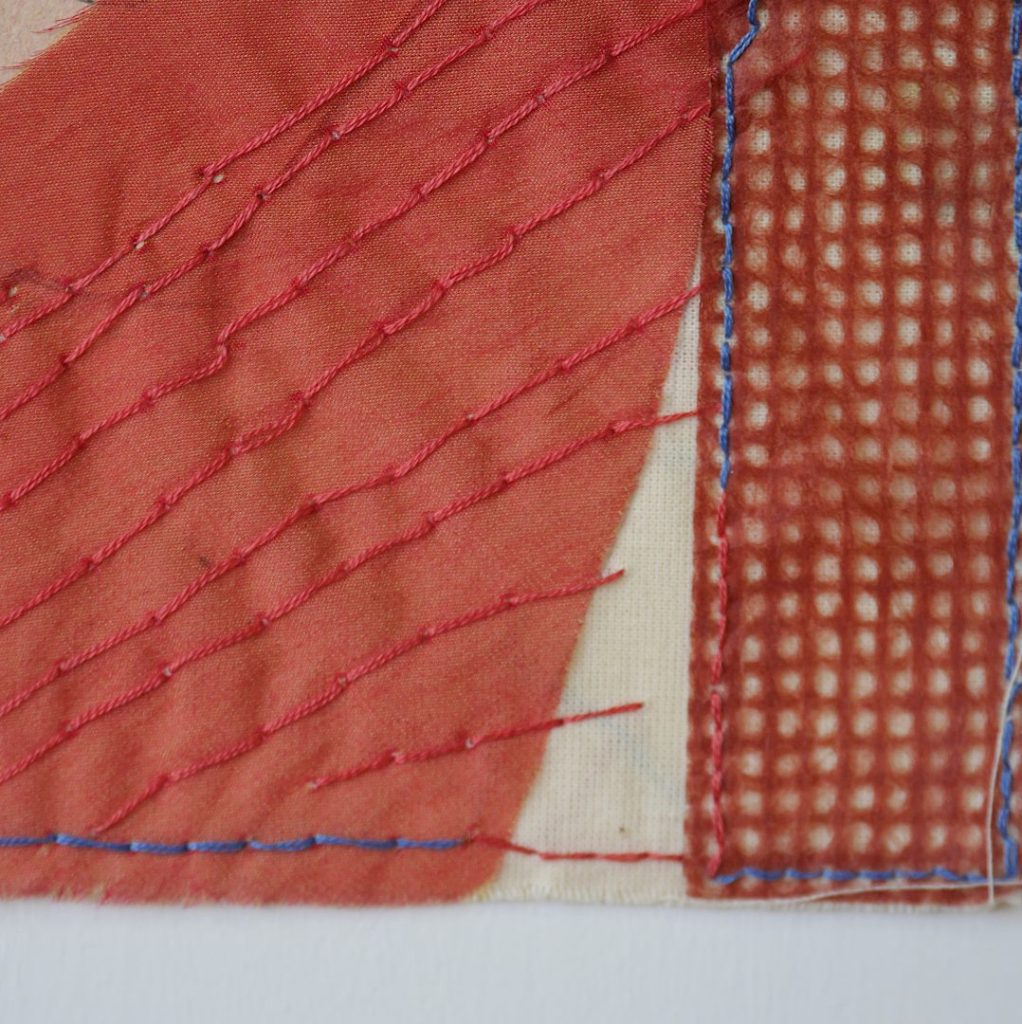
As an artist, one of my most powerful tools for processing internal and social challenges, and then communicating them to the outside world, is through artmaking. Being presented with the ‘problem’ of a diverse set of materials—the fabric and paper scraps—and creating a ‘solution’ by piecing them together into a visual object, allowed me to focus energy on patching together my sense of self again, in my new reality. The object presented, a patchwork mask, metaphorically represents the scraps of help I received to battle the disease. These are sewn together into a representation of the ubiquitous social object that has both unified and divided humanity as we all negotiate the disease and its impacts.
JOSÉE LAVIGNE // Montreal, Quebec, Canada
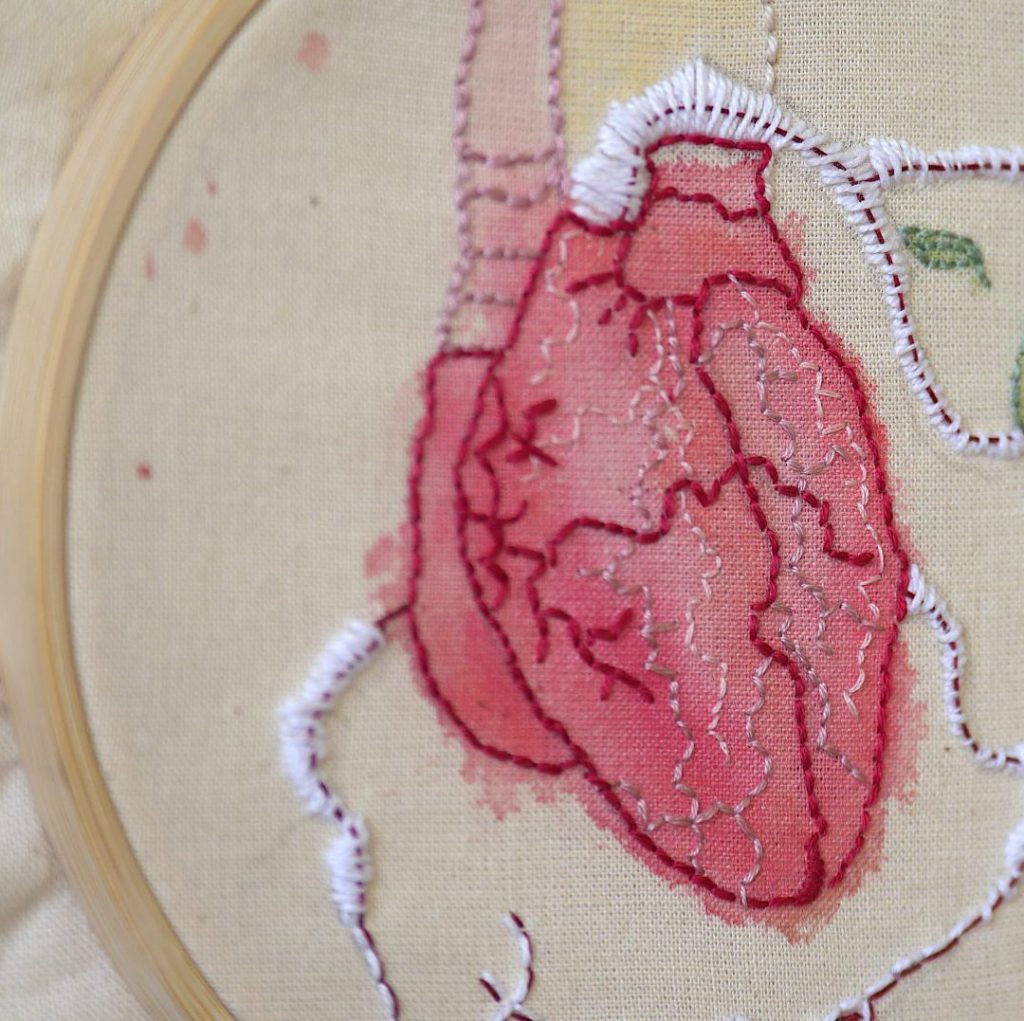
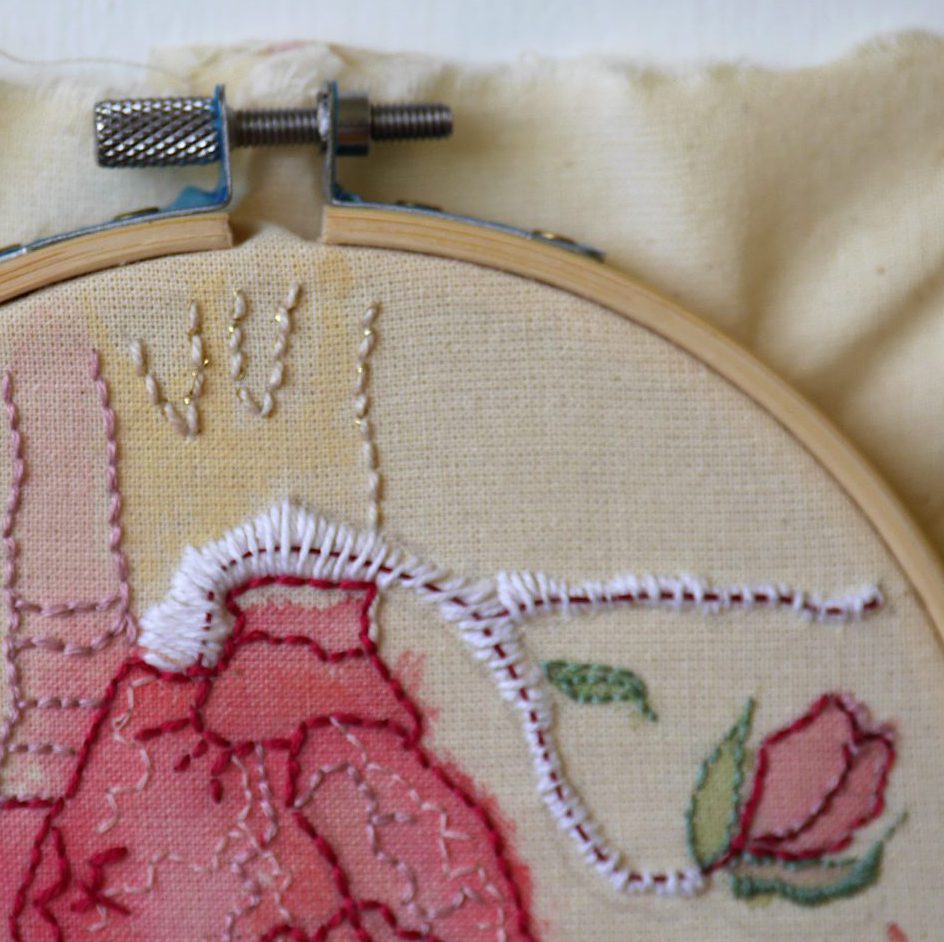
When the pandemic hit Canada and most specifically Montreal, Quebec, in March 2020, I lost my job as an art educator at the Montreal Museum of Fine Arts. The Arts and Culture sectors were some of the most strongly hit by the crisis. Considered to be non-essential to our living in times of a health crisis, I could not help myself but to question this consideration. Are we non-essential in our society? What is Art for?
When you are home-bound, feeling anxious about your health & the health of others and unsure about your future, creativity comes along and offers you some hope. I kept myself busy as much physically as mentally because or else, I’d simply lose it. And so my head and hands were busy- making embroideries or small crafts for loved ones, making illustrations and drawings to forget for a few hours during my day, the crisis. Without Art, I would feel empty, lost, just a body without a soul.
I am an artist and art educator so I know & have known for a while the importance of Art in my life and that of others. Unfortunately not every one feels this way but I wonder how many times those who disregard artists and their crafts, have turned to those who are sensitive and creative for a song, a dance, a poem, a photograph, a drawing to lift up their spirits? I simply wish Creators and their crafts would not be taken for granted, especially in times like these when we need Beauty, sensitivity and Culture to enrich our lives.
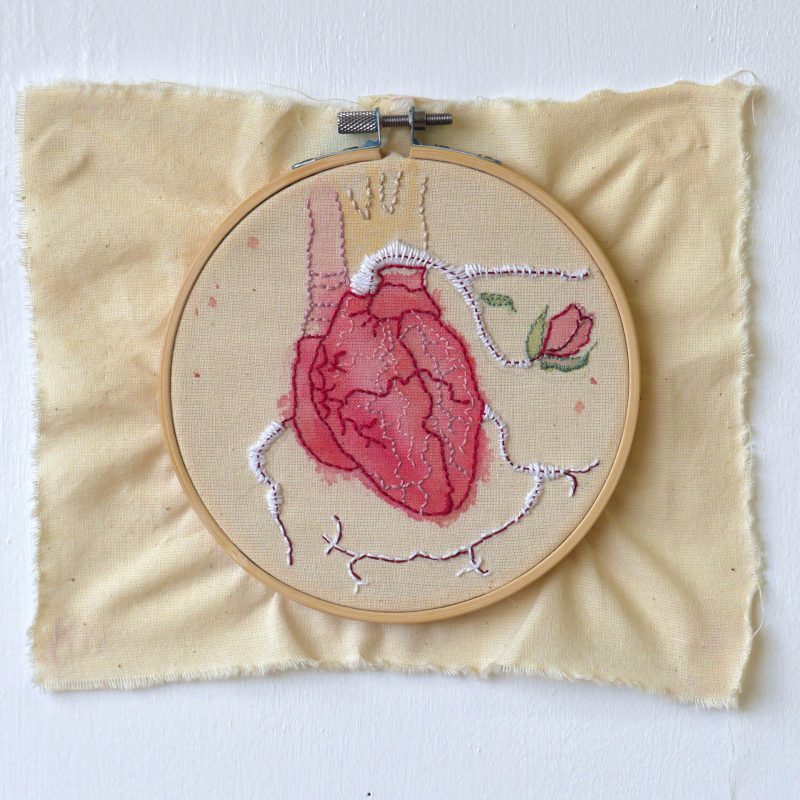
My work for the collaborative art project What is art for? is a small embroidery that was created from an illustration I made in Spring 2020 entitled ´mon cœur bourgeonne’. It was inspired by the thrill of feeling love- or rather passion in the midst of this crisis. For me, the symbol of the heart in times of a health crisis is very important and mirrors how I feel about the importance of the Arts in our lives. Without artists and their crafts, without the possibility of creating, life would be uneventful, unsatisfactory and impossible. There is too much hatred, too much suffering, anxiety and depression in this world. We need sensitive souls who can lift us up, even if it is only for a short while and make us reflect.
Mon cœur bourgeonne puisqu’il est en vie et il ressent l’amour. Sans cœur, sans amour, sans passion, sans créativité, la vie ne serait qu’une série de minutes, d’heures et de journées qui se suivraient sans étincelle, sans magie, sans vie.
RENEE JACKSON // Philadelphia, Pennsylvania, USA
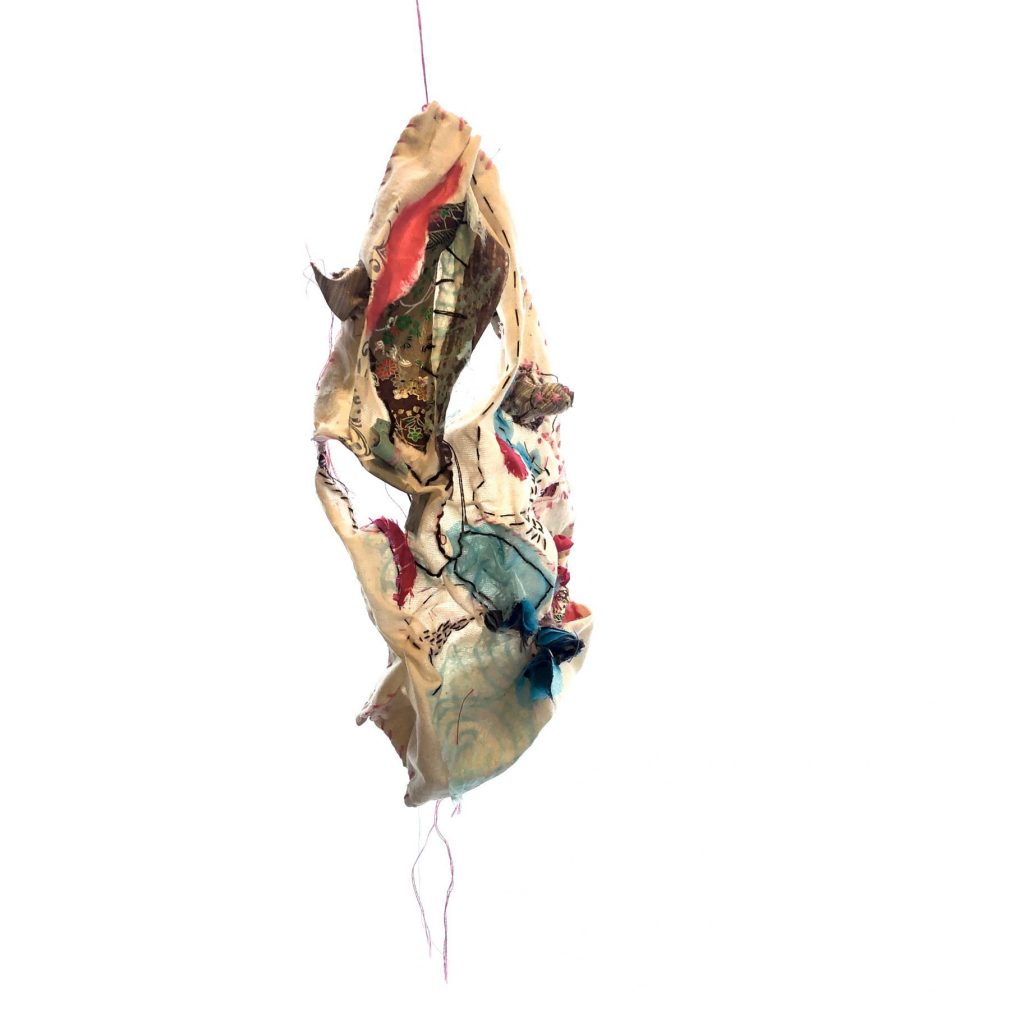
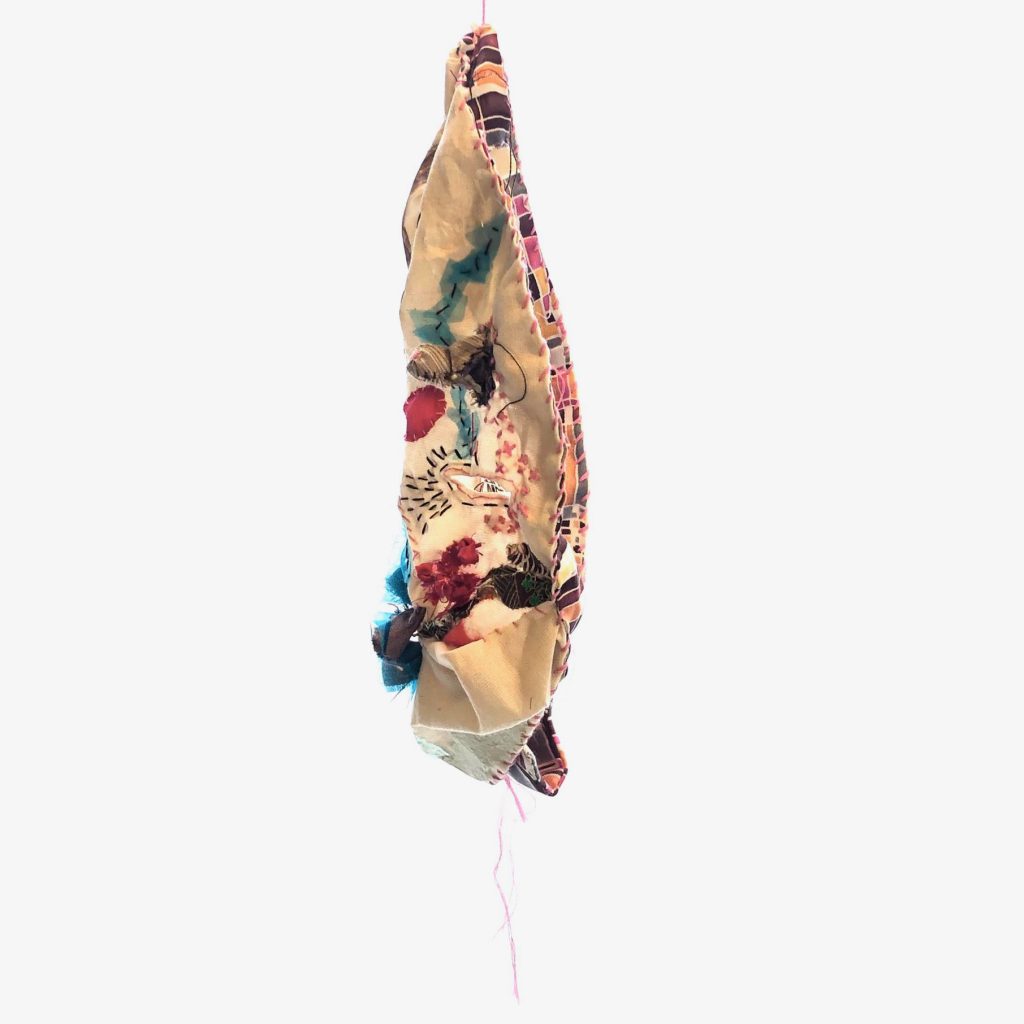
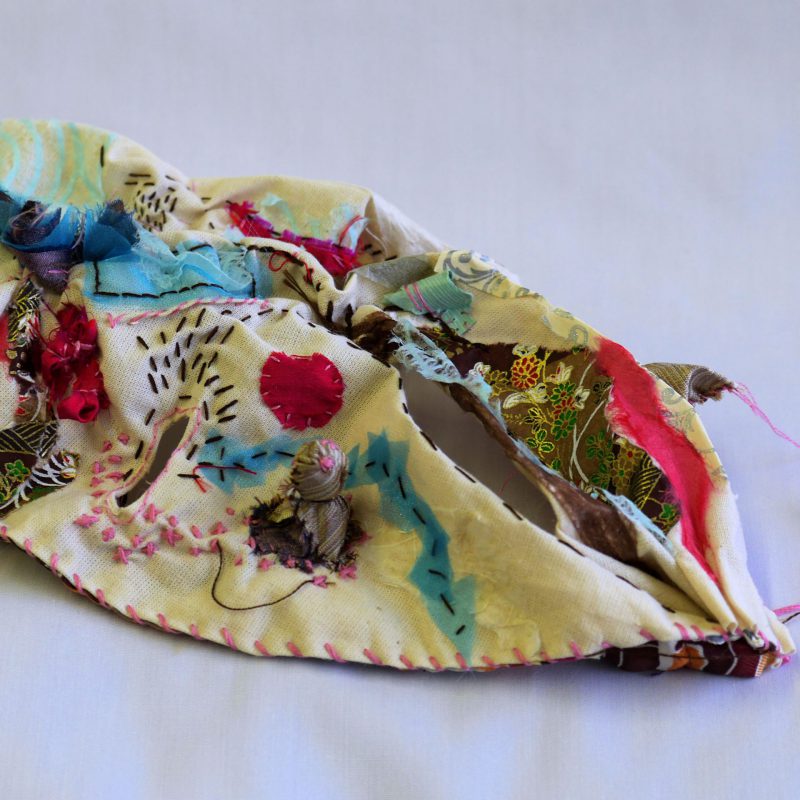
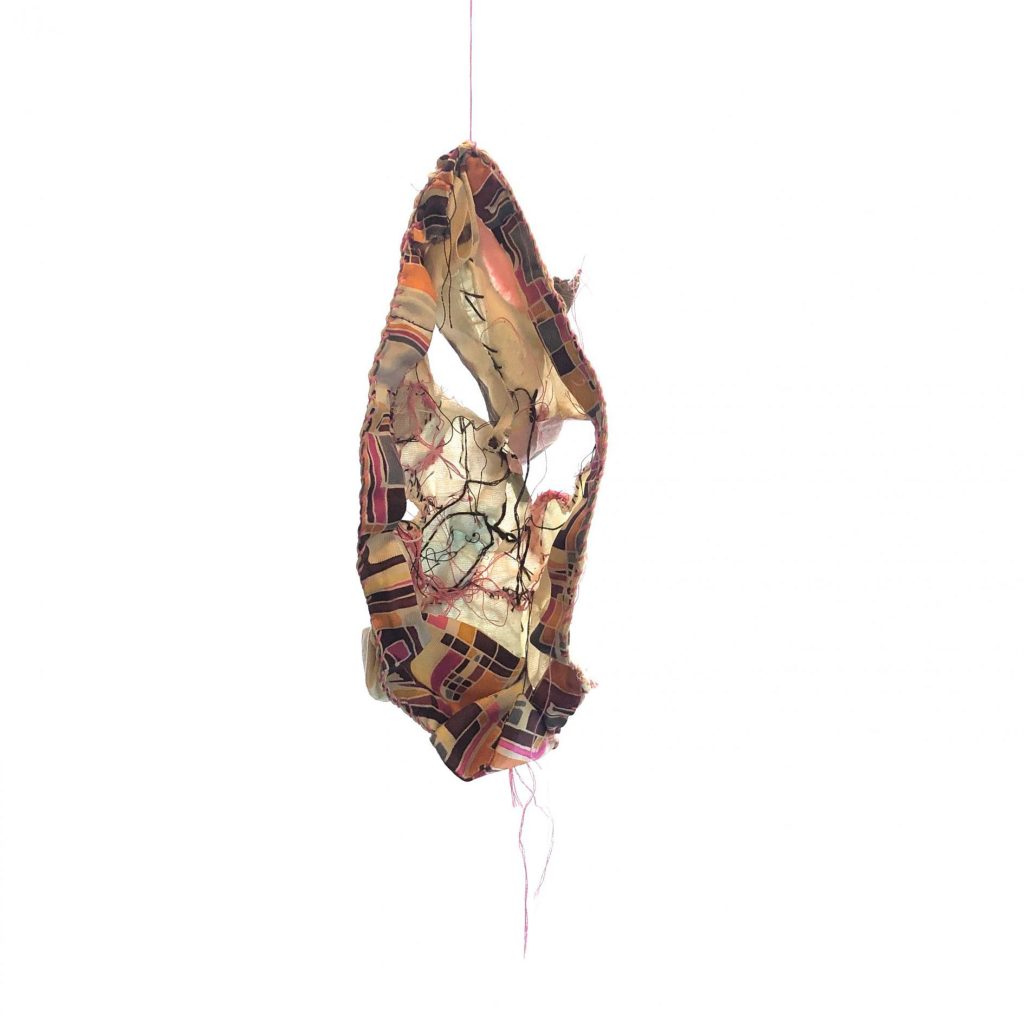
Mycelium Substrate (2020)
Mycelium consumes that which surrounds it and grows into a network of fibres beneath the substrate. When it comes time, the mycelium builds a mushroom. Mushrooms do all kinds of things. For humans and creatures, they can be a source of food or medicine. The medicinal properties of mushrooms are far reaching. They are used for everything from antioxidant to sexual tonic and stress relief. Ironically, they can even be anti-fungal. They are used as dyes in the textile industry and play various roles in agriculture, including fertilizer. They can also be poisonous. Consuming certain species can lead to death. Consuming certain species can also lead to various versions of enlightenment. They are used for spiritual or religious quests. They help to open the mind and senses to the surrounding world, altering human perception and understanding. They can produce feelings of euphoria and a sense that one is communing with nature. They can cause humans to engage with the emotional or psychological depths of themselves. In recent research they have been used in controlled environments to help people to come to terms with terminal illness.
Like mycelium, artists consume that which surrounds them and when it comes time, they build their mushrooms/art. Art, like mushrooms, comes in all shapes and forms, and can have many similar effects/affects. During these pandemic times, the medicinal metaphor is particularly appropriate in terms of both the production and consumption of art.
This piece, Mycelium Substrate (2020), is my contribution to Kathleen Vaughan’s collective art project, What is Art For? Vaughan sent packages out to all participants containing paper, fabric and embroidery thread. My rule was to use only the materials provided, and at least some of each, representing the idea that the artist works with/from that which surrounds them. To this mix I permitted myself to add one item as a reminder that artists bring their trails of mycelium with them to any new encounter. The item is a bowtie that belonged to William E. Doll, Jr., a professor of curriculum studies who died in 2017. I have a small collection of his infamous bowties from an auction that took place in his honour at the American Association for the Advancement of Curriculum Studies conference in 2018. I look at his ties in my studio every day and have wanted to incorporate them into a project for some time. Preparing for this project I began to look more closely at Doll’s work. He used contemporary theories about nature and science to inform ideas about open, emergent curriculum. He took inspiration from eco-systems, as I have done here, and elsewhere in my own work. This was a jarring discovery and I was compelled at last to weave the first of a set of five bowties into this work.
The work itself is meant to be seen from all angles. The tangle of threads at the back of the cocoon like form/landscape are the mycelium, equally as important as the elements they produce and anchor above the surface.
Rogers, R. (2011). The fungal pharmacy: The complete guide to medicinal mushrooms and lichens is North America. Berkeley, CA: North Atlantic Books
Doll, W.E. Jr. (1993). A post-modern perspective on curriculum. New York, NY: Teachers College Columbia University.
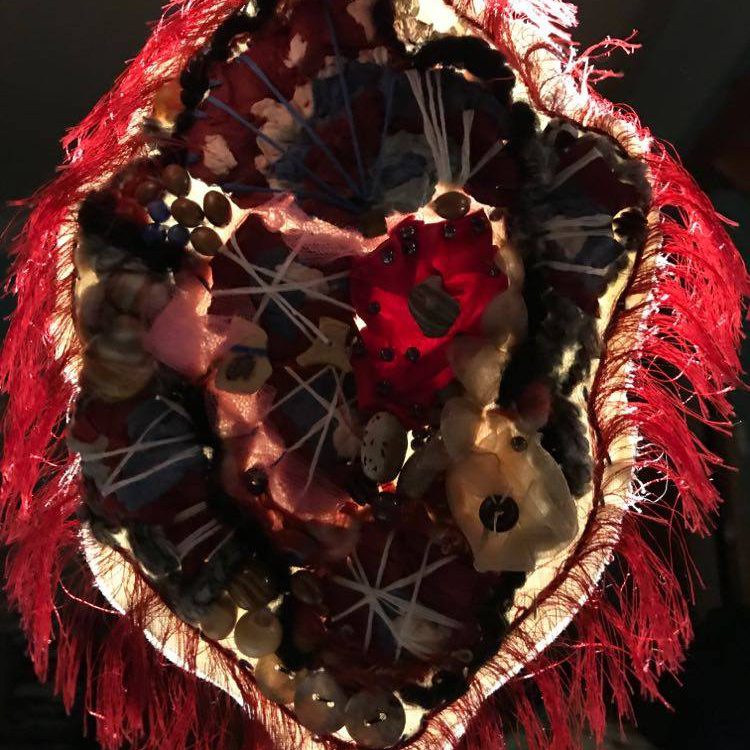
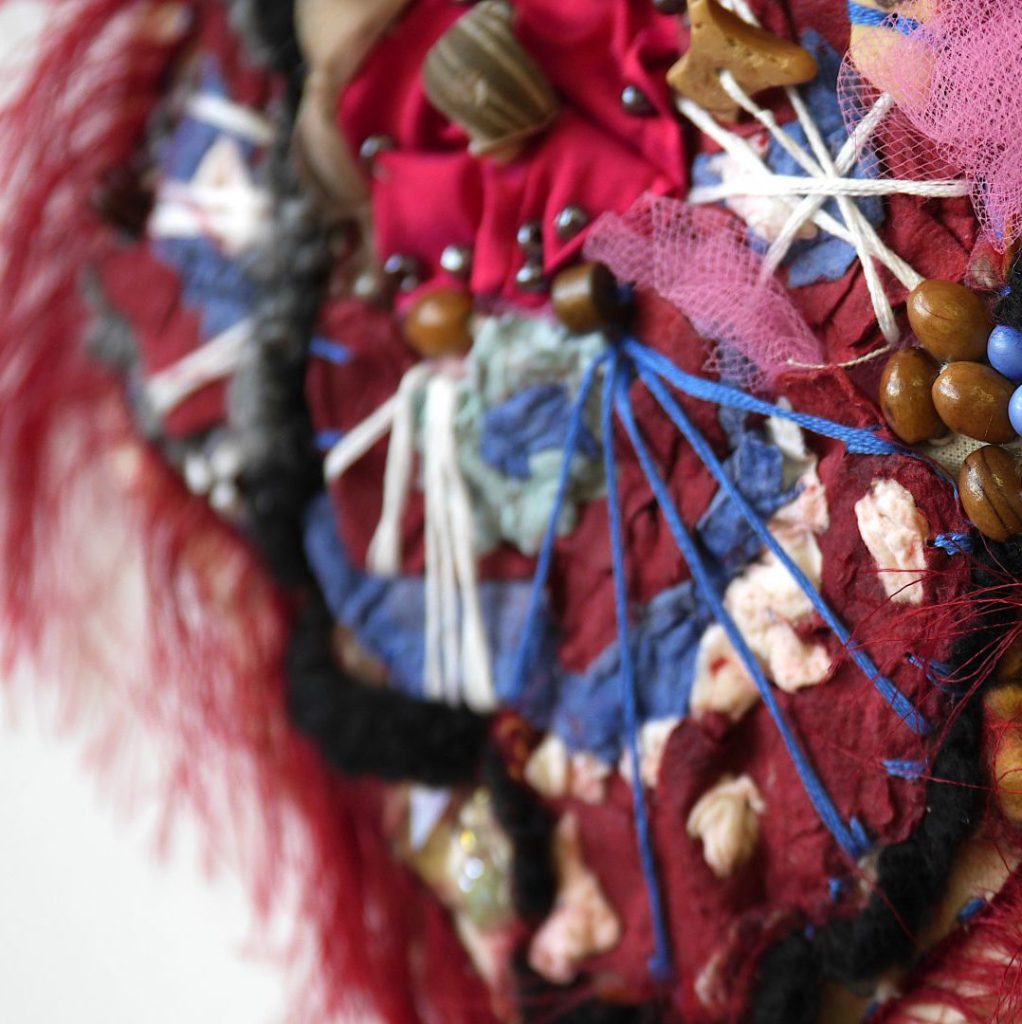
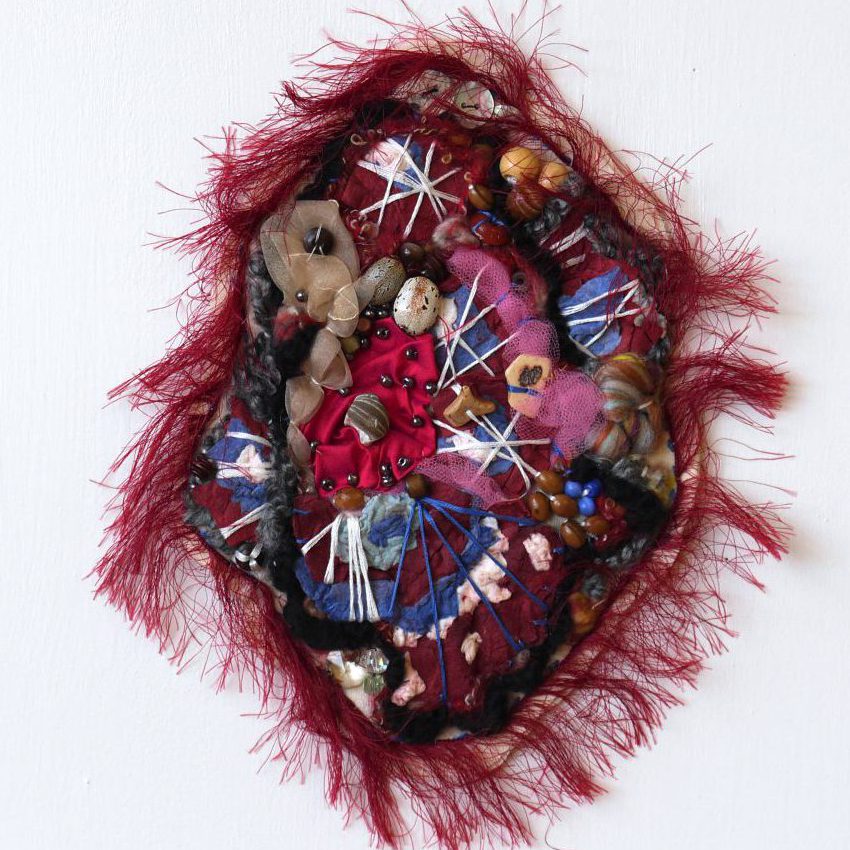
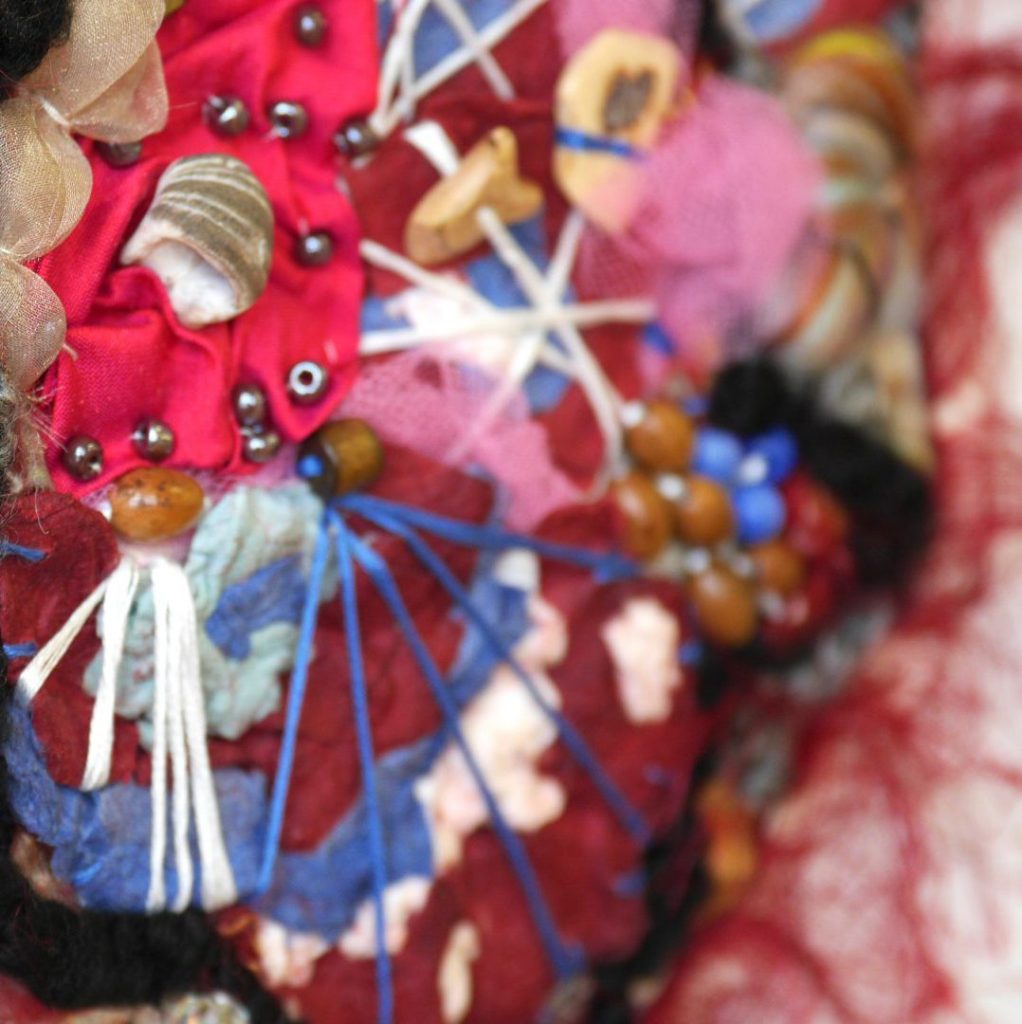
DAN SMEBY // Moncton, New Brunswick, Canada
I can’t make a decision. I’m writing. I’m crying. I’m sitting. I’m breathing. I’m breathing. I’m breathing.
MOLLY MOLDOVAN // Apsley, Ontario, Canada
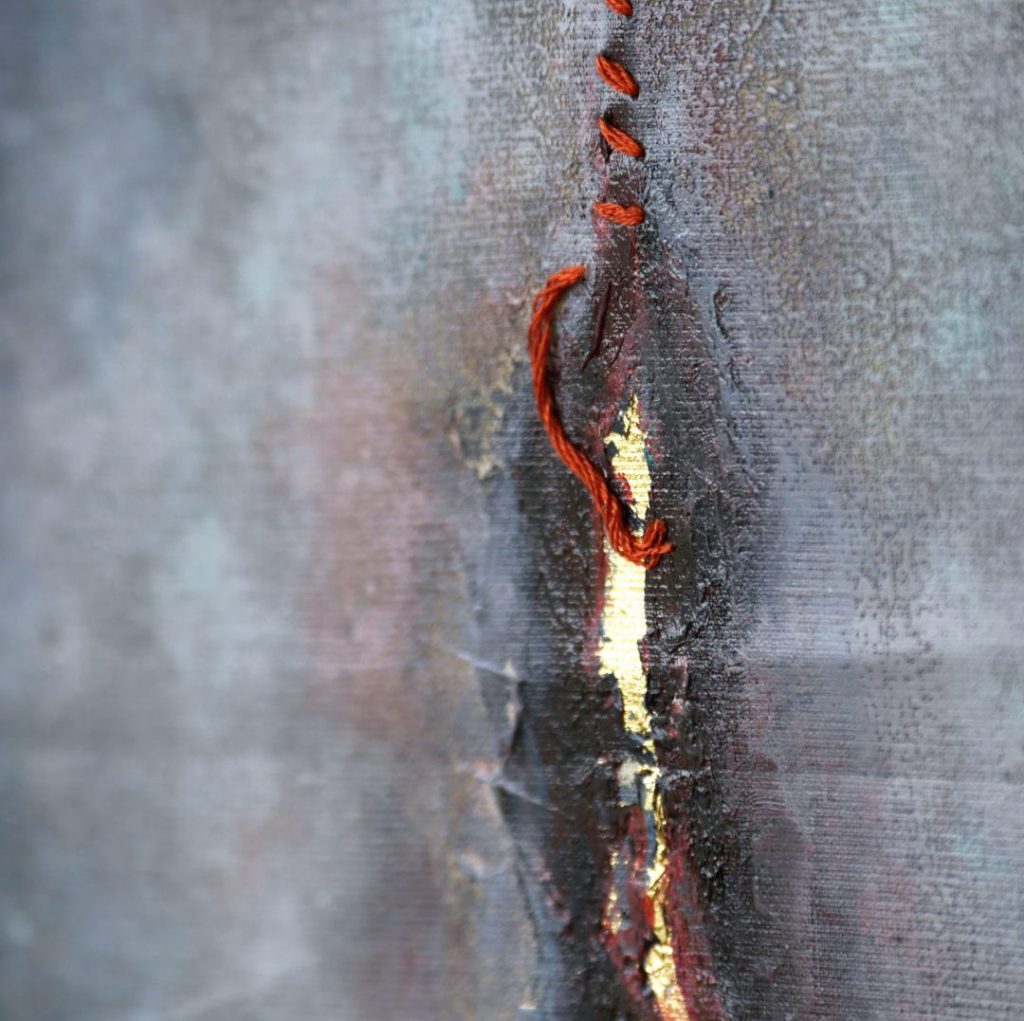
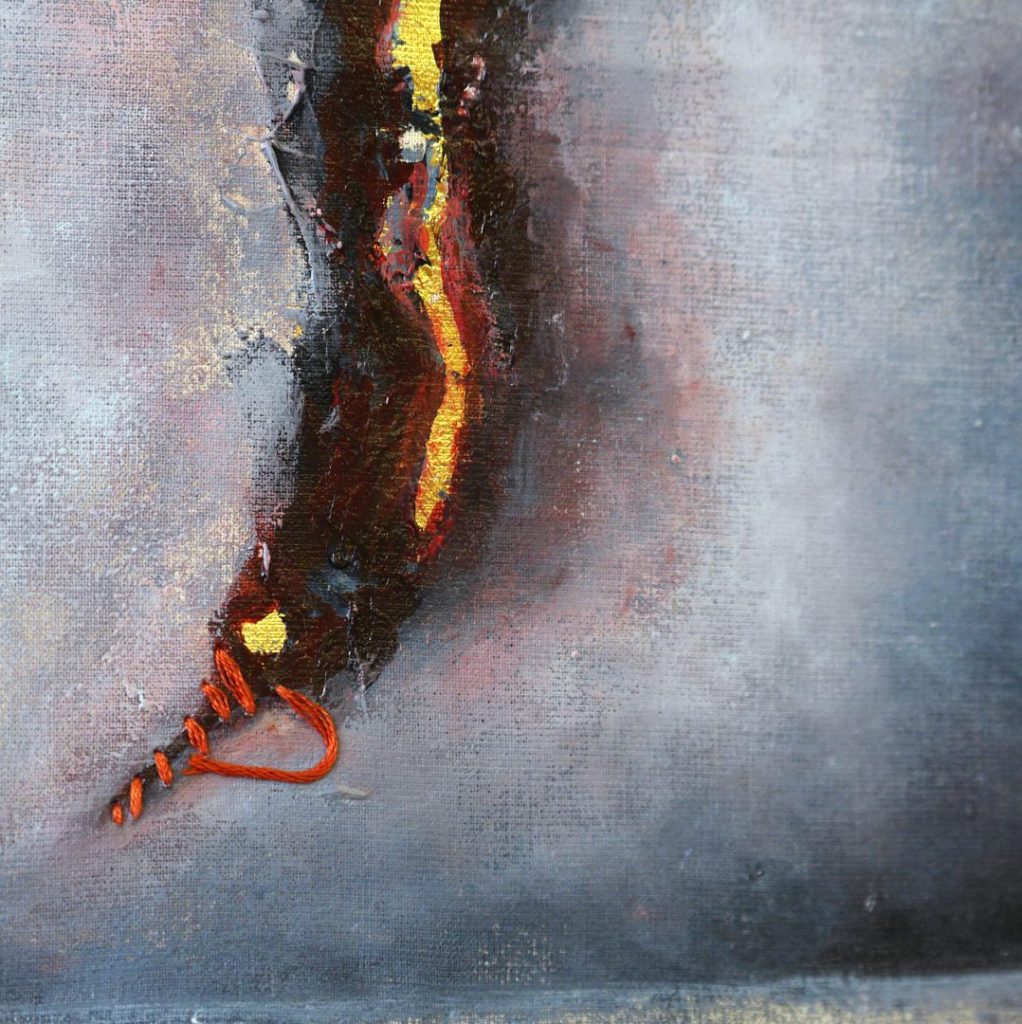
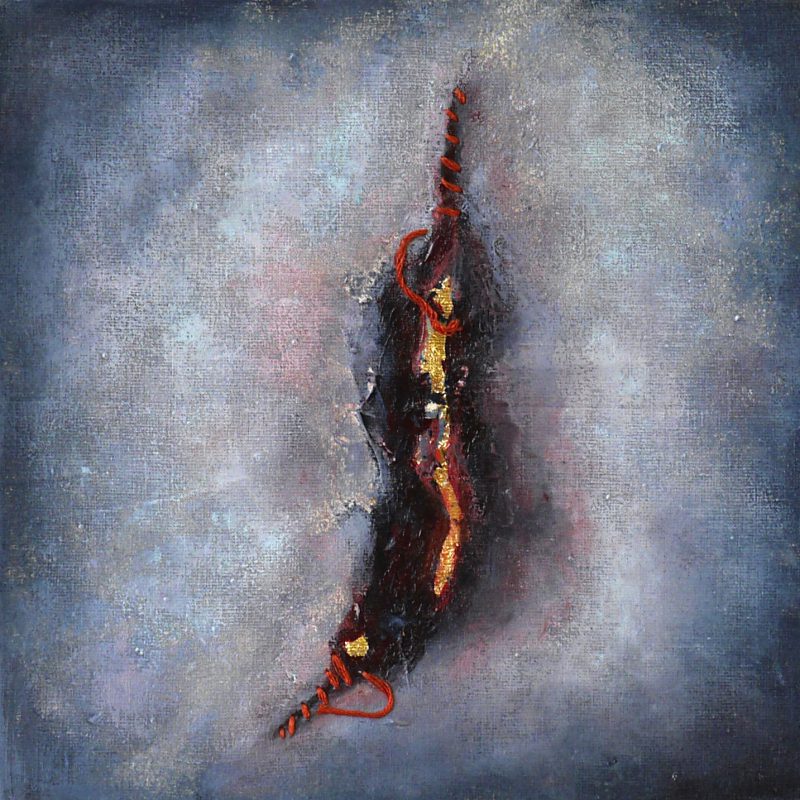
No matter how I tried, I could not make this piece pretty or decorative.
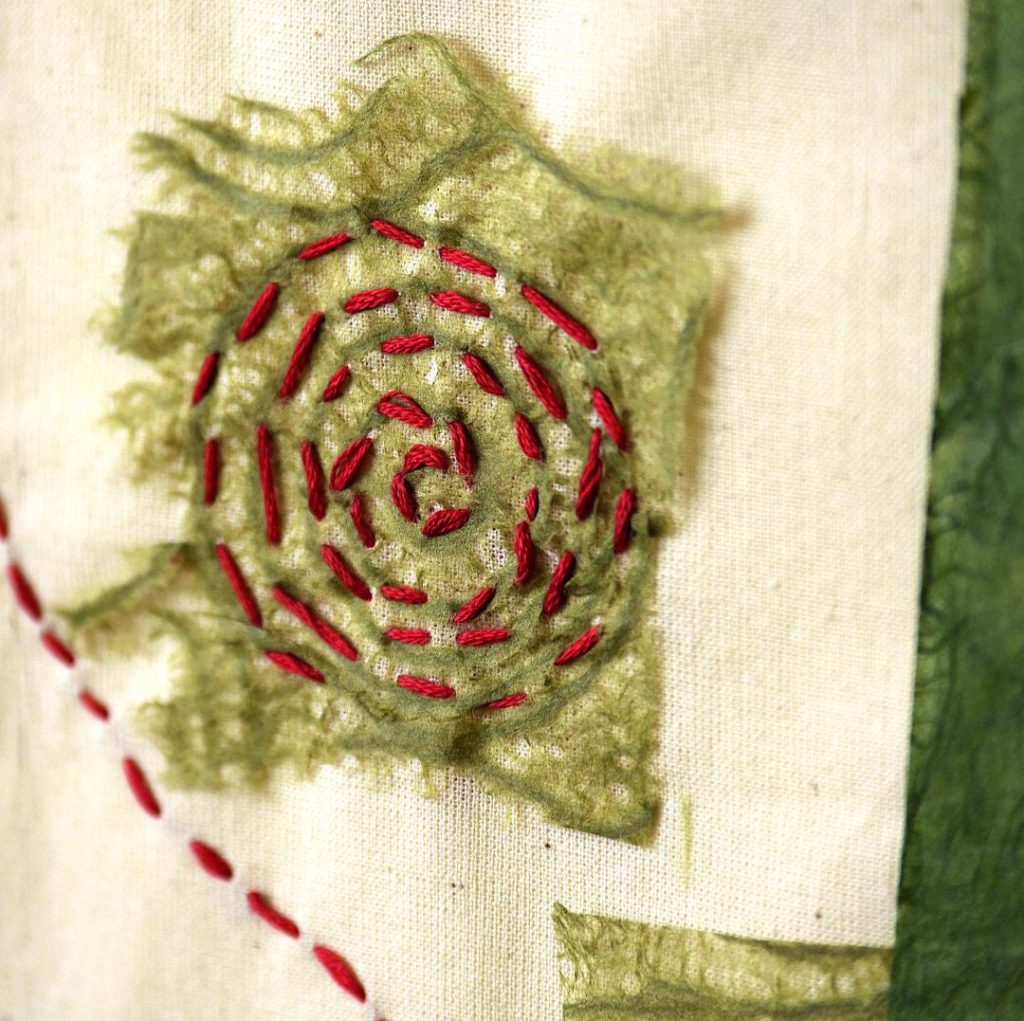
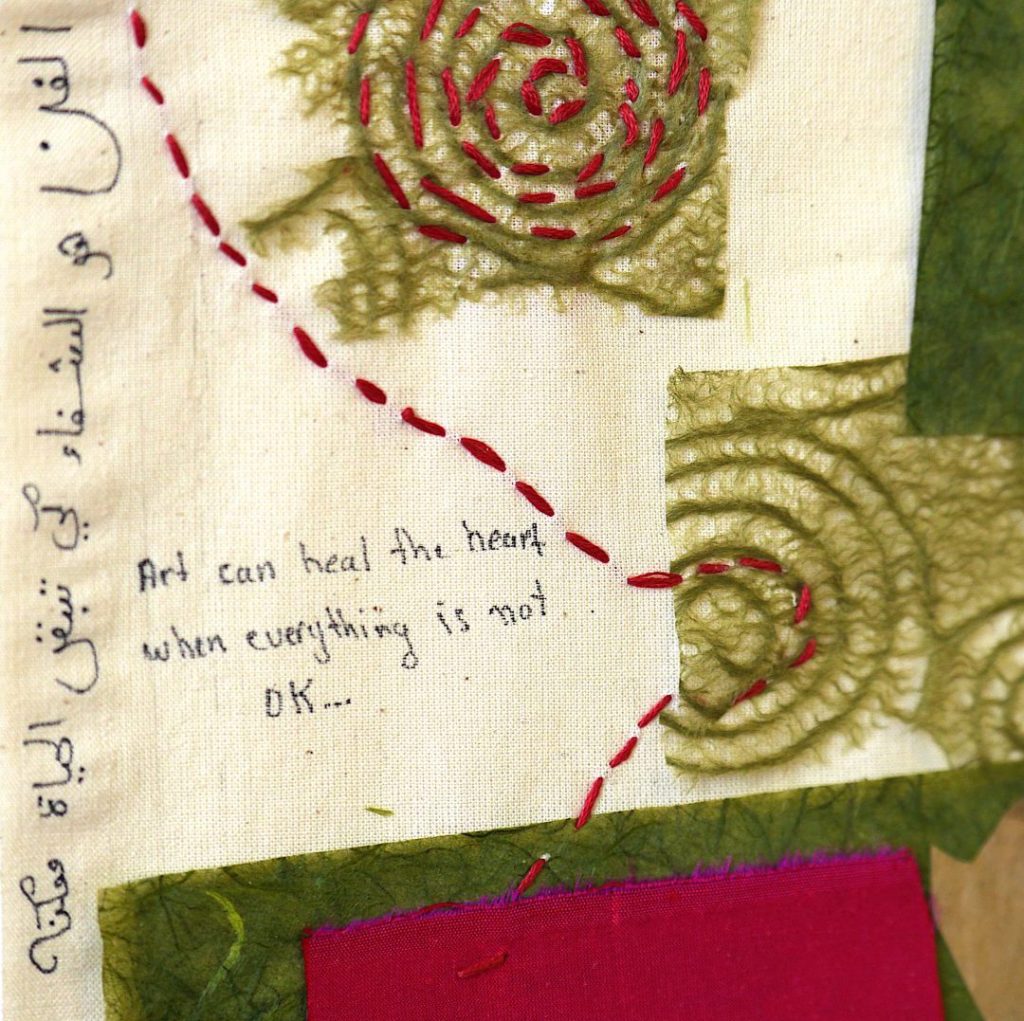
It kept coming back to how I experience the world at this time, how bruised and wounded it is, and how our attempts to fix things unravel. But, beneath the wounds and the scarring lies the best of human potential. And at its core is art, with its transcendent ability to bridge chasms. Here, it is represented by gold leaf.
So:
To mend the world
Acrylic/gold leaf/embroidery floss on unprimed linen
CINDY MAGUIRE // Merion Station, Pennsylvania, USA
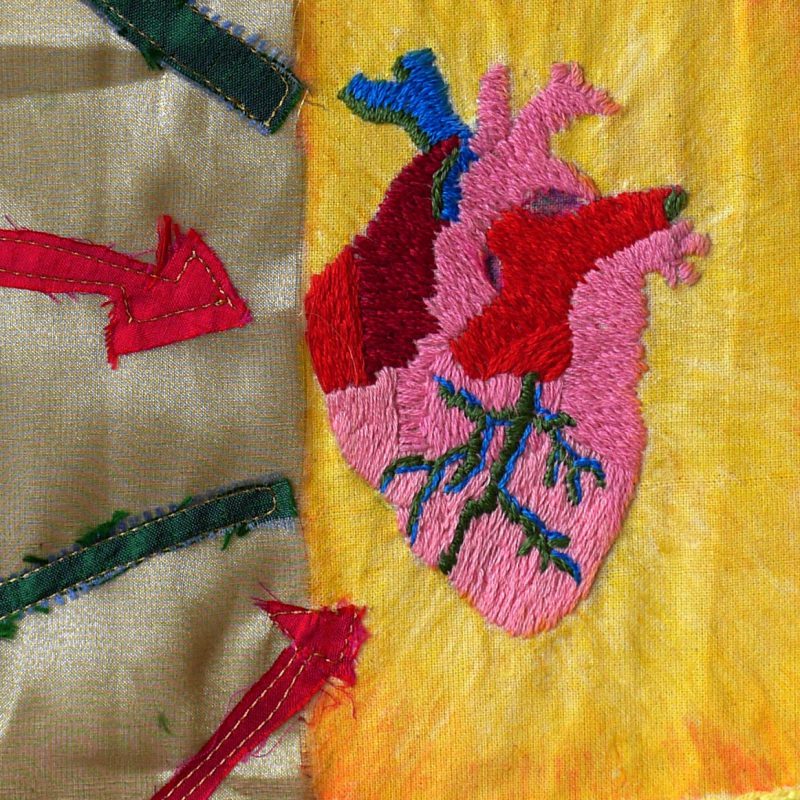
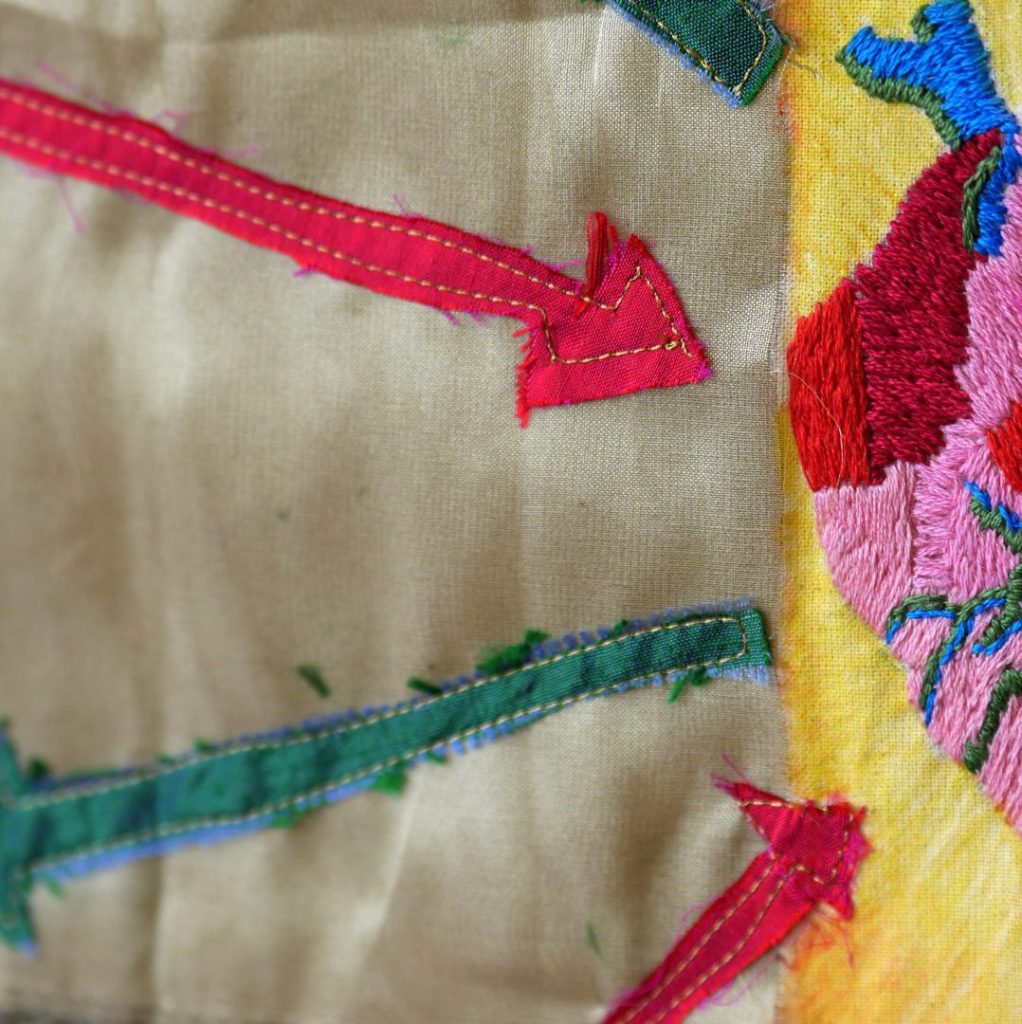
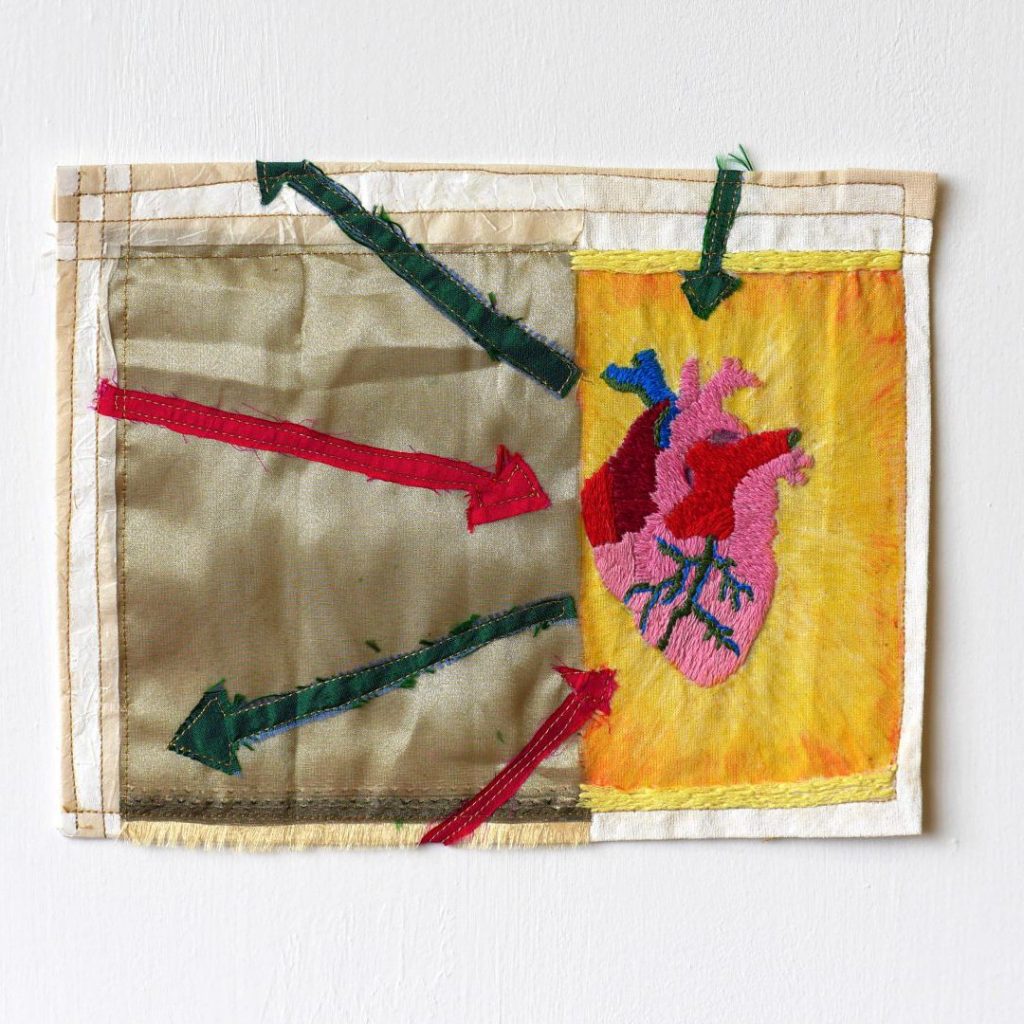
The COVID-19 lockdown in spring/summer sent me back to my creative roots – crafting – and the gift of a pause amidst a global pandemic. The embroidered heart with arrows reflects the give and take of my processing, breathing, mourning, connecting. Returning to embroidery meant I was using my hands in new and different ways. Halfway through the project, the joints in both of my hands started locking. Unable to sew the design as planned, I stepped back and assessed a different way forward. I’m accepting this message as a metaphor for my life, during/post-COVID.
MOLLY MOLDOVAN // Apsley, Ontario, Canada
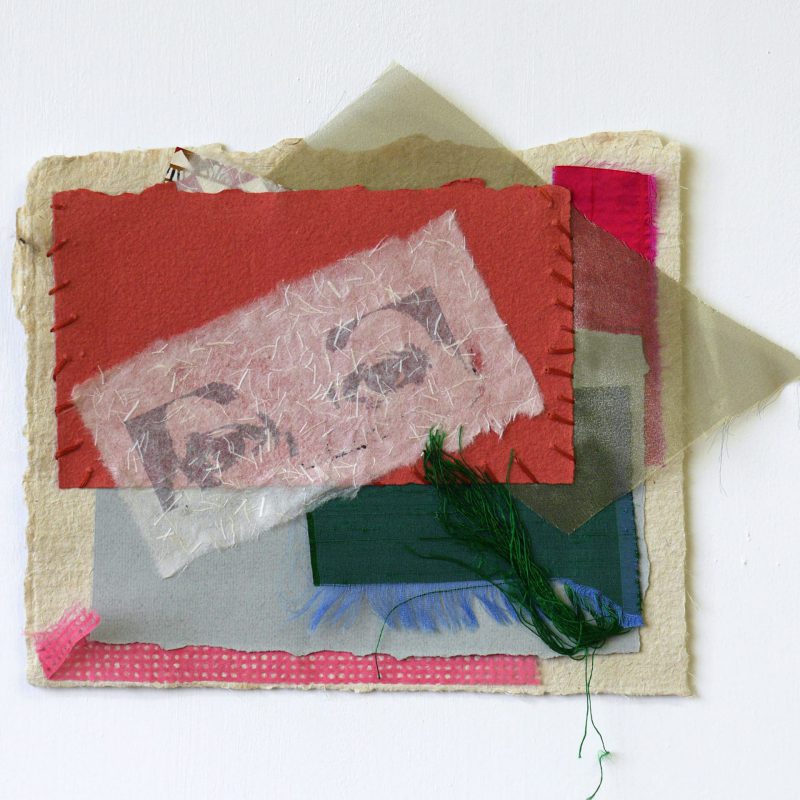
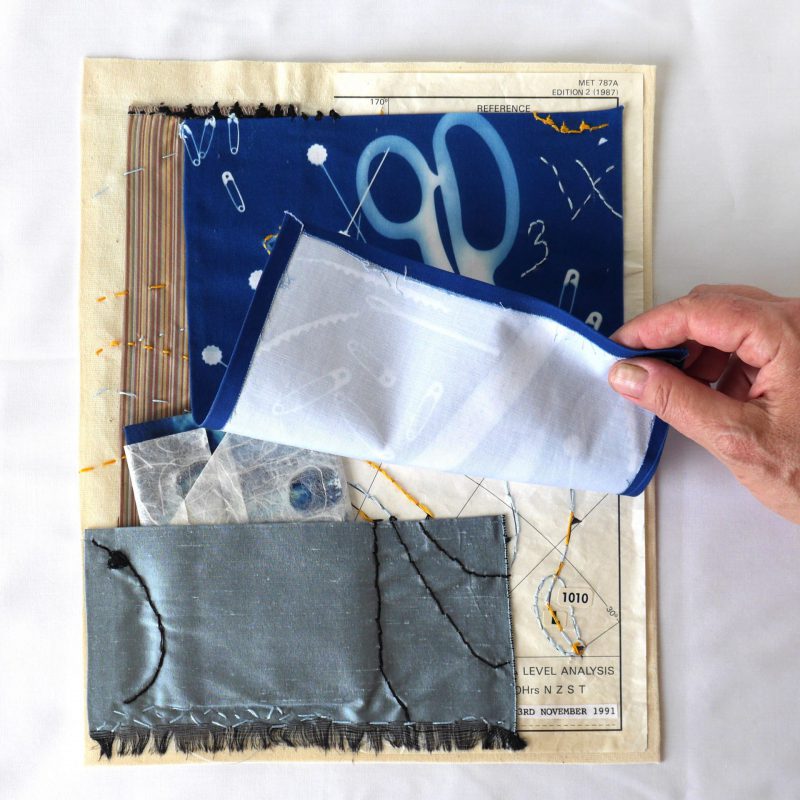
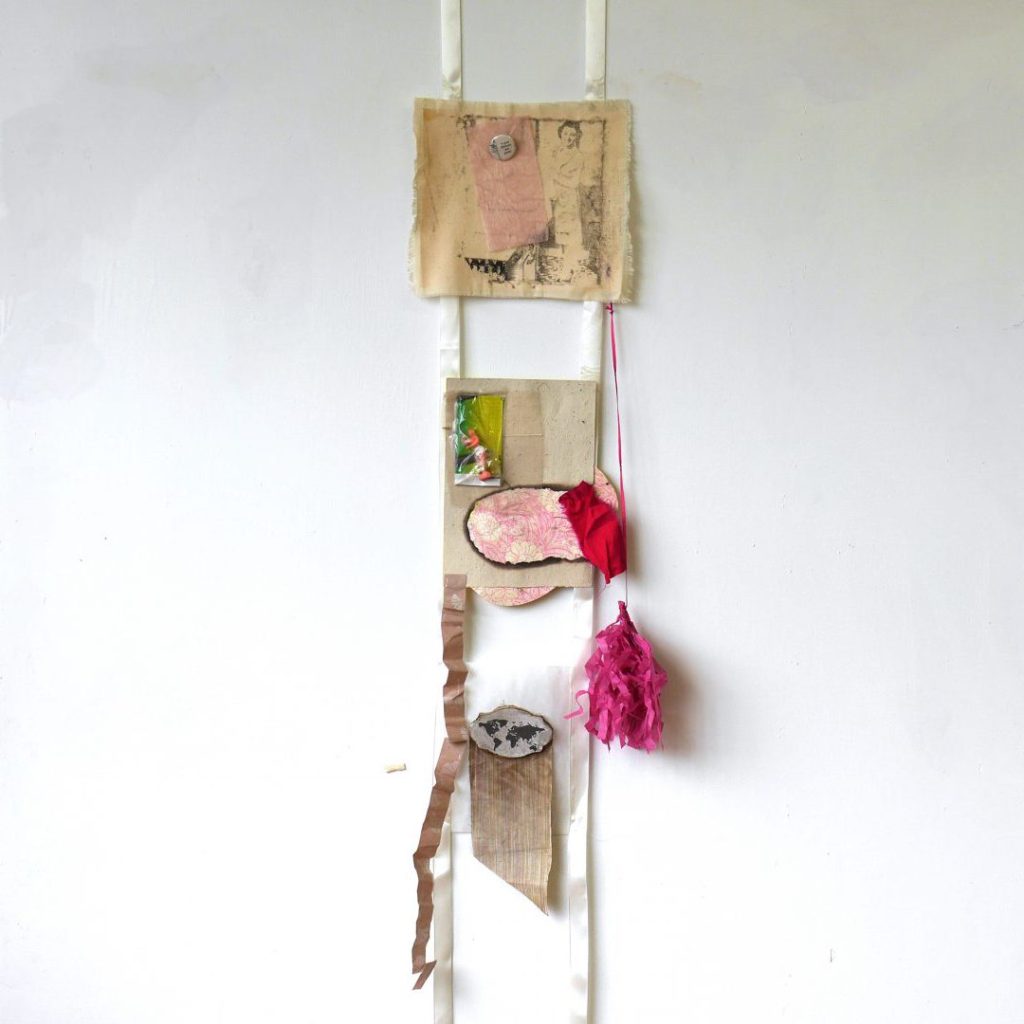
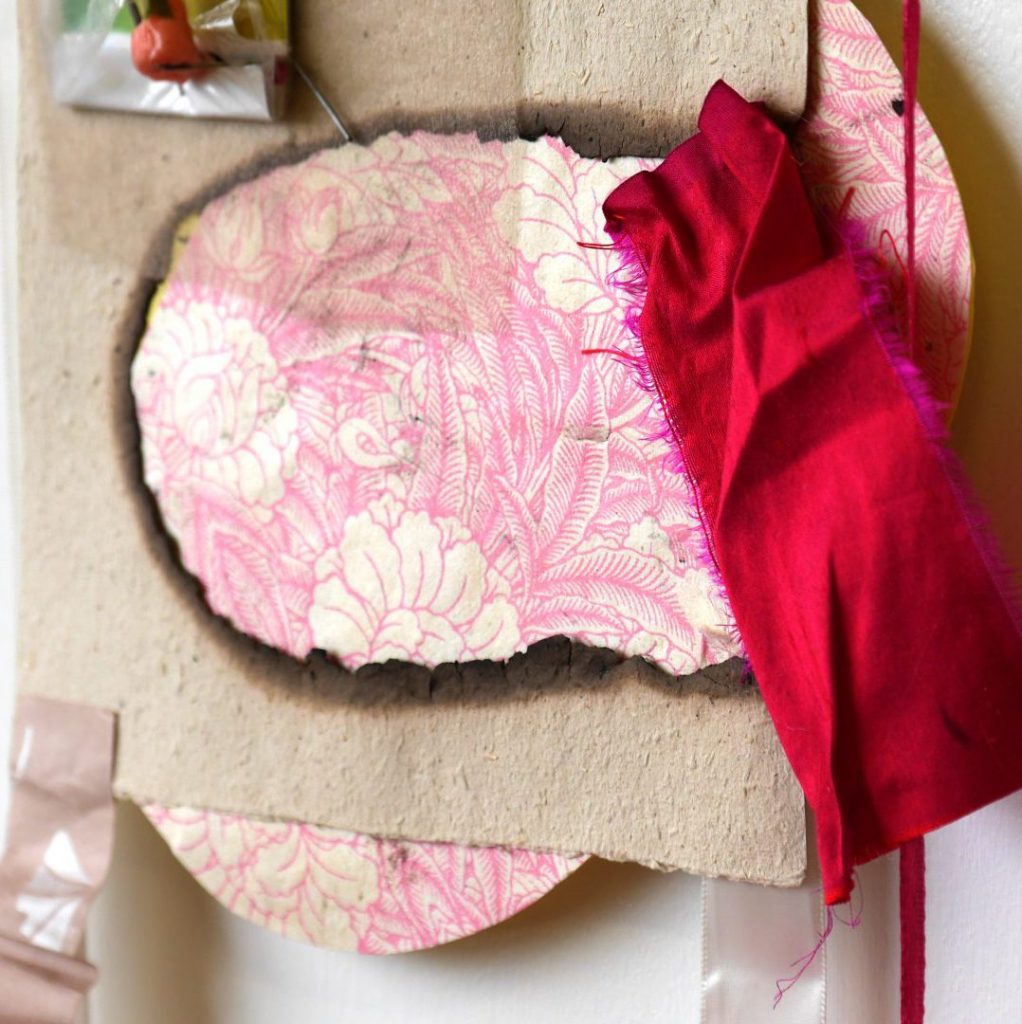
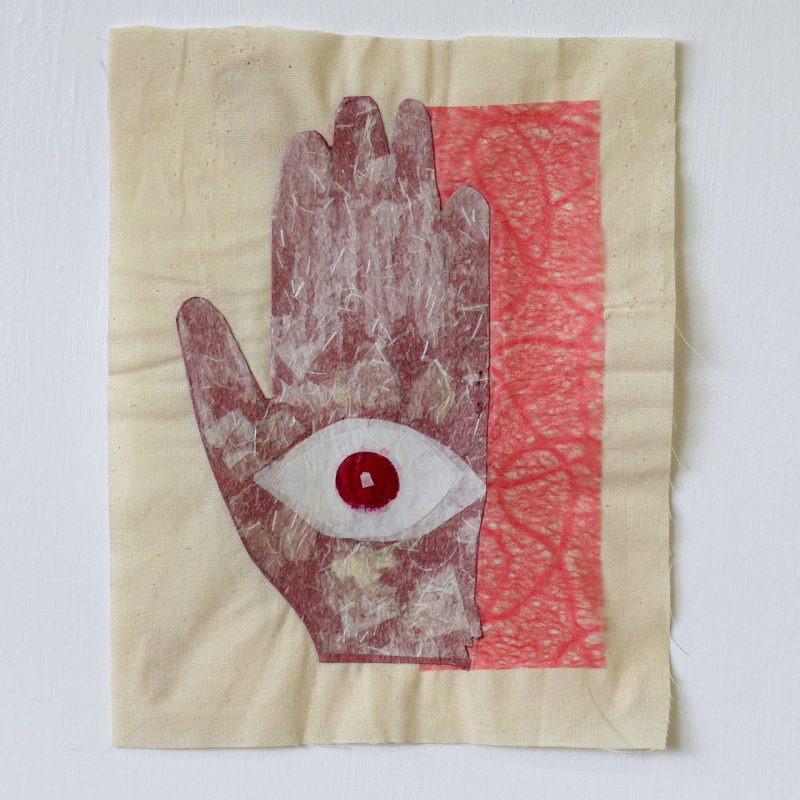
The Lens and the Lever
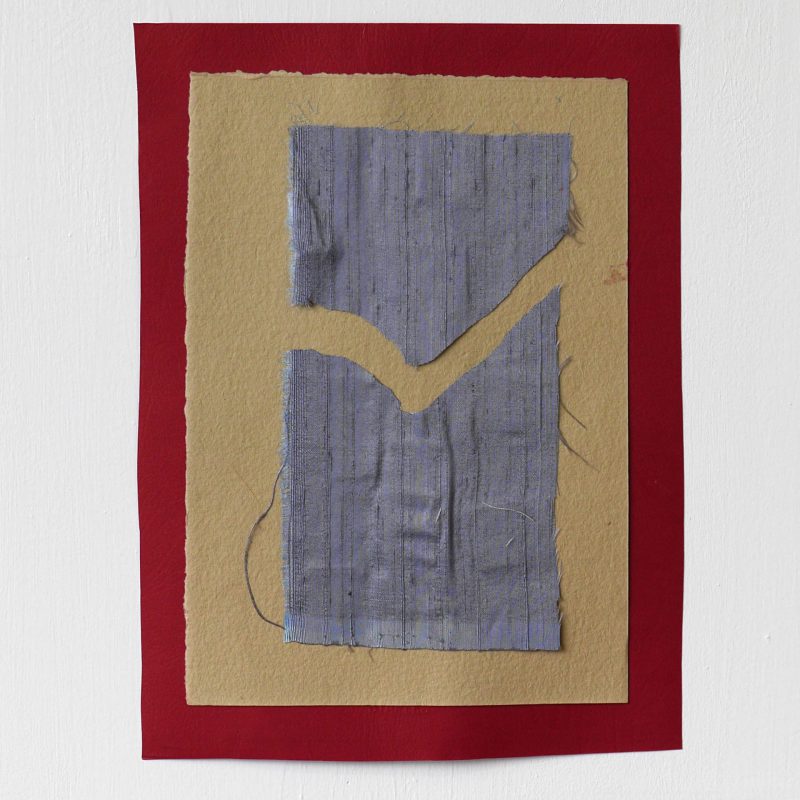
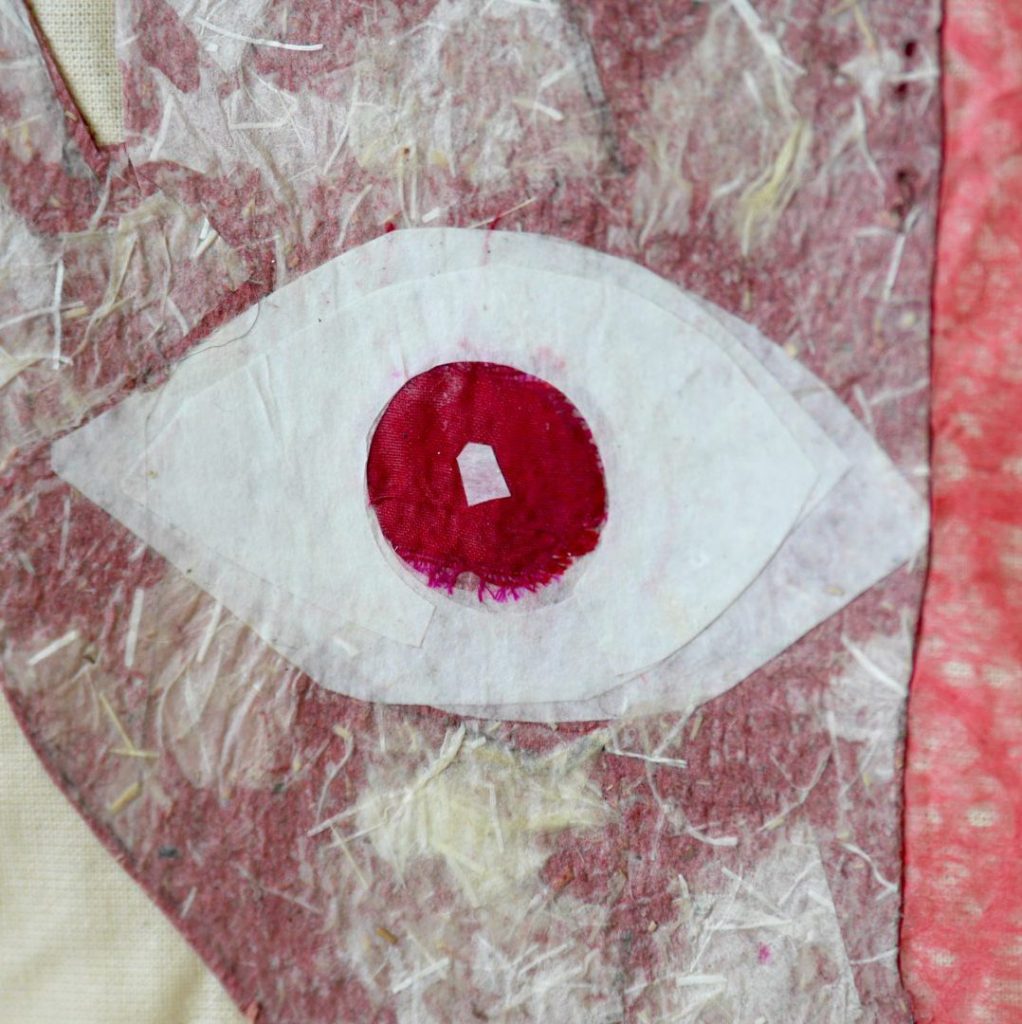
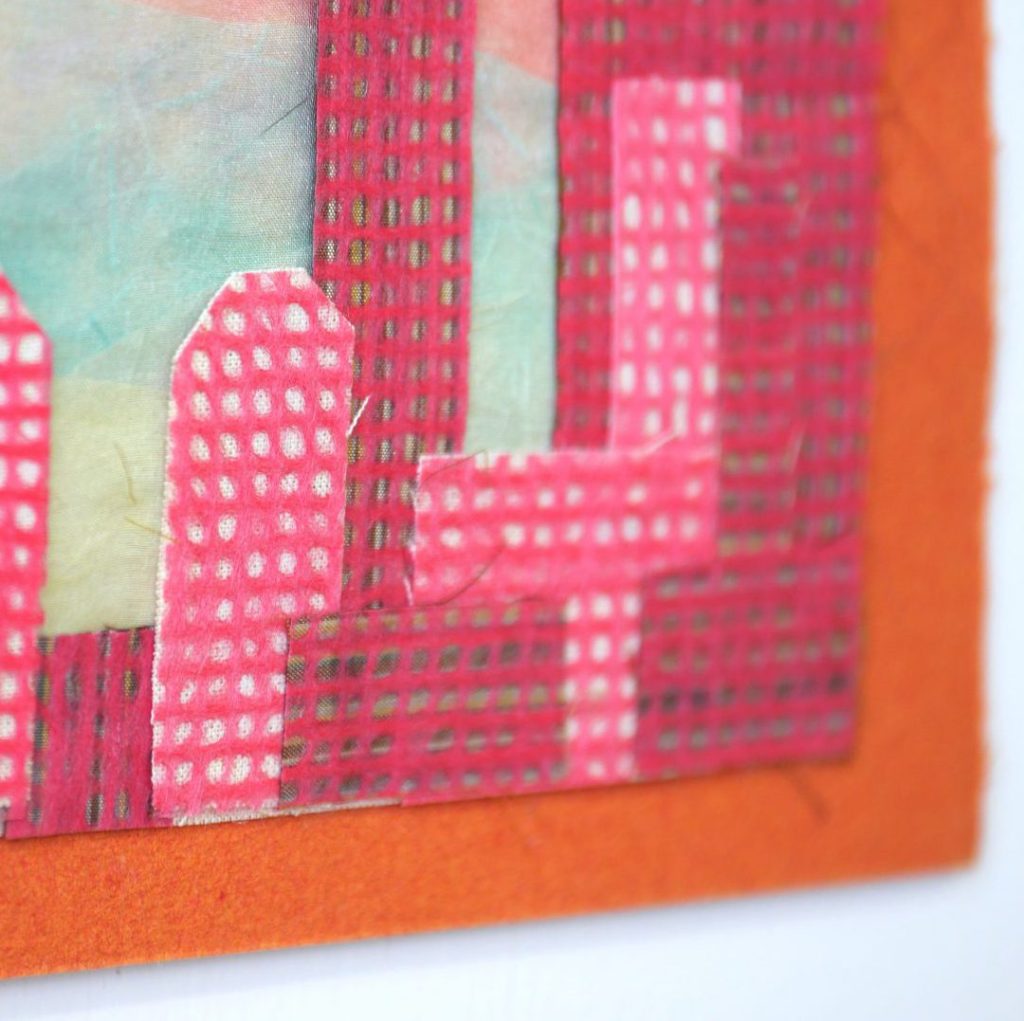
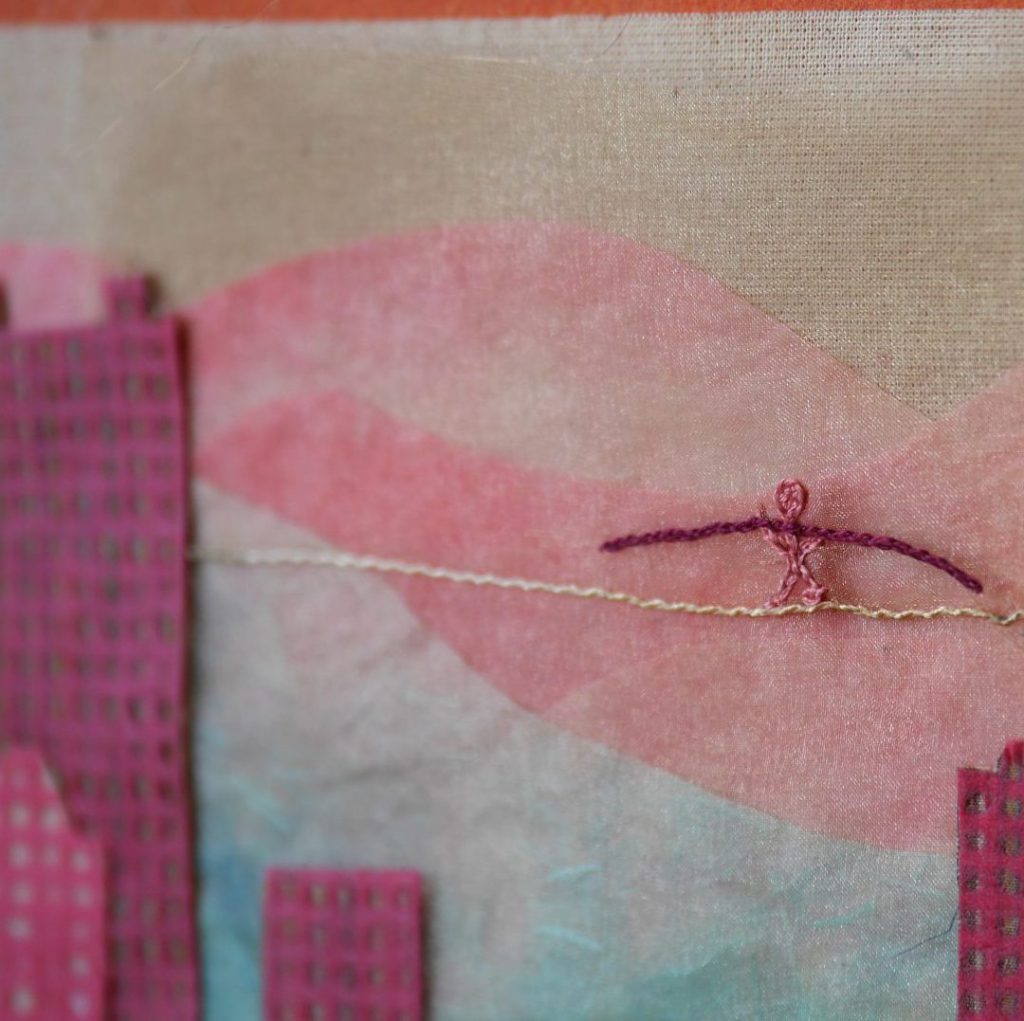
This piece was a struggle for me – vastly different from anything I do – so many straight edges! I forced myself to work with the materials from the kit because I knew it would be a stretch for me. Once the piece was completed, I still wasn’t sure that felt even remotely like a “Moldovan,” but I was committed to it.
What you likely cannot see from the photograph: the component that is stitched on 3 sides to the larger paper is a pouch into which I’ve placed the printed words for “what is art for/art is…” along with a square of the printed paper. I managed, without conscious effort, to emulate the layers that are integral to my painted work. What is hidden is as important as what is revealed.
Look through the lens – the eyes of an artist – to see the world that is and the world that could be. Art is the lever that can move the world.
ANNE PILON // Montreal, Quebec, Canada
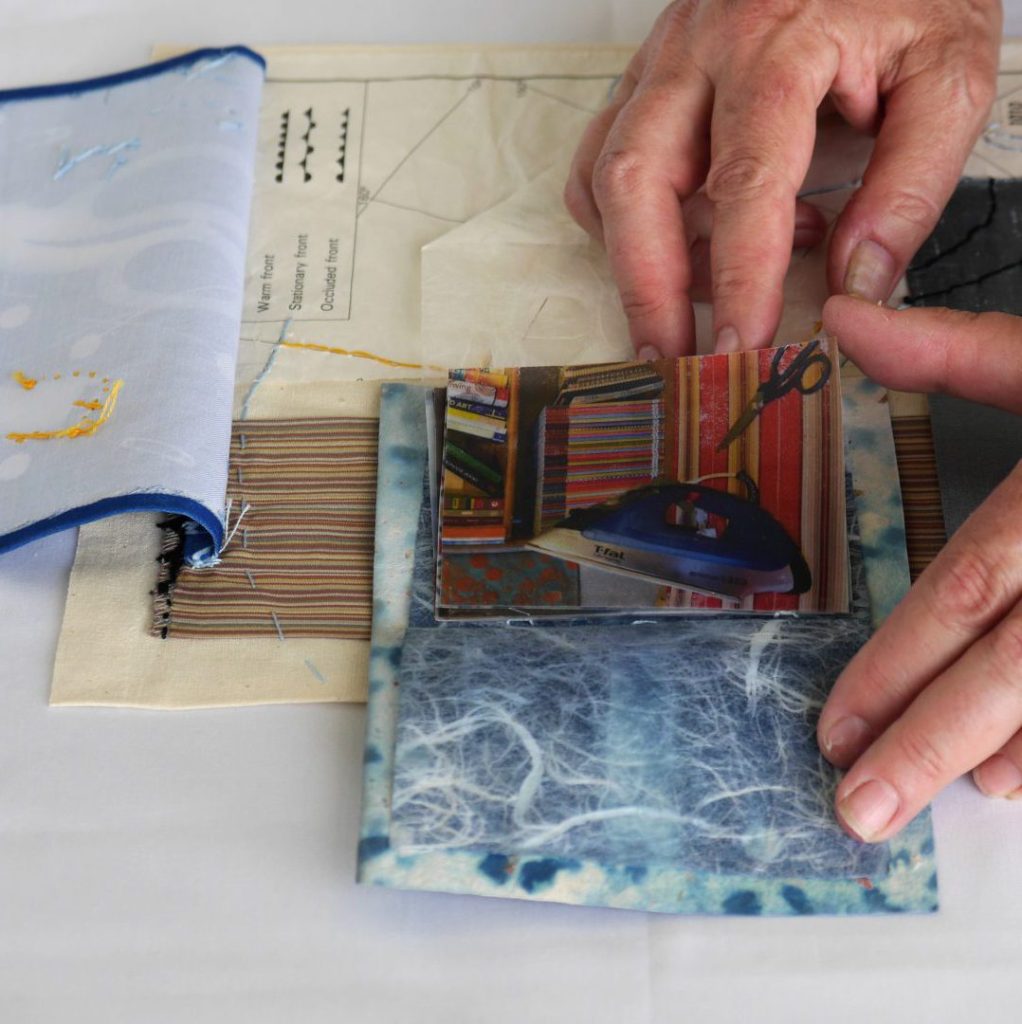
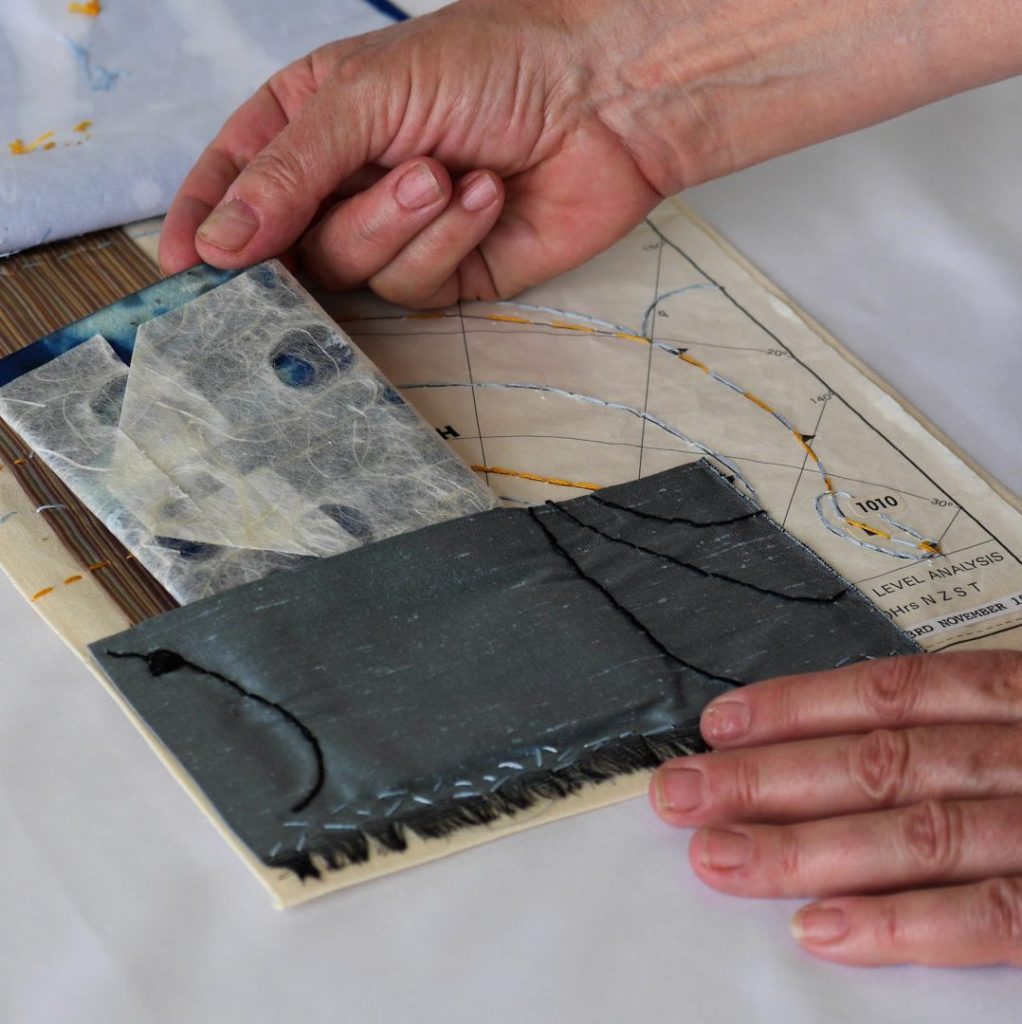
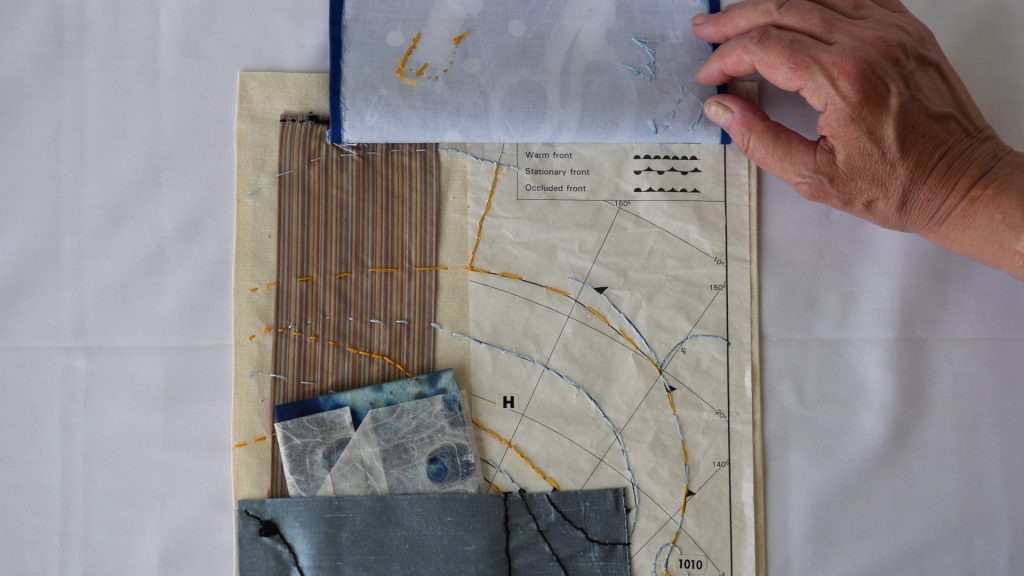
Art is for …
Resonance
– the quality or state of being resonant
– a quality of evoking response
– a synchronous gravitational relationship
Merriam Webster
Art is for experiencing resonance. When my ideas are manifest in the materials and the way they are put together, and when I lose the sense of time passing while creating, I experience resonance.
During the lockdown I sewed face coverings for my family and friends. Although it gave me great pleasure to do so, it also made me angry because we had to wear them for our safety. Suddenly, we all became fearful of a threat that we couldn’t see or fully understand. While making masks, I stopped to take photos of sights that caught my attention: a pile of fabric remnants, sunlight on the iron, a tangle of thread on the floor. I printed these on vellum and made them into a book. I wanted to show the beauty in the repeated domestic gestures that are often unseen and underappreciated, tucked away in the pages of the everyday.
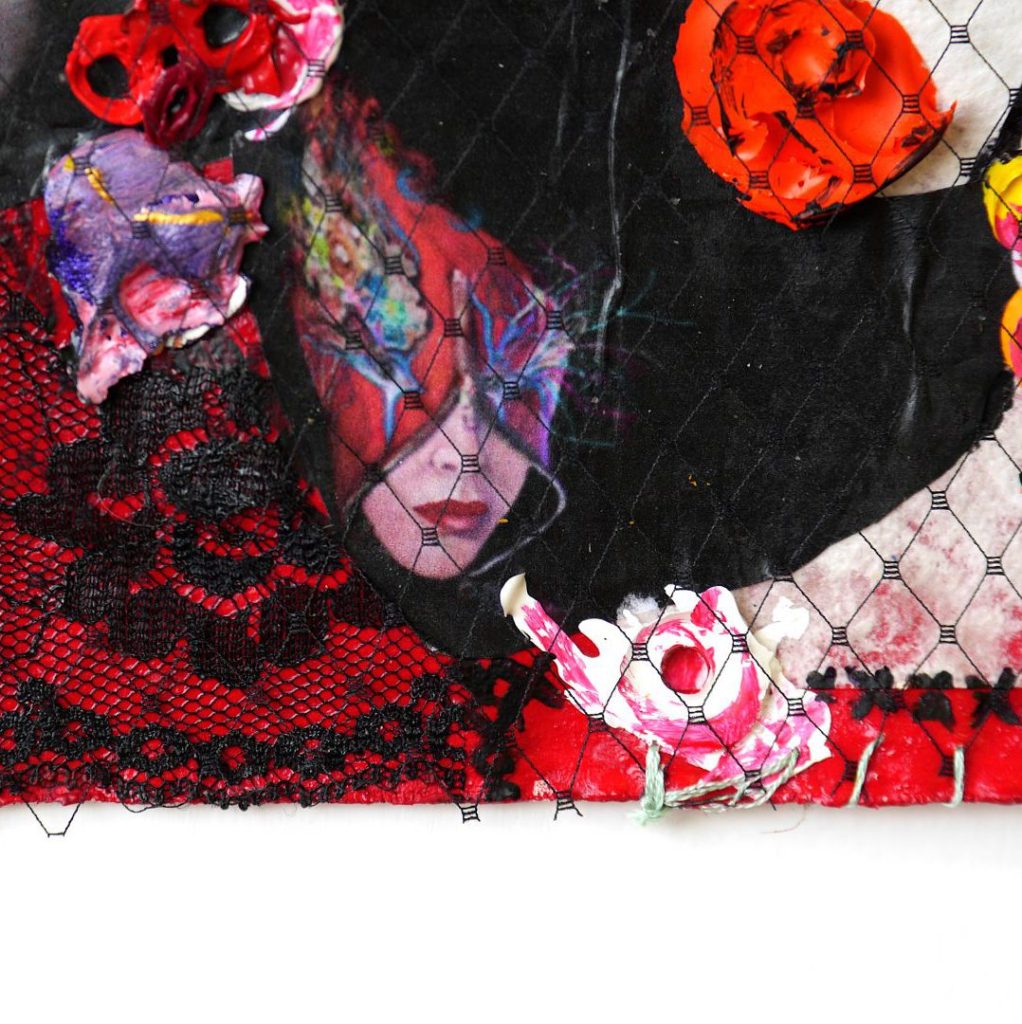
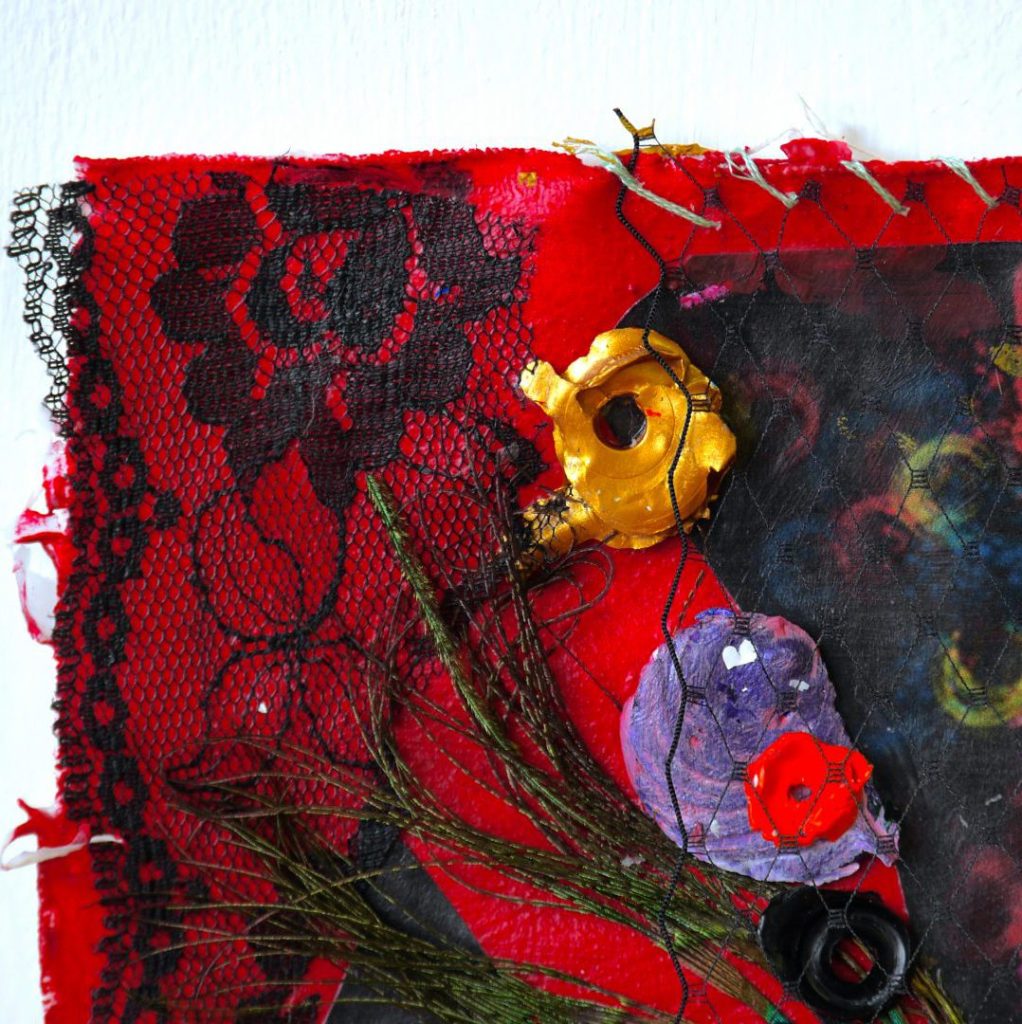
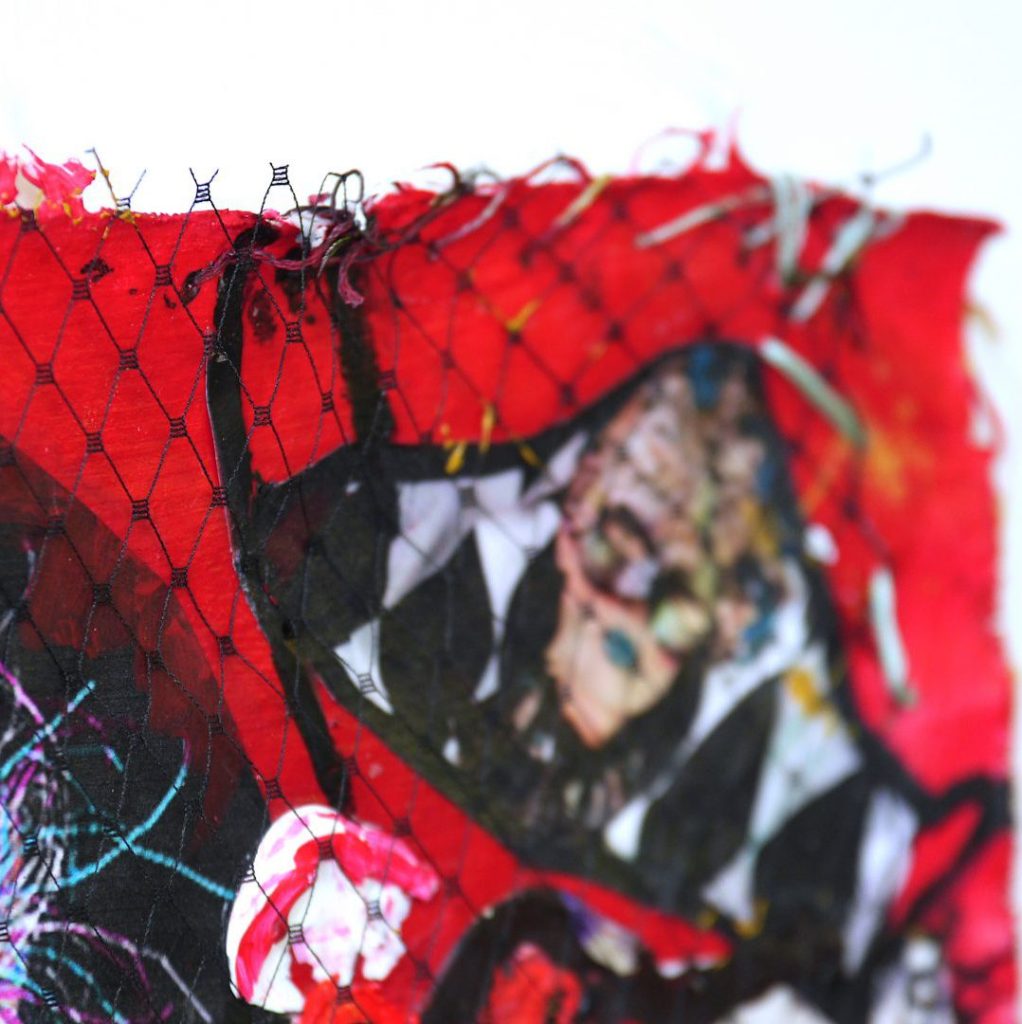
CLAUDIA COUTU RADMORE // Carleton Place, Ontario, Canada
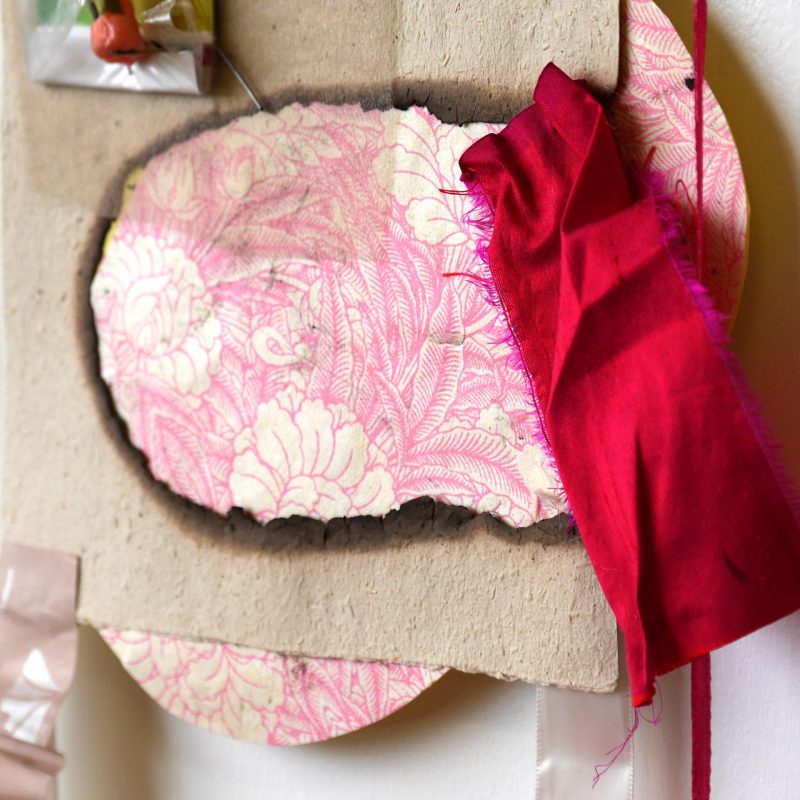
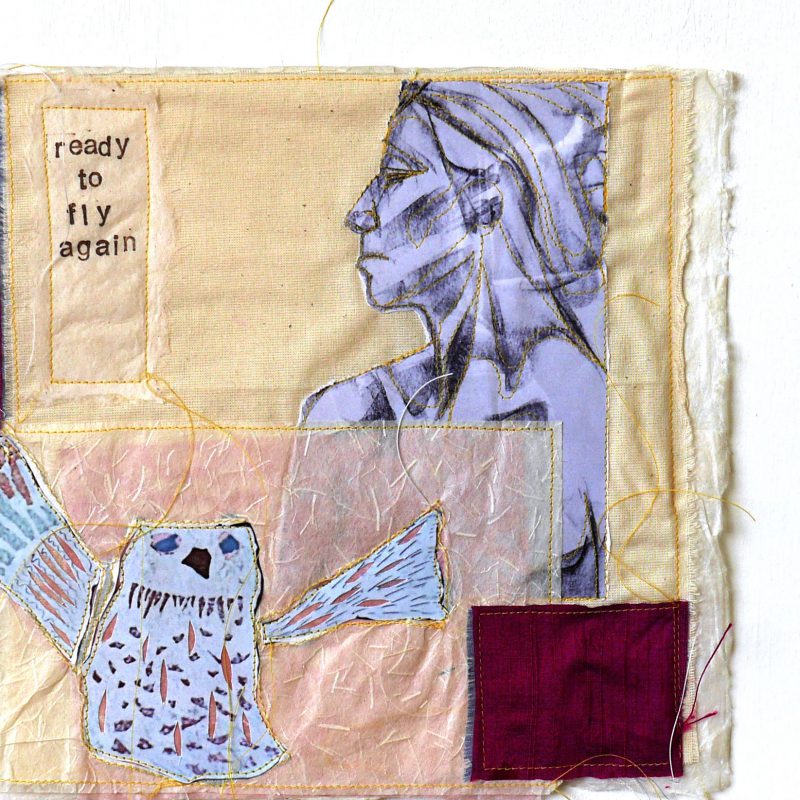
So here is a piece called “ready to fly again.” It was fun to do, using my usual method of letting an idea sit around for two months before the deadline, and changing the concept radically several times. The drawing of the woman is from a figure drawing class a few years ago, and the owl is a torn paper collage done a long time ago. Both are larger pieces originally. Another aspect of the way I work is to carry on if I ruin something, and figure out a way to over up mistakes. I like to machine sew on paper, and to work with handmade papers, and often leave threads hanging.
Thank you for the opportunity to make something. I’ve found it hard to do artwork during this time, but thanks to this project I finished two non-related pieces today.
BECKY FREHSE // Tacoma, Washington, USA
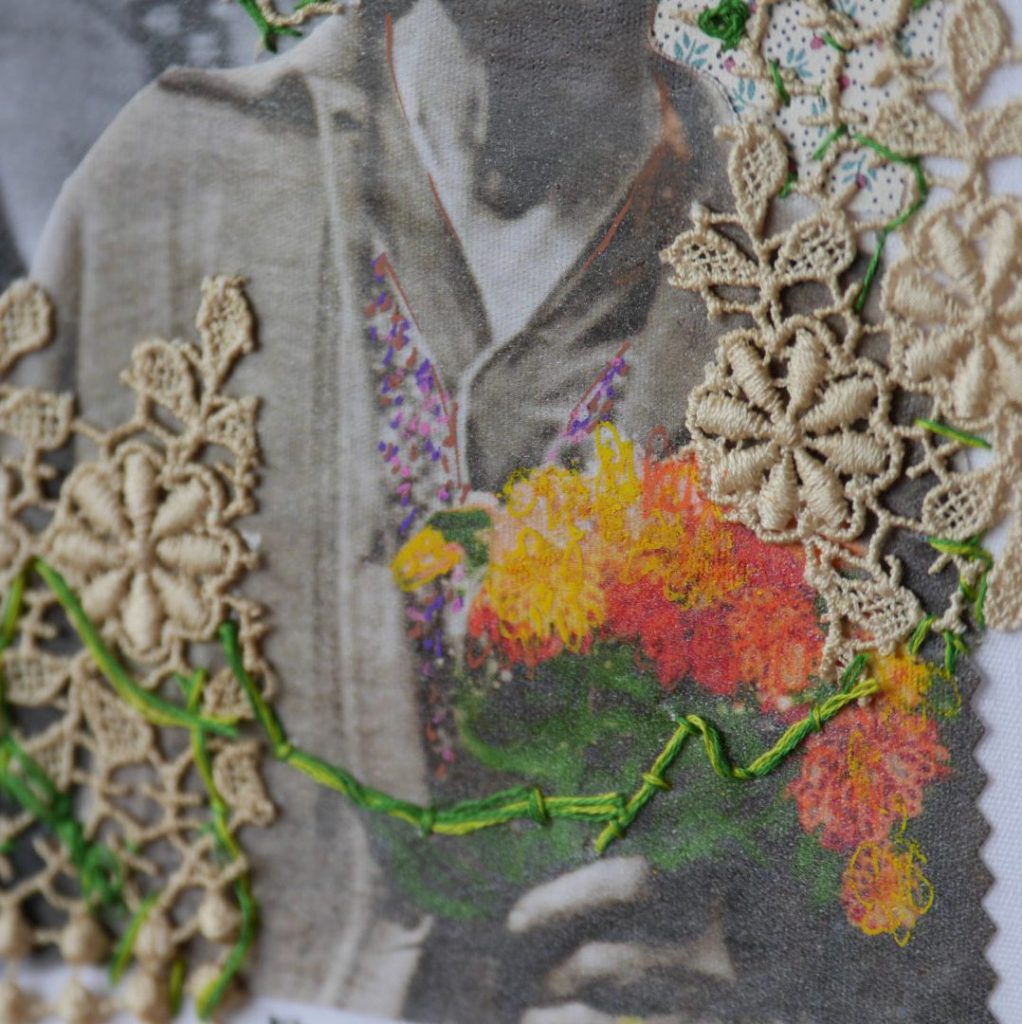
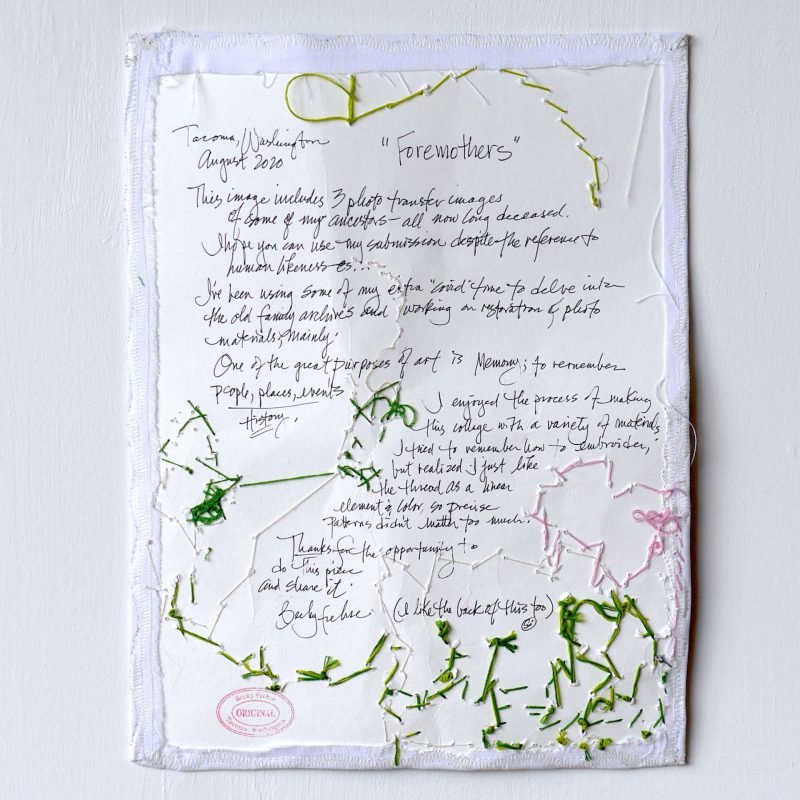
“Foremothers”
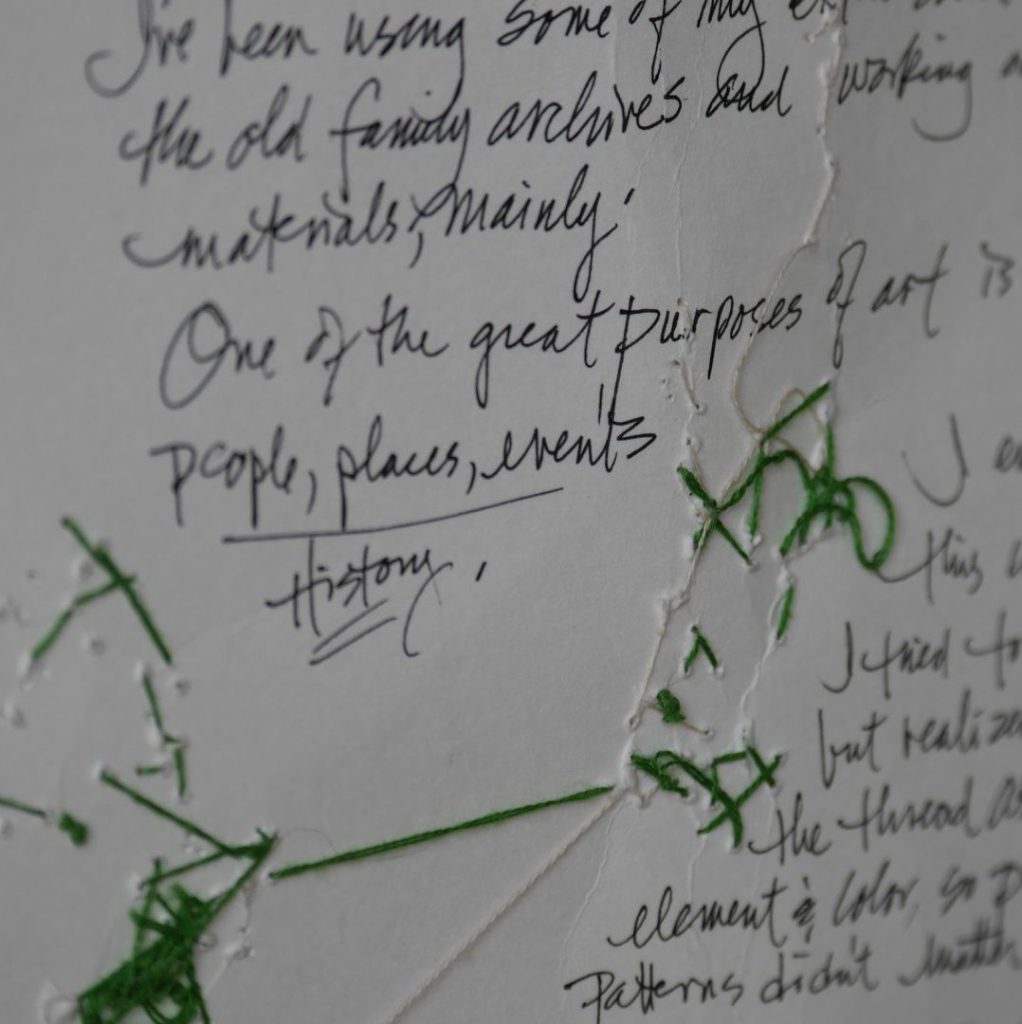
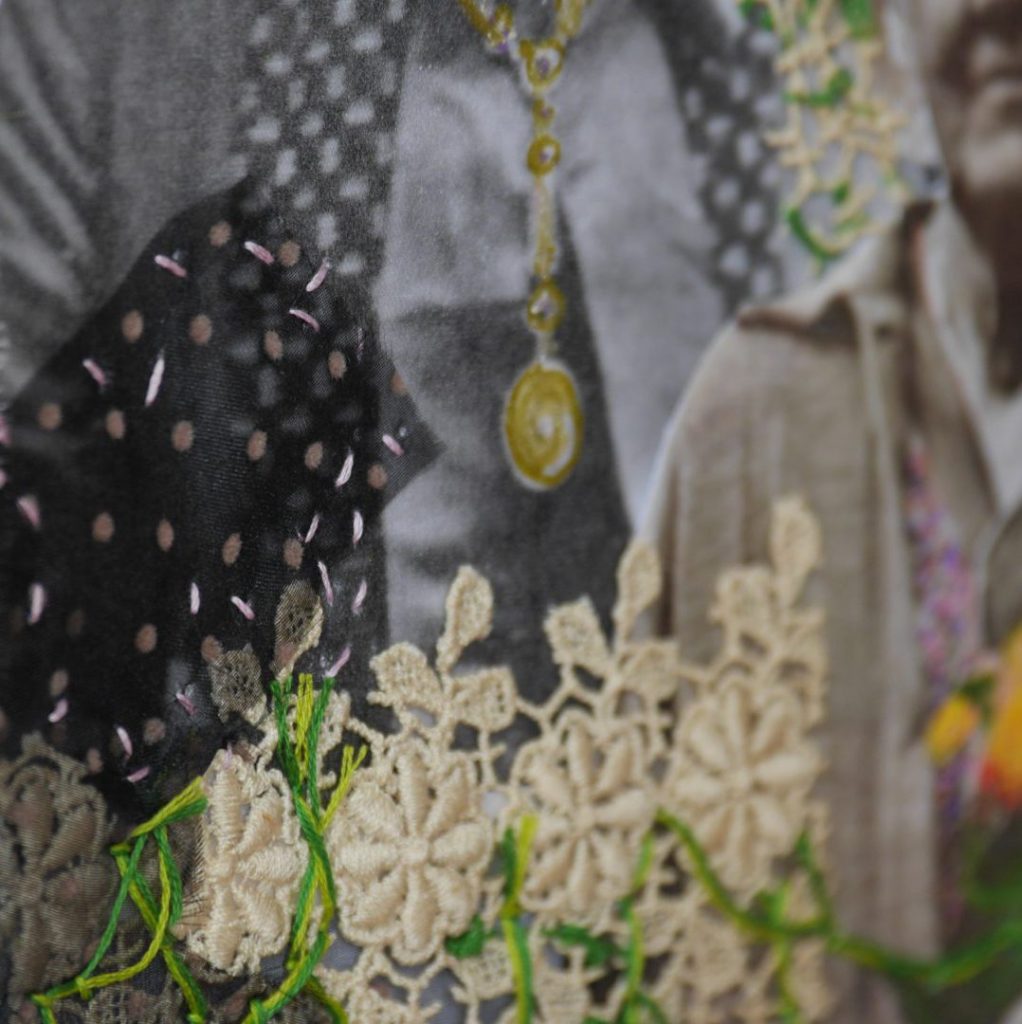
One of the purposes of art is Memory; to remember people, places, events, history. I used some of my extra time during the pandemic to delve into old family archives. I am restoring old photographic portraits and re-constructing several vintage albums from the 1880’s. “Foremothers” references the three women pictured on the collage I created for What is ART For? While combining photos, lace, and other bits and pieces for this collage, I tried to remember how to embroider. I realized I especially liked the thread as a linear element, so precise patterns didn’t matter too much. And I liked the reverse side of the collage too. Thanks to the curators for choosing to include it.
JUDITH BOILY VALOIS // Terrebonne, Quebec, Canada
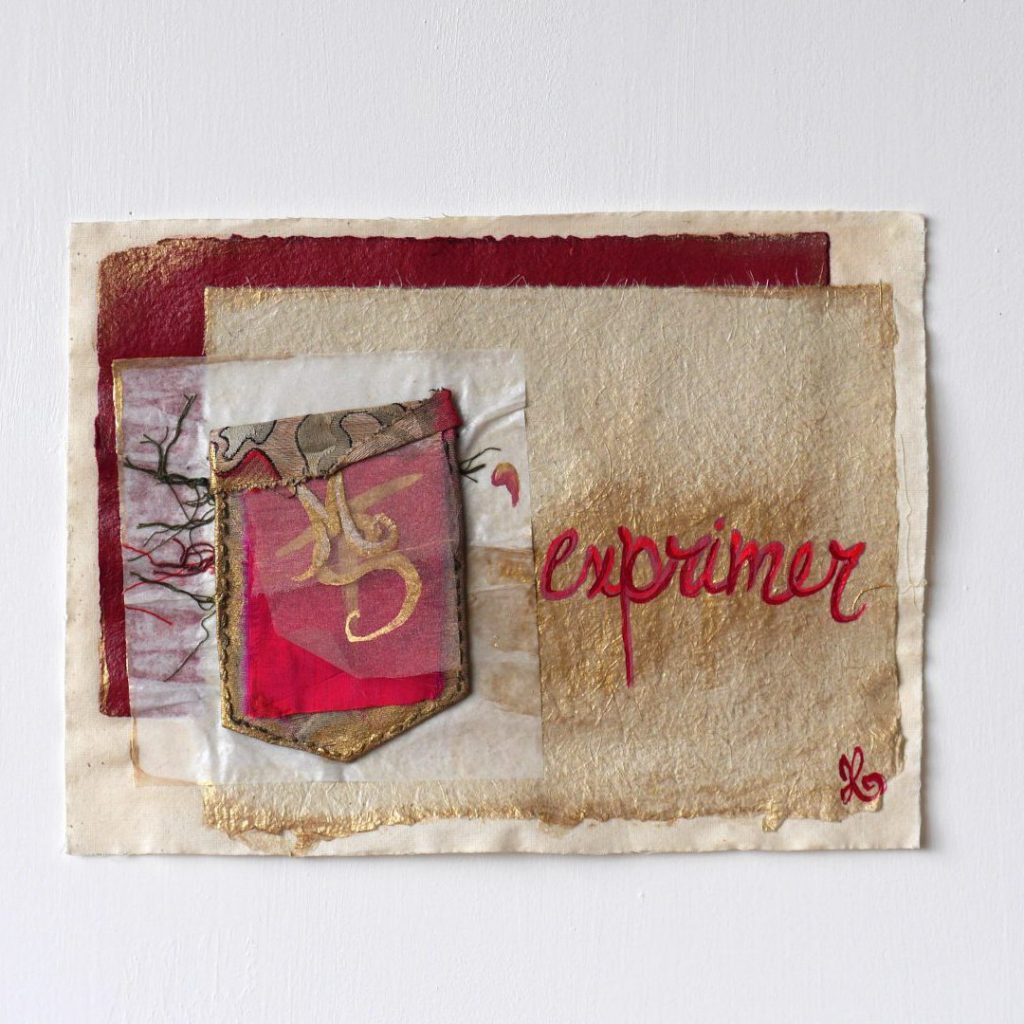
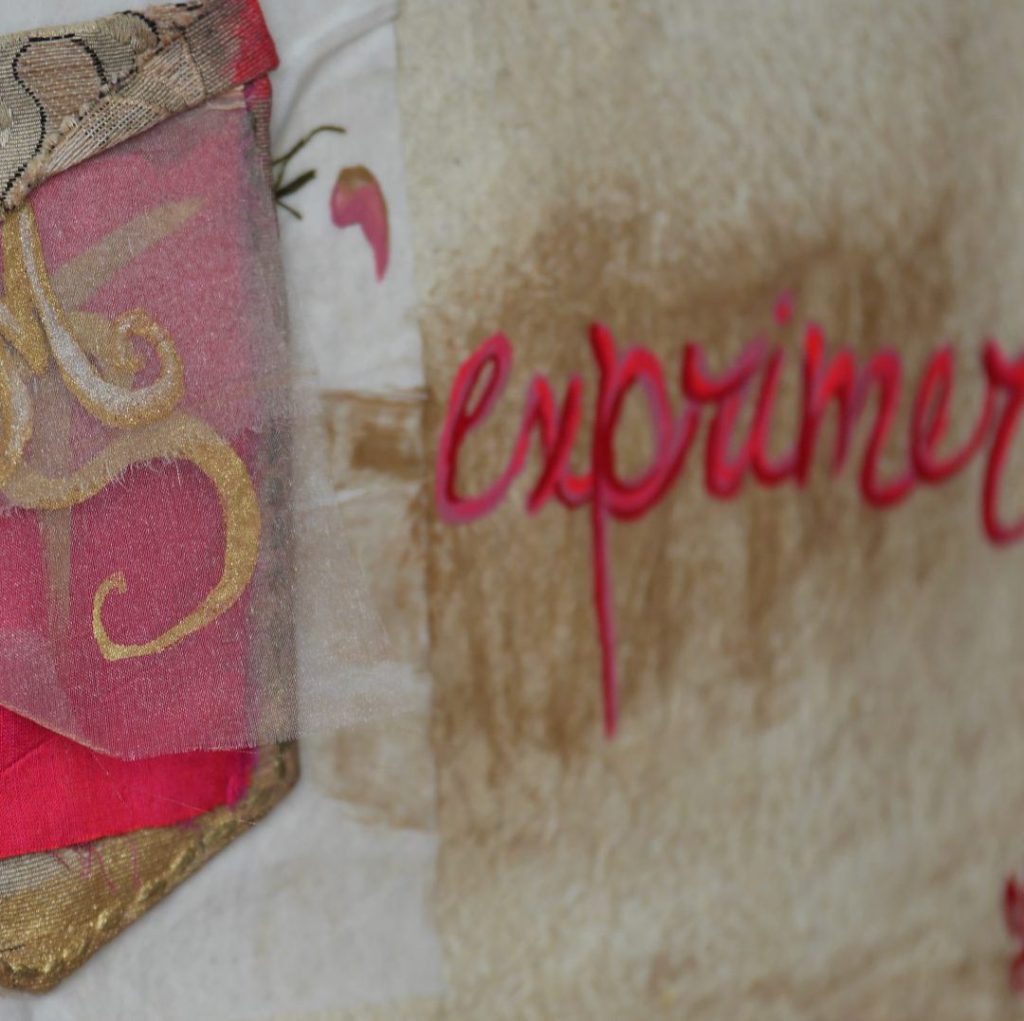
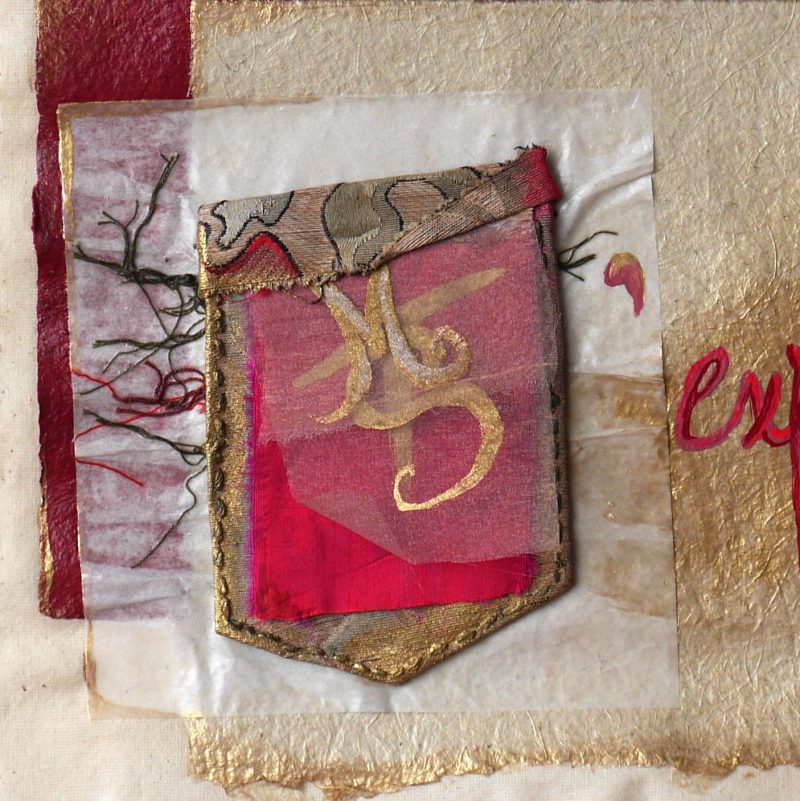
M’exprimer
S’exprimer
T’exprimer
In addition to the 20 works featured in the grid above, the Breathing animation by Marie-Pier Viens captures the joy of breathing, the joy of making.

*As though the exact length of time of the officer’s killing act could somehow be as important as its murderous impact, debate has emerged over how long he applied pressure with his knee to George Floyd’s throat and airways. The now iconic “8:26” has been reduced by some to “7:26” and revised by the New York Times’ reconstruction (using assembled cell phone and video footage) to at least 8:15.